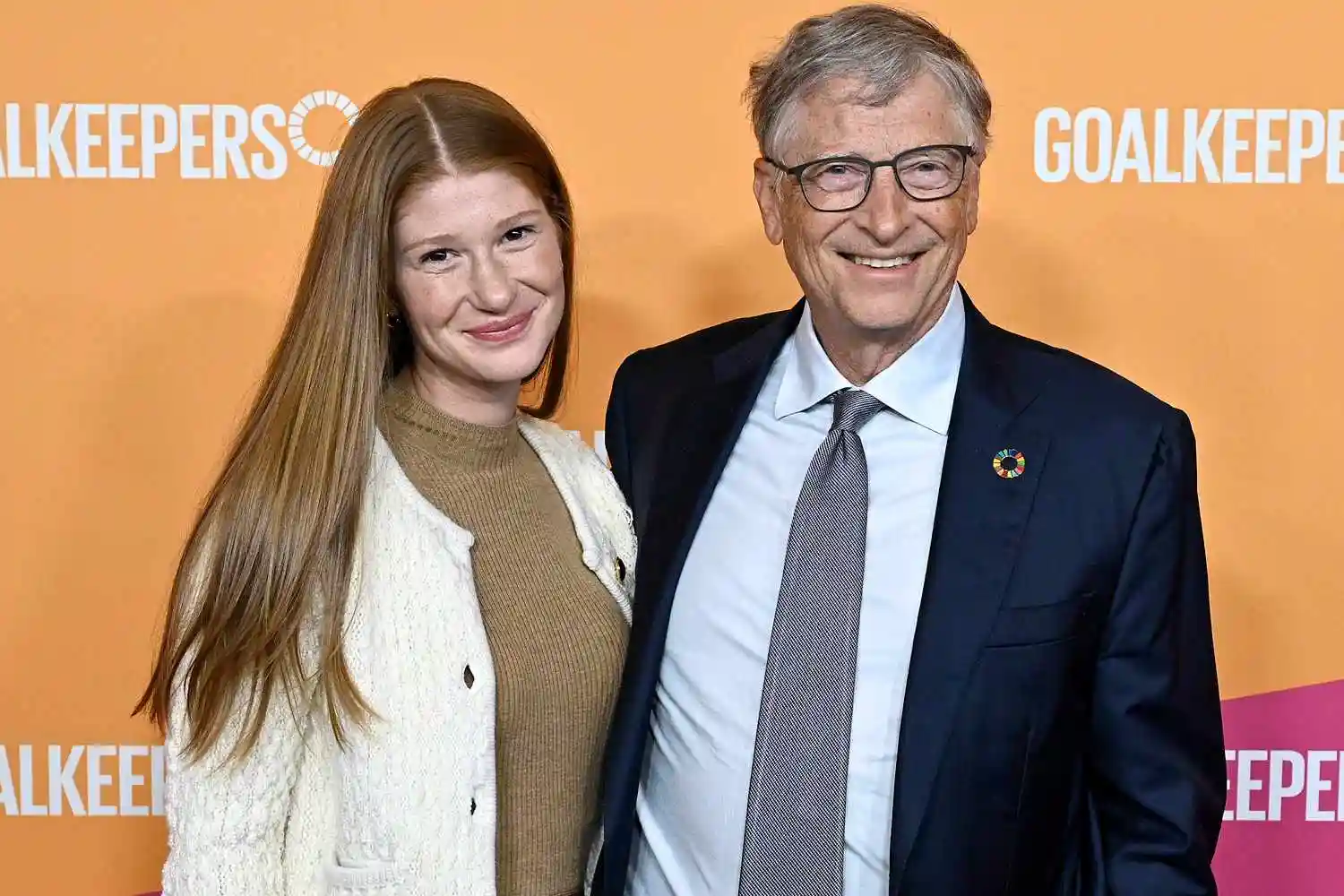
In 2026, Bill Gates is 70 years old, reaching his 71st birthday on October 28. His estimated net worth stands at approximately $148 billion, reflecting his diversified investment portfolio through Cascade Investment and his remaining Microsoft stake. He continues to focus primarily on global health and climate change through his foundation.
The Biography and Birthday of William Henry Gates III
Born on October 28, 1955, in Seattle, Washington, William Henry Gates III—known globally as Bill Gates—has spent over five decades at the forefront of the technological and philanthropic world. As of 2026, Gates has transitioned into a role that combines his technical roots with a massive commitment to solving "wicked problems" like carbon emissions and pandemic preparedness.
His upbringing in a supportive, high-achieving family provided the foundation for his competitive nature. His father, William H. Gates Sr., was a prominent attorney, and his mother, Mary Maxwell Gates, served on the board of directors for First Interstate BancSystem and the United Way. This environment nurtured the intellectual curiosity that eventually led him to the Lakeside School, where he first encountered a computer terminal and began his lifelong obsession with software.
The significance of his birthday, October 28, often serves as a milestone for annual updates on his "Giving Pledge" progress. Entering his 70s in 2026, Gates remains physically active and intellectually engaged, frequently publishing his seasonal reading lists and reflecting on the trajectory of computing—from the BASIC programming he wrote as a teenager to the sophisticated Artificial General Intelligence (AGI) systems that dominate the tech landscape of the mid-2020s.
Decoding the 2026 Net Worth: Where the Wealth Resides
While many still associate Bill Gates exclusively with Microsoft, his 2026 net worth of roughly $148 billion is the result of a highly sophisticated, diversified investment strategy. For decades, Gates has been systematically reducing his ownership in Microsoft to fund his philanthropic endeavors and diversify his assets.
Cascade Investment LLC
The majority of Gates’s wealth is managed through Cascade Investment LLC, a private investment firm overseen by Michael Larson. This entity holds significant stakes in various industries, shielding the Gates fortune from the volatility of the tech sector. Key holdings typically include:
- Republic Services: A leading waste management company in the United States.
- Deere & Company: The world’s largest manufacturer of agricultural machinery.
- Canadian National Railway: A critical piece of North American infrastructure.
- Ecolab: A global leader in water, hygiene, and energy technologies.
- Farmland: Gates remains one of the largest private owners of agricultural land in the U.S., a move he explains as being tied to seed science and productivity rather than a "grand climate scheme."
The Microsoft Legacy Stake
Despite selling the vast majority of his shares, Gates still retains a significant enough portion of Microsoft (MSFT) to benefit from the company’s continued dominance in cloud computing and AI. In 2026, Microsoft’s integration of advanced AI models across its product suite has kept its stock price at record highs, which in turn bolsters Gates's total valuation, even as he continues to donate billions to the Bill & Melinda Gates Foundation.
The Giving Pledge and Wealth Attrition
It is important to note that Gates’s net worth would likely be much higher—potentially exceeding $250 billion—had he not committed to the Giving Pledge. In 2022, Gates announced an intent to move $20 billion into the foundation’s endowment to increase annual spending. This "wealth attrition by design" is a core part of his financial identity; he has publicly stated his goal to eventually drop off the list of the world’s wealthiest people entirely.
Evolution of an Icon: From Software Architect to Global Statesman
The career of Bill Gates is often viewed in two distinct acts: the aggressive, monopolistic era of Microsoft and the humanitarian-focused era of the Foundation.
The Microsoft Era (1975–2000)
Co-founded with Paul Allen in 1975, Microsoft transformed the personal computer from a hobbyist’s toy into an essential tool for every desk and home. Gates’s role as CEO was defined by a ruthless pursuit of market share and a vision that software, not hardware, was the key to the digital revolution. This era culminated in the landmark U.S. antitrust case, which profoundly changed Gates’s public image and arguably accelerated his transition toward philanthropy.
The Foundation Era (2000–Present)
Stepping down as CEO in 2000 to form the Bill & Melinda Gates Foundation, Gates applied the same data-driven rigor to global health that he once applied to software development. By 2026, the foundation has spent tens of billions of dollars on eradicating polio, reducing malaria deaths, and improving sanitation in the developing world. His approach is often described as "philanthro-capitalism," using market incentives and massive R&D investments to solve problems that governments and private companies might otherwise ignore.
Current Interests in 2026: Climate Change and AI
In 2026, Gates is less involved in the day-to-day operations of Microsoft and more focused on Breakthrough Energy, an umbrella organization he founded to accelerate innovation in sustainable energy.
Breakthrough Energy Ventures
Gates has identified five "grand challenges" to reaching net-zero emissions: electricity, manufacturing, agriculture, transportation, and buildings. Through Breakthrough Energy Ventures, he invests in high-risk, high-reward startups working on fusion energy, long-duration battery storage, and carbon-capture technology. He views climate change not just as an environmental crisis, but as a technical challenge that requires a "Green Premium" reduction—making green products as cheap as their fossil-fuel counterparts.
Artificial Intelligence Advocacy
As a long-time proponent of AI, Gates spends considerable time in 2026 discussing the ethical implications of the technology. While he remains optimistic about AI's ability to provide personalized tutoring to children and better medical diagnostics to rural communities, he has also been vocal about the risks of job displacement and the need for global guardrails to ensure AI alignment with human values.
Key Facts and Milestones Table
The following table summarizes the essential data points regarding Bill Gates’s life, career, and financial status as of 2026.
| Category | Detail | Significance |
|---|---|---|
| Current Age | 70 (as of early 2026) | Reflects five decades of industry influence. |
| Birthday | October 28, 1955 | Born during the dawn of the computing era. |
| Net Worth | ~$148 Billion | Ranked among the top 10 wealthiest globally. |
| Primary Residence | Xanadu 2.0 (Medina, WA) | A 66,000-sq-ft high-tech earth-sheltered mansion. |
| Philanthropy | Bill & Melinda Gates Foundation | Largest private foundation in the world. |
| Education | Harvard University (Dropped Out) | Honorary degree awarded in 2007. |
| Key Organizations | Microsoft, Cascade, Breakthrough Energy | Represents his tech, finance, and climate pillars. |
| Literary Output | GatesNotes / Published Author | Influences global policy and reading trends. |
Frequently Asked Questions
What is Bill Gates's daily routine in 2026?
Gates is known for a highly disciplined schedule, often broken down into five-minute increments, a habit he shared with his late friend, Paul Allen. Even at 70, his day usually involves heavy reading of technical white papers, meetings with scientists at the Gates Foundation, and oversight of his energy investments. He reportedly carves out significant time for "Think Weeks," where he retreats to read and contemplate long-term strategy away from daily interruptions.
Does Bill Gates still own Microsoft?
Bill Gates does not "own" Microsoft in a controlling sense, but he remains one of its largest individual shareholders. As of 2026, his stake is estimated to be around 1% or less of the total outstanding shares. He serves as a technology advisor to the company, though he stepped down from the board of directors in 2020 to focus more on philanthropy.
How much land does Bill Gates own in 2026?
Bill Gates remains one of the largest private owners of farmland in the United States, possessing over 270,000 acres across nearly 20 states. While this has sparked various conspiracy theories, Gates and his investment team maintain that these acquisitions are part of a long-term investment strategy managed by Cascade Investment, focused on improving crop yields and sustainable farming techniques.
What happened to his wealth after the divorce from Melinda French Gates?
The 2021 divorce resulted in a significant transfer of assets to Melinda French Gates, but the two pledged to continue co-chairing their foundation. While the exact settlement was private, it involved the transfer of billions of dollars in stock (including shares in Canadian National Railway and AutoNation). Despite this split, Gates's net worth has remained high due to the strong performance of the broader equity markets between 2021 and 2026.
What are Bill Gates's most famous books?
Gates has authored several influential books, including The Road Ahead (1995), which predicted the internet revolution, and Business @ the Speed of Thought (1999). More recently, his book How to Avoid a Climate Disaster (2021) has become a foundational text for policymakers and technologists looking for pragmatic solutions to global warming.
Tracking the Impact of a Modern Legacy
For those looking to follow Bill Gates’s current work and insights in 2026, the best resource remains his personal blog, GatesNotes. He uses this platform to highlight "unsung heroes" in global health, review books that have shaped his thinking, and provide updates on the progress of his various climate initiatives.
Monitoring the annual Goalkeepers Report published by the Gates Foundation is also essential for understanding his impact on global development. This report tracks the United Nations Sustainable Development Goals and provides a data-driven look at where the world is succeeding and where it is failing in the fight against poverty and disease. As Gates enters his eighth decade, his influence appears less defined by the software on our computers and more by the vaccines in our clinics and the carbon-capture systems in our factories.