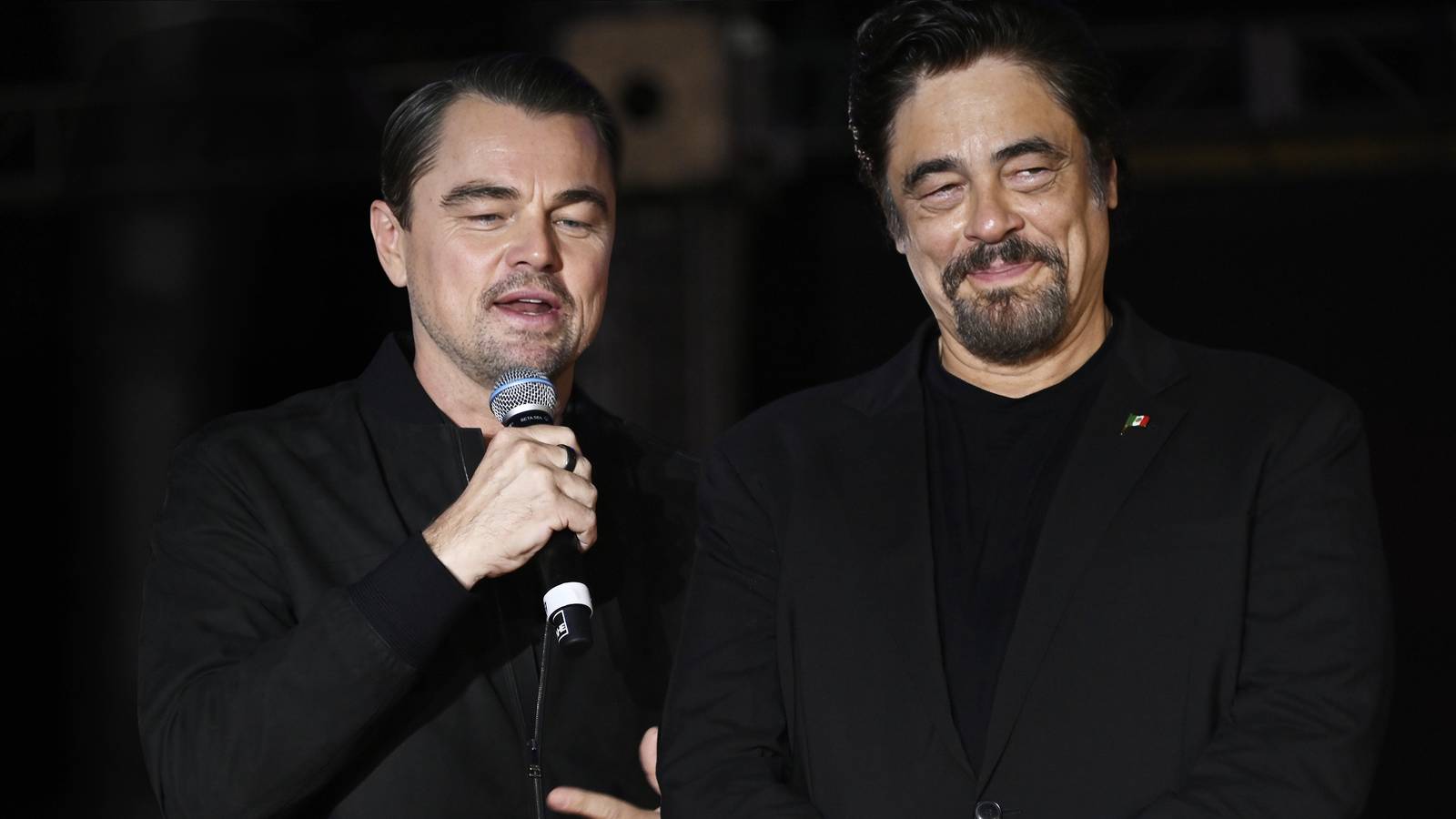
Despite sharing a famous surname and a significant impact on global cinema, Benicio del Toro and Guillermo del Toro are not related by blood or family ties. Benicio is a Puerto Rican actor known for his intense performances, while Guillermo is an Academy Award-winning Mexican director celebrated for his visionary fantasy and horror films.
The confusion regarding a potential familial connection between Benicio del Toro and Guillermo del Toro is one of the most persistent myths in Hollywood. As of 2026, both men remain titans of the industry, and while they share a mutual respect and a common language, their roots are geographically and genealogically distinct. Understanding the lack of a family tie requires a look at their separate origins, their vastly different career trajectories, and the individual financial empires they have built over decades of work.
The Surname Connection: Are They Family?
The primary reason for the frequent association is the surname "Del Toro." In the Spanish-speaking world, del Toro translates literally to "of the bull." It is a relatively common habitational surname, particularly in Spain and Latin America. However, Benicio and Guillermo belong to entirely different lineages.
Benicio del Toro was born on February 19, 1967, in San Germán, Puerto Rico. His parents were both lawyers, and his family history is rooted in the Caribbean island's legal and social structures. He moved to the mainland United States (Pennsylvania) as a teenager following the death of his mother. His journey to Hollywood was paved through the Stella Adler Academy of Acting and the Circle in the Square Theatre School in New York.
Guillermo del Toro, on the other hand, was born on October 9, 1964, in Guadalajara, Jalisco, Mexico. Raised in a strictly Catholic household, his upbringing in the heart of Mexico deeply influenced his storytelling, which often blends Mexican folklore with gothic horror. Unlike Benicio, who pursued acting from a young age, Guillermo began his career in special effects and makeup, eventually studying at the Centro de Investigación y Estudios Cinematográficos in Guadalajara.
While they are not relatives, the two have often been asked about their connection in interviews. They have handled the recurring question with humor, occasionally joking that they are "brothers in spirit" or "artistic cousins." Their bond is one of cultural solidarity and professional admiration rather than DNA.
Benicio del Toro: The Mastery of the Method Actor
Benicio del Toro’s career is defined by a brooding, high-intensity acting style that has earned him critical acclaim and a reputation as one of the most versatile performers of his generation. As of 2026, his filmography serves as a masterclass in character acting and leading-man presence.
Breakthrough and Critical Acclaim
Benicio first caught the industry's attention with his eccentric, mumbled performance as Fred Fenster in The Usual Suspects (1995). It was a bold creative choice that signaled his willingness to take risks. However, it was his role as Javier Rodriguez in Steven Soderbergh’s Traffic (2000) that cemented his legacy. For this role, he won the Academy Award for Best Supporting Actor, becoming one of only a handful of actors to win an Oscar for a primarily non-English speaking role.
Throughout the 2000s and 2010s, Benicio focused on gritty, transformative roles. In 21 Grams (2003), he delivered a haunting performance as a man seeking religious redemption after a tragic accident. He later took on the historical mantle of Che Guevara in the two-part biopic Che (2008), for which he won the Best Actor award at the Cannes Film Festival.
Commercial Success and the MCU
While he is a darling of independent cinema, Benicio has also successfully navigated the world of blockbusters. His portrayal of The Collector in the Marvel Cinematic Universe (MCU), appearing in Guardians of the Galaxy and Avengers: Infinity War, introduced him to a younger, global audience. Additionally, his role as the enigmatic codebreaker DJ in Star Wars: The Last Jedi further expanded his presence in major franchises.
By 2026, his work in the Sicario series—portraying the cold, calculated Alejandro Gillick—is often cited as one of the most chilling and complex anti-hero portrayals in modern action-thriller history.
Guillermo del Toro: The Architect of Monsters
Guillermo del Toro is widely regarded as one of the "Three Amigos" of Mexican cinema, alongside directors Alfonso Cuarón and Alejandro G. Iñárritu. His career is a testament to the power of imagination and the belief that monsters can be the most human characters on screen.
The Gothic Visionary
Guillermo’s early work, such as Cronos (1993) and The Devil's Backbone (2001), established his fascination with the supernatural and the historical scars of civil unrest. His international breakthrough came with Pan's Labyrinth (2006), a dark fairy tale set against the backdrop of post-Civil War Spain. The film won three Academy Awards and is frequently ranked among the best films of the 21st century.
His ability to humanize the grotesque reached its zenith with The Shape of Water (2017). The film, a poetic romance between a mute woman and a captive amphibian creature, won the Academy Award for Best Picture and Best Director. This victory solidified his status as a filmmaker who could bridge the gap between niche horror fans and mainstream critical circles.
Producing and Writing
Guillermo’s influence extends beyond the director’s chair. He is a prolific producer and writer, having shepherded projects like The Orphanage, Scary Stories to Tell in the Dark, and the animated hit Puss in Boots. His 2022 stop-motion adaptation of Pinocchio won the Academy Award for Best Animated Feature, proving his mastery over various mediums of storytelling. As of 2026, his "Cabinet of Curiosities" anthology remains a staple for horror aficionados, showcasing his commitment to supporting emerging voices in the genre.
Comparative Overview of Career and Wealth (2026)
The following table compares the professional standing and financial estimates of both figures as of 2026.
| Feature | Benicio del Toro | Guillermo del Toro |
|---|---|---|
| Birthplace | San Germán, Puerto Rico | Guadalajara, Mexico |
| Primary Role | Actor / Producer | Director / Writer / Producer |
| Major Awards | 1 Academy Award, 1 BAFTA, 1 Golden Globe | 3 Academy Awards, 3 BAFTAs, 2 Golden Globes |
| Breakout Project | The Usual Suspects (1995) | Pan's Labyrinth (2006) |
| Estimated Net Worth (2026) | ~$50 Million | ~$50 Million |
| Signature Style | Method acting, intense physicality | Dark fantasy, practical effects, monsters |
| Key Franchise | MCU, Star Wars, Sicario | Hellboy, Pacific Rim, Cabinet of Curiosities |
Analysis of Net Worth and Financial Portfolios
As of 2026, both Benicio and Guillermo have amassed significant fortunes, though their wealth stems from different revenue streams.
Benicio del Toro’s Wealth
Benicio’s net worth, estimated at approximately $50 million, is primarily derived from high-value acting contracts. For major franchise roles in the Marvel Cinematic Universe and Star Wars, he has commanded multi-million dollar salaries and backend points. Additionally, his consistent work in high-budget dramas like Sicario and The Wolfman has provided a steady financial base. Unlike some of his peers, Benicio keeps a relatively low profile regarding brand endorsements, focusing instead on the longevity of his acting career and occasional producing credits.
Guillermo del Toro’s Wealth
Guillermo’s estimated $50 million net worth is the result of his multifaceted career as a "hyphenate" (writer-director-producer). While directing fees for films like Pacific Rim were substantial, his long-term wealth is built on his production company, Double Dare You Productions, and his lucrative multi-year deals with streaming giants like Netflix. His involvement in successful book series, such as The Strain (which was also adapted into a television series), provides ongoing royalty income. Furthermore, his massive collection of film memorabilia and art—housed in his famous "Bleak House"—represents a significant personal asset, though much of it is considered a private museum rather than a liquid investment.
Impact on Hispanic and Latino Representation
While they are not related, Benicio and Guillermo are inextricably linked by their shared role in elevating Hispanic and Latino representation in Hollywood. They both emerged during a period when roles for Spanish-speaking actors and directors were often limited to stereotypes.
Benicio fought against these limitations by choosing complex, flawed, and powerful characters. He has often insisted on playing roles that have a specific cultural texture, even if it meant performing in Spanish for a domestic U.S. audience. Guillermo, conversely, has used his platform to bring Mexican aesthetic sensibilities—such as the "Day of the Dead" imagery and specific folklore—to the global stage.
In 2026, their legacy is seen in a new generation of creators who no longer feel pressured to "assimilate" their art but are encouraged to lean into their specific heritage. The success of both "Del Toros" proved that culturally specific stories could achieve universal commercial and critical success.
Frequently Asked Questions
Are Benicio and Guillermo del Toro brothers?
No, they are not brothers or relatives of any kind. Benicio is Puerto Rican and Guillermo is Mexican. They share a common Spanish surname, but their families are not linked.
Have Benicio del Toro and Guillermo del Toro ever worked together?
Surprisingly, they have not collaborated on a feature film as of 2026. While fans have long campaigned for Guillermo to direct Benicio in a dark fantasy or horror project, their schedules and specific project interests have not yet overlapped.
What is the origin of the "Del Toro" name?
The name is of Spanish origin, meaning "of the bull." It was often given to people who lived near a prominent bull-related landmark or to someone noted for their strength or bravery, similar to the characteristics of a bull.
Who is more successful in terms of Academy Awards?
Guillermo del Toro currently holds more Academy Awards. He has won for Best Director and Best Picture (The Shape of Water) and Best Animated Feature (Pinocchio). Benicio del Toro won the Academy Award for Best Supporting Actor for his role in Traffic.
Is Benicio del Toro related to the actor who played the young version of his character?
Usually, when Benicio plays a character with a younger counterpart, the actors are cast based on resemblance rather than family ties. He does not have children who have followed him into the acting profession in a way that would lead to shared roles.
Recommended Next Actions for Fans
To truly appreciate the distinct contributions of these two unrelated icons, viewers should explore their work chronologically to see how their styles evolved independently of one another.
- Watch the "Masterworks": Start with Benicio’s Traffic and Guillermo’s Pan's Labyrinth. These films represent the pinnacle of their respective crafts and highlight why both became household names.
- Explore the "Three Amigos" History: To understand Guillermo's place in cinema, research his relationship with directors Alfonso Cuarón and Alejandro G. Iñárritu.
- Follow Industry Credits: Check the production credits on smaller indie horror films; you will often find Guillermo’s name as a producer, supporting new talent. For Benicio, look into his executive producer roles on projects like Reptile to see his influence on the creative direction of modern thrillers.
By 2026, the question of their relation has become a trivial curiosity compared to the massive cultural footprints they have left. Whether in front of the camera or behind it, the two Del Toros continue to define the standard for excellence in modern film.