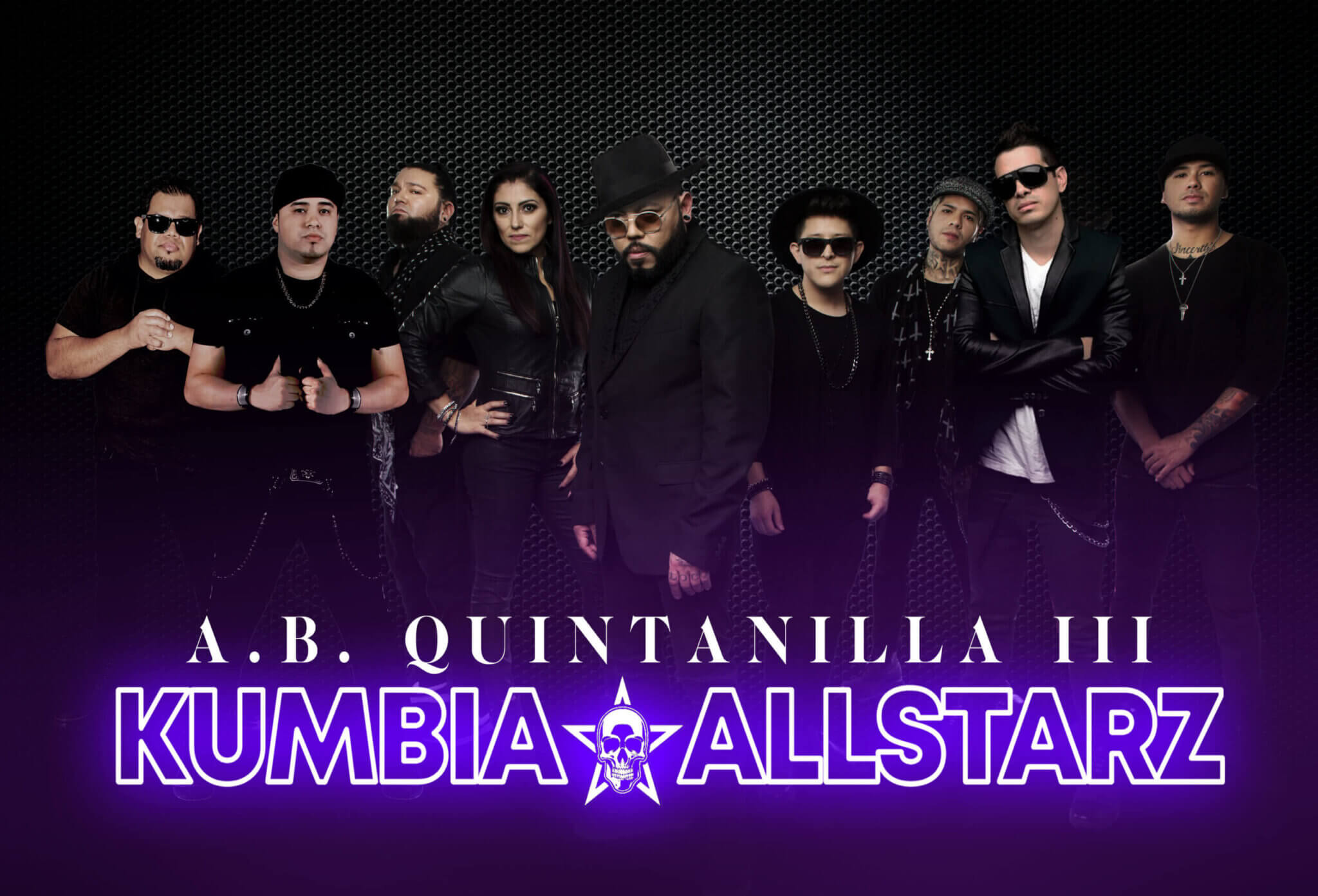
A.B. Quintanilla III is the visionary producer, songwriter, and musician who revolutionized modern Latin music by blending traditional Cumbia with Hip-Hop, R&B, and Pop. As the founder of the Kumbia Kings, he created a multi-platinum legacy that redefined the genre for a global audience, securing his status as a master of the "Cumbia-Urban" fusion.
The Genesis of a Musical Visionary
To understand the rise of A.B. Quintanilla as the "King of Kumbia Kings," one must first recognize his foundational role in the Tejano music explosion of the 1990s. Born Abraham Isaac Quintanilla III, A.B. spent his formative years as the bassist and primary songwriter for Selena y Los Dinos. While his sister Selena was the face and voice of the movement, A.B. was the sonic architect in the background. He was responsible for penning and producing iconic hits such as "Como la Flor," "Amor Prohibido," and "Bidi Bidi Bom Bom."
Following the tragic passing of Selena in 1995, A.B. faced the monumental task of forging a new path while honoring his family's legacy. His transition from a Tejano bassist to the leader of a global Cumbia movement was not merely a career change; it was a deliberate effort to modernize Mexican-American music. By 1999, this evolution culminated in the formation of A.B. Quintanilla y Los Kumbia Kings, a group that would change the trajectory of Latin pop for the next decade.
The Architectural Sound of the Kumbia Kings
The Kumbia Kings were not a traditional Cumbia band. A.B. Quintanilla’s genius lay in his ability to identify the shared rhythmic DNA between the Colombian Cumbia beat and the urban grooves of American Hip-Hop and R&B. This wasn't a superficial "remix" culture; it was a deep-seated fusion that utilized the traditional guacharaca and accordion alongside heavy synth basslines and talk-box effects.
The Urban-Cumbia Fusion
A.B. understood that the younger generation of Latinos in the United States—the "200%ers" who were 100% American and 100% Latino—needed a sound that reflected their dual identity. By incorporating English lyrics, urban fashion, and sophisticated choreography, the Kumbia Kings moved the genre out of the traditional ballrooms and into mainstream nightclubs and stadiums.
Key Musical Elements
- The Bassline: A.B.’s background as a bassist is evident in every Kumbia Kings track. The bass is often the melodic driver, providing a funkier, more syncopated feel than traditional Cumbia.
- Vocal Diversity: Unlike many groups led by a single frontman, A.B. utilized a rotating cast of talented vocalists, including Frankie J, DJ Kane, and later, Pee Wee. This allowed the band to pivot between soulful R&B ballads and high-energy dance tracks.
- Production Polishing: A.B. applied high-gloss pop production standards to a genre that was often viewed as "folk" or "grassroots," making it radio-ready for international markets.
Significant Eras and Discography
The Kumbia Kings' journey is marked by explosive growth, massive commercial success, and eventually, internal friction that led to various iterations of the group. As of 2026, music historians view the early 2000s as the golden era of A.B.’s production prowess.
| Album Title | Release Year | Key Singles | Significance |
|---|---|---|---|
| Amor, Familia y Respeto | 1999 | "Azúcar," "Fuiste Mala" | The debut album that established the "Cumbia-Urban" sound. |
| Shhh! | 2001 | "Shhh!," "Boom Boom" | Solidified their status in Mexico and reached #1 on Billboard Latin Pop charts. |
| 4 | 2003 | "No Tengo Dinero," "Insomnio" | Featured high-profile collaborations and won a Latin Grammy nomination. |
| Fuego | 2004 | "Fuego," "Na Na Na (Dulce Niña)" | The peak of their commercial success, blending reggaeton influences. |
| Amanecer (Kumbia All Starz) | 2006 | "Chiquilla" | A.B.'s successful pivot after the Kumbia Kings' internal split. |
The Kumbia Kings vs. Kumbia All Starz: A Legacy Divided
The middle of the 2000s saw a significant shift in A.B. Quintanilla's career. Due to internal disputes and legal battles over the band's management and name, the original Kumbia Kings lineup splintered. This led to a famous rivalry between A.B. Quintanilla and Cruz Martínez, another key producer and member of the original group.
A.B. eventually formed A.B. Quintanilla y Los Kumbia All Starz. While the name changed, the "King of Kumbia Kings" remained the creative force. The Kumbia All Starz continued the tradition of high-energy Cumbia fusion, finding massive success with tracks like "Chiquilla" and "Parece Que Va a Llover." This era proved that the "A.B. Sound" was the primary ingredient for success, regardless of the brand name attached to it.
Even in 2026, the distinction between these two entities remains a point of discussion for fans. While Cruz Martínez’s version of the Kumbia Kings focused more on traditional regional Mexican influences, A.B.’s All Starz leaned harder into the global pop and electronic markets.
Technical Mastery in the Studio
As a senior producer, A.B. Quintanilla’s work is characterized by "layered rhythmic complexity." In the studio, he famously spends hours perfecting the percussion tracks. He often blends live percussion—congas, timbales, and the scratching of the güiro—with programmed drum machines. This creates a "wall of sound" that is both organic and mathematically precise.
His influence extends to the arrangement of brass and accordions. Instead of long, wandering solos typical of vallenato or older Cumbia styles, A.B. utilizes "staccato" stabs and catchy riffs that act as hooks. This approach made the songs incredibly "sticky" for radio play, ensuring that a listener would have the melody in their head after a single hearing.
Challenges and Resilience in the Industry
The path for the King of Kumbia Kings has not been without its hurdles. From the immense pressure of living up to the Quintanilla name to the public nature of his band’s breakups, A.B. has navigated the industry with a mix of defiance and adaptability.
Throughout the 2010s and leading into the mid-2020s, A.B. focused on mentorship and selective production. He has been vocal about the importance of artists owning their masters and understanding the business side of music—a lesson learned through his own legal battles. In 2026, he is frequently cited as a "Godfather" of the modern Latin Urban movement, as artists in the Reggaeton and Trap spheres increasingly sample the Cumbia rhythms he popularized twenty years ago.
A.B. Quintanilla’s Influence on Modern Latin Music
The DNA of A.B. Quintanilla’s work is visible in the careers of dozens of contemporary artists. By proving that Cumbia could be "cool," urban, and internationally viable, he paved the way for the "Electro-Cumbia" and "Cumbia-Pop" genres that dominate airwaves today.
- Genre Blurring: He removed the boundaries between Regional Mexican, Caribbean, and American music.
- Fashion and Image: He introduced an "urban-street" aesthetic to a genre that was previously more conservative or rural in its presentation.
- Collaborative Spirit: A.B. was one of the first to frequently use "featured artists" in the Tejano/Cumbia world, a practice that is now the industry standard in Latin music.
Frequently Asked Questions
Why did the original Kumbia Kings break up?
The breakup was primarily due to internal legal and financial disagreements between A.B. Quintanilla and other members, specifically Cruz Martínez. The dispute led to a split in 2006, resulting in the creation of two separate groups: Kumbia All Starz (led by A.B.) and Los Kumbia Kings (led by Cruz Martínez).
What is A.B. Quintanilla’s relationship with Selena’s legacy?
A.B. was Selena’s primary songwriter and producer. He has dedicated much of his career to preserving her memory through tribute concerts and the continued production of her unreleased material. He remains a key figure in the management of her estate alongside his father, Abraham Quintanilla Jr.
How did A.B. Quintanilla get the title "King of Kumbia Kings"?
While not an official title bestowed by a formal body, the moniker arose from his role as the founder, leader, and creative mastermind behind the group. Because he wrote and produced the majority of their hits, fans and the media began referring to him as the "King" of the movement he started.
Is A.B. Quintanilla still active in the music industry in 2026?
Yes. As of 2026, A.B. Quintanilla continues to produce for emerging artists and occasionally tours with the Kumbia All Starz. He has also moved into digital media and music education, sharing his production techniques with a new generation of Latin producers.
Which Kumbia Kings song is considered the most successful?
While many songs reached #1, "Na Na Na (Dulce Niña)" and "No Tengo Dinero" (a Juan Gabriel cover) are often cited as the most commercially successful due to their massive radio airplay and longevity in digital streaming metrics through 2026.
Engaging with the Kumbia Legacy
For those looking to explore the work of the King of Kumbia Kings, the best starting point is the 2005 compilation Duetos, which showcases the band's versatility and collaborative reach. To truly appreciate the technical depth of A.B.'s production, listeners should seek out high-fidelity versions of the Fuego album, which remains a masterclass in Latin percussion and urban arrangement. In 2026, his music is more accessible than ever, serving as a timeless bridge between the traditions of the past and the innovations of the future.