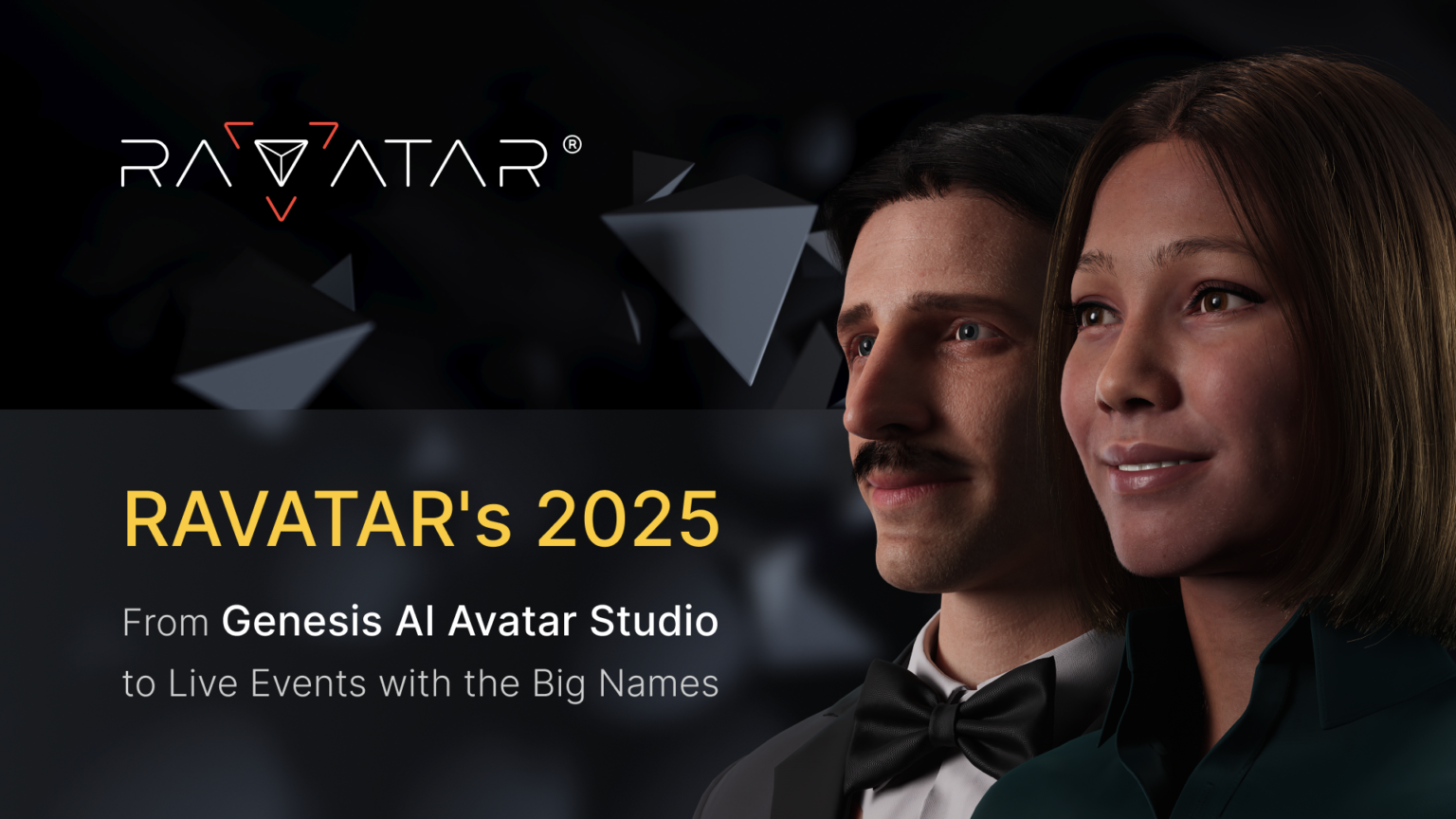
Avatar technology refers to the suite of software and hardware tools used to create, animate, and manage digital representations of humans or autonomous entities. By 2026, it has evolved from static profile pictures into highly sophisticated, AI-driven "digital twins" capable of photorealistic rendering, real-time emotion mapping, and autonomous interaction across spatial computing environments.
The Technological Architecture of Modern Avatars
In 2026, the architecture of avatar technology is no longer a single software layer but a multi-stack ecosystem. To understand how a digital representation functions, one must examine the convergence of computer vision, generative AI, and real-time rendering engines. The foundation of any high-fidelity avatar rests on three primary pillars: the geometry (the mesh), the movement (animation), and the intelligence (the behavioral model).
The geometry of an avatar has shifted from traditional polygon-based modeling to Neural Radiance Fields (NeRFs) and 3D Gaussian Splatting. These technologies allow for the creation of digital doubles from a few smartphone photos or a short video, capturing sub-millimeter details of skin texture, hair transparency, and clothing folds. Unlike the rigid models of the early 2020s, 2026-era avatars utilize dynamic topology that adjusts in real-time to simulate muscle movements and skin sliding, providing a level of realism that bypasses the "uncanny valley."
Animation is the second critical pillar. We have moved beyond basic skeletal rigging to Neural Motion Synthesis. By leveraging vast datasets of human movement, AI models can now predict how a specific individual’s body should react to various stimuli or speech patterns. This is often paired with "markerless motion capture," where standard high-definition cameras or depth sensors—integrated into modern laptops and headsets—track eye movement, micro-expressions, and finger articulation without the need for specialized suits.
Primary Categories of Avatar Systems
As of 2026, the market for avatar technology has bifurcated into distinct categories based on use cases and technical requirements. Users typically interact with these systems depending on whether they require social flexibility, professional representation, or automated service.
1. Stylized Social Avatars
These are the most common avatars found in consumer-grade metaverses and social platforms. They prioritize expression and performance over photorealism. Platforms like Ready Player Me have standardized the interoperable avatar, allowing users to carry a consistent 3D identity across hundreds of different applications. These avatars use optimized skeletal systems to ensure they can run on lower-power mobile hardware while maintaining high-frame-rate animations.
2. Photorealistic Digital Twins
Used primarily in high-stakes professional environments—such as virtual legal consultations, telemedicine, and executive telepresence—digital twins are pixel-perfect replicas. Companies like Synthesia and Meta (with their Codec Avatar project) lead this space. These systems require significant computational power, often offloaded to edge-computing servers, to render light-subsurface scattering on skin and complex physics for hair and fabric.
3. Autonomous AI Agents
These are "human-in-the-loop" or entirely autonomous avatars. They do not represent a living human pilot in real-time but are powered by Large Language Models (LLMs) and specialized "personality cores." In 2026, these are frequently used in retail as virtual concierges or in education as persistent tutors. They integrate speech-to-face technology, where the AI's verbal output automatically drives the phonemes and facial expressions of the avatar with zero latency.
Comparative Specifications of Avatar Technologies
| Feature | Stylized Avatars | Photorealistic Twins | Autonomous AI Agents |
|---|---|---|---|
| Primary Use | Social, Gaming, VR Chat | Telepresence, Professional | Customer Service, Tutoring |
| Rendering Method | Traditional Rasterization | Path Tracing / NeRFs | Hybrid Neural Rendering |
| Hardware Req. | Smartphone / Standalone VR | High-end PC / Edge Cloud | Server-side API / Browser |
| Latency Target | < 20ms (Input to Motion) | < 50ms (Photorealistic sync) | < 200ms (Response time) |
| Customization | High (Modular clothes/parts) | Low (Exact likeness) | Moderate (Brand-specific) |
The Role of Generative AI in Avatar Creation
The most significant breakthrough leading into 2026 has been the democratization of avatar creation through Generative AI. Previously, creating a high-quality 3D asset required hundreds of hours of manual labor by technical artists. Today, Text-to-Avatar and Video-to-3D pipelines have reduced this timeframe to minutes.
Generative models now handle the "skinning" and "weighting" of avatars—processes that previously required deep anatomical knowledge. By analyzing a user's biometric data, AI can automatically generate a skeletal structure that matches their real-world proportions, ensuring that when the user moves their arm in physical space, the digital counterpart moves with identical physics and constraints.
Furthermore, AI-driven voice cloning has become an integral part of the avatar package. An avatar in 2026 is rarely just a visual shell; it is a multimodal entity. By training on a short sample of a user’s voice, the technology creates a synthetic vocal profile that maintains the user’s unique prosody, accent, and emotional inflection, which is then synced with the avatar's lip movements using advanced audio-to-gesture algorithms.
Infrastructure and Connectivity Requirements
High-fidelity avatar technology is heavily dependent on the surrounding digital infrastructure. To maintain the illusion of presence, the data transfer between the user’s input device and the rendering engine must be near-instantaneous.
- Bandwidth: While stylized avatars require minimal data (mostly coordinate transforms), photorealistic streaming requires high-bandwidth connections, often exceeding 50 Mbps, to receive high-quality video frames rendered in the cloud.
- Edge Computing: To solve the problem of latency, many providers now utilize edge nodes located physically closer to the user. This allows the heavy lifting of neural rendering to happen at a local data center rather than on a headset, extending battery life and reducing heat.
- Spatial Protocols: The adoption of standards like OpenUSD (Universal Scene Description) has been crucial. It allows avatars to move between different software environments (e.g., from a virtual office to a digital stadium) without losing their textures, animations, or metadata.
Ethical Considerations and Identity Security
As avatar technology becomes indistinguishable from reality, the risks associated with "identity spoofing" and deepfakes have escalated. In 2026, the industry has responded with several security layers:
- Biometric Hashing: Modern avatars often carry a "digital signature" tied to the user's biometric data. When an avatar enters a secure environment, the platform verifies that the person controlling it is the rightful owner through iris or facial scanning within the headset.
- Watermarking: Many AI-generated avatars include invisible digital watermarks in their texture or motion data. These marks can be detected by verification software to determine if an avatar is a real-time human representation or a synthesized recording.
- Data Privacy: The sheer volume of data collected—eye-tracking, gait analysis, and emotional response—is sensitive. Regulations in 2026 require "on-device processing" for raw biometric data, ensuring that only the interpreted animation coordinates, rather than the raw camera feeds, are sent to the cloud.
Frequently Asked Questions
What is the difference between a 2D and a 3D avatar in 2026?
2D avatars are primarily used for static or video-based interactions, such as "Vtubing" or AI-generated video presenters. They rely on "puppet" mechanics where a 2D image is warped to simulate depth. 3D avatars are full volumetric models that exist within spatial environments (VR/AR), allowing them to be viewed from any angle and interact with 3D physics engines.
Can I use the same avatar across different platforms?
Yes, largely due to the widespread adoption of the VRM and OpenUSD formats. Most major social and professional platforms now support "Avatar Interoperability," allowing you to import your digital identity from one service to another, provided the platforms adhere to the same technical standards.
How much does it cost to create a professional-grade avatar?
In 2026, basic photorealistic avatars can be created for free or a low monthly subscription (approx. $20-$50) using automated mobile apps. However, bespoke "enterprise-grade" digital twins used for high-end film production or permanent brand ambassadors can still cost thousands of dollars due to the manual refinement and high-fidelity scanning required.
Do I need a VR headset to use avatar technology?
No. While VR headsets provide the most immersive experience, avatar technology is widely used on standard smartphones, tablets, and PCs. "AR Mirroring" allows users to see their avatars overlaid on the real world through a phone screen, and "Desktop Clients" allow for avatar-based video conferencing without any wearable hardware.
How does an avatar mimic my facial expressions in real-time?
This is achieved through a process called "Face Tracking." Cameras or IR sensors on your device track "feature points" (like the corners of your mouth or your eyebrows). Software like Apple's ARKit or specialized AI models translate these movements into "Blendshapes"—a set of predefined facial poses—which are then mixed together to recreate your expression on the avatar.
Selecting the Right Avatar Strategy for Your Needs
When adopting avatar technology in 2026, your choice should be dictated by the "Context of Presence." If you are engaging in casual social interaction, a stylized avatar is often preferable as it reduces social anxiety and allows for creative expression. These models are lightweight and function perfectly over standard mobile data connections.
For professional or legal interactions, prioritize platforms that offer End-to-End Identity Verification. Ensure the service uses encrypted biometric handshakes to prevent your digital likeness from being hijacked. If you are a developer or business owner looking to automate customer service, focus on LLM-Integrated Autonomous Agents that offer low-latency "speech-to-anim" capabilities to ensure the interaction feels natural rather than robotic. The next step for most users is to perform a "Digital Audit" of their current devices to ensure they have the necessary NPU (Neural Processing Unit) power to handle the latest generation of real-time neural rendering.