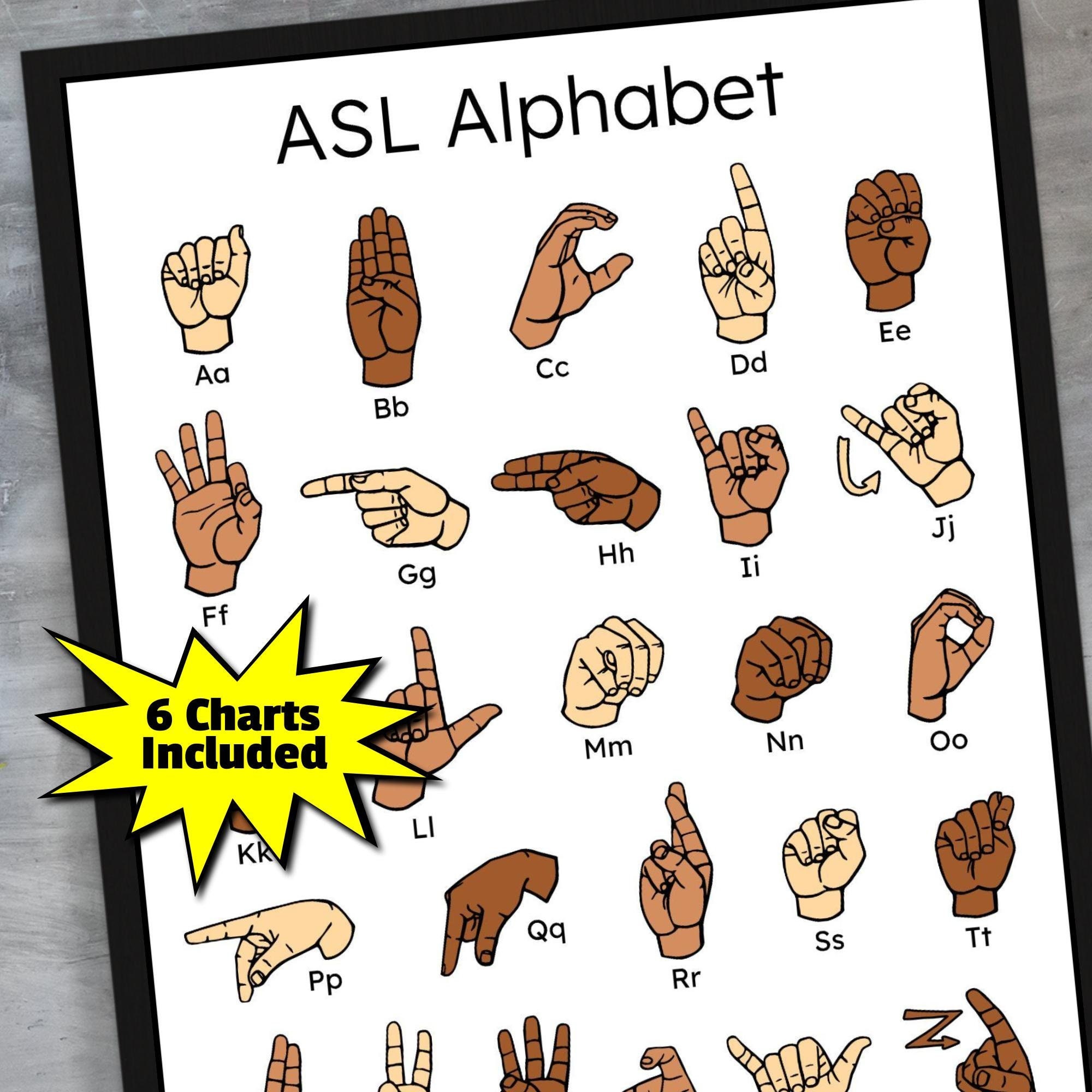
To express "about" in American Sign Language (ASL), you must first identify the context of the word. For subject matter (concerning a topic), use the index finger of the dominant hand to circle the stationary index finger of the non-dominant hand. For numerical approximations (around or roughly), use a relaxed "5" handshape with a slight circular or shimmering motion in the air.
American Sign Language is a visually-oriented, conceptual language that does not translate English prepositions on a one-to-one basis. In English, the word "about" is a linguistic workhorse, functioning as a preposition, an adverb, and occasionally an adjective. It can describe the subject of a book, the approximate time of an arrival, or a physical location. Because ASL prioritizes the meaning over the specific English word, learners in 2026 must master several distinct signs to accurately convey "about" depending on the intended message.
The Primary Sign for "About": Subject Matter and Topics
When the word "about" is used to mean "concerning," "on the subject of," or "regarding," ASL uses a specific sign involving both hands. This is the most common version of the sign taught in introductory ASL courses and is essential for academic or conversational storytelling.
Handshape and Positioning
To execute this sign, start with your non-dominant hand. Form an index-finger handshape (the "1" handshape) and hold it stationary in front of your chest, with the finger pointing toward your dominant side. Your dominant hand also forms an index-finger handshape.
The Movement
The dominant index finger performs a circular motion around the tip of the stationary non-dominant index finger. Usually, the dominant finger circles once or twice. The movement is relatively small and contained within the "signing space" (the area from the top of the head to the waist).
Contextual Usage
This version of "about" is used in sentences such as:
- "What is that movie about?"
- "We need to talk about the meeting."
- "I am reading a book about history."
In these instances, the sign functions as a bridge between a noun and its descriptor. It signifies that the following information is the core theme of the preceding subject.
Expressing Numerical Approximation: "About" as "Around"
In English, we frequently say "There were about fifty people" or "I’ll be there about five o'clock." In these cases, "about" does not mean "on the subject of"; it means "approximately" or "roughly." Using the subject-matter sign described above in this context would be grammatically incorrect in ASL and would likely confuse a Deaf interlocutor.
The "Around" Sign
For approximations, ASL uses the "around" or "approximate" sign. This is performed using the dominant hand in a relaxed "5" handshape (palm facing forward or slightly inward toward the signer).
The Motion of Uncertainty
The hand moves in a small, circular, "shimmering" motion. This movement visually represents the lack of a precise boundary. If you are signing "about 50," you would sign the number 50 and then follow it (or precede it, depending on regional dialect) with this shimmering circular motion.
Non-Manual Markers (NMMs)
Linguistics in ASL heavily relies on facial expressions, known as Non-Manual Markers. When signing "about" in an approximate sense, signers often squint their eyes slightly or tilt their head, which conveys the concept of "estimation." This adds a layer of "maybe" or "roughly" that the handshape alone might not fully capture.
Temporal and Proximity Expressions: "Almost" vs. "About to"
Another common use of "about" in English refers to the immediate future ("I am about to leave") or a state of being nearly complete ("We are just about done"). These require different ASL constructions.
The Sign for "Almost"
If "about" means "nearly," the correct sign is ALMOST. This is done by holding the non-dominant hand flat (B-handshape), palm facing the body. The dominant hand, also a flat B-handshape, swipes upward, with the fingertips of the dominant hand hitting or "grazing" the edge of the non-dominant hand. This indicates that a threshold has nearly been reached.
"About to" (The "Just-Ready" Concept)
When expressing that an action is imminent, ASL often uses the sign for READY or the sign for SOON. However, a very common idiomatic way to say "I'm just about to [verb]" is to use the "close-to" sign or simply use the sign for WILL with an intense facial expression and a slight forward lean. In 2026, many ASL instructors emphasize that "about to" is a temporal aspect rather than a specific vocabulary word.
Comparing ASL Signs for "About"
To help learners distinguish between these variations, the following table breaks down the three most common ways to express "about" based on its English function.
| English Meaning | ASL Sign/Movement | Handshape | Typical Usage Example |
|---|---|---|---|
| Concerning/Topic | Dominant index circles non-dominant index. | Index (1) | "Tell me about your family." |
| Approximately | Relaxed "5" hand circles/shimmers in the air. | Open 5 | "The car costs about $5,000." |
| Nearly/Almost | Dominant hand swipes/grazes the non-dominant palm. | Flat B | "The game is about finished." |
| Physical Proximity | "Near" sign (hands move close together). | Curved B | "The store is about there." |
Syntactic Differences: Why You Might Not Need the Sign at All
One of the most important aspects of mastering ASL is learning when not to sign a word. Because ASL uses a Topic-Comment structure, the English preposition "about" is often redundant.
Topic-Comment Omission
If you are establishing a topic, you often do so through your eyebrows and head position. For example, in the English sentence, "Let’s talk about the weather," an ASL user might sign:
- WEATHER (with raised eyebrows to establish the topic)
- DISCUSS (the comment/action)
In this structure, the concept of "about" is baked into the grammar. The raised eyebrows signal to the listener, "The following information is about the weather." Forcing the sign for "about" into this sentence is a common mistake for English speakers (often referred to as "signed English" rather than ASL).
Directional Verbs
Some ASL verbs are "directional" or "inflected," meaning they incorporate the subject and object into the movement of the verb itself. If you want to say "I will tell you about it," you use the sign TELL. The movement starts at your chin and moves toward the person you are speaking to. This single movement encompasses "I tell you about [the thing we are discussing]."
Common Pitfalls for ASL Students
When learning how to express "about," students frequently encounter hurdles that stem from thinking in English rather than in concepts.
Overusing the "Subject" Sign
The most frequent error is using the "index-circling-index" sign for everything. If a student signs "My sister is [Subject-About] twenty years old," a Deaf person will understand the intent but recognize it as grammatically "broken." Using the subject sign for a number implies that the sister is a topic named "Twenty," rather than being approximately twenty years old.
Neglecting Non-Manual Markers
If you sign "approximate" with a completely blank, "stone-faced" expression, it can look like a different sign or lack the necessary nuance of uncertainty. In ASL, your face is your intonation. Just as your voice rises when you say "About...?" your face must "ask" or "estimate" when signing it.
Physical Location Confusion
In English, we say "He was running about the yard." This "about" means "around" in a spatial sense. In ASL, you would use a "classifier" (handshapes that represent objects and their movement) to show the person moving in a circular or random path. You would not use the sign for "Subject-About" or "Approximate-About."
Developing Fluency Through Contextual Practice
To truly master these distinctions, learners should practice signing short narratives that require different types of "about."
Practice Scenario:
- Start by signing that you read a book about (Subject sign) a dog.
- State that the dog was about (Approximate sign) ten years old.
- Mention that the dog was almost (Almost sign) as big as a pony.
- Explain that you are about to (Soon/Ready sign) go buy the book for a friend.
By cycling through these variations in a single story, you train your brain to recognize the conceptual shifts that ASL requires. As of 2026, the shift in ASL pedagogy has moved toward "Conceptual Accurate Signed English" (CASE) for some, but pure ASL remains the gold standard for the Deaf community. Understanding the difference between these signs is a hallmark of a proficient signer who respects the linguistic integrity of ASL.
FAQ
How do I sign "What about you?" in ASL?
In ASL, you generally do not use the sign for "about" in this phrase. Instead, you use the "deictic" (pointing) gesture. You would point at the person and use a questioning facial expression (eyebrows down for a WH-question). Often, this is signed as "YOU?" or "FEEL YOU?" depending on the context of the conversation.
Is the sign for "about" different in other sign languages?
Yes. ASL is distinct from British Sign Language (BSL), French Sign Language (LSF), and others. While ASL has roots in LSF, the sign for "about" is not universal. If you are traveling or communicating with international signers, you will need to learn the specific regional signs for those concepts.
When should I use the "around" sign instead of "about"?
In ASL, "around" and "about" (the numerical approximation) are often the same sign: the relaxed "5" handshape with a circular motion. However, if you mean "around" as in "encircling a physical object," you would use your hand to literally trace the shape of the object.
Why is there a stationary finger in the subject-matter sign?
The stationary index finger represents the "point" or the "topic." The moving finger represents the discussion or information circling that central point. It is a visual metaphor for the linguistic concept of "revolving around a subject."
Can I use the sign for "about" to mean "because"?
No. "About" and "Because" are conceptually different. "Because" has its own specific sign (the index finger pulling away from the forehead into a "1" or "X" shape). Using "about" to explain a cause-and-effect relationship is a common error for beginners.
Expanding Your ASL Vocabulary
Mastering the variations of "about" is a significant milestone in moving from a beginner to an intermediate signer. It signals that you have stopped translating word-for-word and have begun to communicate through visual concepts. To further your skills, focus on other prepositions like "for," "with," and "from," which also have multiple ASL equivalents based on context.
Engagement with the Deaf community and consistent practice with native signers remains the most effective way to internalize these nuances. In 2026, numerous digital platforms and VR immersion tools exist to provide this context, but the core principle remains: watch the context, not the English word.