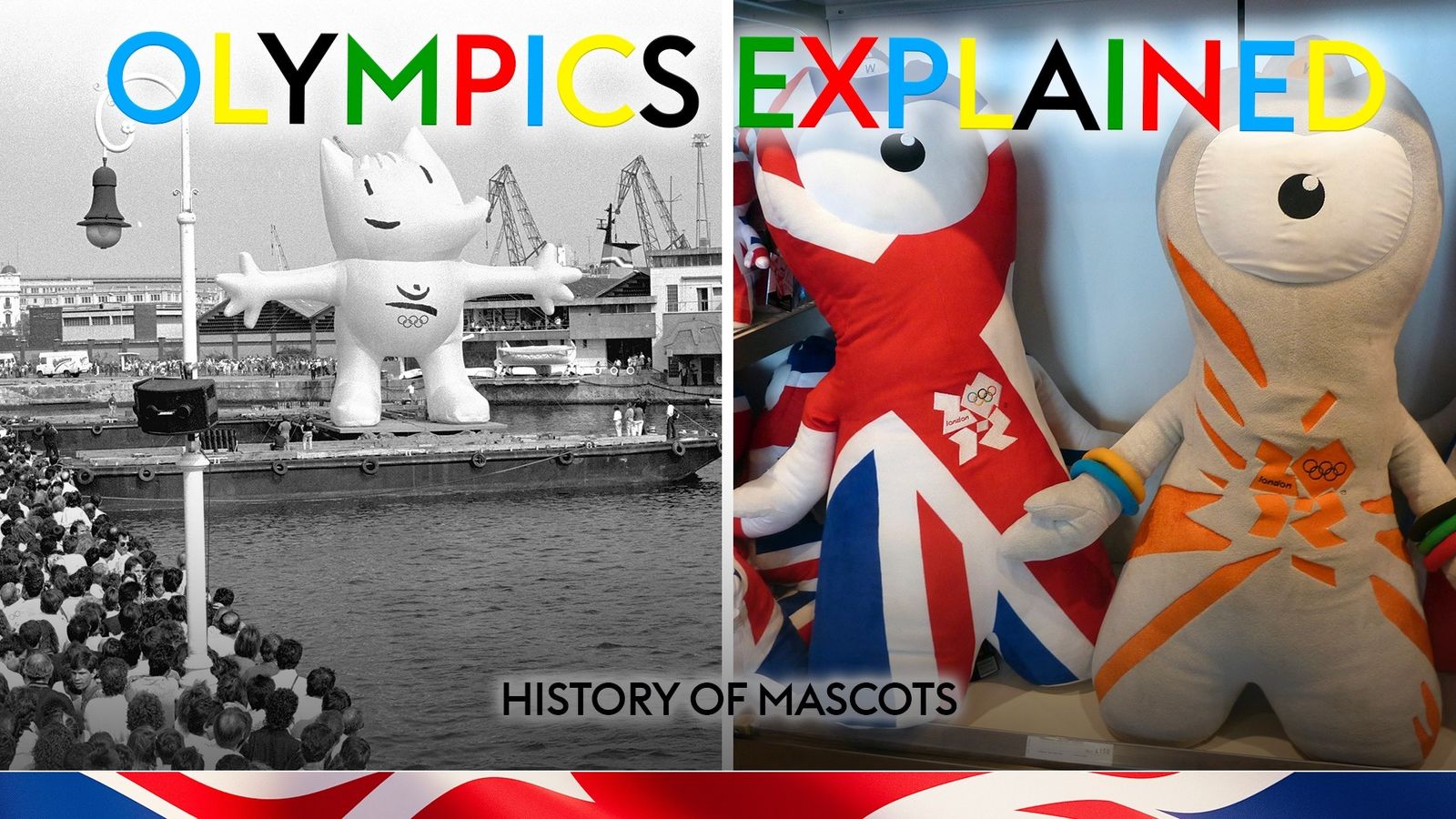
Official Olympic mascots serve as cultural ambassadors, visual identifiers, and storytelling icons for the Olympic Games. Since the introduction of the first official character at the 1972 Munich Games, these mascots have evolved from native fauna and folklore figures into complex abstract symbols reflecting local identity, artistic trends, and global design philosophies.
The Evolution of Olympic Mascots: From Unofficial Icons to Brand Ambassadors
The tradition of Olympic mascots began as an informal marketing experiment before maturing into a central pillar of the Olympic brand identity. Prior to formal institutional integration by the International Olympic Committee (IOC), local organizing committees experimented with visual symbols to build public engagement, entertain spectator crowds, and generate promotional revenue.
The first recognizable character associated with the Games was Schuss, an unofficial visual character designed for the 1968 Winter Games in Grenoble, France. Schuss featured a stylized red head positioned atop a single blue ski-shaped foot. While never designated as an official mascot under strict IOC guidelines, Schuss demonstrated the public appetite for personified event symbols. Later that same year, the 1968 Summer Olympics in Mexico City utilized an unnamed red jaguar figure inspired by ancient Maya artifacts, further cementing the appeal of regional artistic motifs.
Recognizing the immense potential of character design, the IOC officially integrated mascots into the Olympic branding framework for the 1972 Summer Games in Munich, Germany. The organizing committee commissioned designer Elena Winschermann, under the creative direction of Otl Aicher, to create Waldi, a colorful Dachshund representing agility and tenacity. Waldi set the precedent for official character design, proving that mascots could successfully bridge international audiences with local regional culture while establishing new revenue streams through merchandising and television broadcasts.
Over subsequent decades, mascot design shifted through three distinct structural eras:
- The Regional Fauna Era (1972–1988): Early mascots relied heavily on native animal species stylized with athletic gear, such as bears, raccoons, and eagles, to convey natural national symbols.
- The Avant-Garde and Abstract Era (1992–2012): Graphic designers moved away from traditional realism toward abstract, mythological, and non-representational figures, aiming to communicate philosophical themes rather than regional zoology.
- The Digital and Conceptual Era (2014–Present): Contemporary mascots incorporate futuristic aesthetics, storytelling narratives, and digital adaptability tailored for social media, animation, and interactive software formats.
Historical Design Era Timeline
- 1968–1972: Early Pioneers & Institutional Standardization
- Grenoble 1968 (Schuss - Unofficial) to Munich 1972 (Waldi - First Official)
- 1976–1988: Stylized Zoological & Regional Representation
- Amik (1976), Misha (1980), Vučko (1984), Hodori (1988)
- 1992–2012: Conceptual, Abstract & Mythological Expansion
- Cobi (1992), Izzy (1996), Phevos & Athena (2004), Wenlock (2012)
- 2014–2026: Digital Adaptation, Cultural Symbols & Interactive Storytelling
- Miraitowa (2020), Bing Dwen Dwen (2022), The Phryges (2024), Tina (2026)
Official Summer Olympic Mascots (1972–2024)
Summer Olympic mascots reflect the broad international scope and cultural history of their host nations. The following breakdown tracks every official character designed for the Summer Games since 1972.
Munich 1972: Waldi
- Character Type: Dachshund (Dog)
- Designers: Elena Winschermann and Otl Aicher
- Cultural Significance: Representing a breed native to Bavaria, Waldi possessed the physical attributes required of Olympic athletes: endurance, tenacity, and agility. Waldi's body incorporated pastel stripes corresponding to the Olympic palette (pastel blues, greens, and yellows), intentionally excluding black and red to avoid nationalistic overtones associated with WWII.
Montreal 1976: Amik
- Character Type: Beaver
- Designers: Yvon Laroche, Pierre-Yves Pelletier, Guy St-Arnaud, and George Huel
- Cultural Significance: Named after the Algonquin word for "beaver," Amik highlighted Canada's historic fur trade legacy and national fauna. The mascot featured a minimalist design with a red sash representing the Montreal Olympic emblem.
Moscow 1980: Misha
- Character Type: Russian Bear
- Designer: Victor Chizhikov
- Cultural Significance: Full name Mikhail Potapych Toptygin, Misha became a global pop-culture figure. Chosen via a public competition, Misha wore a tri-color belt carrying the five Olympic rings. The mascot achieved legendary emotional resonance during the Closing Ceremony, when a massive tearful mosaic of Misha was displayed in the stadium stands.
Los Angeles 1984: Sam the Bald Eagle
- Character Type: Bald Eagle
- Designer: Robert Moore (Walt Disney Productions)
- Cultural Significance: Designed with classic American animation principles, Sam represented the American national symbol wearing a top hat and suit styled after Uncle Sam. He was crafted to project a friendly, approachable, and optimistic persona rather than an aggressive patriotic icon.
Seoul 1988: Hodori
- Character Type: Siberian Tiger
- Designer: Kim Hyun
- Cultural Significance: The tiger is deeply rooted in Korean folklore and legends. "Ho" derives from the Korean word for tiger (horangi), while "Dori" is a affectionate masculine diminutive. Hodori wore a traditional sangmo hat with a long streaming ribbon forming an "S" shape for Seoul.
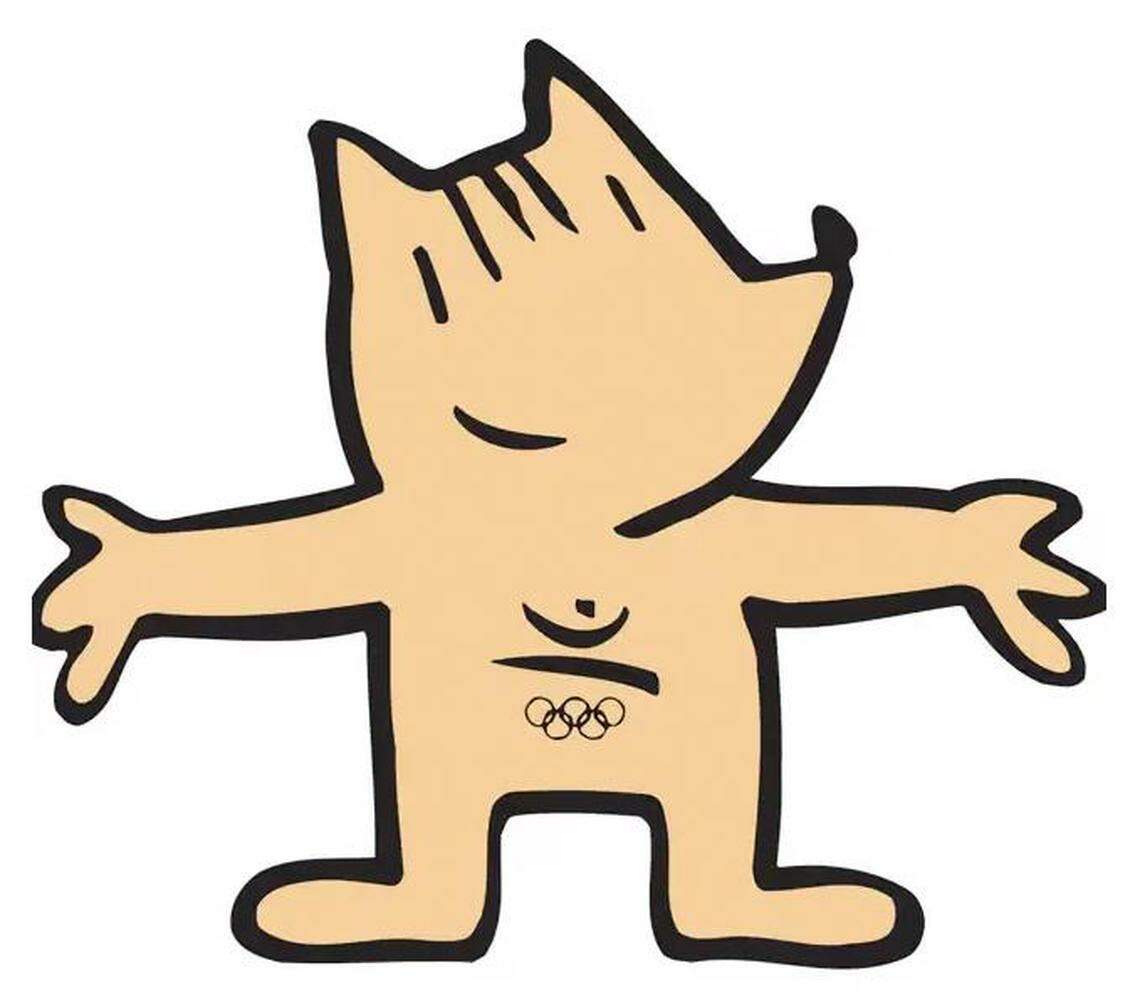
Barcelona 1992: Cobi
- Character Type: Pyrenean Shepherd Dog
- Designer: Javier Mariscal
- Cultural Significance: Designed in a distinct avant-garde, Cubist style, Cobi marked a departure from classic animation aesthetics. Initial public skepticism gave way to widespread popularity as Cobi's clean, minimalist outline translated successfully into merchandise and animated television series.
Atlanta 1996: Izzy
- Character Type: Abstract/Computer-Generated Figure
- Designer: DESIGNefx
- Cultural Significance: Originally named Whatizit at its debut during the 1992 Barcelona Closing Ceremony, the character was later redesigned and renamed Izzy. Izzy was the first completely computer-generated Olympic mascot, created to symbolize the digital revolution of the late 20th century.
Sydney 2000: Olly, Syd, and Millie
- Character Types: Kookaburra (Olly), Platypus (Syd), and Echidna (Millie)
- Designer: Matthew Hatton
- Cultural Significance: Australia eschewed a single character in favor of a trio representing land, air, and water fauna. Olly (from Olympic) represented generosity; Syd (from Sydney) represented energy and environment; Millie (from Millennium) represented technological progress and information.
Athens 2004: Phevos and Athena
- Character Types: Ancient Greek Terracotta Dolls (Daidala)
- Designer: Spiros Gogos
- Cultural Significance: Stylized after bell-shaped terracotta dolls from the 7th century BCE, the brother and sister pair honored ancient Greek heritage. Named after Apollo (Phevos, god of light and music) and Athena (goddess of wisdom and patron of Athens), they featured oversized feet and elongated necks.
Beijing 2008: The Fuwa (Beibei, Jingjing, Huanhuan, Yingying, Nini)
- Character Types: Fish, Giant Panda, Olympic Flame, Tibetan Antelope, Swallow
- Designer: Han Meilin
- Cultural Significance: A set of five characters matching the colors of the Olympic rings and traditional Chinese elements (sea, forest, fire, earth, sky). When combined, the first syllables of their names spell out "Beijing huanying ni" ("Beijing welcomes you").
London 2012: Wenlock
- Character Type: Abstract Drop of Steel
- Designer: Iris Design
- Cultural Significance: Named after the village of Much Wenlock, which hosted early precursors to the modern Olympics. Wenlock's single lens camera eye represented recording memories, while the head points mirrored the structure of the Olympic Stadium roof.
Rio 2016: Vinicius
- Character Type: Hybrid Brazilian Wildlife
- Designer: Birdo Studio
- Cultural Significance: Vinicius represented the diverse flora and fauna of Brazil, combining cat-like agility, monkey-like balancing skills, and avian grace. Named via public vote in honor of legendary Brazilian musician Vinicius de Moraes.
Tokyo 2020: Miraitowa
- Character Type: Futuristic Cybernetic Figure
- Designer: Ryo Taniguchi
- Cultural Significance: Selected by Japanese elementary school students, Miraitowa combined traditional culture with futuristic technology. The name blends the Japanese words mirai (future) and towa (eternity). Its body featured the indigo-blue ichimatsu checkered pattern seen in the official Games emblem.
Paris 2024: The Olympic Phryge
- Character Type: Anthropomorphic Phrygian Cap
- Designer: Paris 2024 Design Team
- Cultural Significance: Departing from animal forms, the Olympic Phryge was modeled after the traditional Phrygian cap—a historical symbol of liberty and revolution in French history. The mascot was designed to communicate a political and cultural message of inclusivity, unity, and social change.
Official Winter Olympic Mascots (1976–2026)
Winter Olympic mascots frequently emphasize cold-climate wildlife, mountain folklore, ice-based structures, and high-altitude heritage.
Innsbruck 1976: Schneemann
- Character Type: Snowman
- Designer: Walter Pötsch
- Cultural Significance: Representing the first official mascot for the Winter Olympic Games, Schneemann ("Snowman") wore a red Tyrolean hat. The character projected a simple, cheerful alpine identity.
Lake Placid 1980: Roni
- Character Type: Raccoon
- Designer: Don Moss
- Cultural Significance: Chosen because raccoons are native to the Adirondack region. Roni's face mask naturally mimicked the goggles and hats worn by winter sports athletes.
Sarajevo 1984: Vučko
- Character Type: Little Wolf
- Designer: Jože Trobec
- Cultural Significance: Selected through a newspaper reader vote, Vučko aimed to reshape traditional European folklore perceptions of the wolf from predatory to friendly and courageous.
Calgary 1988: Hidy and Howdy
- Character Types: Pair of Polar Bears
- Designer: Sheila Scott (Great Western Garment Co.)
- Cultural Significance: Representing Western Canadian hospitality, Hidy and Howdy were the first dual mascot team for an Olympic Games. They wore Western attire, including cowboy hats and boots.
Albertville 1992: Magique
- Character Type: Imp / Star Shape
- Designer: Philippe Mairesse
- Cultural Significance: Replacing an initial chamois goat concept, Magique was a star-shaped star-man figure representing dreams and imagination, colored in the blue and red of the French flag.
Lillehammer 1994: Håkon and Kristin
- Character Types: Medieval Norwegian Children
- Designers: Kari and Werner Grossmann
- Cultural Significance: The first human-figure Olympic mascots, named after historical 13th-century royal figures (King Håkon IV and Princess Kristin) connected to the medieval history of Norway.
Nagano 1998: The Snowlets (Sukki, Nokki, Lekki, Tsukki)
- Character Types: Four Owls
- Designer: Landor Associates
- Cultural Significance: Representing the four major Japanese islands and the four-year Olympic cycle, the names combined the first syllables of each owl's name to hint at wisdom and connection to nature.
Salt Lake City 2002: Powder, Copper, and Coal
- Character Types: Snowshoe Hare, Coyote, and American Black Bear
- Designer: Steve Small (Landor Associates / Publicis)
- Cultural Significance: Inspired by Native American legends (Utah's ancient petroglyphs), each animal wore a traditional necklace featuring authentic indigenous artwork.
Turin 2006: Neve and Gliz
- Character Types: Personified Snowball (Neve) and Ice Cube (Gliz)
- Designer: Pedro Albuquerque
- Cultural Significance: Neve (wearing red) represented fluid motion and elegance; Gliz (wearing blue) represented speed and structural power. Together they embodied the essential elements of winter sports.
Vancouver 2010: Miga and Quatchi
- Character Types: Mythical Sea Bear (Miga) and Sasquatch (Quatchi)
- Designer: Meomi Design
- Cultural Significance: Grounded in First Nations mythology of the Pacific Northwest. Miga was part killer whale and part Kermode bear; Quatchi was a shy sasquatch who dreamed of playing hockey.
Sochi 2014: Bely Mishka, Leopard, and Zaika
- Character Types: Polar Bear, Snow Leopard, and Hare
- Designers: Silvia Petrova, Vadim Pak, Oleg Serdechny (Public Voting)
- Cultural Significance: Selected through a nationwide television vote in Russia, the three characters represented endurance, speed, and agility across high-altitude and winter environments.
PyeongChang 2018: Soohorang
- Character Type: White Tiger
- Designer: MASS C&G
- Cultural Significance: The white tiger is considered a sacred guardian animal in Korean culture. Soo-ho means "protection" in Korean, while Rang comes from Horangi (tiger) and the traditional folk song Arirang.
Beijing 2022: Bing Dwen Dwen
- Character Type: Giant Panda in an Ice Suit
- Designer: Cao Xue
- Cultural Significance: Bing means ice and symbolizes purity, while Dwen Dwen means robust and lively. The panda wore a full-body protective shell made of ice resembling an astronaut suit, showcasing digital technological fusion.
Milano Cortina 2026: Tina
- Character Type: White Ermine / Stoat
- Designer: Students of Istituto Comprensivo of Taverna (Catanzaro)
- Cultural Significance: Selected through a public vote involving Italian schoolchildren, Tina (short for Cortina) represents curiosity, resilience, and adaptability. Her light coat reflects snow and winter high-altitude terrain.
Comparative Matrix: All Official Olympic Mascots
The table below synthesizes all official Summer and Winter Olympic mascots chronologically, detailing host locations, core visual identities, and creative origins.
| Olympic Games | Location | Official Mascot Name(s) | Character Identity / Type | Primary Visual & Cultural Theme |
|---|---|---|---|---|
| 1972 Summer | Munich, W. Germany | Waldi | Dachshund Dog | Endurance, agility, colorful Olympic pastel palette |
| 1976 Winter | Innsbruck, Austria | Schneemann | Snowman | Simple alpine heritage, wearing a red Tyrolean hat |
| 1976 Summer | Montreal, Canada | Amik | Beaver | Canadian fur trade history, Algonquin language roots |
| 1980 Winter | Lake Placid, USA | Roni | Raccoon | Adirondack fauna, eye mask mimicking ski goggles |
| 1980 Summer | Moscow, USSR | Misha | Russian Bear | Traditional Russian folklore bear with ring belt |
| 1984 Winter | Sarajevo, Yugoslavia | Vučko | Little Wolf | Transforming negative wolf folklore into friendly icon |
| 1984 Summer | Los Angeles, USA | Sam | American Bald Eagle | Patriotic Americana, friendly Uncle Sam styling |
| 1988 Winter | Calgary, Canada | Hidy and Howdy | Polar Bears (Pair) | Western Canadian hospitality and cowboy heritage |
| 1988 Summer | Seoul, South Korea | Hodori | Siberian Tiger | Korean folklore animal wearing traditional sangmo hat |
| 1992 Winter | Albertville, France | Magique | Imp / Star Shape | Dreams and imagination replacing traditional fauna |
| 1992 Summer | Barcelona, Spain | Cobi | Pyrenean Shepherd Dog | Avant-garde Cubist design based on regional dog |
| 1994 Winter | Lillehammer, Norway | Håkon and Kristin | Human Children | 13th-century Norwegian historical royal figures |
| 1996 Summer | Atlanta, USA | Izzy (Whatizit) | Abstract / Digital | Computer-generated futuristic entity |
| 1998 Winter | Nagano, Japan | The Snowlets | Four Owls | Wisdom, nature, and the four major islands of Japan |
| 2000 Summer | Sydney, Australia | Olly, Syd, and Millie | Kookaburra, Platypus, Echidna | Australian native fauna representing air, water, land |
| 2002 Winter | Salt Lake City, USA | Powder, Copper, Coal | Hare, Coyote, Bear | Indigenous Native American legends and rock art |
| 2004 Summer | Athens, Greece | Phevos and Athena | Terracotta Dolls | Ancient Greek daidala historical terracotta dolls |
| 2006 Winter | Turin, Italy | Neve and Gliz | Snowball & Ice Cube | Fluid motion (Neve) and structural energy (Gliz) |
| 2008 Summer | Beijing, China | The Fuwa (5 Characters) | Fish, Panda, Flame, Antelope, Swallow | Five elements, ring colors, welcome phrase |
| 2010 Winter | Vancouver, Canada | Miga and Quatchi | Sea Bear & Sasquatch | First Nations coastal mythology and regional lore |
| 2012 Summer | London, UK | Wenlock | Drop of Steel | Industrial Revolution history and camera-eye motif |
| 2014 Winter | Sochi, Russia | Bely Mishka, Leopard, Zaika | Polar Bear, Leopard, Hare | Russian high-altitude wildlife and public design vote |
| 2016 Summer | Rio de Janeiro, Brazil | Vinicius | Hybrid Brazilian Animal | Biodiversity of Brazilian rainforests and fauna |
| 2018 Winter | PyeongChang, S. Korea | Soohorang | White Tiger | Sacred Korean guardian animal of peace and safety |
| 2020 Summer | Tokyo, Japan | Miraitowa | Cybernetic Checkered Figure | Innovation, tradition, and futuristic digital identity |
| 2022 Winter | Beijing, China | Bing Dwen Dwen | Panda in Ice Suit | Winter sports purity, space exploration, digital shell |
| 2024 Summer | Paris, France | The Olympic Phryge | Phrygian Cap | Historic French freedom cap, political & social symbol |
| 2026 Winter | Milano Cortina, Italy | Tina | White Ermine / Stoat | Adaptability, snow landscape, curiosity and resilience |
Technical and Artistic Trends in Mascot Selection
The approval process for an official Olympic mascot is governed by strict protocols managed jointly by the local Organising Committee for the Olympic Games (OCOG) and the International Olympic Committee (IOC) Executive Board. Over the past five decades, the criteria evaluated during character selection have transformed drastically.
Public Co-Creation and Youth Engagement
In early Olympic iterations, mascots were created almost exclusively by commercial graphic design agencies or political organizing boards behind closed doors. Modern processes place emphasis on youth participation and public democratization:
- Tokyo 2020: The final design pair was voted on directly by over 200,000 Japanese elementary school classes across more than 16,000 schools.
- Milano Cortina 2026: Thousands of Italian primary and secondary students submitted initial design sketches, which were then narrowed down by professional designers before undergoing a public national vote.
Digital Licensing, Animation, and Vector Scalability
Early characters like Waldi and Misha were designed primarily for print media, plush toys, and static television broadcasts. Contemporary mascot designs must satisfy stringent digital criteria:
- Vector Scalability: Designs must render effortlessly across formats ranging from a 16-pixel mobile icon to an 80-foot stadium screen.
- 3D Skeleton Rigging: Characters are modeled in three-dimensional digital space to allow rapid animation for television graphics, video games, augmented reality (AR) smartphone filters, and motion-capture mascots.
- Color Accessibility: Line art and contrast levels must meet global accessibility standards for viewers with vision impairments.
Official Mascot Selection & Lifecycle
- CONCEPT & BRIEFING: OCOG defines cultural goals & brand guidelines
- PUBLIC COMPETITION: Open submissions from public, schools, or agencies
- IOC REVIEW: Legal trademark search & brand compatibility audit
- PUBLIC DECISION: Student voting (e.g., Tokyo) or national digital polls
- PRODUCTION RELEASE: Plush manufacturing, vector branding, 3D AR assets
Frequently Asked Questions
What was the first official Olympic mascot?
The first official Olympic mascot was Waldi, a Dachshund created for the 1972 Summer Olympic Games in Munich, Germany. While an unofficial character named Schuss was used during the 1968 Winter Games in Grenoble, France, Waldi was the first character formally institutionalized and protected under International Olympic Committee (IOC) copyright and branding regulations.
How are Olympic mascots chosen by host cities?
Olympic mascots are designed by the host city's Organising Committee for the Olympic Games (OCOG) in collaboration with design agencies or public design competitions. The prospective mascot must undergo extensive legal review, trademark audits, and cultural impact assessments before receiving final ratification from the IOC Executive Board. Host nations frequently utilize public voting or student design competitions to select final winning concepts.
Are Paralympic mascots separate from Olympic mascots?
Yes, Paralympic Games utilize distinct official mascots designed to complement their Olympic counterparts. While they share cohesive visual design languages, color palettes, and background narratives created by the same design teams, Paralympic mascots are specifically developed to promote inclusivity, accessibility, and the unique spirit of Paralympic sports. Examples include Phryge Handicapée (Paris 2024) and Milo the stoat (Milano Cortina 2026).
Why do some Olympic Games feature multiple mascots?
Host cities often select multiple mascots to represent diverse regional wildlife, broad cultural concepts, or spatial elements (such as air, land, and water). For example, Sydney 2000 featured three native animals (Olly, Syd, and Millie), while Beijing 2008 introduced five Fuwa characters to correspond with the five traditional Chinese elements and the five Olympic rings.
Guidance for Researchers, Designers, and Collectors
For design historians, archivists, and sports memorabilia collectors evaluating Olympic mascot history, systematic categorization relies on verifying authenticity and production provenance.
Collector Verification Standards
- Official Licensing Seals: Legitimate commercial mascot products manufactured since 1972 carry a serialized hologram or official licensing mark issued by the host nation's organizing committee (e.g., "© OCOG" or "© IOC").
- Design Sheets and Brand Books: Graphic design researchers studying historical character specifications should reference official host city Style Guides or Graphic Manuals, which outline exact Pantone color codes, proportion grids, and prohibited brand usages.
- Archival Access: The Olympic Studies Centre located in Lausanne, Switzerland, maintains the official historical repository of original design briefs, licensing contracts, and physical mascot artifacts from all past Games.
When cataloging or studying character histories, always cross-reference character launch dates against official IOC publication records to distinguish officially sanctioned mascot characters from secondary promotional mascots, sponsor-created figures, or unofficial commercial knockoffs.