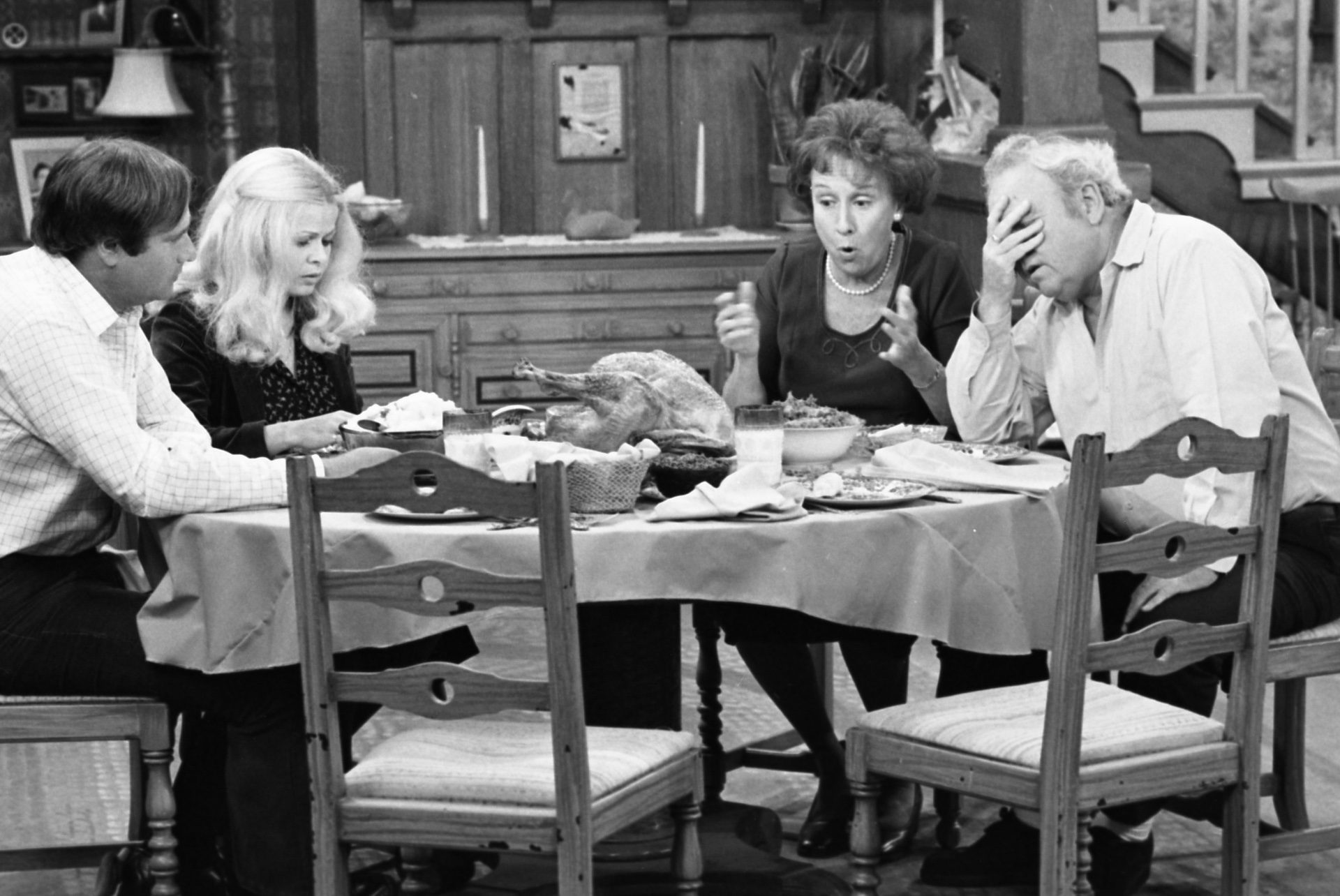
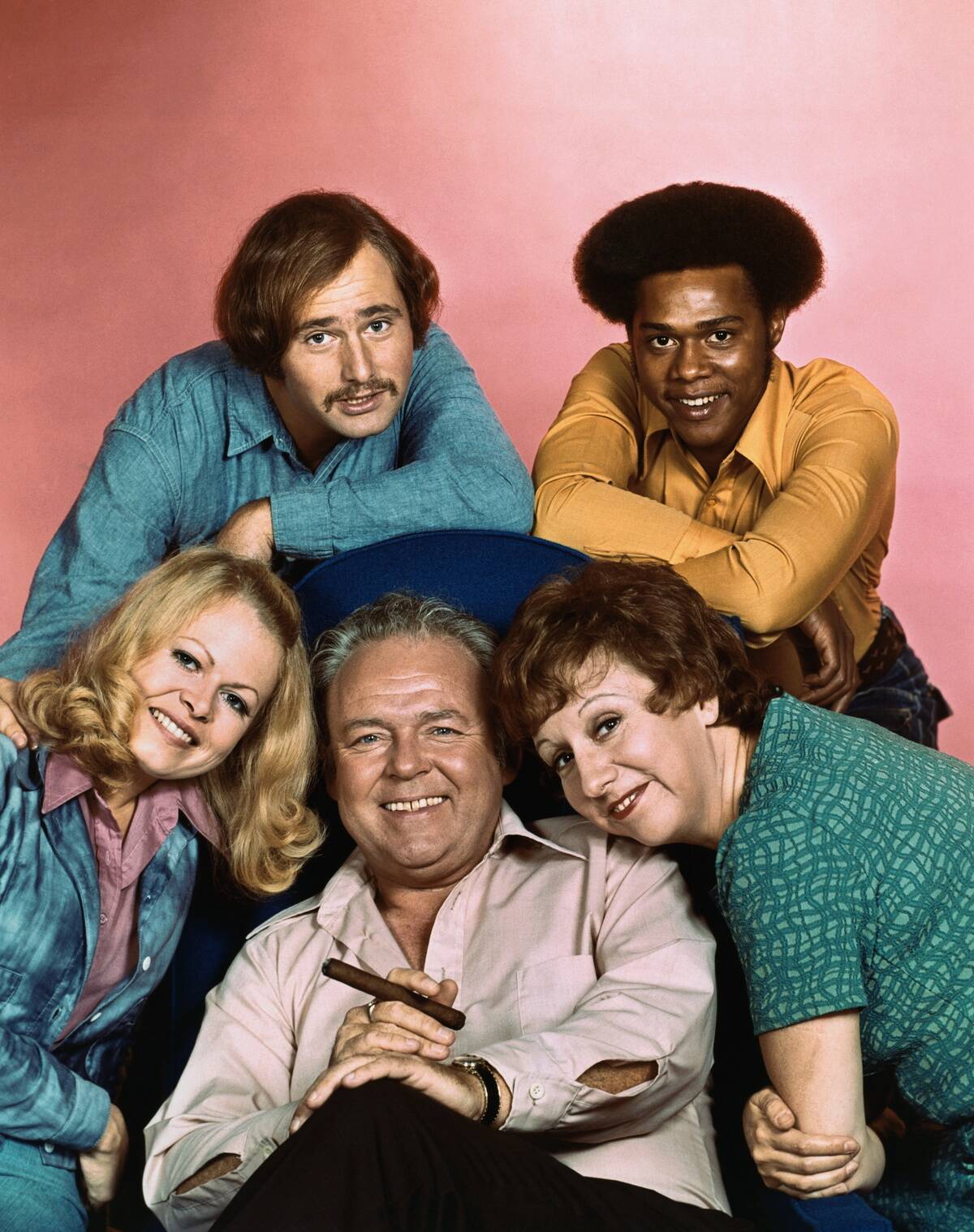
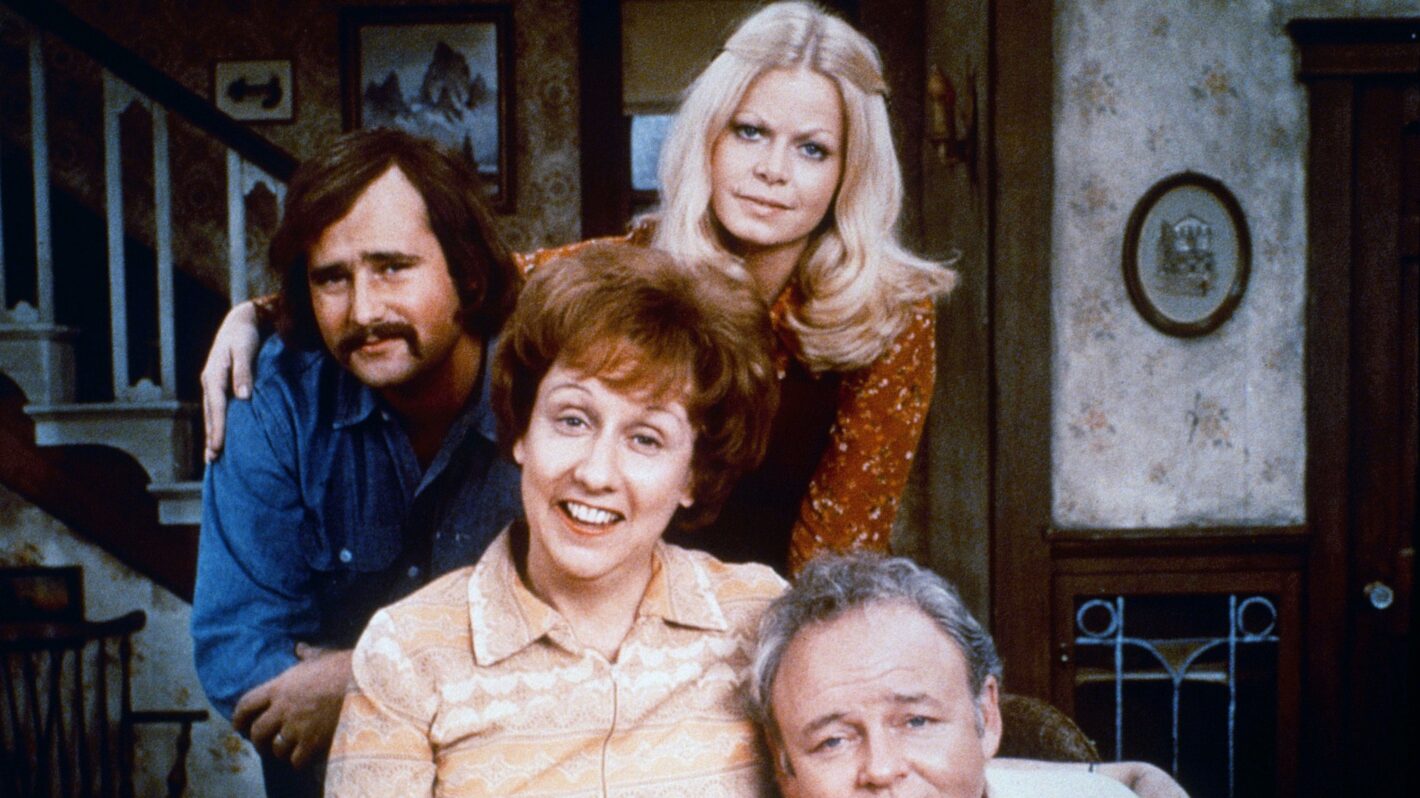
All in the Family is a landmark American sitcom that aired on CBS from 1971 to 1979, revolutionizing television by addressing social, political, and racial issues through the lens of a working-class household. Created by Norman Lear, it follows Archie Bunker, a bigoted patriarch, and his frequent clashes with his progressive son-in-law.
The Core Premise: A Collision of Generations and Ideologies
The premise of All in the Family was groundbreaking for its time because it moved away from the sanitized, escapist sitcoms of the 1950s and 1960s. Set at 704 Hauser Street in Astoria, Queens, the show centers on Archie Bunker, a blue-collar worker at a loading dock who is resistant to the rapid social changes occurring in the United States during the 1970s. Archie is portrayed as a "lovable bigot"—a man who is loud, opinionated, and often uses derogatory language, yet is also shown to be a product of his upbringing and a man who deeply loves his family.
The primary conflict of the series stems from the ideological war between Archie and his son-in-law, Michael "Meathead" Stivic. Mike is a Polish-American college student and a staunch liberal who lives in Archie’s house while finishing his education. Their arguments served as a microcosm of the "generation gap" that defined the era, covering topics such as the Vietnam War, civil rights, feminism, and environmentalism.
Between these two opposing forces were the women of the house. Edith Bunker, Archie’s wife, was often dismissed by her husband as a "dingbat," but she served as the moral and emotional anchor of the family. Her innocence and innate kindness often highlighted the absurdity of Archie's prejudices. Gloria Stivic, Archie and Edith's daughter and Mike's wife, frequently found herself caught in the middle, struggling to reconcile her love for her father with her husband's progressive ideals and her own budding feminism.
The Iconic Cast: Bringing 704 Hauser Street to Life
The success of All in the Family was heavily dependent on its four lead actors, all of whom delivered performances that balanced comedy with intense, sometimes uncomfortable, realism. In 2026, these performances remain the gold standard for character-driven television.
Carroll O'Connor as Archie Bunker
Carroll O'Connor’s portrayal of Archie Bunker is widely considered one of the greatest performances in television history. O'Connor brought a surprising level of depth to a character that could have easily been a one-dimensional villain. By infusing Archie with vulnerability and insecurity, O'Connor allowed the audience to see a man who felt the world was passing him by. He won four Primetime Emmy Awards for the role.
Jean Stapleton as Edith Bunker
Jean Stapleton played Edith with a distinctive high-pitched voice and a physical clumsiness that masked a profound wisdom. Over the course of the series, Edith grew from a submissive housewife into a character of significant moral strength. Stapleton won three Emmys for her portrayal, famously deciding to leave the franchise when she felt she had explored the character fully, leading to Edith’s off-screen death in the sequel series, Archie Bunker's Place.
Rob Reiner as Michael "Meathead" Stivic
Before he became an acclaimed film director, Rob Reiner was the face of the American counterculture on television. As Mike Stivic, Reiner provided the necessary intellectual and emotional foil to Archie. While Mike was often right on the facts, the show frequently depicted him as arrogant or hypocritical, ensuring that the conflict remained balanced rather than one-sided.
Sally Struthers as Gloria Stivic
Sally Struthers portrayed Gloria’s evolution from a protected daughter to an independent woman and mother. Her performance captured the specific tensions of a woman trying to forge her own path while remaining loyal to a traditionalist father. Struthers won two Emmys for her work on the show.
Production History and Key Facts
The road to getting All in the Family on the air was fraught with difficulty. Norman Lear based the show on the British sitcom Till Death Us Do Part, which featured a similarly bigoted protagonist.
- The Pilots: ABC originally funded two pilots for the show, then titled Justice for All and Those Were the Days. However, the network ultimately got "cold feet" due to the controversial subject matter. CBS eventually picked up the show, but even they were nervous, famously placing a disclaimer before the first episode to warn viewers of its content.
- The Premiere: The show premiered on January 12, 1971. Initial ratings were low, but it eventually became a word-of-mouth sensation, rising to the #1 spot in the Nielsen ratings by the following season.
- Ratings Dominance: All in the Family was the first television show to be ranked #1 in the yearly Nielsen ratings for five consecutive years (1971–1976), a feat later matched only by The Cosby Show and American Idol.
- The "Sammy's Visit" Episode: One of the most famous moments in TV history occurred in 1972 when Sammy Davis Jr. guest-starred as himself. The episode culminated in Davis Jr. giving the bigoted Archie a kiss on the cheek, resulting in one of the longest sustained laughs from a studio audience in television history.
| Feature | Description |
|---|---|
| Creator | Norman Lear |
| Original Network | CBS |
| Air Dates | January 12, 1971 – March 25, 1979 |
| Setting | 704 Hauser Street, Astoria, Queens, NY |
| Based On | Till Death Us Do Part (UK) |
| Total Seasons | 9 |
| Spin-offs | Maude, The Jeffersons, Good Times, Archie Bunker's Place, Gloria, 704 Hauser |
| Major Awards | 22 Primetime Emmy Awards |
The Legacy: How the Bunkers Changed the Cultural Landscape
The legacy of All in the Family cannot be overstated. It effectively ended the "Rural Purge" of the early 70s, where networks canceled shows like The Beverly Hillbillies to make room for more socially relevant, urban-centered programming.
Breaking Taboos
The series was the first to openly discuss topics that were previously forbidden on the airwaves. This included episodes centered on rape, menopause, breast cancer, impotence, and homosexuality. By dealing with these issues in a living room setting, the show forced the American public to confront the realities of the time. According to the Television Academy, the show’s willingness to tackle "the heat of the day" set the stage for the "Golden Age" of 1970s television.
The Spin-off Universe
Norman Lear used All in the Family as a springboard for an entire universe of programming. The character of Maude Findlay (Edith’s cousin) led to the show Maude, which in turn led to Good Times. The Bunkers' neighbors, the Jeffersons, moved to Manhattan to star in The Jeffersons, one of the most successful shows featuring an African-American family in TV history. These shows collectively changed how race and class were depicted on screen.
Archie Bunker as a Cultural Icon
Archie Bunker’s chair is now housed in the Smithsonian Institution's National Museum of American History. The chair serves as a symbol of the complex relationship Americans have with the character—he was a symbol of prejudice, yet he was also a symbol of the common man’s struggle with a world that seemed increasingly unrecognizable.
Where to Watch and Explore the Legacy in 2026
As of 2026, All in the Family remains highly accessible for new generations. The series is frequently available on major streaming platforms such as Freevee and Pluto TV, and it continues to air in heavy syndication on networks like Antenna TV and Logo.
For those interested in the academic study of the show, the Paley Center for Media maintains extensive archives of the series, including original scripts and behind-the-scenes interviews with Norman Lear. The 2019 and 2020 "Live in Front of a Studio Audience" specials, produced by Jimmy Kimmel and Norman Lear, also introduced the show's scripts to modern audiences with contemporary actors like Woody Harrelson and Marisa Tomei, proving that the dialogue remains as sharp and relevant today as it was in the 1970s.
Frequently Asked Questions
Why was Archie Bunker called "Meathead" by his son-in-law?
Actually, it was the other way around: Archie called his son-in-law, Mike Stivic, "Meathead." Archie used the term as a derogatory nickname because he believed Mike was "dead from the neck up," despite Mike being a highly educated college student. The nickname became a staple of their relationship, representing Archie's dismissal of Mike’s intellectual and liberal arguments.
Is All in the Family based on a true story?
The show is not based on a specific true story, but Norman Lear based the character of Archie Bunker largely on his own father, Herman Lear. Lear described his father as a man who would tell his wife to "stifle herself" and who held many of the same prejudices as Archie. This personal connection helped give the show its emotional authenticity.
Did the show ever win any major awards?
Yes, All in the Family was a critical powerhouse. It won 22 Primetime Emmy Awards during its nine-season run. Notably, it is one of only four shows in history where all four lead actors (O'Connor, Stapleton, Reiner, and Struthers) won at least one Emmy for their roles on the series.
How did All in the Family end?
The original series ended in 1979 when Rob Reiner and Sally Struthers left the show. However, the story continued immediately in a spin-off/sequel titled Archie Bunker's Place. This new series shifted the focus to Archie’s life as the owner of a tavern, following Edith’s death and the challenges of raising their niece, Stephanie.
Why is the show still considered controversial today?
All in the Family remains controversial because it uses racial slurs and bigoted language to satirize prejudice. While the show’s intent was to mock Archie’s ignorance, some critics then and now argue that it occasionally humanized his views too much or that viewers might agree with his bigotry rather than laugh at it. However, most historians agree the show was a tool for social progress.
Recommendations for Modern Viewers
If you are approaching All in the Family for the first time in 2026, it is recommended to start with the first season to understand the establishment of the character dynamics. Pay close attention to the episode "Sammy’s Visit" (Season 2, Episode 21) and "The Draft Dodger" (Season 7, Episode 15), which are masterclasses in how the show balanced high comedy with profound social commentary.
To get the most out of the experience, view the show as a historical document of the 1970s. While some of the language is dated and jarring by 2026 standards, the underlying themes—economic anxiety, political polarization, and the struggle for family unity despite deep disagreements—remain strikingly relevant to modern American life.