Navigating the streaming availability of Alfred Hitchcock's legendary filmography requires understanding shifting regional licensing agreements, as his masterpieces are rarely bundled onto a single platform simultaneously and often require alternative subscription services or digital storefronts to view in their entirety.
The master of suspense, Alfred Hitchcock, remains one of the most influential and analyzed filmmakers in cinematic history. His career spanned over five decades, transitioning from the British silent era through the golden age of Hollywood and into the psychological thrillers of the 1960s and 1970s. For cinephiles and modern audiences attempting to watch his filmography via subscription video-on-demand services, the viewing experience is frequently fragmented. Because licensing rights for classic Hollywood titles are heavily contested and distributed across various major studios—such as Universal Pictures, Paramount Pictures, and Warner Bros.—streaming platforms like Netflix rarely hold global, permanent streaming rights to his most celebrated works. Consequently, finding Alfred Hitchcock's cast, crew, and classic films on Netflix demands a strategic approach that accounts for regional content blocks, rotating catalogs, and the availability of alternative digital platforms.
Understanding Netflix Licensing and Regional Content Availability
Streaming libraries on Netflix are governed by strict geographical licensing agreements rather than a universal global catalog. This means that a Hitchcock film streaming in the United Kingdom or continental Europe might be entirely absent from the United States or Canadian libraries, and vice versa.
When searching for Hitchcock titles on Netflix, users frequently encounter sudden rotations where films appear for a single month before expiring. This volatility is tied to studio distribution models. Universal Pictures holds the rights to many of Hitchcock’s most famous mid-century masterworks—often referred to as the "Universal Pictures Library" or the "Paramount" holdings for specific titles like Vertigo and Rear Window (though distribution rights for several of his Paramount films reverted to Universal over the decades). Netflix acquires these titles on short-term licensing deals to bolster its classic cinema offerings temporarily.
To determine current availability, subscribers must rely on in-app search functionality or third-party catalog aggregators like JustWatch, which track real-time changes across regional streaming nodes. Relying solely on static watchlists can lead to frustration, as the absence of a universal library means a direct link that works in one country will return a "Title Not Available" error in another.
Major Alfred Hitchcock Masterpieces and Where to Find Them
While Netflix occasionally features individual titles from Hitchcock's extensive filmography, a comprehensive viewing guide requires looking beyond a single streaming service. His most defining works are distributed across multiple platforms, physical media, and digital rental marketplaces.
The director's filmography is typically categorized into distinct creative phases: his early British period (including The 39 Steps and The Lady Vanishes), his Hollywood breakthrough and transition into psychological suspense (Rebecca, Shadow of a Doubt), his 1950s peak (Rear Window, Vertigo, North by Northwest), and his late-career horror and thriller milestones (Psycho, The Birds).
The table below outlines several cornerstone Hitchcock films, their original release years, primary star casts, and typical streaming accessibility tiers across major platforms.
| Film Title | Release Year | Primary Cast | Typical Streaming / Rental Availability |
|---|---|---|---|
| Rebecca | 1940 | Laurence Olivier, Joan Fontaine | Criterion Channel, MGM+, Digital Rental |
| Shadow of a Doubt | 1943 | Teresa Wright, Joseph Cotten | Criterion Channel, Universal VOD |
| Rear Window | 1954 | James Stewart, Grace Kelly | Peacock, VOD Rental (Apple TV, Amazon) |
| Vertigo | 1958 | James Stewart, Kim Novak | Peacock, VOD Rental (Apple TV, Amazon) |
| North by Northwest | 1959 | Cary Grant, Eva Marie Saint | Max, TCM, VOD Rental |
| Psycho | 1960 | Anthony Perkins, Janet Leigh | Peacock, Starz, VOD Rental |
| The Birds | 1963 | Rod Taylor, Tippi Hedren | Peacock, Universal VOD |
This distribution matrix demonstrates that platforms like Peacock (owned by NBCUniversal) frequently house the core Universal-owned Hitchcock catalog, whereas independent or arthouse services like the Criterion Channel host his earlier British and Selznick-produced titles.
Evaluating the Cast and Creative Collaborations That Defined His Work
A primary reason viewers search for Hitchcock's catalog involves studying his legendary casting choices and recurring creative partnerships. Hitchcock famously treated actors as elements within the frame—often misattributed as calling them "cattle," though he clarified he meant they should be treated with the same meticulous direction as props.
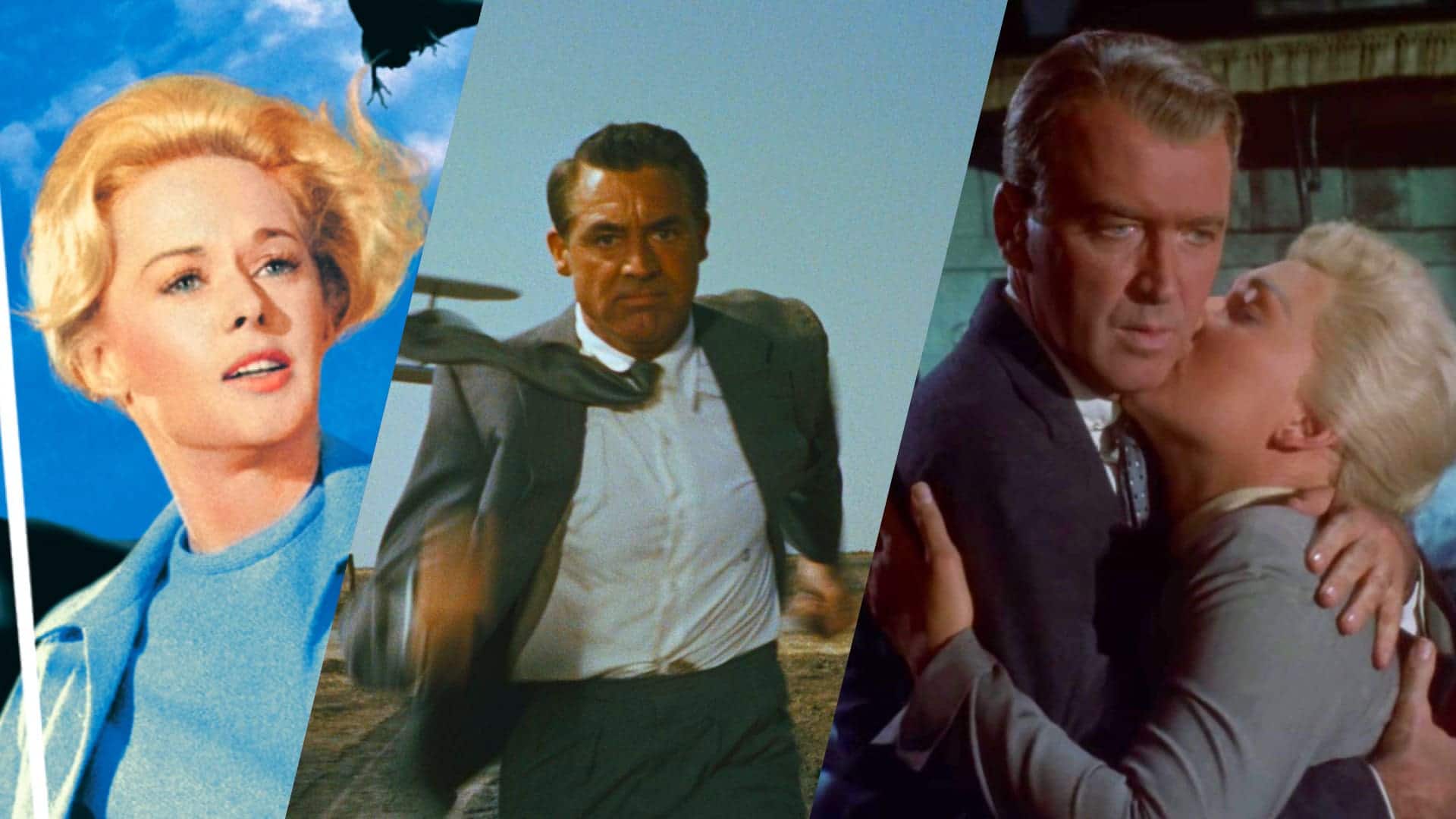
His preference for sophisticated, cool blonde leading women became a defining cinematic archetype. Actresses such as Grace Kelly (Rear Window, Dial M for Murder, To Catch a Thief), Kim Novak (Vertigo), Tippi Hedren (The Birds, Marnie), and Eva Marie Saint (North by Northwest) brought a distinct blend of elegance and underlying vulnerability to his narratives. On the male side, actors like James Stewart and Cary Grant served as audience surrogates—everyman figures thrust into extraordinary, terrifying circumstances. Stewart’s portrayal of the voyeuristic, immobilized photographer in Rear Window or the vertigo-afflicted former detective in Vertigo showcases a psychological depth that elevated thriller cinema into high art.
When specific Hitchcock films rotate onto Netflix, audiences gain immediate access to masterclasses in screen acting, costume design by Edith Head, and Bernard Herrmann’s iconic musical scores. Examining these performances requires noting how Hitchcock utilized close-ups and subjective camera angles to manipulate viewer empathy, a technique that remains studied in film schools worldwide.
Alternative Streaming Options and Digital Purchase Strategies
Because depending on Netflix for a complete Hitchcock retrospective is impractical, viewers should utilize alternative acquisition pathways to ensure uninterrupted access to his filmography.
- Dedicated Subscription Services: Services specializing in classic cinema, such as the Criterion Channel or Turner Classic Movies (TCM) integrations via live-tv packages, frequently rotate Hitchcock's British period and lesser-seen 1930s and 1940s thrillers (Notorious, Spellbound).
- Studio-Affiliated Platforms: Because Universal Pictures controls the domestic rights to many definitive titles, platforms tied to the studio library (such as Peacock in the United States) are reliable secondary destinations when Netflix licenses expire.
- Digital VOD Storefronts: For guaranteed, permanent access without subscription rotation anxiety, digital storefronts including Apple TV, Amazon Prime Video, Vudu (Fandango at Home), and Google Play offer individual film rentals or digital bundle purchases.
- Physical Media (Blu-ray and 4K UHD): For film purists and collectors, physical box sets—such as the Alfred Hitchcock Classics Collection released by Universal Pictures—provide uncompressed video transfers, extensive audio commentaries, making-of documentaries, and theatrical trailers that streaming services frequently omit.
Troubleshooting Regional Restrictions and Common Viewing Challenges
Encountering playback errors or missing titles when attempting to watch classic films on streaming platforms is a common friction point for digital cinephiles.
If a search for a specific Hitchcock title on Netflix yields no results, the primary cause is territorial licensing. A title advertised on global movie databases as "streaming on Netflix" is often restricted to specific international regions. Attempting to circumvent these regional boundaries via Virtual Private Networks (VPNs) frequently violates Netflix’s terms of service, resulting in proxy-detection blocks or forced streaming quality degradation.
Another frequent challenge involves audio-visual degradation on older prints. Public domain platforms or low-budget streaming aggregators often host inferior, unrestored versions of early Hitchcock films like The 39 Steps or Blackmail. These copies suffer from heavy visual grain, dropped frames, and unsynchronized audio tracks. Viewers should verify that the streaming source utilizes digital restorations provided by recognized film archives, such as the BFI National Archive or the UCLA Film & Television Archive, to experience the cinematography as originally intended.
Building Your Personal Hitchcock Viewing Schedule
To maximize a cinematic exploration of Alfred Hitchcock's career without relying entirely on volatile streaming rotations, structuring your viewing chronologically or by thematic motifs provides the most coherent experience.
Begin with his transitional works to observe how visual storytelling developed before dialogue-heavy sound cinema dominated the industry. Transitioning from The Man Who Knew Too Much (1934) to his Hollywood arrival with Rebecca (1940) highlights his mastery of lighting and suspense under studio constraints. Following this, group your viewing sessions by collaboration—such as analyzing the distinct acting styles James Stewart brought to his films compared to the polished charm Cary Grant projected in North by Northwest and To Catch a Thief.
By combining short-term checks on Netflix with stable VOD rentals or physical media acquisitions, viewers can bypass the frustration of changing licensing catalogs and enjoy an uninterrupted, academically rich journey through the history of suspense cinema.