Alexandra Grant is an American conceptual visual artist whose multidisciplinary practice spans painting, drawing, sculpture, photography, film, and independent publishing. Known for her innovative integration of written text, literary theory, and translation into visual forms, Grant explores how language constructs human identity, shapes social connection, and informs cultural memory. Beyond her studio practice, she is the founder of the grantLOVE project and co-founder of the independent publishing house X Artists' Books.
Early Life, Academic Foundation, and Linguistic Roots
Alexandra Grant was born on April 4, 1973, in Fairview Park, Ohio, into an academic family whose pursuits exposed her to diverse international cultures early in life. Raised across multiple linguistic environments—including childhood periods spent living in Mexico City, Paris, and Spain—Grant developed a profound sensitivity to how language functions as both a bridge and a barrier. This cross-cultural upbringing formed the intellectual bedrock of her artistic career, instilling a lifelong fascination with translation, semiology, and the physical architecture of words.
Grant pursued her formal higher education in both liberal arts and studio disciplines. She earned a Bachelor of Arts in History and Studio Art from Swarthmore College in 1994, where she deepened her understanding of historiography, literature, and visual culture. To further refine her technical execution and conceptual rigor, she attended the California College of the Arts (CCA) in San Francisco, graduating in 2000 with a Master of Fine Arts (MFA) in Drawing and Painting.
Her academic training combined rigorous historical analysis with hands-on studio exploration. Rather than treating text purely as a tool for narrative or documentation, Grant began to view written language as a tactile material. Her early post-MFA works established her core premise: that written symbols can be disassembled, reconfigured, and physically rendered on canvas or in space to reveal emotional, psychological, and philosophical dimensions that speech alone cannot convey.
Artistic Mediums, Structural Technique, and Core Conceptual Themes
Grant’s visual art operates at the intersection of painting, drawing, sculpture, and literature. Her process often begins with a chosen text—ranging from classical Greek literature to contemporary feminist theory, hyper-text fiction, and poetry. She then transposes these literary fragments into complex visual compositions.
- Literary Source Text
- Linguistic Deconstruction
- Somatic & Visual Mapping
- Multi-layered Composition
Text-as-Visual-Art and Typographic Spatiality
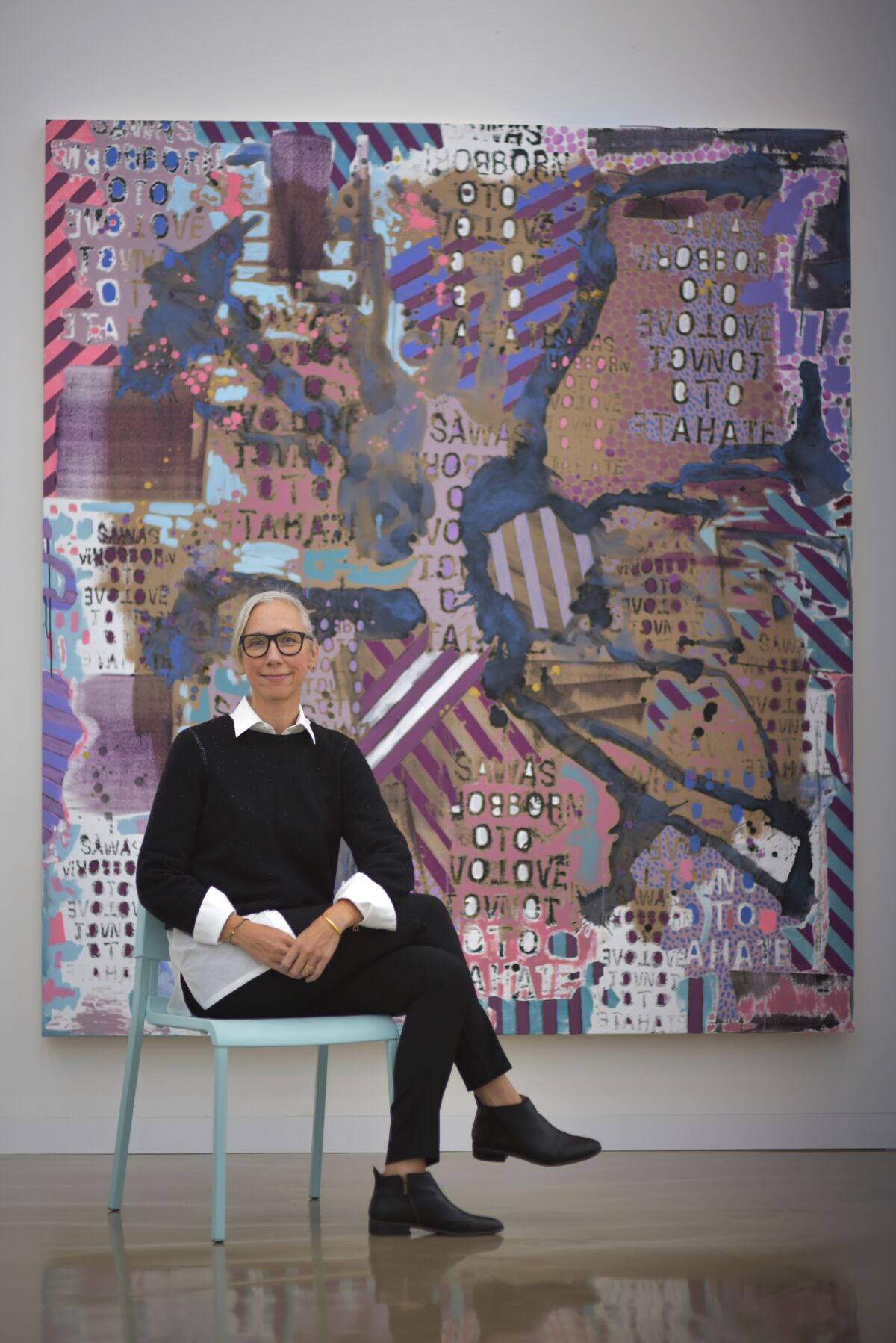
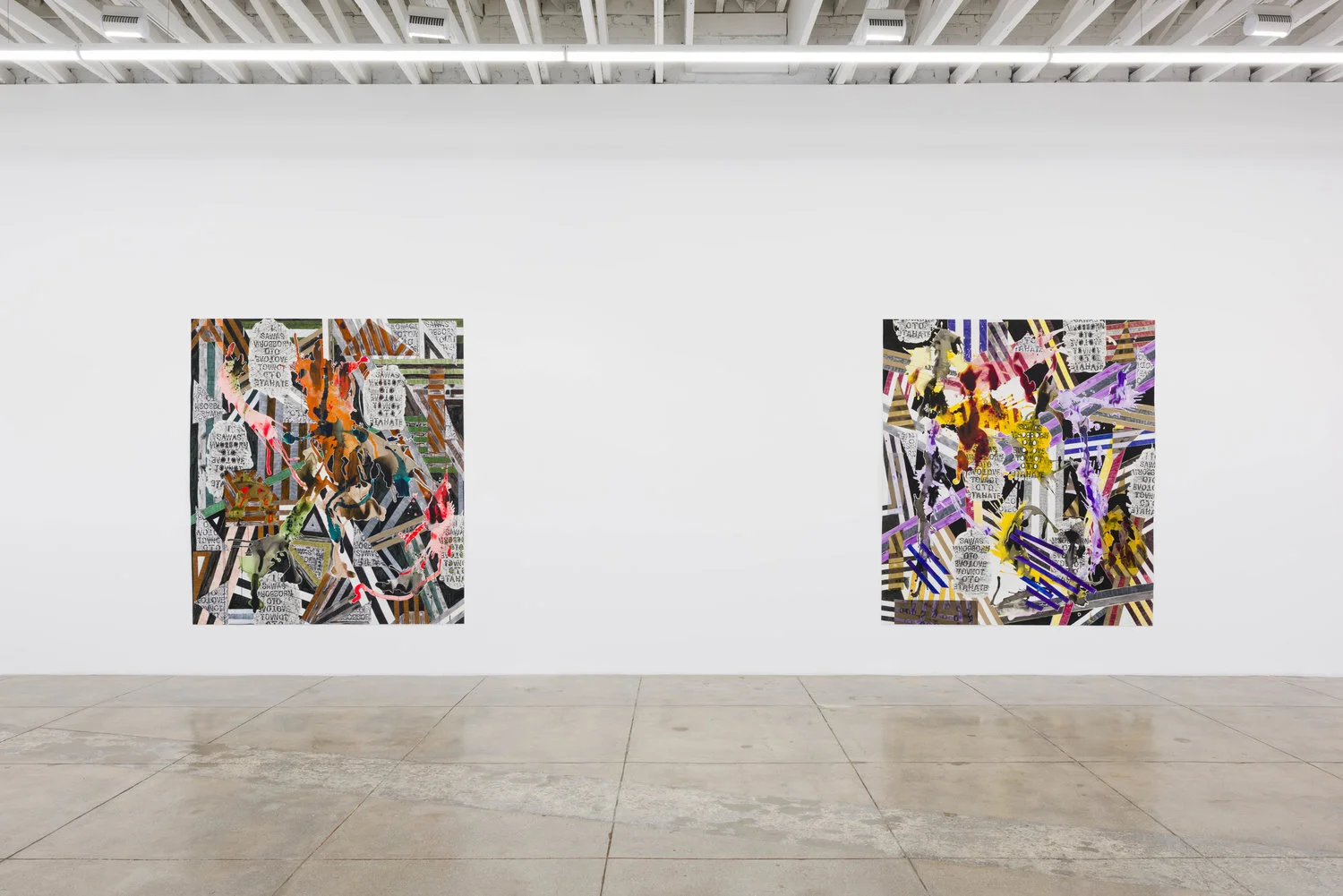
Central to Grant’s practice is the transformation of written words into graphic and architectural elements. She deconstructs sentences into individual phrases, letters, or phonemes, stretching, reversing, and layering them across large-scale canvases. By altering scale, weight, and orientation, Grant strips text of its traditional linear readability, forcing the viewer to engage with language as a spatial and visual phenomenon. Words become topography, calligraphic gesture, and structural scaffolding.
Somatic and Gestural Execution
Grant's working method is deeply physical. Working on large canvases laid horizontally or mounted across studio walls, she uses her entire body to paint, draw, and sculpt. She often employs dual-handed painting techniques, mirror writing, and gestural brushwork to introduce unpredictability and fluidity into her work. The scale of her paintings requires viewers to shift their physical distance—stepping back to discern macro-patterns and moving closer to read intricate script and micro-layers of pigment.
Translation, Transposition, and Intertextuality
Translation is not merely a method for Grant; it is her core conceptual theme. She examines what is preserved, lost, or transformed when ideas move between languages, mediums, and individuals. Her work frequently incorporates texts by influential writers and theorists, including:
- Hélène Cixous: Engaging with French feminist theory, exploring ideas of écriture féminine (feminine writing) and bodily expression.
- Michael Joyce: Collaborating on hyper-text literature turned visual art, exploring non-linear narrative structures.
- Pablo Neruda and Sophocles: Investigating themes of devotion, tragedy, memory, and spatial displacement.
Major Artistic Collaborations and Literary Projects
Throughout her career, Grant has championed collaborative creation, challenging the romantic myth of the isolated artist. Her collaborations bridge the boundaries between visual arts, literature, and performance.
Collaborations with Michael Joyce
One of Grant’s earliest major collaborative lines of inquiry involved pioneering hyper-text author Michael Joyce. Together, they produced works such as Agile Small Waves and Quarter of the World. In these projects, Grant transformed Joyce’s non-linear digital narratives into vast, web-like paintings and sculptures. The resulting installations visually mapped how human thought moves through digital and textual networks, creating dynamic dialogic canvases.
Literary and Visual Partnerships with Keanu Reeves
Grant’s high-profile collaborations with actor and writer Keanu Reeves yielded two distinct artist books that blend poetry, visual art, and bookmaking mechanics:
- Ode to Happiness (2011): Conceived as an artist’s book, Ode to Happiness features text written by Reeves alongside ink drawings created by Grant. Grant’s delicate, expressive wash drawings complement the text's somber yet darkly humorous tone, serving as a subtle parody of self-pity and a meditation on resilience.
- Shadows (2016): This suite of works explores the concept of the shadow as both a physical reality and a psychological metaphor. Grant photographed Reeves’ shadow in movement, subsequently applying digital and darkroom manipulations, scale shifts, and painterly color fields. The resulting suite of art prints and accompanying art book transform fleeting silhouettes into monumental, abstract forms.
Film and Documentary Endeavors
Grant’s artistic inquiry extends into moving-image media. Her directorial debut, the documentary film Taking Lena Home (2015), investigated the history and repatriation of a stolen 19th-century tombstone discovered in rural Kansas. The film highlights her interest in material artifacts, community memory, historic preservation, and the ethics of ownership.
Enterprise and Advocacy: grantLOVE Project and X Artists' Books
Grant’s career is equally defined by her entrepreneurial and philanthropic endeavors, which seek to redefine how art is produced, distributed, and used to support communities.
The grantLOVE Project
Founded by Grant in 2008, the grantLOVE project is an ethical, artist-driven philanthropic initiative. The project produces and sells limited-edition artworks, prints, jewelry, and apparel featuring Grant’s trademark hand-drawn "LOVE" symbol.
Proceeds from the grantLOVE project are directed toward non-profit arts organizations and artist-led endeavors, particularly those supporting arts education, community projects, and underrepresented artists. Beneficiaries have included:
- Heart of Los Angeles (HOLA): Supporting visual arts programs for youth in underserved communities.
- Project Angel Food: Funding food relief and nutrition services through creative partnerships.
- Union Center for the Arts: Supporting local artist-run spaces and community programming in Los Angeles.
The grantLOVE initiative demonstrates Grant’s belief in art as a sustainable engine for social impact, providing a blueprint for how studio practice can directly fund community outreach.
X Artists' Books (XAB)
In 2017, Grant co-founded X Artists' Books alongside Keanu Reeves and book designer Jessica Fleischmann. XAB is a small, independent publisher focused on producing high-quality, artist-centered books that do not fit neatly into traditional literary or commercial art publishing categories.
XAB emphasizes publishing as a collaborative, interdisciplinary art form. The press works closely with visual artists, writers, and thinkers to craft physical books where typography, paper choice, binding, and layout are integral to the conceptual content of the work. By producing low-run, beautifully crafted titles, XAB preserves the book as an essential medium for contemporary conceptual art.
Key Projects, Mediums, and Conceptual Focus
The following table summarizes Grant’s major bodies of work, highlighting their primary mediums, key collaborators, and core conceptual inquiries.
| Project / Body of Work | Primary Mediums | Key Partners / Literary Sources | Core Conceptual Focus |
|---|---|---|---|
| Agile Small Waves | Mixed media on paper, wire, painting | Michael Joyce | Non-linear hyper-text, linguistic webs, spatial mapping of narrative. |
| Ode to Happiness (2011) | Ink wash drawings, artist book format | Keanu Reeves | Satire of melancholy, interplay between light verse and visual wash. |
| grantLOVE Project (2008–Present) | Screenprints, sculpture, jewelry, textiles | Various arts non-profits (e.g., HOLA) | Philanthropy, democratization of art, sustainable non-profit funding. |
| Taking Lena Home (2015) | Documentary film, archival video | Rural Kansas community archives | Provenance, historic memory, material culture, ethical repatriation. |
| Shadows (2016) | Photography, digital printmaking, book art | Keanu Reeves | Silhouette abstraction, bodily movement, light and dark dualities. |
| Century / Teleportation Series | Large-scale oil and acrylic on canvas | Hélène Cixous, post-structural literature | Translation loss/gain, mirror script, calligraphic spatial composition. |
| X Artists' Books (2017–Present) | Independent fine art publishing | Jessica Fleischmann, Keanu Reeves, various artists | The book as visual medium, artist-led publishing, tactile literature. |
Institutional Recognition, Exhibitions, and Art Historical Context
Grant’s work has been exhibited extensively across North America and Europe, earning inclusion in prominent public and private collections.
Selected Institutional Exhibitions
Grant’s studio work has been featured in solo and group exhibitions at respected art institutions, including:
- Los Angeles County Museum of Art (LACMA) (Los Angeles, CA)
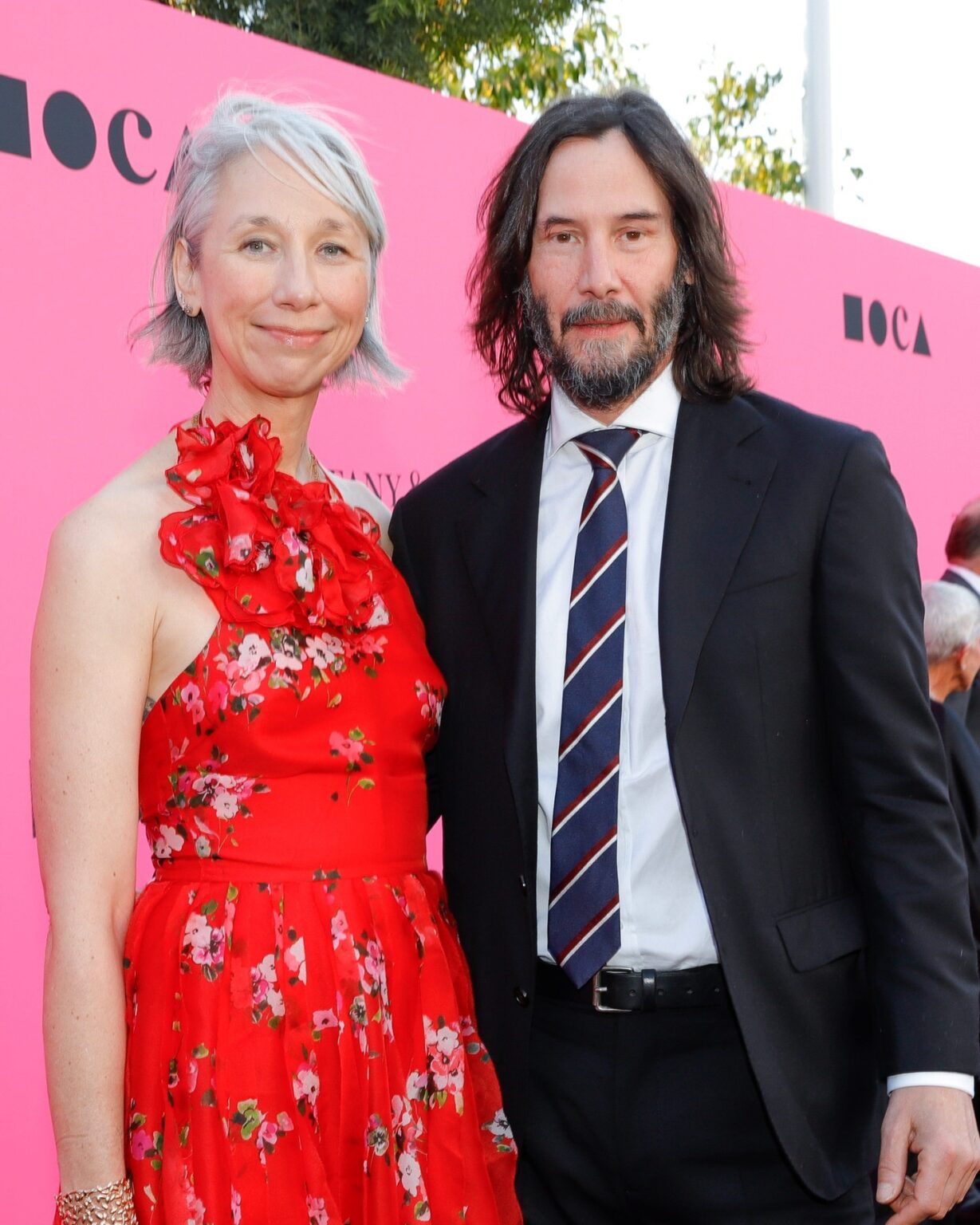
- Museum of Contemporary Art (MOCA) (Los Angeles, CA)
- The Eli and Edythe Broad Art Museum at Michigan State University (East Lansing, MI)
- Marfa Contemporary (Marfa, TX)
- Galerie Gradiva (Paris, France)
- Harris Lieberman Gallery (New York, NY)
Her works form part of the permanent collections of institutions such as LACMA, MOCA Los Angeles, the Hammer Museum, and the Blanton Museum of Art at the University of Texas at Austin.
Position within Art History
In the broader context of art history, Grant operates within a lineage of language-focused conceptual artists, including Cy Twombly, Ed Ruscha, Jenny Holzer, and Xu Bing. However, whereas artists like Holzer often utilize severe typography to critique power structures, and Ruscha isolates iconic pop-culture phrases, Grant approaches text through a deeply painterly, somatic, and literary lens.
She retains the gesture of the human hand, infusing conceptual art with organic warmth, tactile intensity, and emotional vulnerability. Her work demonstrates that language is not merely an intellectual code, but a physical experience deeply tied to human empathy, touch, and collective memory.
Frequently Asked Questions About Alexandra Grant
What is Alexandra Grant's primary artistic medium?
Alexandra Grant is a multidisciplinary conceptual artist who works across painting, drawing, sculpture, photography, film, and fine-art publishing. She is best known for her large-scale paintings and drawings that incorporate deconstructed written text, oil, acrylic, and sculptural elements.
How does Alexandra Grant incorporate literature into her visual art?
Grant selects texts from poets, philosophers, and fiction writers, deconstructing their syntax into isolated letters, phrases, and visual forms. She translates these words onto canvas using mirror writing, calligraphic gestures, and multi-layered pigments, creating visual compositions where text operates as both abstract form and semantic meaning.
What is the primary purpose of the grantLOVE project?
Founded in 2008 by Grant, the grantLOVE project is an artist-led philanthropic initiative. It creates and sells limited-edition prints, sculptures, and merchandise featuring Grant's signature hand-drawn "LOVE" design to raise funds for arts non-profits, community art centers, and educational programs.
What is X Artists' Books (XAB)?
X Artists' Books is an independent publishing imprint co-founded in 2017 by Alexandra Grant, Keanu Reeves, and Jessica Fleischmann. The press publishes artist-centered, non-traditional books that bridge visual art, literature, and conceptual design, treating the published book as a primary artistic medium.
What academic credentials does Alexandra Grant hold?
Grant holds a Bachelor of Arts (BA) in History and Studio Art from Swarthmore College (1994) and a Master of Fine Arts (MFA) in Drawing and Painting from the California College of the Arts (CCA) in San Francisco (2000).
How to Study and Engage with Alexandra Grant's Work
For art historians, students, curators, and collectors looking to analyze or engage with Alexandra Grant’s practice, the following structured approaches provide direct avenues for exploration:
- Examine Her Independent Publications: Obtain titles published by X Artists' Books to examine how Grant and her collaborators integrate text, binding, paper selection, and spatial design into physical book art.
- Analyze Public Permanent Collections: Visit or research institutional collections holding her work—such as the Los Angeles County Museum of Art (LACMA) or the Museum of Contemporary Art (MOCA), Los Angeles—to study her large-scale painterly handling of text in person.
- Engage with Philanthropic Art Models: Study the grantLOVE project as a case study in ethical art production and social entrepreneurship, examining how fine artists can build sustainable models to support non-profit community programming.
- Research Interdisciplinary Translation: Analyze Grant’s visual transpositions of theoretical texts by writers such as Hélène Cixous and Michael Joyce to explore the intersection of contemporary visual art, literary criticism, and translation theory.