Alexandra Grant is a Los Angeles-based visual artist who bridges the gap between written language and fine art. By translating poetry, philosophy, and spoken narrative into painting, sculpture, neon installations, and published books, Grant explores the conceptual terrain where words end, visual art begins, and meaning is endlessly reinterpreted.
The Intersection of Text and Image in Alexandra Grant’s Art Practice
For decades, contemporary visual artists have wrestled with the relationship between what is read and what is seen. Alexandra Grant stands at the forefront of this post-conceptual tradition, transforming text from a static communication tool into a fluid, visual medium. Rather than using language merely to label or explain a visual work, Grant treats words as the very fabric of her art.
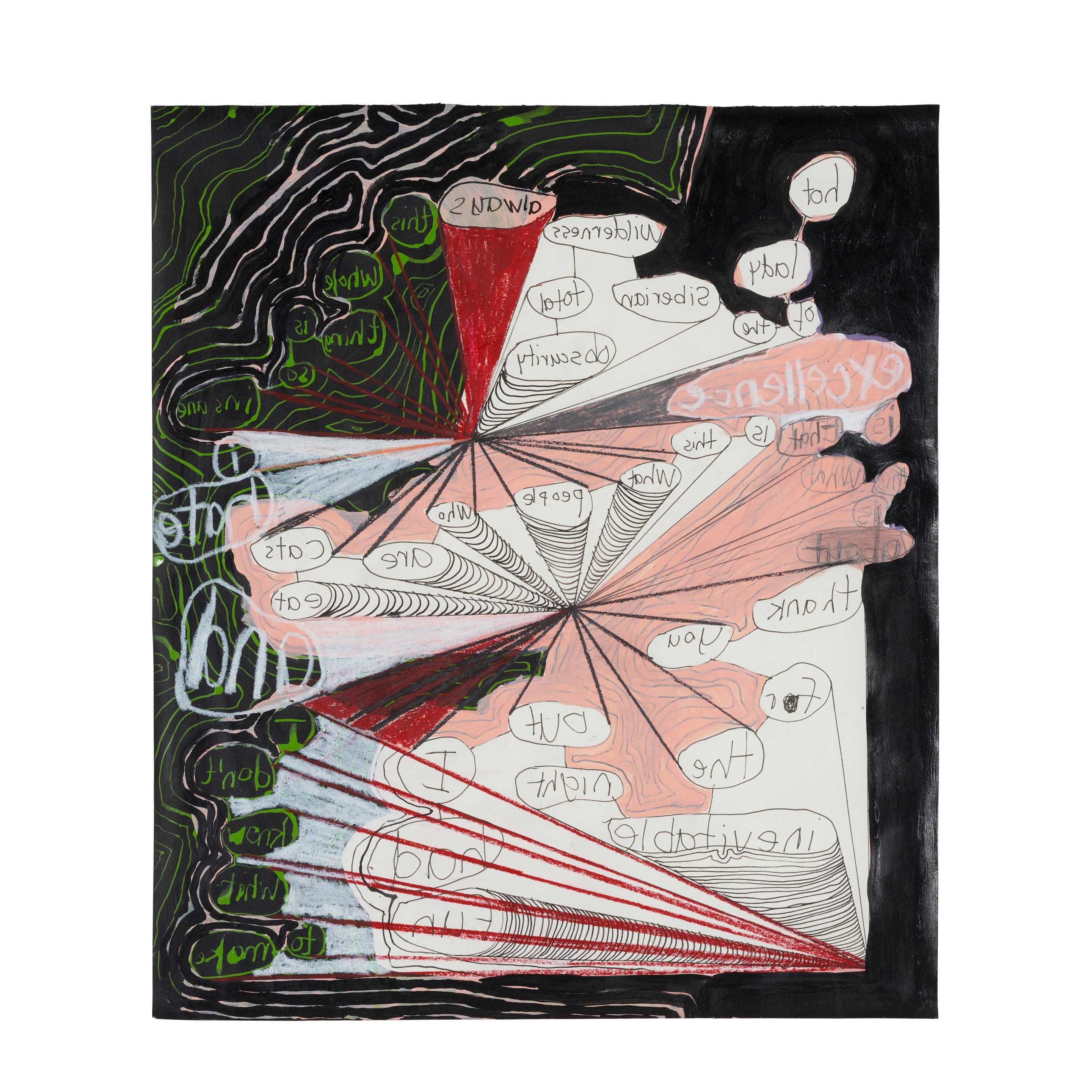
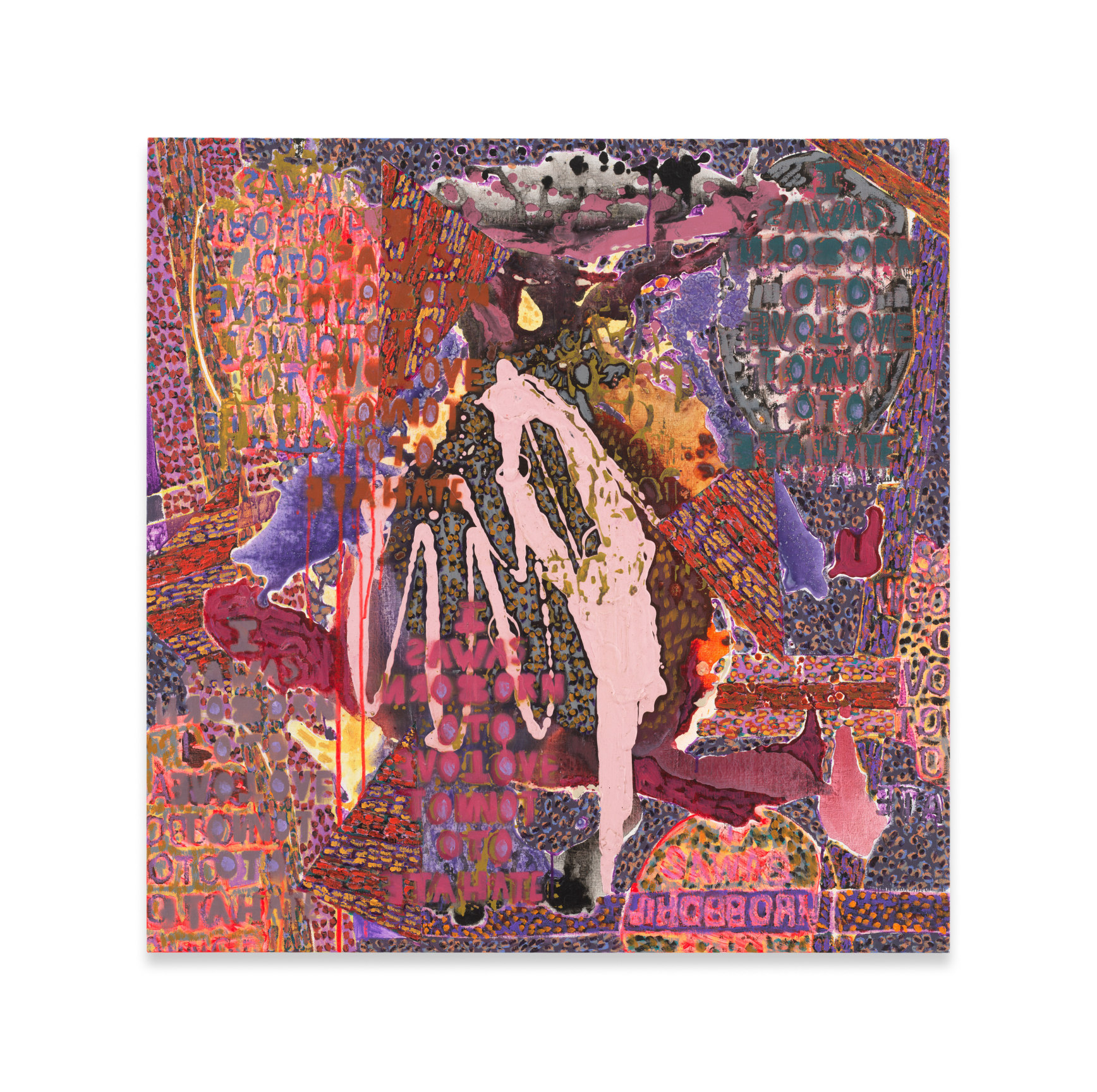
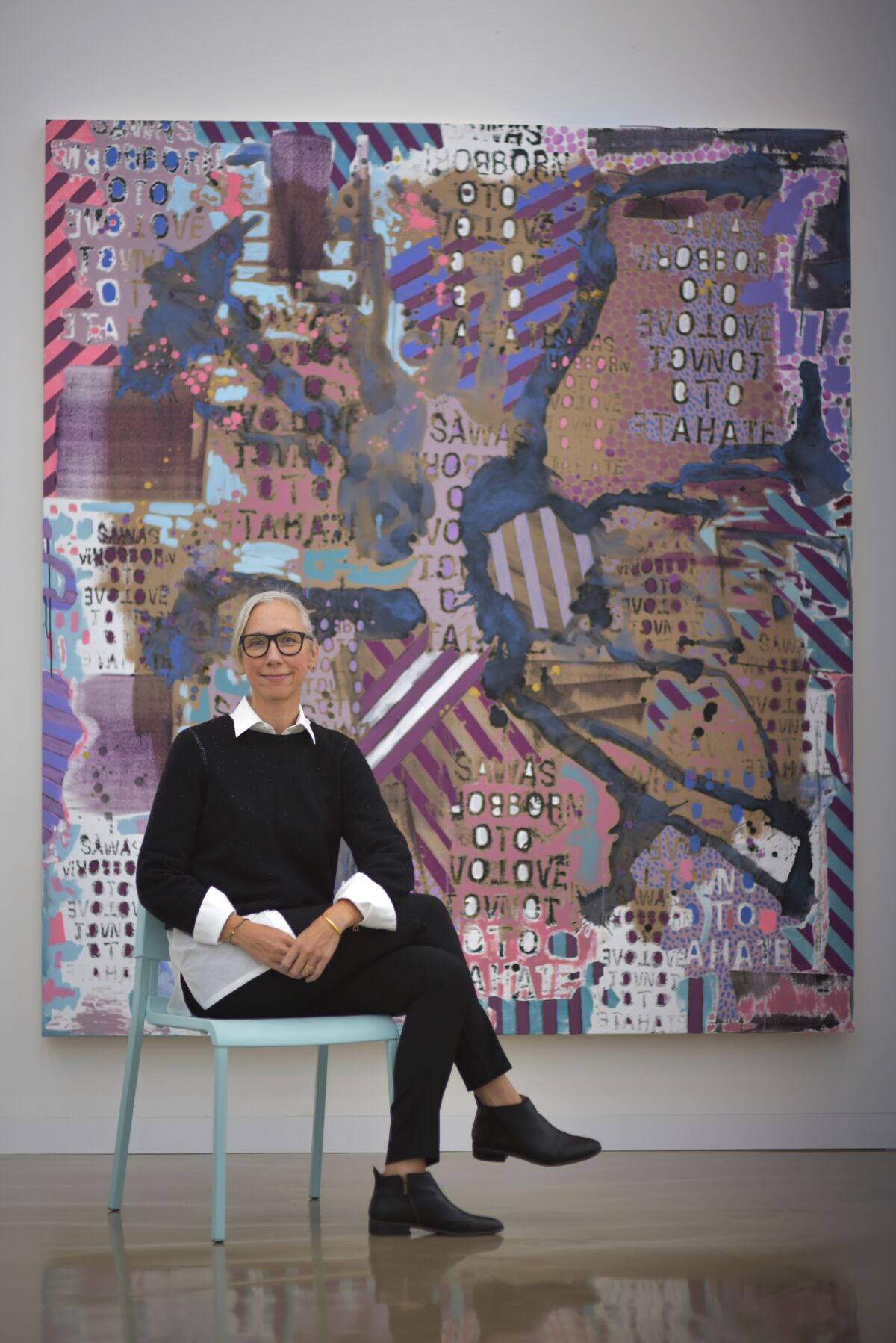
Grant’s educational background in both history and studio art—earning her B.A. from Swarthmore College and her MFA from the California College of the Arts—profoundly shapes her methodology. She views written language not as an objective set of rules, but as an evolving human artifact. Her canvases often feature dense layers of handwriting, painted typography, and gestural brushwork where individual letters stretch, overlap, and blur.
In Grant’s work, text operates on two distinct levels simultaneously:
- The Semantic Level: The literal meaning of the source text, whether derived from a classic tragedy, a contemporary poem, or a philosophical essay.
- The Somatic and Visual Level: The physical presence of the letters—their scale, color, texture, and spatial arrangement across the canvas or gallery wall.
By forcing these two levels to interact, Grant creates a tension between reading and viewing. A viewer standing before one of her large-scale paintings must constantly adjust their focus, switching back and forth between deciphering phrases and taking in abstract visual compositions.
Deconstructing Language: Translation, Repetition, and the Space "In Between"
The phrase "words and everything in between" encapsulates the central philosophy of Grant’s work. The "in between" represents the liminal space where translation occurs—between author and artist, between one language and another, between written symbol and physical gesture, and ultimately between the artwork and the viewer’s perception.
- Author / Literary Source
- Translation & Deconstruction
- The "Space In Between"
- Visual Form: Painting / Neon / Sculpture
- Viewer Interpretation & Experience
Mirror Writing and Reversal
One of Grant’s signature formal strategies is the use of reversed or mirror-written text. By flipping phrases horizontally, she disrupts the habit of quick reading. The viewer can no longer skim the surface for quick information; instead, they are forced to slow down, decode each character, and experience the physical effort of reading as part of the aesthetic experience.
Semantic Satiation and Repetition
Grant frequently repeats a single phrase across a canvas dozens or hundreds of times. This process triggers a psychological phenomenon known as semantic satiation, where repeating a word causes it to temporarily lose its literal meaning, exposing its underlying sound and visual form. Under Grant's brush, a repeated word transforms from a signifier into a rhythmic, abstract pattern of paint.
Multilingualism and Cultural Translation
Having spent significant portions of her childhood and formative years living in Mexico, France, and the United States, Grant fluently navigates multiple linguistic framework environments. Her art reflects this international perspective, often examining how concepts change when translated across languages. The slippages, misunderstandings, and open-ended nuances that occur during translation become fertile ground for visual exploration.
Major Literary Collaborations: From Philosophy to Contemporary Poetry
Collaboration is fundamental to Grant’s practice. Rather than working in isolated artist solitude, she engages in long-term creative dialogues with writers, theorists, and filmmakers. These partnerships demonstrate how literary texts can evolve into multidimensional visual experiences.
Collaborations with Hélène Cixous
Grant’s engagement with French feminist writer and philosopher Hélène Cixous represents one of her most significant intellectual partnerships. Exploring themes of telepathic communication, language, and memory, Grant created works such as For Paris and the Telepathic Book series. Cixous’s non-linear, poetic prose aligns naturally with Grant’s fluid visual structures, resulting in paintings and neon sculptures where theoretical ideas take on physical light and spatial presence.
Work with Michael Joyce
Early in her career, Grant collaborated extensively with hyperfiction pioneer Michael Joyce. Their work together examined how electronic literature, hyper-textuality, and visual art intersect. Projects like She Drives Me Crazy transformed narrative fragments into complex, web-like paintings that mirrored the interconnected, non-linear structure of early digital text.
Books and Projects with Keanu Reeves
Grant’s collaborations with actor and writer Keanu Reeves produced two notable artists' books: Ode to Happiness (2011) and Shadows (2016).
- Ode to Happiness paired Reeves’s self-deprecating text with Grant’s expressive, ink-wash drawings, creating a playful yet poignant meditation on sadness and resilience.
- Shadows explored the physical and metaphorical nature of shadows, combining photographic silhouettes captured by Grant with poetic text by Reeves, examining how light and dark define human presence.
Mediums and Formal Techniques: How Words Become Visual Form
Grant works across a diverse range of artistic mediums, adapting her technical approach to fit the physical demands of the language she is investigating.
| Project / Series | Literary Source / Collaborator | Primary Medium | Key Artistic Theme |
|---|---|---|---|
| She Drives Me Crazy | Michael Joyce | Mixed media on paper and canvas | Hypertext, mapping, and non-linear narrative networks |
| For Paris / Telepathic Book | Hélène Cixous | Oil, acrylic, and custom neon light | Telepathy, translation, and linguistic transformation |
| Ode to Happiness | Keanu Reeves | Artists' book (ink washes and typography) | Satire, vulnerability, and text-image balance |
| Shadows | Keanu Reeves | Photography, pigment prints, text | Silhouette, body presence, light, and shadow |
| Antigone 3000 | Sophocles / Classical Myth | Acrylic, spray paint, neon on canvas | Civic duty, protest, gendered power, and moral voice |
Painting and Drawing
In her two-dimensional works, Grant layers oil, acrylic, watercolor, and drawing media. She frequently builds up dense surfaces over months, applying text in thin glazes or heavy impasto. The result is a tactile stratum where past drafts of writing remain visible underneath newer coats of paint, echoing the palimpsest nature of historic manuscripts.
Neon Sculptures
Grant’s transition into neon art allowed her to strip away the physical weight of paint and turn words into pure light. Suspended from gallery ceilings or mounted against walls, her neon works present phrases written in her distinct handwriting. The glowing glass tubes project colored light onto surrounding surfaces, physically expanding the text into the gallery space and transforming the viewer's immediate environment.
X Artists’ Books and Philanthropic Endeavors
Alexandra Grant’s engagement with language extends beyond the gallery wall into independent publishing and community philanthropy, emphasizing accessibility and collaboration.
- Alexandra Grant Art
- X Artists' Books
- Artist-led publishing
- Hybrid literature/art
- High tactile quality
- Grant Love Project
- Art sales for charity
- Supporting non-profits
- Arts education grants
- X Artists' Books
X Artists’ Books
Co-founded in 2017 by Alexandra Grant, Keanu Reeves, and Jessica Fleischmann, X Artists’ Books is a publisher of thoughtful, high-quality, artist-centered books. The publishing imprint focuses on works that reside between genres—books that are artworks in their own right rather than simple exhibition catalogs. By prioritizing non-traditional formats, unusual binding materials, and unique writer-artist pairings, X Artists' Books reinforces Grant’s belief that publishing is a vital extension of visual art practice.
The Grant Love Project
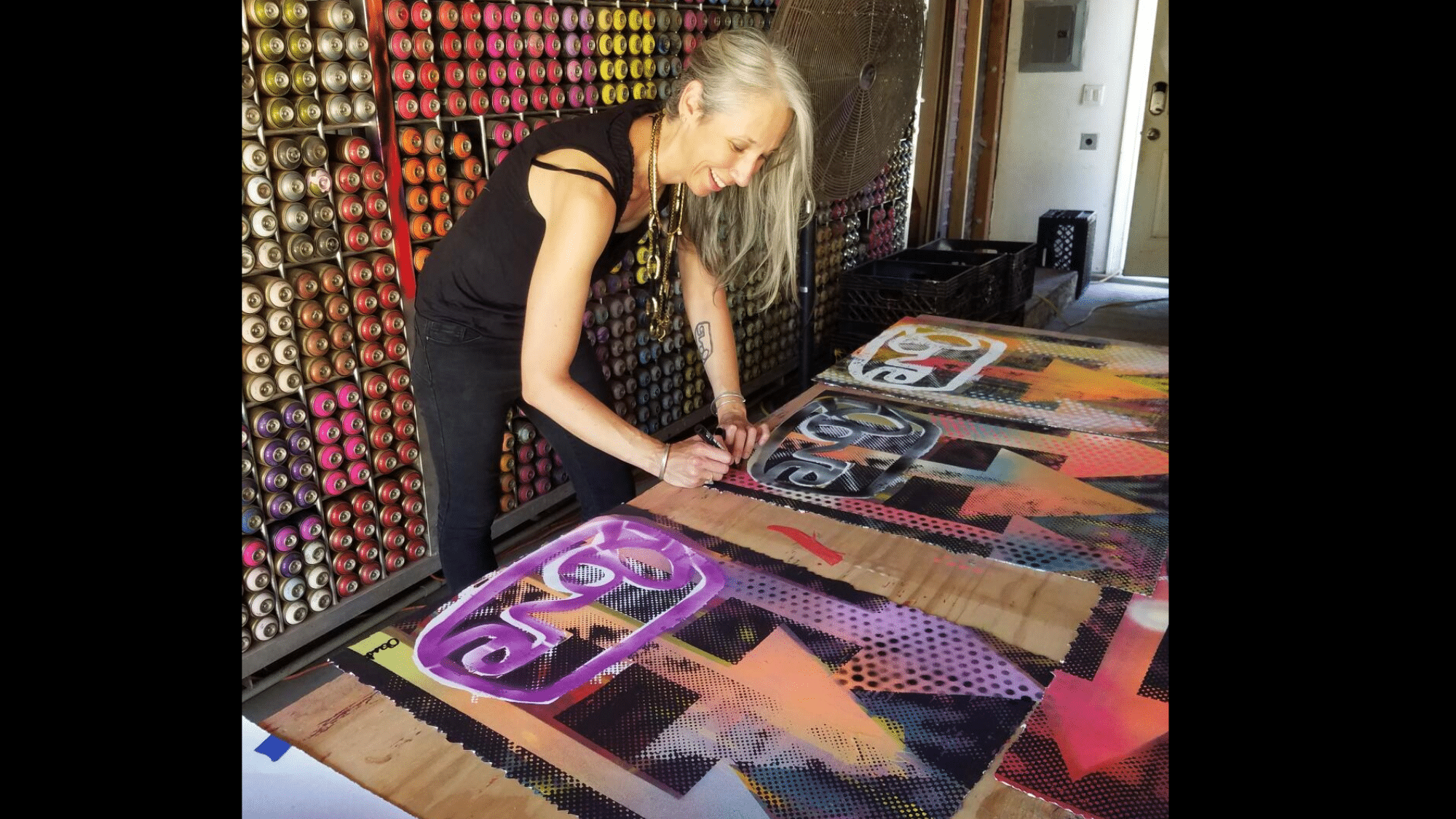
Established in 2008, the Grant Love Project produces and sells original artworks, prints, and limited-edition items to benefit non-profit organizations and artist-run projects. Featuring Grant’s signature stylized "LOVE" symbol, the project has raised significant support for arts education, community organizations, and legal aid groups, demonstrating how visual concepts can generate tangible social impact.
Critical Reception and Institutional Impact
Throughout her career, Grant has established a distinctive space in modern contemporary art. Her works are included in major public collections, such as the Los Angeles County Museum of Art (LACMA), the Museum of Contemporary Art (MOCA) Los Angeles, the Hammer Museum, and the Art Gallery of Ontario.
Critics frequently highlight her ability to make abstract theoretical concepts accessible and visually engaging. By treating language as a tactile material subject to decay, transformation, and physical weight, Grant challenges the traditional boundaries separating literature from fine art. Her practice demonstrates that words are not merely vessels for literal messages, but versatile raw materials capable of evocative visual expression.
Frequently Asked Questions
What is the main focus of Alexandra Grant's artwork?
Alexandra Grant’s art focuses on the relationship between language, written text, and visual art. She explores how text can be deconstructed, translated, and visually represented through painting, drawing, sculpture, neon installations, and artists' books.
How does Alexandra Grant integrate words into her visual art?
Grant uses several techniques to turn words into visual forms, including handwriting, mirror writing, linguistic repetition, stencil work, and custom neon tubing. Her method forces viewers to experience reading as a physical, aesthetic act alongside visual observation.
What is X Artists’ Books?
X Artists’ Books is an independent publishing imprint co-founded by Alexandra Grant, Keanu Reeves, and Jessica Fleischmann in 2017. The house specializes in publishing unusual, hybrid artists' books that blend text, visual art, and non-traditional conceptual formats.
What does "everything in between" mean regarding Grant's work?
"Everything in between" refers to the conceptual space connecting text and image, author and visual artist, reading and viewing. It highlights Grant's focus on translation, liminal spaces, and the open meanings created when language shifts into physical form.
Which major public galleries hold Alexandra Grant’s artwork?
Her work is held in prestigious public and museum collections, including the Los Angeles County Museum of Art (LACMA), the Museum of Contemporary Art (MOCA) Los Angeles, the Hammer Museum, and the Art Gallery of Ontario.
How to Explore and Study Text-Based Visual Art
For art historians, students, collectors, and enthusiasts seeking to deeper understand text-based visual art and Alexandra Grant’s career, the following steps offer a practical path forward:
- Examine Artists' Books Firsthand: Visit specialized art libraries, museum archives, or independent bookshops to view published works from X Artists' Books and classic artist publications. Experiencing the scale, paper weight, and binding provides essential context that digital screens cannot replicate.
- Study Post-Conceptual Text Artists: Contextualize Grant's practice by studying earlier pioneers of text art, such as Jenny Holzer, Lawrence Weiner, Ed Ruscha, and John Baldessari, observing how Grant's painted, collaborative approach differs from classic conceptualism.
- Analyze the Role of Translation: When viewing text-based installations, examine how the source material changes when converted into a visual medium. Pay attention to how mirror-writing, scale changes, and surface textures alter your reading speed and emotional response.