Quantifying Alexander the Great’s net worth today requires translating ancient bullion hoards and imperial revenues into modern financial metrics. Based on the 180,000 talents of precious metals seized from Persian royal treasuries and the sovereign assets of his empire, historians estimate his peak net worth ranged between $300 billion and $1.6 trillion in modern U.S. dollars.
The Mechanics of Ancient Wealth: Units of Account and Historical Sources
Determining the net worth of a king who lived in the fourth century BC requires establishing a bridge between ancient monetary systems and modern economic indicators. Alexander III of Macedon did not hold stock options, central bank deposits, or paper currency. Instead, his wealth consisted of uncoined gold and silver bullion, minted coinage, royal landholdings, revenue from state-monopolized trade routes, and annual tribute paid by conquered satrapies.
The primary unit of high-denomination currency across the Mediterranean and Near East during Alexander's reign was the talent. In the Attic weight standard—which Alexander adopted to streamline commerce across his expanding empire—one talent equaled 6,000 silver drachmas. In physical terms, an Attic talent weighed approximately 25.8 kilograms (56.9 pounds) of pure silver. The Achaemenid Persian Empire also utilized the Eastern or Babylonian talent, which was even heavier, weighing roughly 30.2 kilograms (66.6 pounds).
- 1 Attic Talent = 6,000 Drachmas = ~25.8 kg (56.9 lbs) Silver
- 1 Drachma = Daily wage for a skilled artisan or mercenary phalangite
Historical figures regarding Alexander’s acquisition of wealth come primarily from four classical historians: Arrian of Nicomedia (Anabasis of Alexander), Plutarch (Life of Alexander), Diodorus Siculus (Bibliotheca historica), and Quintus Curtius Rufus (Histories of Alexander the Great). These writers drew directly from primary accounts that have since been lost, including the royal daily journal (Ephemerides) maintained by Alexander’s secretary Eumenes of Cardia, and memoirs written by Alexander’s general, Ptolemy I Soter.
To evaluate Alexander’s financial standing fairly, modern economic historians divide his fortune into two distinct categories:
- Liquid Treasury Assets: Physical gold, silver, and precious goods looted directly from royal Persian strongholds.
- Sovereign Asset Value: The structural, tax-generating capacity of an empire spanning over 2 million square miles across Europe, Africa, and Asia.
The Persian Conquest: Quantifying the Loot of Susa, Persepolis, and Babylon
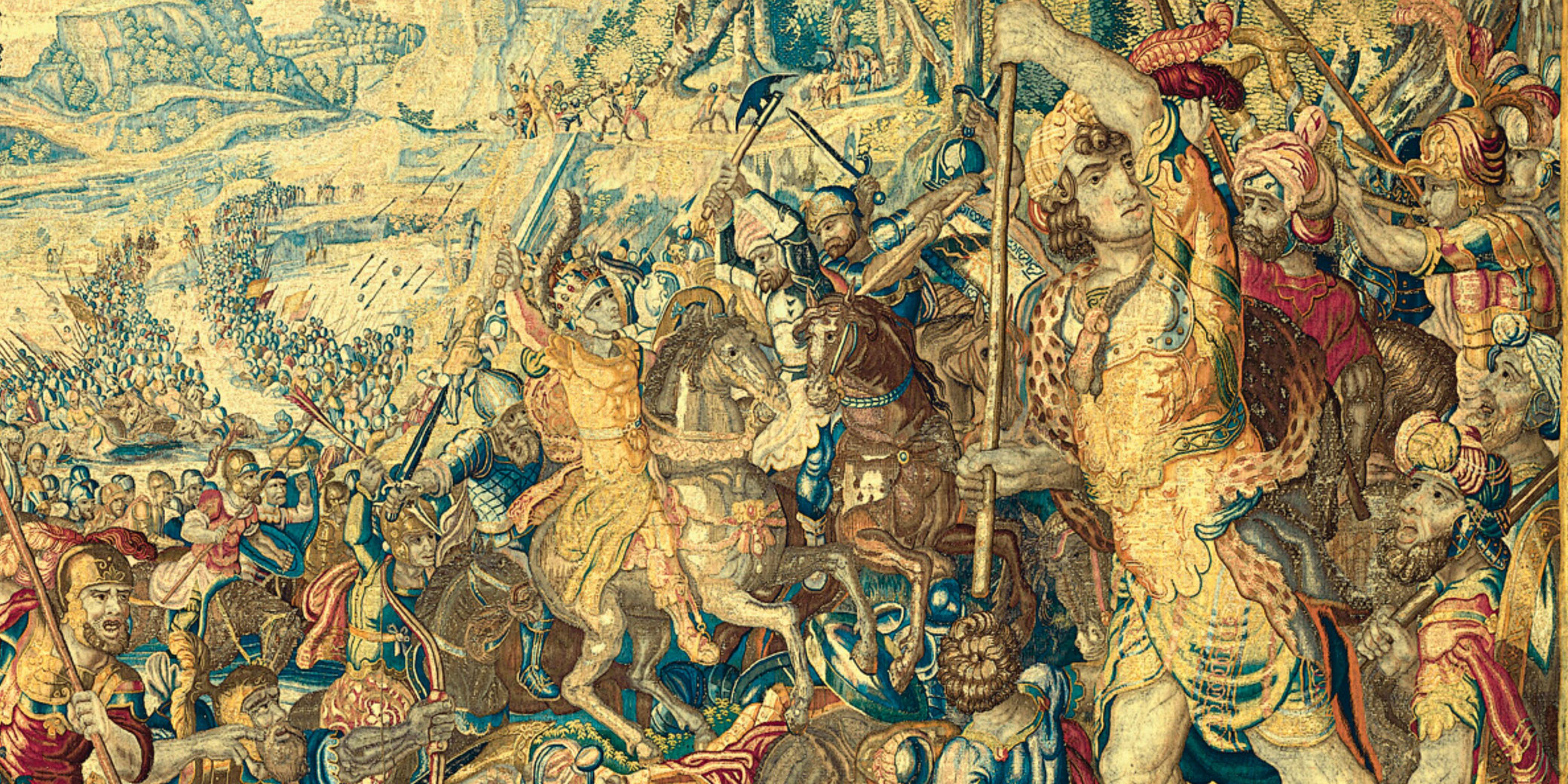
When Alexander crossed the Hellespont into Asia Minor in 334 BC, the Macedonian crown was severely in debt. King Philip II had left behind a treasury burdened by roughly 500 talents of debt, alongside military payroll obligations. However, after decisive victories at Granicus (334 BC), Issus (333 BC), and Gaugamela (331 BC), Alexander gained direct access to the accumulated, untouched wealth of the Achaemenid Dynasty.
For over two centuries, Persian Great Kings had collected annual tributes from satrapies stretching from Egypt to the Indus River Valley. Rather than circulating this wealth back into the economy, Persian rulers stored the bullion in uncoined ingots, golden vessels, and coined darics inside fortified treasury cities.
- Macedonian Invasion (334 BC): ~500 Talents in Crown Debt
- Conquest of Persia (331–330 BC): ~180,000 Talents Seized
Susa
Following the Battle of Gaugamela, Alexander marched into Susa, the administrative capital of Persia. The city surrendered without resistance. Classical sources, including Diodorus Siculus, record that Alexander captured approximately 40,000 to 50,000 talents of uncoined silver and gold bullion, alongside 5,000 talents of pure purple dye from Hermione that had retained its color intensity for nearly 200 years.
Persepolis
The capture of Persepolis in 330 BC represented the largest single financial seizure in recorded ancient history. The ceremonial capital contained the primary royal treasury of Darius III. Plutarch writes that the treasure was so vast that it required 20,000 mules and 5,000 camels to carry the precious metals away to Susa and Ecbatana. Historians estimate the yield at Persepolis alone reached 120,000 talents.
Pasargadae, Babylon, and Ecbatana
Additional imperial hoards were seized at Pasargadae (the ancient capital founded by Cyrus the Great), Babylon, and Ecbatana (the summer capital). Ecbatana yielded another 26,000 talents of bullion, which Alexander converted into a centralized military fund under the guardianship of his treasurer, Harpalus.
Summing these major captures yields a total liquid treasury acquisition of 180,000 to 200,000 talents of precious metal within a three-year window.
Modern Financial Valuation Models: From Spot Metal Prices to GDP Share
Translating 180,000 Attic talents into current financial figures requires different economic modeling approaches. Depending on whether an economist measures raw commodity weight, labor purchasing power, or relative gross domestic product (GDP) share, Alexander’s net worth varies substantially.
| Alexander the Great: Valuation Range | Value |
|---|---|
| Commodity Spot Value | $35 Billion – $115 Billion |
| Purchasing Power (PPP) | $194 Billion – $240 Billion |
| Empire GDP Share Value | $1.2 Trillion – $1.6 Trillion |
Model 1: Commodity Spot Value (Raw Metal Weight)
This conservative model calculates the modern market value of the silver and gold weight captured by Alexander.
- Weight Calculation: 180,000 talents × 25.8 kg = 4,644,000 kilograms (4,644 metric tons) of precious metal.
- Silver Standard Valuation: If calculated entirely as fine silver at a nominal commodity price of $0.90 per gram ($28 per troy ounce), 4.64 million kg of silver equals roughly $4.18 billion.
- Gold-Adjusted Valuation: A large proportion of Persian treasure consisted of gold bullion and gold darics. In antiquity, the standard ratio of gold to silver was roughly 10:1 to 13:1. Accounting for the actual gold concentration in the royal hoards, the spot market value of his captured bullion sits between $35 billion and $115 billion.
Model 2: Purchasing Power Parity (Labor Standard)
Calculating ancient net worth solely by raw commodity weight ignores the vastly higher purchasing power of silver in the 4th century BC. A more accurate metric compares what a talent could purchase in goods and services versus modern costs.
- In classical Greece and Macedon, 1 drachma represented a competitive daily wage for an infantry soldier (phalanx soldier) or a skilled stonemason.
- In modern economies, a day of skilled manual labor or entry-level military service costs approximately $150 to $200.
- Because 1 talent equaled 6,000 drachmas, one talent possessed a modern labor purchasing equivalent of $900,000 to $1.2 million.
- Multiplying 180,000 talents by $1.1 million yields a purchasing power net worth of $198 billion to $216 billion.
Model 3: Relative Economic Share (Sovereign Empire Valuation)
The most comprehensive valuation model treats Alexander not merely as an individual asset holder, but as the absolute owner-monarch of an empire. In antiquity, the monarch held direct crown ownership over all ungranted lands, mines, forests, custom ports, and royal monopolies.
By 323 BC, Alexander controlled the economic output of the Nile Valley, the Tigris-Euphrates basin, the Anatolian agricultural centers, the Phoenician maritime trade networks, and the Iranian plateau. Economic historians estimating the total productive capacity of the ancient world calculate that Alexander personally commanded between 40% and 50% of global economic output. Translating that level of sovereign dominance into modern financial terms—where global GDP exceeds $100 trillion—yields an adjusted wealth valuation of $1.2 trillion to $1.6 trillion.
Comparative Valuation Models for Alexander the Great’s Wealth
The following table summarizes how different economic analytical frameworks evaluate Alexander's fortune at its peak in 323 BC.
| Valuation Model | Financial Basis & Calculation Formula | Estimated Value (USD Equivalent) | Key Economic Assumptions |
|---|---|---|---|
| Commodity Spot Value | 180,000 talents converted to raw metric weight of silver and gold bullion | $35 Billion – $115 Billion | Evaluates strictly the physical commodity value of metal; ignores historical purchasing power. |
| Labor Purchasing Power (PPP) | Daily wage comparison (1 drachma = ~$180 modern labor cost × 6,000 drachmas/talent) | $194 Billion – $240 Billion | Measures practical buying power for goods, wages, fortifications, and military recruitment. |
| Annual State Revenue Model | Capitalization of imperial annual tribute (~15,000 to 20,000 talents per year) | $300 Billion – $450 Billion | Treats annual state collection like corporate revenue, applying a standard sovereign earnings multiple. |
| Sovereign Economic Share | Monopoly control over ~45% of the ancient world's gross domestic product | $1.2 Trillion – $1.6 Trillion | Measures total control over land, trade routes, natural resources, and labor populations. |
Imperial Logistics and Spending: How Alexander Spent His Billions
Alexander did not passively hoard his financial reserves inside underground vaults as his Persian predecessors had done. Instead, he deployed his financial capital aggressively to maintain military superiority, construct trade infrastructure, reward political loyalty, and project ideological power across three continents.
- Alexander's Expenditures:
- Military Payroll (~30,000 T/year)
- City Foundations (Alexandria, etc.)
- Debt Relief (20,000 T Opis)
- Civic Monuments (12,000 T Pyre)
Military Payroll and Mercenary Retainers
Maintaining a standing army of over 50,000 Macedonian veterans and allied Greek soldiers required unprecedented liquidity. A single infantryman earned roughly 1 drachma per day, while cavalrymen earned double. When accounting for specialized auxiliary troops, siege engineers, baggage trains, and naval crews, army payroll devoured 1,000 to 1,500 talents per month.
Furthermore, as Alexander pushed deeper into Central Asia and India, he hired vast forces of native Asian mercenaries, including Sogdian cavalry and Bactrian horse-archers, expanding his routine operating budget significantly.
Major Public Expenditures and Philanthropy
Historical records from Arrian and Diodorus Siculus detail several extraordinary single-event expenditures:
- The Opis Debt Discharge (324 BC): To resolve mutinous tensions among his Macedonian troops at Opis, Alexander unilaterally paid off all personal debts accumulated by his soldiers. This single decision cost the treasury 20,000 talents (roughly $22 billion in modern PPP terms).
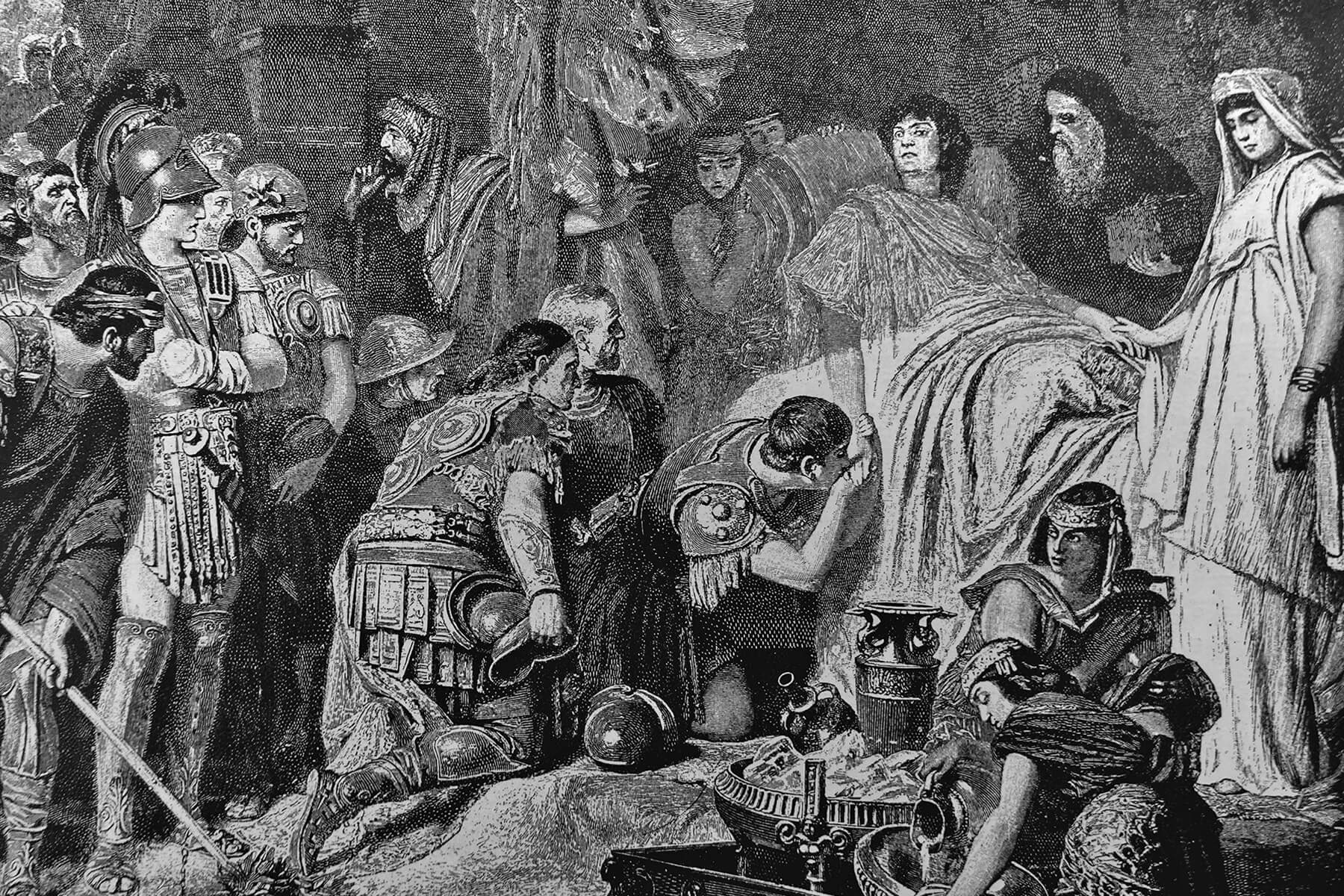
- Hephaestion's Demise and Funerary Pyre (324 BC): Following the death of his closest companion, Hephaestion, in Ecbatana, Alexander commissioned a colossal, six-story funerary monument in Babylon. Historical accounts state the funeral and associated games cost between 10,000 and 12,000 talents.
- Patronage of Science and Learning: According to Pliny the Elder, Alexander directed his royal treasurers to grant his former tutor, Aristotle, 800 talents to support his biological research, flora and fauna collection, and library acquisitions across Asia.
Urban Planning and Infrastructure
Alexander founded over 70 strategic cities across his campaign route, most bearing his name. The most famous, Alexandria in Egypt, was planned on a grid system with grand harbors, royal palaces, and wide avenues. Financing the physical construction, defensive walls, and initial colonization of these strategic urban centers consumed tens of thousands of talents.
Economic Aftershocks: Monetization and Ancient Inflation
The economic impact of Alexander’s conquests extended far beyond his personal balance sheet. By seizing the dormant Persian bullion stores and turning them into circulating currency, Alexander reshaped the monetary system of the ancient Mediterranean.
For centuries, the Persian Empire had acted as a financial sinkhole, pulling silver and gold out of regional economies and locking it away in underground vaults as solid ingots. When Alexander seized these hoards, he established mints at Susa, Babylon, Amphipolis, and Alexandria. These mints melted down ingots and struck millions of silver tetradrachms and gold staters featuring the image of Heracles—bearing Alexander’s likeness—on the obverse.
- Persian Hoarding Model (Passive Bullion Vaults)
- Macedonian Monetization (Active Minting & Circulation)
- Widespread Liquidity
- Lower Interest Rates
- Regional Economic Expansion
This sudden influx of massive liquidity into the Mediterranean market had two major economic consequences:
- Severe Short-Term Inflation: The rapid increase in circulating currency drastically reduced the purchasing power of silver throughout Greece, Asia Minor, and Egypt. Historical price records show that commodity prices—including wheat, barley, and livestock—doubled in price across the Aegean region during the decade following Alexander's death.
- Lowering Interest Rates and Stimulating Commerce: Before Alexander's conquest, standard commercial interest rates in classical Athens hovered between 12% and 18%. The immense liquidity injected by Macedonian mints drove baseline interest rates down to roughly 6%. This reduction in capital costs catalyzed Hellenistic maritime trade, enabling merchant networks to expand across the Red Sea, the Mediterranean, and the Persian Gulf.
Comparative Wealth: Alexander the Great vs. History’s Richest Leaders
Contextualizing Alexander’s net worth requires comparing his peak fortune against other legendary figures of historical wealth, such as Mansa Musa of Mali, Augustus Caesar, and modern industrial barons.
| Historical Wealth Comparison (Adjusted Modern Equivalents) | Value |
|---|---|
| Augustus Caesar | $4.6 Trillion |
| Alexander the Great | $1.6 Trillion (Peak) |
| Mansa Musa | $400 Billion |
| John D. Rockefeller | $340 Billion |
| Elon Musk (Peak) | $300 Billion |
Alexander the Great vs. Augustus Caesar
While Alexander commanded immense wealth, Augustus Caesar (reigned 27 BC – AD 14) is widely regarded by economic historians as holding greater absolute personal net worth. Augustus personally owned the entire territory of Roman Egypt as his private estate (patrimonium) rather than a state asset. Economists calculate Augustus’s net worth reached approximately $4.6 trillion, accounting for nearly 20% of the entire Roman Empire's economy.
By contrast, Alexander’s empire was less institutionally consolidated at the time of his death, making his wealth more dependent on active military control and physical bullion holdings.
Alexander the Great vs. Mansa Musa
Mansa Musa, the 14th-century ruler of the Mali Empire, derived his fortune from controlling over half the world’s supply of gold and salt. Estimates place Mansa Musa’s net worth at approximately $400 billion in modern terms.
Alexander’s liquid treasury assets (at $194 billion to $240 billion PPP) were somewhat smaller than Mansa Musa's long-term gold output capability, but Alexander’s total sovereign empire control ($1.2 trillion to $1.6 trillion) far exceeded that of the Malian sovereign.
Alexander the Great vs. Modern Industrialists
Modern billionaires like John D. Rockefeller, Andrew Carnegie, or contemporary tech founders derive their net worth from paper equity in corporate entities operating under legal protections.
Alexander’s wealth was fundamentally different: it was sovereign, absolute, and unencumbered by tax law or external regulatory authority. If Alexander desired funds to construct a monument or hire an army, he simply appropriated bullion directly from his royal strongholds.
Frequently Asked Questions
How much gold and silver did Alexander the Great capture at Persepolis?
Historical sources, including Diodorus Siculus and Plutarch, record that Alexander captured approximately 120,000 talents of gold and silver at Persepolis in 330 BC. This required an estimated 20,000 mules and 5,000 camels to transport the treasure out of the city. In modern purchasing power parity terms, the loot from Persepolis alone was worth over $130 billion.
What was an Attic talent worth in modern money?
An Attic talent weighed approximately 25.8 kilograms (56.9 pounds) of pure silver and was divided into 6,000 drachmas. Based purely on metal commodity spot prices, a silver talent is worth roughly $23,000. However, based on ancient purchasing power—where 1 drachma equaled a full day's wage for a skilled worker—one talent had a modern purchasing power equivalent of $900,000 to $1.2 million.
Was Alexander the Great richer than Mansa Musa or Augustus Caesar?
Alexander was likely richer than Mansa Musa in terms of total sovereign empire valuation ($1.6 trillion vs. $400 billion), though Mansa Musa held greater sustained access to natural gold reserves. Augustus Caesar remains richer than Alexander, as Augustus held direct personal ownership over Egypt and personal wealth evaluated at roughly $4.6 trillion.
Did Alexander the Great hoard his wealth or spend it?
Unlike the Persian kings who stored bullion in underground vaults, Alexander spent his wealth rapidly. He used his treasury to pay standing army salaries, clear his soldiers' personal debts, build strategic infrastructure, establish over 70 new cities, fund scientific research, and erect massive monuments like Hephaestion's funerary pyre.
What happened to Alexander’s fortune after his death in 323 BC?
Following Alexander's sudden death in Babylon in 323 BC, his imperial treasury was fractured during the Wars of the Diadochi (his rival generals). Leaders like Ptolemy in Egypt, Seleucus in Mesopotamia, and Antigonus in Asia Minor seized local treasuries to fund their own mercenary armies, forming the economic foundations of the Hellenistic kingdoms.
Analyzing Historical Wealth: Methodology and Contextual Takeaways
When evaluating historical financial claims, analysts must avoid reading modern economic constructs into ancient historical frameworks. Alexander the Great did not maintain a central bank account or publish an audited annual balance sheet; his fortune was defined by direct access to raw precious metals and physical territory.
To analyze historical wealth accurately in modern contexts, observe three foundational guidelines:
- Distinguish Liquid Bullion from Sovereign Assets: Always separate direct physical liquidity (minted coin and bullion ingots) from the total economic output of conquered lands.
- Prioritize Purchasing Power Parity over Spot Commodity Prices: Metal prices fluctuate based on modern supply chains. Calculating ancient wealth using labor-wage equivalency (e.g., comparing ancient drachma wages to modern hourly pay) yields a far more realistic evaluation of historical purchasing power.
- Account for State vs. Personal Wealth Boundaries: In autocratic ancient monarchies, the boundary between state tax revenues and the personal wealth of the monarch was virtually non-existent.
Through this multi-layered financial framework, Alexander the Great remains one of the wealthiest sovereign figures in recorded human history—commanding a liquid and asset-based fortune that rivals the largest modern economies.