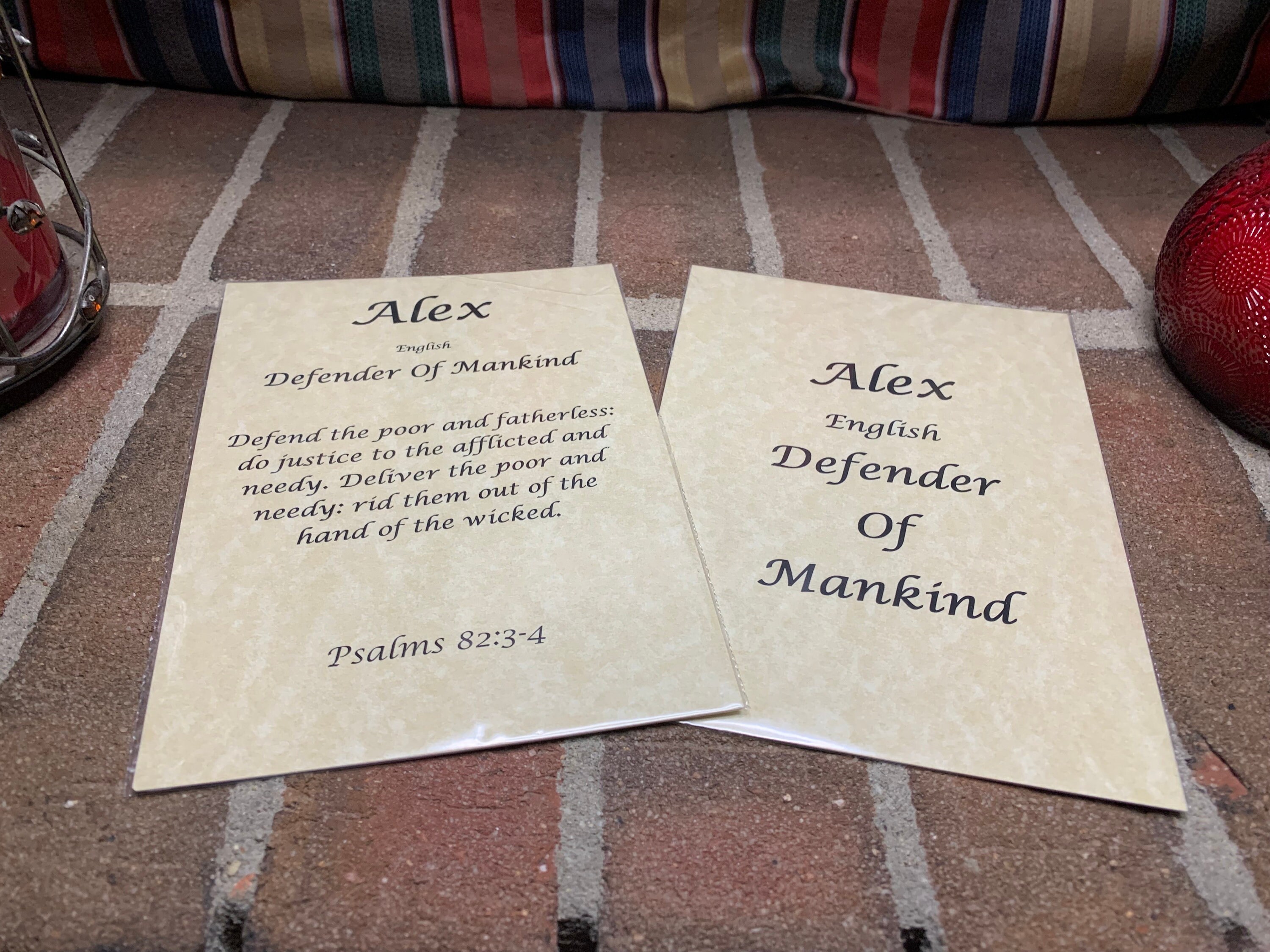
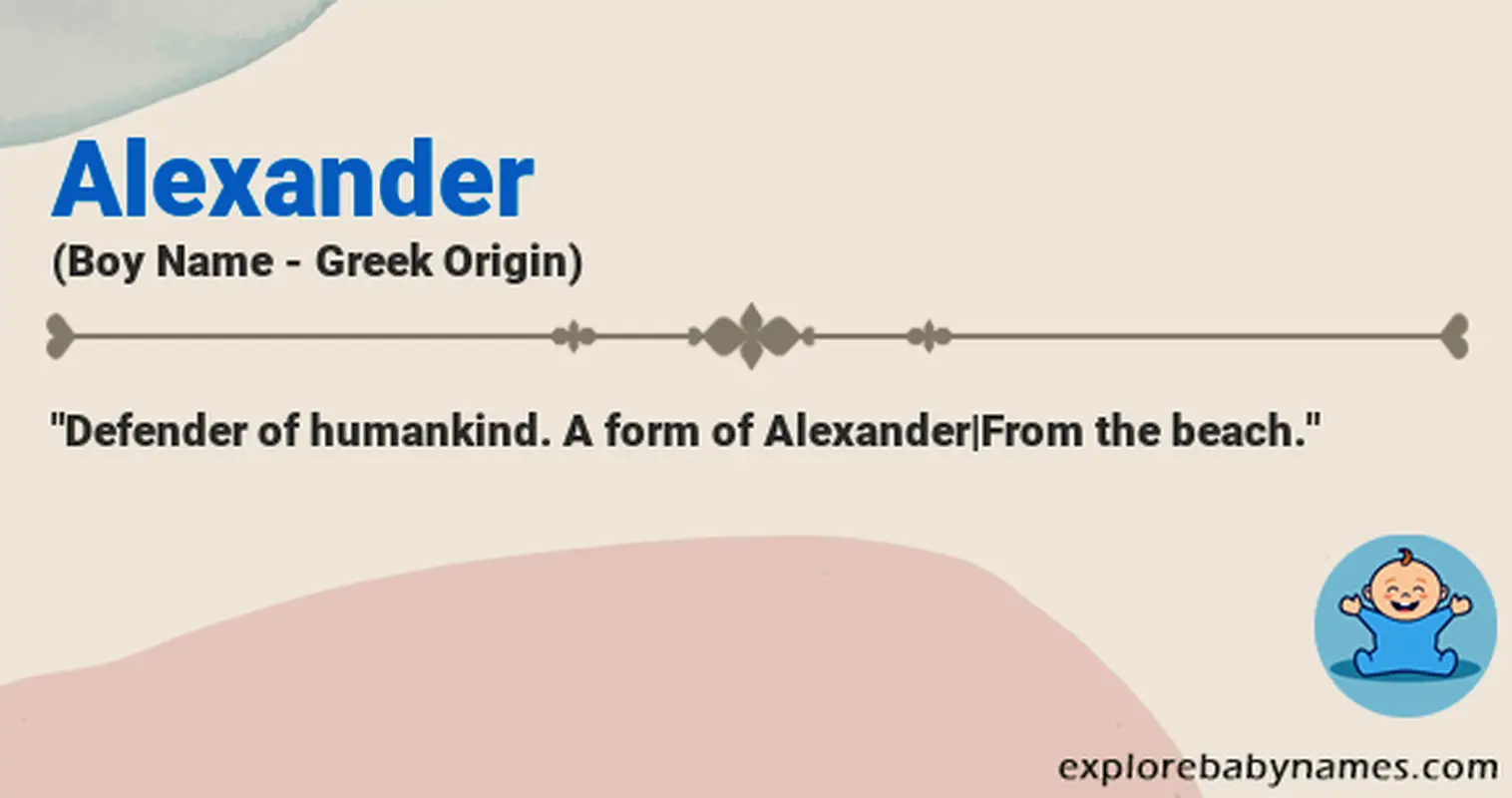
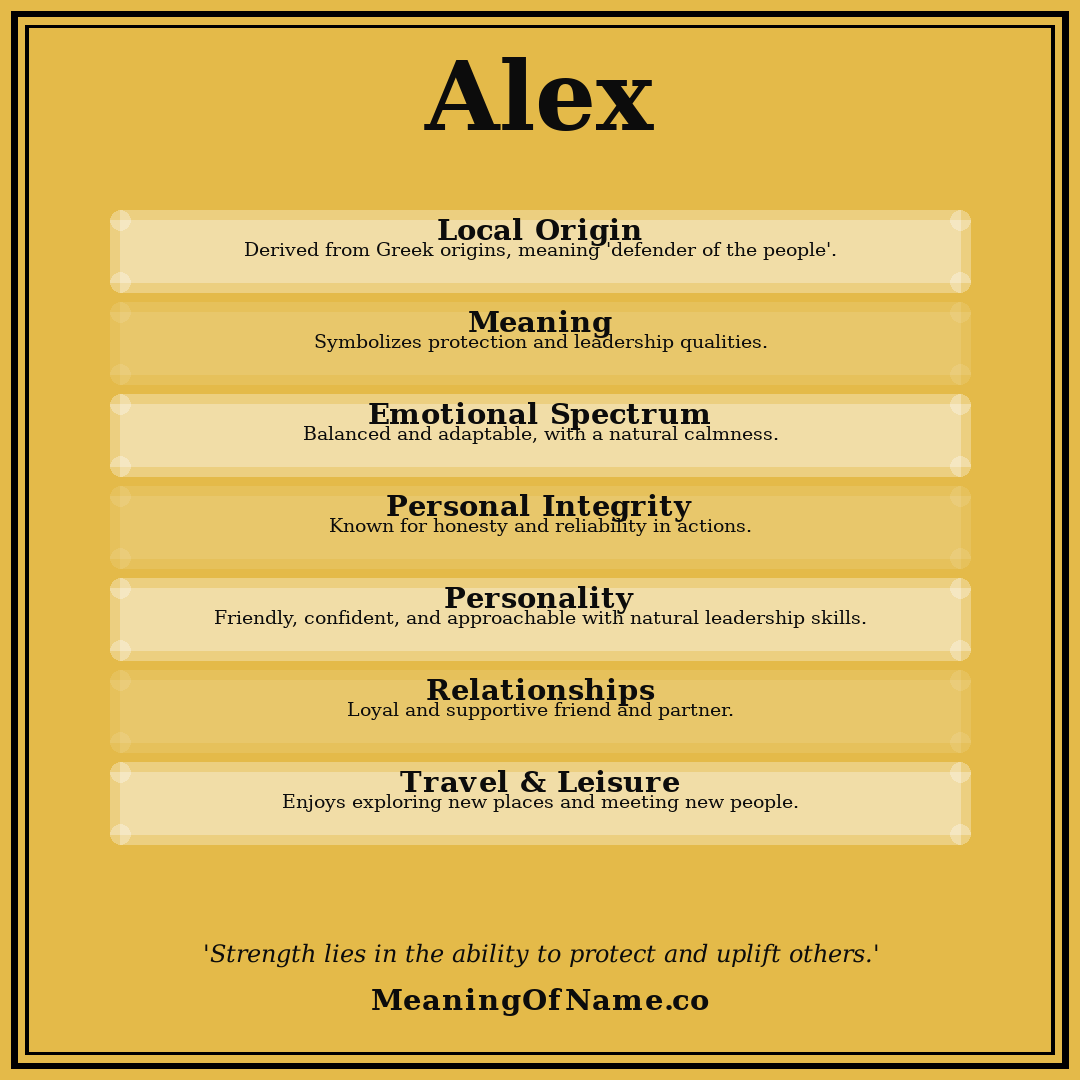
The name Alex originates as a shortened form of Alexander, a classic moniker rooted in ancient Greek history, meaning "defender of mankind." Over centuries, it evolved from a royal title into an independent given name used globally across diverse cultures for people of all genders.
The Etymological Foundations of Alexander
To understand the roots of the modern name, one must first examine its primary ancestral form: the ancient Greek name Alēs (Ἀλέξανδρος, Alexandros). This compound word fuses two distinct Greek terms that together established a powerful semantic foundation.
The first component is the verb alexein (ἀλέξειν), which translates directly to "to ward off," "to defend," or "to protect." The second component is andrós (ἀνδρός), the genitive form of anēr (ἀνήρ), meaning "man" or "warrior." When combined, Alexandros translates neatly to "defender of men," "protector of humanity," or "ward of the people." In ancient Indo-European naming traditions, compound names expressing protective qualities, martial strength, and civic leadership were exceptionally common among nobility and warriors.
These names were not merely functional; they served as aspirations or programmatic statements about the character and future role of the child within society. As trade, conquest, and cultural diffusion expanded throughout the Mediterranean basin, the Greek naming tradition heavily influenced neighboring cultures, planting the seeds for the name to spread far beyond its Hellenic origins.
Historical Expansion Across Cultures and Languages
While the name began in ancient Greece, its historical trajectory accelerated dramatically due to one of history's most notable military figures: Alexander the Great. As the King of Macedon built an empire stretching from Greece to the Indian subcontinent during the 4th century BCE, the name gained immense prestige, inspiring countless variations across conquered and neighboring territories.
Following the expansion of the Roman Empire and the subsequent Christianization of Europe, the name entered Latin as Alexander. From Latin, it filtered into Old French as Alixandre or Alis before crossing into Middle English. Across different European linguistic landscapes, the name adapted phonetically to local tongues:
- Germanic and Scandinavian: Alexander, Aleksander, with short forms like Ale or Sascha.
- Slavic Languages: Aleksandr, Aleksandra, commonly shortened to Sasha or Alex.
- Romance Languages: Alejandro in Spanish, Alessandro in Italian, and Alexandre in French.
- Celtic and British Isles: Adopted widely in Scotland and England, where it frequently generated vernacular nicknames and short forms.
As a linguistic trend, the truncation of longer multi-syllable names into punchier, monosyllabic or disyllabic forms has occurred across centuries. Thus, Alex emerged organically as a convenient everyday abbreviation long before it gained official standing as a standalone birth name on modern registry documents.
Structural Comparison of Global Variants
| Language / Region | Full Ancestral Form | Common Short Form / Variant | Literal Meaning or Context |
|---|---|---|---|
| Ancient Greek | Alexandros | Alēs / Alex | Defender of mankind |
| Spanish | Alejandro | Alex / Ale | Protector of men |
| Italian | Alessandro | Sandro / Alex | Defender of humanity |
| Russian | Aleksandr | Sasha / Alex | Warrior and defender |
| English | Alexander | Alex / Alec / Lex | Protector of the people |
From Nickname to Independent Given Name
For much of Western naming history, Alex functioned almost exclusively as a hypocorism—a diminutive or pet name derived from a longer given name such as Alexander, Alexandra, Alexis, or Alejandro. A child would be christened with the full traditional name on birth certificates and parish registries, while family, peers, and community members would use Alex in daily interaction.
During the late 19th and mid-20th centuries, naming conventions shifted toward greater informality. Parents began bypassing formal traditional names altogether, choosing to register newborns directly with the shortened forms they intended to use. This trend gained immense momentum across English-speaking countries, continental Europe, and parts of Latin America.
Today, Alex stands firmly on its own merits as an independent given name. This independence provides individuals with a streamlined moniker that retains the historical weight and dignified resonance of its longer ancestor without requiring the mandatory adoption of the full multi-syllable form.
Gender Distribution and Modern Usage Patterns
One of the most notable features of the modern name is its deep-rooted gender-neutral status. While its historical predecessor Alexander was overwhelmingly masculine—and its feminine counterpart Alexandra exclusively feminine—Alex occupies a versatile middle ground.
In contemporary naming registries, Alex is given to boys, girls, and non-binary individuals alike. In some regions, it functions as a standalone unisex name, while in others, it serves as the universal short form for gender-specific names such as Alexandra, Alexandria, Alexis, or Alexander. This cross-gender flexibility has contributed to its enduring popularity. Parents seeking a name that resists rigid gender stereotypes often gravitate toward Alex for its balanced acoustic profile and inclusive cultural footprint. Statistical demographic tracking across North America and Europe consistently places various spellings of the name within standard usage charts, reflecting its resilient appeal across generations.
Etymological and Historical FAQs
What does the name Alex mean?
The name Alex means "defender of mankind" or "protector of men." It derives from the Greek verb alexein (to defend) combined with aner (man).
Is Alex a nickname or a full name?
Alex functions as both. Historically, it was strictly a short form or nickname for Alexander or Alexandra. In modern naming practices, it is frequently chosen as a standalone, independent given name on birth certificates.
Is Alex a male or female name?
Alex is a truly gender-neutral name. It is used globally as a boy's name, a girl's name, and a unisex or non-binary name, often serving as a truncation for both masculine and feminine legal names.
How did the name spread globally?
The name spread primarily due to the historical influence of Alexander the Great and the subsequent adoption of the name into Latin, which filtered it into Romance, Germanic, and Slavic languages across Europe and the wider world.
Practical Guidance for Researching Family Names
Tracing the specific historical background of a given name requires looking beyond general etymological summaries and consulting primary genealogical documents. When investigating how a name like Alex appears in your own family tree, several methodical steps can yield accurate historical context:
- Examine Primary Civil Records: Review birth certificates, marriage licenses, and death registers from the relevant era. Note whether "Alex" was recorded as a formal legal name or simply as a preferred everyday moniker used in census records.
- Consult Parish and Church Registers: For historical research predating modern vital statistics, look into baptismal records where priests often recorded the formal canonical name (Alexander or Alexandra) regardless of what the family called the child at home.
- Investigate Immigration and Naturalization Papers: Passenger manifests and naturalization petitions frequently reveal how immigrant families adapted or anglicized longer foreign variants of the name upon arrival in new countries.
- Cross-Reference Regional Naming Laws: Keep in mind that historical legal frameworks in certain jurisdictions restricted which names parents could legally register, which often explains why a child known as Alex might officially appear as Alexander on formal documents.