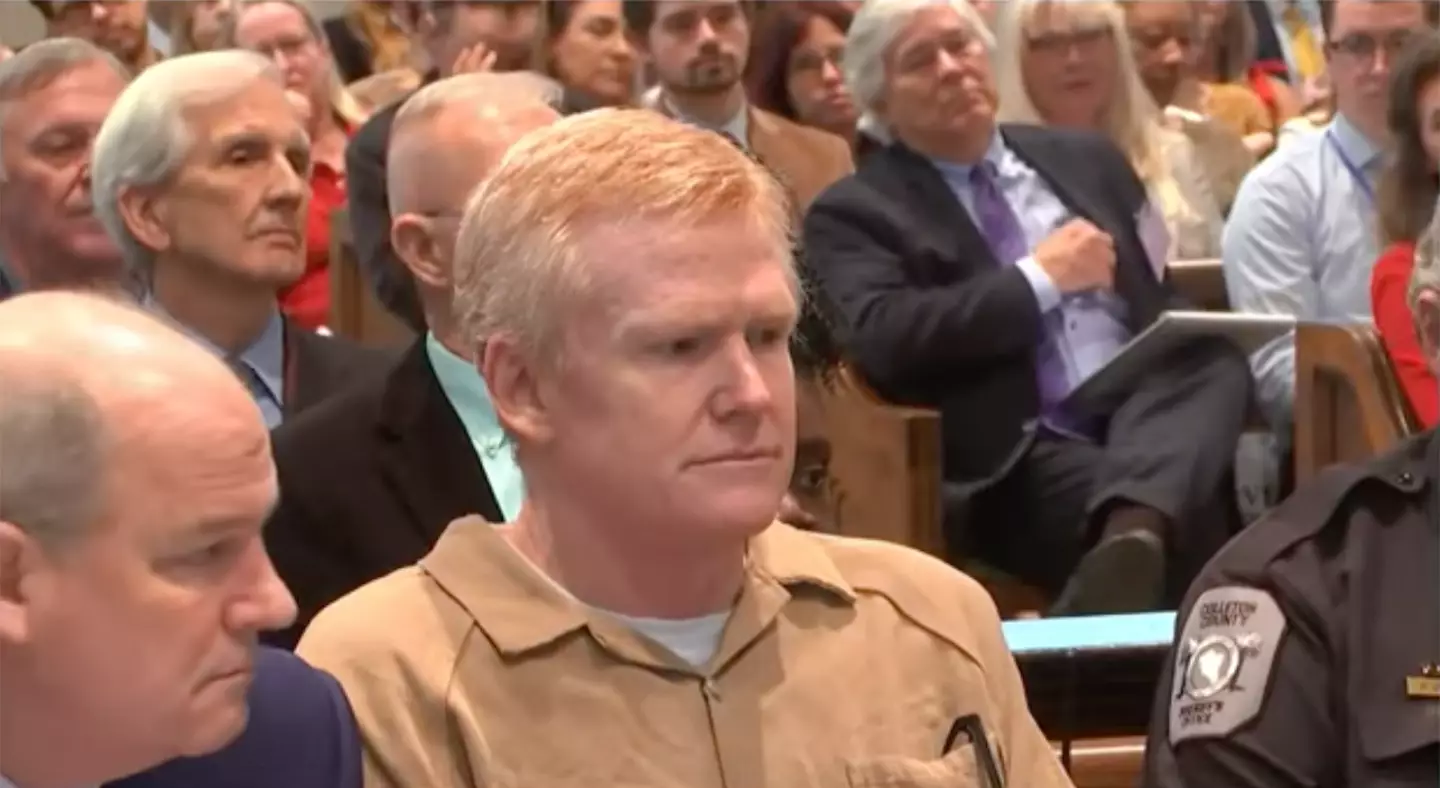
Alex Murdaugh, the disbarred South Carolina attorney currently serving consecutive life sentences for the murders of his wife and son, survived a roadside shooting on September 4, 2021, on a rural road in Hampton County, South Carolina, after being struck in the head by a bullet, though subsequent investigations revealed the incident was an allegedly botched, staged suicide-for-hire plot designed to secure a $10 million life insurance payout for his surviving son.
The saga surrounding Alex Murdaugh remains one of the most thoroughly scrutinized criminal cases in modern American legal history. Beyond the brutal homicides of his wife, Margaret "Maggie" Murdaugh, and his youngest son, Paul Murdaugh, at their Moselle property in June 2021, the roadside shooting incident on Old Salkehatchie Road injected a dizzying layer of complexity into an already collapsing dynasty. Understanding the timeline, official investigative disclosures, subsequent criminal charges, and the broader financial unraveling requires an examination of the public record established by the South Carolina Law Enforcement Division (SLED), federal and state prosecutors, and court proceedings through 2026.
Context of the September 2021 Roadside Incident
On the afternoon of September 4, 2021, emergency services received a 911 call reporting that Alex Murdaugh had been shot in the head while changing a flat tire on his Mercedes-Benz SUV along Old Salkehatchie Road near Varnville, South Carolina. Murdaugh was airlifted to Memorial Health University Medical Center in Savannah, Georgia, where medical staff treated him for a superficial entrance wound and a skull fracture. Initial statements from Murdaugh’s defense attorneys painted a picture of a grieving father targeted by an unknown assailant due to the intense public scrutiny surrounding his family.
Within days, however, the narrative unraveled. Investigators from SLED identified numerous inconsistencies in Murdaugh's accounts of the shooting. The vehicle's tire did not exhibit the kind of damage consistent with a standard blowout or flat requiring immediate roadside repair, and physical evidence at the scene did not align with a drive-by ambush. Medical evaluations in the hospital also raised immediate questions among law enforcement regarding the trajectory and severity of the wound, prompting a rapid expansion of the criminal investigation into Murdaugh's financial and personal affairs.
The Confession and the Co-Conspirator Connection
As SLED pressure mounted, the true nature of the September 4 incident came to light through simultaneous confessions from both Murdaugh and his distant cousin, Curtis Edward Smith, commonly known as "Cousin Eddie." Murdaugh admitted to law enforcement that he had orchestrated his own death in an elaborate suicide-for-hire scheme. His stated motivation at the time was to ensure that his surviving son, Buster Murdaugh, could collect a $10 million life insurance policy, which he believed would remain accessible despite his unfolding financial crimes.
Curtis Smith was arrested and charged with multiple offenses, including assisted suicide, assault and battery of a high and aggravated nature, and conspiracy to commit insurance fraud. According to Smith's statements to investigators and subsequent court filings, Murdaugh had provided the firearm and convinced Smith to shoot him along the rural highway. Smith maintained that he never intended to kill Murdaugh and that the bullet merely grazed Murdaugh's skull, leading to the superficial injury treated at the Savannah hospital.
| Individual Involved | Primary Alleged Role | Key Legal Charges Filed | Status in Proceedings |
|---|---|---|---|
| Alex Murdaugh | Mastermind / Client | Conspiracy, insurance fraud, filing a false police report | Convicted of numerous state and federal financial crimes |
| Curtis "Eddie" Smith | Shooter / Accomplice | Assisted suicide, insurance fraud, firearms offenses | Awaiting trial and further legal resolution |
Overlapping Investigations and Financial Unraveling
The investigation into the shooting served as a catalyst that exposed decades of systematic financial fraud perpetrated by Murdaugh through his former law firm, Peters, Murdaugh, Parker, Eltzroth & Detrick (PMPED). Days before the shooting, partners at the firm confronted Murdaugh regarding millions of dollars in misappropriated client settlement funds. The roadside incident effectively forced Murdaugh into public rehab for a long-standing opioid addiction, while simultaneously accelerating internal and external audits of his financial accounts.
Federal and state authorities quickly expanded their scope, leading to dozens of indictments charging Murdaugh with wire fraud, money laundering, tax evasion, and embezzlement from vulnerable clients, including the estate of his former housekeeper, Gloria Satterfield. The collapse of his legal career and the freezing of his remaining assets stripped away any viability of the alleged life insurance scheme, turning the roadside shooting into a defining piece of evidence illustrating Murdaugh's willingness to manipulate public perception and law enforcement resources.
Legal Outcomes and State Murder Convictions
While the roadside shooting investigation revealed extensive fraud and conspiracy, it ran parallel to the state's murder investigation into the June 7, 2021, deaths of Maggie and Paul Murdaugh. In March 2023, following a six-week trial in Colleton County, a jury convicted Alex Murdaugh of two counts of murder and two counts of possessing a weapon during the commission of a violent crime. Judge Clifton Newman sentenced Murdaugh to two consecutive life terms in the South Carolina Department of Corrections.
In addition to the state murder convictions, Murdaugh pleaded guilty in federal court to numerous financial fraud charges, receiving a 40-year federal sentence to run concurrently with his state sentences. He also entered state-level guilty pleas to nearly 100 counts of financial crimes, ensuring that his total incarceration would span the remainder of his natural life regardless of any future appeals or post-conviction relief efforts regarding the murder verdicts.
Frequently Asked Questions
Did Alex Murdaugh actually get shot in the head?
Yes, medical records and law enforcement findings confirmed that Alex Murdaugh sustained a bullet wound to the head on September 4, 2021. However, investigators established that the injury was self-inflicted through a pre-arranged agreement with Curtis Smith, rather than the result of an attack by an outside assailant.
Why did Alex Murdaugh orchestrate the roadside shooting?
Murdaugh confessed that he planned the shooting as an assisted suicide so that his surviving son, Buster Murdaugh, could collect a $10 million life insurance payout. At the time, Murdaugh was facing the complete collapse of his personal finances and career due to the discovery of his multi-million dollar embezzlement schemes.
What happened to Curtis "Eddie" Smith?
Curtis Smith was arrested and charged with multiple felonies, including assisted suicide, insurance fraud, and weapons violations, for his role as the purported shooter. Smith maintained that while he was present and involved in the altercation, he never intended to kill Murdaugh.
How did the shooting investigation impact the murder case?
The botched shooting accelerated public and law enforcement scrutiny on Murdaugh's credibility, behaviors, and financial crimes. Although the shooting itself was a separate criminal incident, the intense media coverage and investigative momentum contributed to SLED's renewed focus on evidence linking Murdaugh to the murders of his wife and son.
Are there ongoing legal actions regarding the shooting?
The financial fraud and conspiracy charges stemming from the staged roadside shooting remain part of the broader legal record, though Murdaugh is already serving multiple life sentences for murder and decades for federal financial crimes, making additional prison time largely symbolic.
Next Actions and Information Verification
For individuals seeking verified primary documents, court filings, and official statements regarding the Alex Murdaugh investigations, consult public repositories maintained by the South Carolina Law Enforcement Division (SLED) and the South Carolina Judicial Department. Court transcripts, sentencing orders, and federal indictment records remain accessible through public PACER terminals and official state clerk of court archives, ensuring an accurate historical record of the legal proceedings.