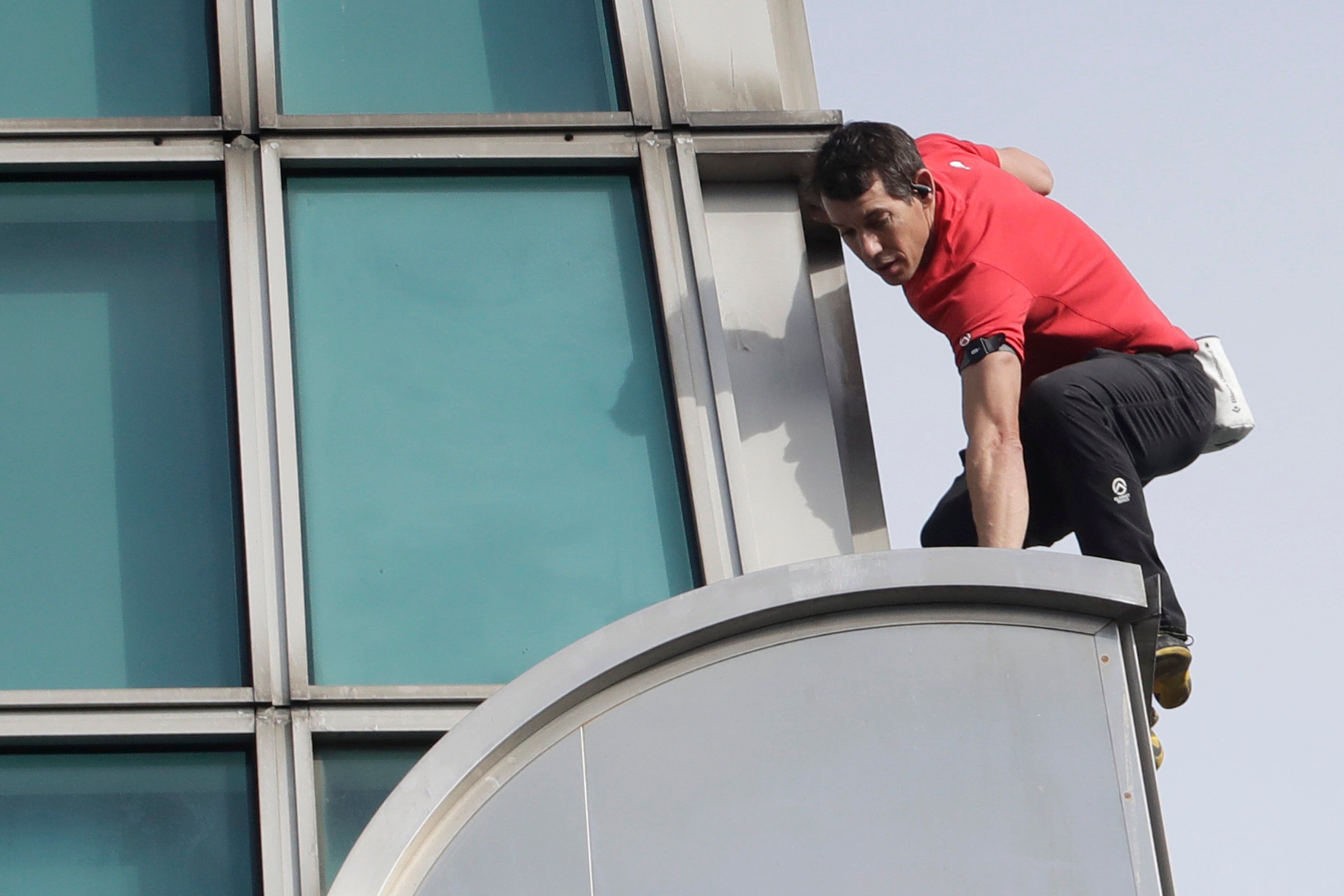
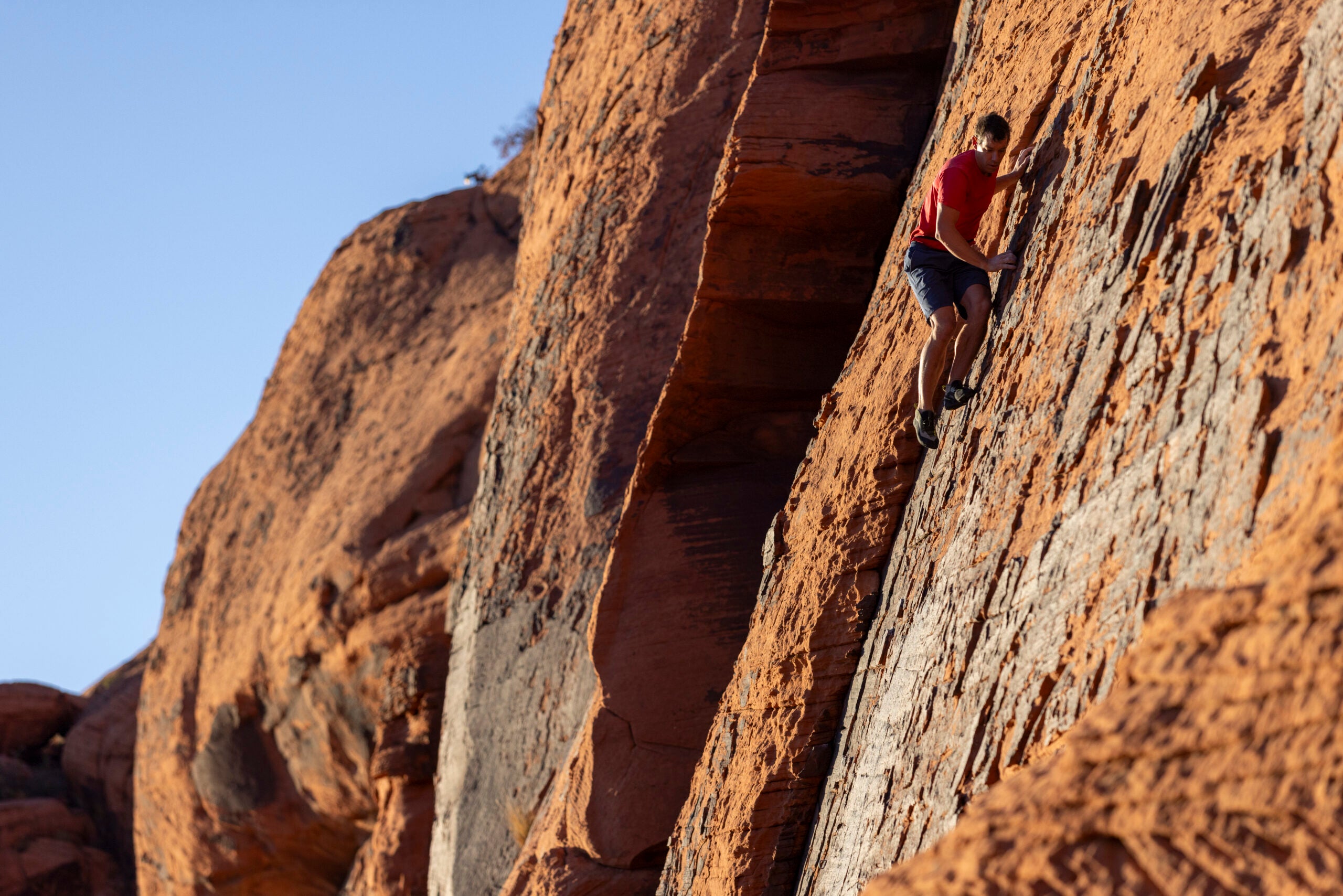
Alex Honnold’s journey from an introverted, climbing-obsessed teenager in Sacramento to the undisputed pioneer of modern free solo climbing is a masterclass in relentless dedication, psychological discipline, and physical adaptation. Long before his historic 2017 free solo ascent of Yosemite’s El Capitan—immortalized in the Academy Award-winning documentary Free Solo—Honnold was a quiet youth navigating the climbing gyms of Northern California, quietly redefining what was considered possible in vertical terrain.
To understand how a self-described awkward kid transformed into a global icon, one must examine his formative years, his early training methodologies, his distinct psychological framework, and the stepping stones that paved his path to legendary status. This exploration traces his evolution from a precocious gym climber to a transcendent figure in outdoor sports.
Formative Years and Early Introduction to Climbing
Born in Sacramento, California, in 1985, Alex Honnold was introduced to vertical movement at an exceptionally young age. By the time he was five years old, he was already visiting local climbing gyms. This early exposure instilled a deep, intrinsic comfort with height and specialized movement patterns that most individuals do not encounter until adulthood. Unlike many contemporary athletes who transition to outdoor climbing later in life, Honnold’s baseline motor skills and spatial awareness were forged on artificial plastic holds during the commercial climbing gym boom of the 1990s.
His parents, both community college professors, supported his athletic pursuits, though climbing remained primarily an internal compulsion for Honnold rather than a socially driven team sport. He was famously introverted, spending countless hours training independently. This solitary nature proved foundational; free soloing—climbing without ropes, harnesses, or protective gear—demands an extraordinary degree of self-reliance. The quiet discipline developed during his adolescence in Sacramento laid the groundwork for the extreme emotional regulation required later in his career.
Transition to Elite Outdoor Climbing and Yosemite Roots
As Honnold entered his late teens, his focus shifted decisively from indoor plastic to the granite monoliths of California, most notably Yosemite National Park. Yosemite has long served as the crucible of American rock climbing, hosting historic routes established by legends such as Royal Robbins, Warren Harding, and Lynn Hill. For a young Honnold, the towering walls of the Valley represented the ultimate testing ground.
During his university years at the University of California, Berkeley, where he studied civil engineering before dropping out, Honnold spent an increasing amount of time living out of a modest Ford Econoline van. This nomadic lifestyle allowed him to maximize his climbing volume. He pursued a high-mileage philosophy, completing massive numbers of multi-pitch routes rather than projecting single, short routes. This sheer volume of climbing built an aerobic engine and a mechanical efficiency that set him apart from peers who focused exclusively on maximum difficulty rather than sustained endurance.
| Career Phase | Primary Focus | Key Geographic Locations | Defining Characteristic |
|---|---|---|---|
| Early Childhood | Gym climbing foundations | Sacramento, California | Early spatial awareness and comfort with height |
| Adolescence | High-volume training | Northern California gyms | Solitary practice and deep internal motivation |
| Young Adulthood | Van life and mileage | Yosemite National Park | Transition to multi-pitch endurance and efficiency |
| Breakthrough Years | Speed records and soloing | Zion, Yosemite, Joshua Tree | Pioneering early major free solo links |
The Philosophy and Psychology of Risk Management
A defining aspect of Honnold’s rise is the profound misunderstanding surrounding his relationship with fear. Popular media frequently portrays free soloists as adrenaline-seeking daredevils with a reckless disregard for mortality. However, psychological evaluations and Honnold’s own extensive writings reveal the exact opposite: a hyper-rational, calculated approach to risk assessment.
Neurological scans conducted by neuroscientist Dr. Jane Joseph at the Medical University of South Carolina revealed that Honnold’s amygdala—the brain’s emotional center responsible for processing fear and threat detection—shows virtually no activation when exposed to horrifying, highly stimulating images. While this indicates a uniquely muted baseline physiological response to fear, Honnold compensates for this biological trait through meticulous, obsessive preparation.
Before cutting ties with safety ropes on any major wall, Honnold studies every hold, crack, and micro-feature repeatedly. He practices moves using top-rope setups until they become deeply ingrained muscle memory. His rise to legendary status was not built on impulsive leaps of faith, but on the systematic elimination of variables through rigorous repetition and flawless execution.
Landmark Early Ascents and Industry Recognition
The turning point that propelled Honnold from an obscure dirtbag climber into the global spotlight occurred in 2008. Within a single 24-hour period, he completed free solo ascents of two of North America’s most iconic big wall routes: the Regular Northwest Face of Half Dome and the Moonlight Buttress in Zion National Park.
The solo of Half Dome’s massive Northwest Face stunned the climbing community. Honnold famously navigated the "Thank God Ledge"—a narrow, horizontal granite shelf thousands of feet above the valley floor—without a rope, demonstrating a level of composure and physical precision that left veteran alpinists awestruck. This feat was closely followed by his 2011 free solo of the Nose on El Capitan in under two hours (as part of a linked day with Hans Florine, though his solo exploits on other Yosemite routes cemented his reputation). These achievements established him not merely as a talented regional climber, but as an generational talent capable of rewriting the history books of adventure sports.
Equipment, Training Methodology, and Physical Conditioning
Unlike modern sport climbers who often prioritize maximum finger strength on steep overhangs, Honnold’s physical conditioning has always mirrored the demands of big wall alpine environments. His training regimen focuses heavily on:
- Aerobic Efficiency: Maintaining a high output over hours of continuous movement rather than explosive bursts of power.
- Core Strength: Ensuring stability while executing delicate foot placements on vertical slabs.
- Mental Endurance: Sustaining laser-like concentration for hours without a single lapse in focus.
His equipment philosophy is equally minimalist. Living out of his van for over a decade, he famously subsisted on simple, inexpensive foods, viewing material possessions as distractions from his singular pursuit. This ascetic lifestyle allowed him to dedicate every waking hour to climbing, reinforcing his legend as a purist who engaged with the mountains on the most fundamental terms possible.
Broader Cultural Impact and the Evolution of Modern Adventure
Honnold’s rise coincided with a broader technological shift in media consumption and outdoor storytelling. Through feature-length films, bestselling memoirs, and public speaking engagements, he helped bridge the gap between niche mountaineering subcultures and mainstream global audiences.
Yet, despite his immense celebrity, Honnold has maintained a remarkably grounded perspective. Through the Honnold Foundation, established in 2012, he leveraged his growing platform to support global solar energy initiatives, proving that his ambitions extended far beyond vertical rock faces. His journey from an introverted Sacramento teenager to a cultural ambassador illustrates that legendary status is achieved not merely through physical prowess, but through intellectual curiosity, moral clarity, and an unwavering commitment to one's chosen path.
Frequently Asked Questions
What was Alex Honnold’s first major free solo breakthrough?
Alex Honnold’s breakout moment occurred in 2008 when he free soloed the Regular Northwest Face of Half Dome in Yosemite National Park. This historic ascent proved that massive big-wall routes previously thought to require days of technical aid and heavy rope systems could be climbed safely and efficiently by a single individual relying entirely on personal skill and nerve.
How does Alex Honnold manage fear while free soloing?
Honnold manages fear through meticulous preparation, visualization, and a naturally subdued physiological response to high-stress stimuli. Rather than suppressing panic on the wall, he eliminates uncertainty beforehand by practicing routes repeatedly with ropes, memorizing every physical movement, and turning complex sequences into automatic muscle memory.
Did Alex Honnold drop out of college to climb?
Yes. Honnold briefly attended the University of California, Berkeley, to study civil engineering. However, the pull of the mountains, combined with personal life transitions during his late teens, led him to leave his studies behind and embrace a nomadic, full-time climbing lifestyle centered around his van and California's climbing areas.
What is the Honnold Foundation?
The Honnold Foundation is a non-profit organization founded by Alex Honnold in 2012. Its primary mission is to promote solar energy use for a more equitable world by supporting marginalized communities with small-scale, high-impact solar projects that reduce environmental impact and improve local quality of life.
How did the film Free Solo impact Honnold’s career?
The 2018 documentary Free Solo, directed by Jimmy Chin and Chai Vasarhelyi, captured Honnold’s successful 2017 free solo of El Capitan. The film won the Academy Award for Best Documentary Feature and introduced Honnold's philosophy, discipline, and vertical achievements to a massive international audience far beyond the traditional climbing community.
Next Actions for Aspiring Climbers
To apply the lessons of Alex Honnold’s developmental years to your own climbing practice, focus on building a robust foundation of movement efficiency and volume rather than rushing into high-risk scenarios. Prioritize safety equipment, build your skills incrementally under controlled conditions in gyms or with top-rope systems, and develop a rigorous routine of technique refinement. True progression in climbing comes from respect for the medium, continuous self-assessment, and patient, methodical practice.