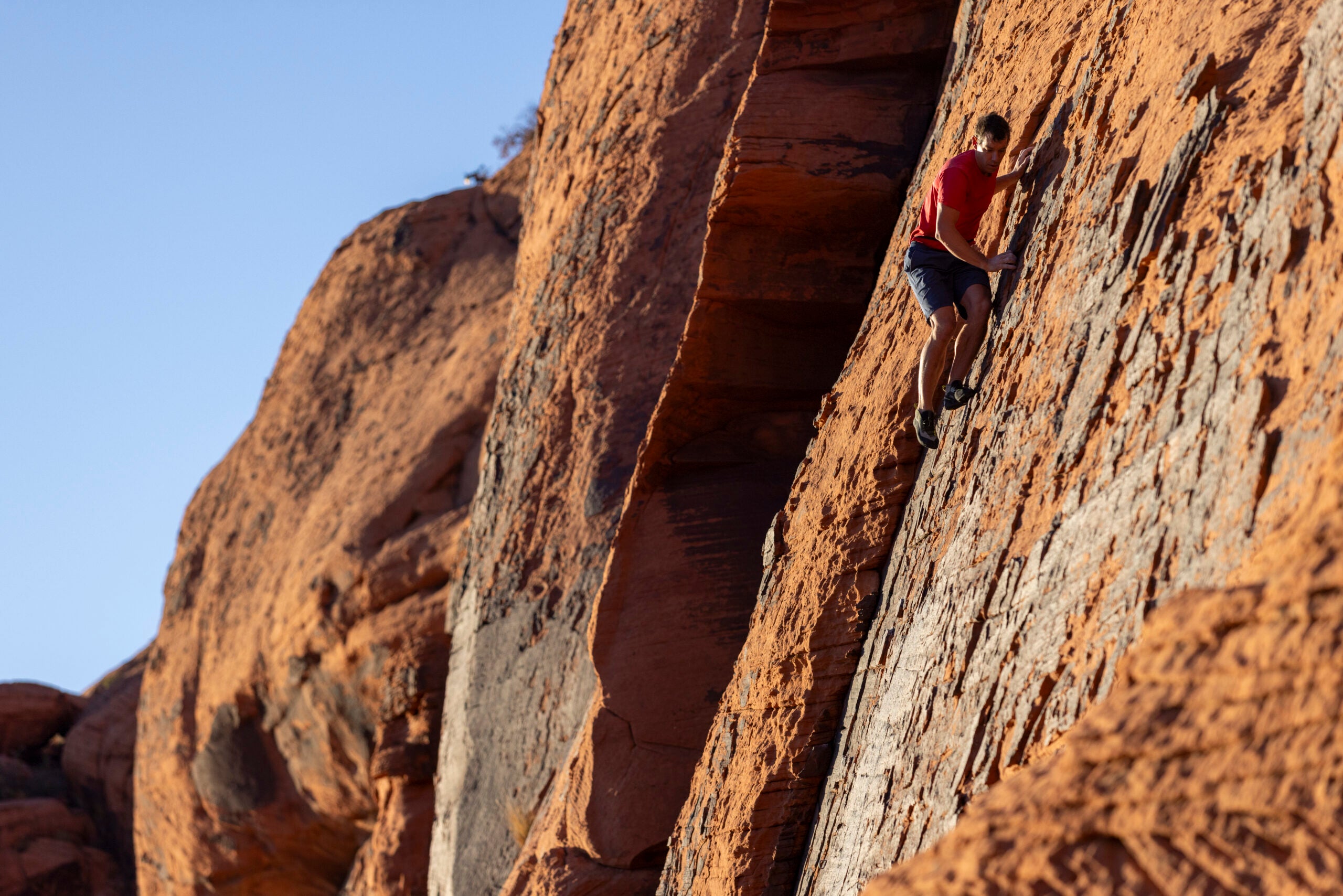
Alex Honnold stands as one of the most consequential endurance athletes and free soloists in the history of rock climbing, redefining the boundaries of human risk tolerance, physical conditioning, and mental composure. His career is defined by the complete elimination of ropes, harnesses, and safety gear on massive vertical rock faces, transforming obscure technical feats into global cultural milestones. Beyond his unprecedented free solo ascents, Honnold has maintained a decades-long career of elite speed climbing, pioneering first ascents, and alpine link-ups that secure his status as a foundational figure in modern mountaineering.
The Evolution and Mechanics of Free Solo Climbing
Free solo climbing is a discipline in which a climber ascends sheer rock faces without a rope, harness, anchor points, or any protective equipment whatsoever. In this context, a single slip, handhold failure, or miscalculated foot placement results in fatal consequences. While free soloing has roots in the early days of traditional climbing as a fringe training method or bold exhibition, Honnold elevated the practice from a reckless sideshow to a calculated, highly methodical athletic science.
The mechanics of Honnold’s approach rely heavily on exhaustive preparation and rehearsal. Before attempting a major wall without ropes, he studies every meter of the route using top-rope systems, rappelling down to clean holds, and memorizing intricate sequences of physical movements. This rigorous rehearsal allows him to execute complex sequences with near-robotic precision while managing the psychological pressure inherent in zero-margin-for-error environments. His ability to control physiological arousal, keeping his heart rate exceptionally stable during high-consequence moves, has been documented by neuroscientists studying his amygdala function and stress response.
Defining Career Achievements and Landmark Ascents
Honnold’s climbing resume includes several of the most difficult and dangerous endurance feats ever recorded. His career spans multi-pitch big-wall routes, high-speed alpine link-ups, and legendary solo ascents that shifted the paradigm of what was thought possible in vertical terrain.
The Yosemite Triple Crown and Early Breakthroughs
In 2007, early in his professional career, Honnold gained wider recognition by free soloing the Regular Northwest Face of Half Dome in Yosemite National Park—a route standing roughly 2,000 feet tall—using a method that stunned the climbing community. A few years later, in 2012, he completed the Yosemite Triple Crown in a single day, linking free solo ascents of Mount Watkins, the Regular Northwest Face of Half Dome, and the Freerider route on El Capitan. This continuous push required climbing thousands of vertical feet of extreme technical difficulty without stopping to rest or secure protection.
The El Capitan Free Solo Ascent
The pinnacle of Honnold’s career occurred on June 3, 2017, when he became the first person to free solo El Capitan in Yosemite National Park. He chose the Freerider route, a 3,000-foot granite monolith featuring 30 pitches of climbing up to 5.13a difficulty. The feat was documented in the Academy Award-winning film Free Solo, bringing unprecedented mainstream visibility to elite rock climbing. The ascent required hours of uninterrupted physical exertion, precise footwork on friction slabs, and sustained power through boulder problems far above the valley floor.
| Route Name | Location | Height / Length | Difficulty Rating | Year of Notable Ascent |
|---|---|---|---|---|
| Regular Northwest Face | Half Dome, Yosemite | 2,000 feet | 5.12a | 2008 (Free Solo) |
| The Freerider | El Capitan, Yosemite | 3,000 feet | 5.13a | 2017 (Free Solo) |
| Fitz Roy Traverse | Patagonia | 4 miles ridge | 5.11c C1 | 2014 (Team Traverse) |
| The Nose (Speed Record) | El Capitan, Yosemite | 2,900 feet | 5.14a (VI) | 2018 (Speed Team) |
Alpine Expeditions and Team Accomplishments
While Honnold is primarily known for solo achievements, his contributions to team alpine climbing demonstrate his versatility across different mountain ranges. In 2014, alongside fellow climber Tommy Caldwell, Honnold completed the first-ever ascent of the Fitz Roy Traverse in Patagonia. This undertaking involved crossing a jagged skyline of seven distinct summits and enduring severe weather, technical ice climbing, and continuous ridge traversing over five days. The partnership earned them the prestigious Piolet d'Or award, recognizing the climb as one of the most significant alpine achievements of the year.
Honnold also shifted his focus to speed climbing on El Capitan, partnering with Tommy Caldwell to set multiple speed records on the iconic route known as The Nose. In 2018, the pair broke the historic barrier of under two hours, ultimately finishing with a time of 1 hour, 58 minutes, and 7 seconds. This required intense anaerobic conditioning, synchronized teamwork, and absolute mastery of big-wall efficiency, proving that Honnold’s capabilities extended far beyond solo endurance into high-velocity technical execution.
Environmental Advocacy and Philanthropic Legacy
Beyond his athletic output, Honnold has established a distinct legacy through his commitment to environmental sustainability and social impact. In 2012, he founded the Honnold Foundation, a nonprofit organization dedicated to promoting solar energy use in marginalized communities globally. Rather than pursuing traditional corporate sponsorships that conflicted with his environmental values, he leveraged his growing public platform to fund solar microgrids and renewable energy initiatives.
Honnold’s lifestyle choices—such as living out of a converted van for years and later adopting an energy-efficient, minimalist household—reflect his personal philosophy regarding carbon reduction and resource conservation. By tying his athletic accomplishments to tangible ecological advocacy, he expanded the traditional definition of a professional mountaineer, demonstrating that extreme athletes can function as effective advocates for global environmental policy.
Cultural Impact and Modern Mountaineering Influence
Honnold’s career has fundamentally altered public perception and cultural appreciation of rock climbing. Before his mainstream prominence, free soloing was largely viewed as a marginal, highly isolated act of recklessness. Through transparent documentation, intellectual articulation of risk management, and media coverage like Free Solo, Honnold reframed the discipline as a rigorous intellectual and physical puzzle requiring extreme self-awareness.
His influence on younger generations of climbers is visible in how modern athletes approach physical training, mental discipline, and career longevity. Honnold demonstrated that elite climbing can be sustained over decades through disciplined maintenance, injury prevention, and careful route selection. His legacy is not merely a list of unroped summits, but a permanent recalibration of human potential in vertical environments.
Frequently Asked Questions
What makes Alex Honnold’s El Capitan free solo ascent historically significant?
Alex Honnold’s 2017 free solo of the Freerider route on El Capitan is widely considered one of the greatest athletic feats in human history. It marked the first time anyone climbed a 3,000-foot vertical granite wall without ropes or safety gear, demanding hours of flawless physical execution where a single minor error would result in death.
How does Alex Honnold manage fear while free soloing?
Honnold approaches fear through cognitive reframing, extensive physical preparation, and neurological conditioning. Because he rehearses every section of a route repeatedly with ropes, his brain processes the movements as familiar and safe, which significantly reduces the physiological panic response commonly associated with high-exposure situations.
What is the Honnold Foundation?
The Honnold Foundation is a registered nonprofit organization established by Alex Honnold in 2012. It focuses on reducing environmental impact and addressing energy poverty by supporting solar energy initiatives and sustainable development projects in marginalized communities worldwide.
Did Alex Honnold hold any speed climbing records?
Yes. Alongside climbing partner Tommy Caldwell, Honnold set multiple speed climbing records on The Nose route of El Capitan in Yosemite. In June 2018, they became the first team to climb the 2,900-foot route in under two hours, setting a benchmark time of 1 hour, 58 minutes, and 7 seconds.
What awards has Alex Honnold received for his climbing career?
Honnold has received numerous accolades, most notably the Piolet d'Or in 2015 for the first ascent of the Fitz Roy Traverse in Patagonia. Additionally, the documentary chronicling his El Capitan free solo, Free Solo, won the Academy Award for Best Documentary Feature in 2019.
Is Alex Honnold still actively climbing?
Yes. While he has adjusted the frequency of his high-risk free solo expeditions following major life milestones such as marriage and fatherhood, Honnold remains an active elite climber, focusing on difficult first ascents, international alpine expeditions, and environmental advocacy projects.
Strategic Professional Guidance for Risk and Performance Assessment
Athletes, coaches, and risk managers analyzing extreme sports performance should evaluate risk through systematic mitigation frameworks rather than relying on raw intuition. When studying high-consequence disciplines, ensure that preparatory phases—such as technical rehearsal, data collection, and physiological monitoring—are thoroughly documented before executing high-risk objectives. Professionals should establish strict operational limits, maintain comprehensive contingency plans, and separate calculated risk management from uncalculated exposure across any high-performance endeavor.