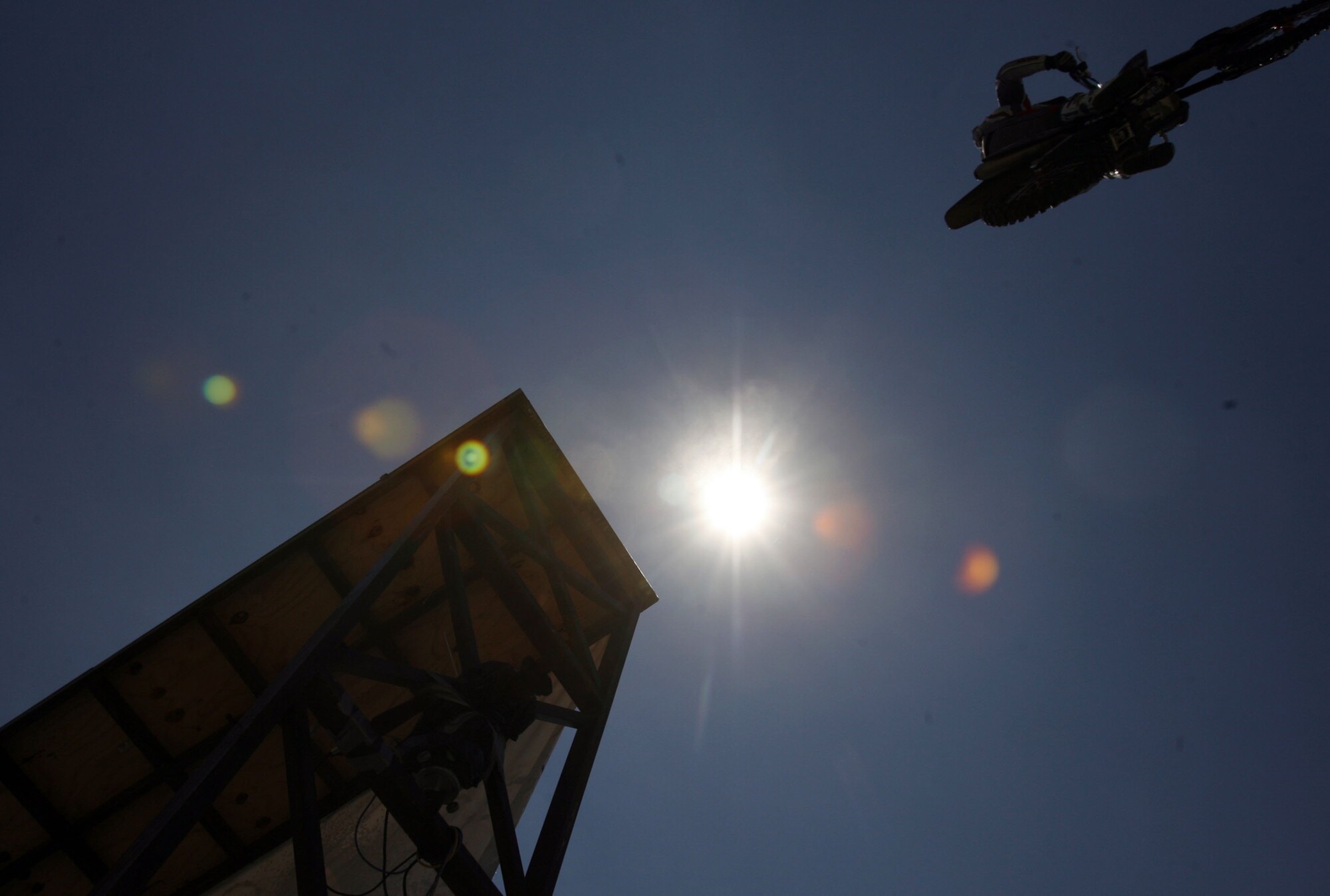
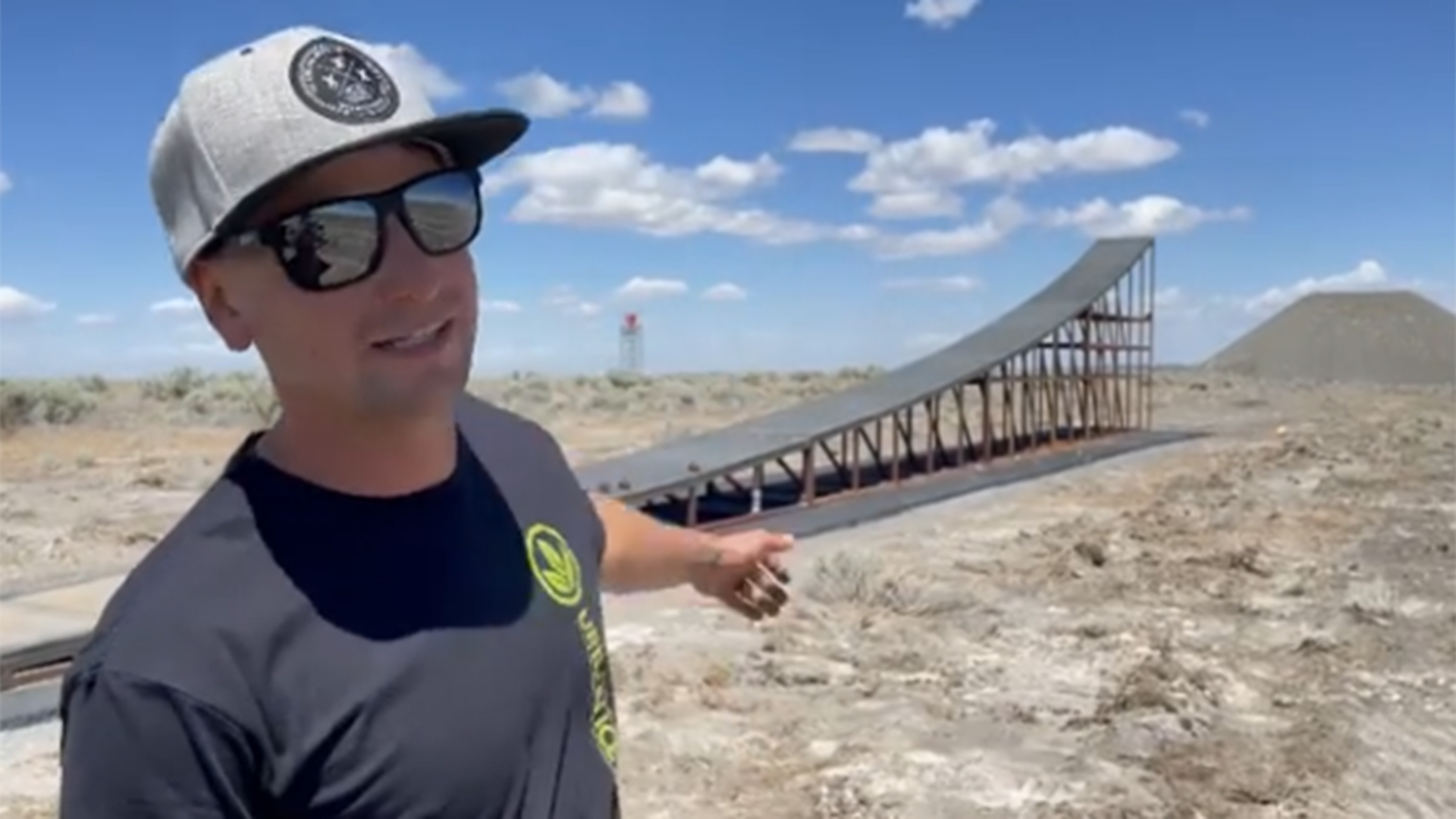
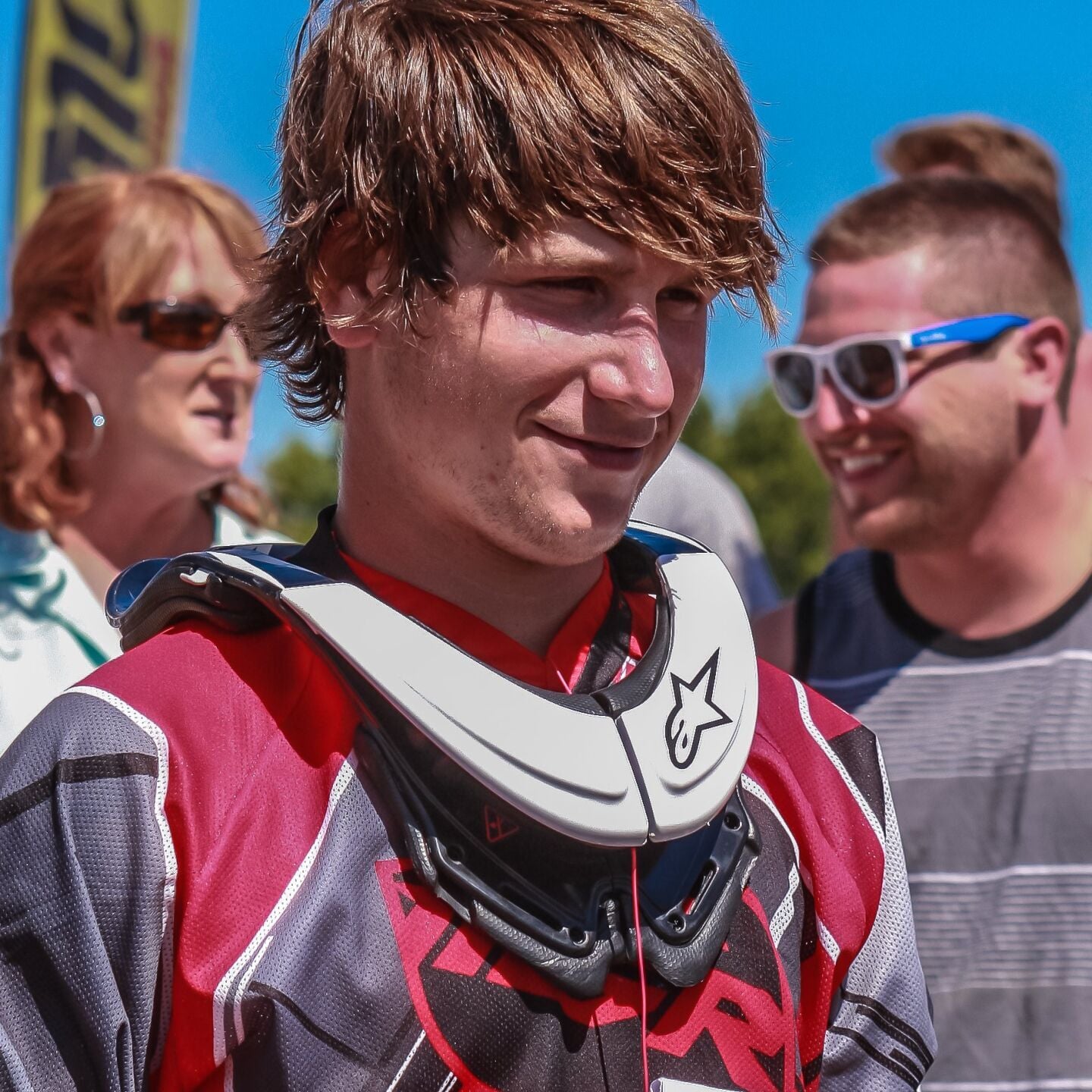
Alex Harvill’s world record jump stands as one of the most remarkable and daring feats in modern motorcycle stunt history, blending extreme engineering, meticulous preparation, and immense personal risk. Executed on June 18, 2021, at the Moses Lake Airshow in Washington State, Harvill successfully launched his motorcycle across an astonishing 425-foot gap, breaking the previous Guinness World Record for the longest ramp-to-ramp motorcycle jump. This monumental achievement required precise mathematical calculations, specialized dirt bike customization, a deep understanding of aerodynamics, and an uncompromising commitment to extreme sports safety. Analyzing this ultimate stunt reveals not only the physical mechanics required to clear such a staggering distance, but also the rich history of motorcycle distance jumping, the rigorous safety protocols involved, and the lasting legacy of a rider who pushed the boundaries of human potential.
Understanding the Mechanics of Extreme Motorcycle Jumping
Achieving a world-record-breaking motorcycle jump requires an intricate balance of physics, velocity, and aerodynamic stability. When a rider leaves a takeoff ramp at extreme speeds, they are governed by projectile motion, where angle and initial velocity determine both the apex of the flight and the total landing distance. For Alex Harvill’s jump, engineers and stunt coordinators had to calculate terminal trajectory down to the fraction of a degree.
The takeoff ramp was engineered with a specific steepness—typically between 45 and 60 degrees—to maximize upward propulsion while minimizing the G-forces experienced by the rider upon departure. Simultaneously, the landing ramp was built at a matching downward slope. This critical design feature ensures that the motorcycle's wheels meet the transition surface parallel to the landing angle, absorbing the immense kinetic energy and preventing catastrophic compression injuries to the rider's spine.
Air resistance and wind conditions also play a decisive role in ultra-long motorcycle jumps. At speeds exceeding 100 miles per hour, crosswinds can destabilize the chassis mid-air, causing the bike to rotate on its roll or yaw axis. Harvill and his technical crew conducted extensive test runs to calibrate the throttle response and weight distribution, ensuring the bike maintained a stable nose-up attitude throughout the flight arc.
The Evolution of Distance Jumping and Historical Context
To fully appreciate the magnitude of Alex Harvill’s 425-foot jump, it is essential to examine the historical progression of motorcycle distance jumping. The discipline gained mainstream prominence in the 1960s and 1970s through daredevils like Evel Knievel, whose exploits captivated global audiences and proved that human beings could defy gravity on two wheels. Knievel’s jumps, while groundbreaking for their era, look modest by contemporary standards, often hovering around 100 to 150 feet.
As motorcycle engineering evolved, featuring lighter frames, more responsive suspension systems, and higher-output two-stroke and four-stroke engines, daredevils began pushing these limits further. By the late 1990s and 2000s, innovators like Robbie Maddison and Seth Enslow redefined the limits of the sport by utilizing specialized motocross bikes and custom-built mega-ramps.
| Daredevil / Rider | Feat / Jump Type | Distance (Feet) | Year | Location |
|---|---|---|---|---|
| Evel Knievel | Snake River Canyon (Attempt) | 1,600 (Steam-powered skycycle) | 1974 | Idaho, USA |
| Robbie Maddison | Red Bull New Year No Limits | 322 | 2008 | Las Vegas, USA |
| Seth Enslow | Harley-Davidson Jump | 183.7 | 1999 | Australia |
| Alex Harvill | Guinness World Record Ramp-to-Ramp | 425 | 2021 | Moses Lake, Washington |
This historical trajectory highlights how ramp design and motorcycle durability shifted the sport from entertainment-focused spectacle to precision aerospace-level engineering. Harvill’s jump surpassed the previous record of 351.3 feet—held by Australian stuntman Robbie Maddison since 2008—by an astounding margin of nearly 74 feet, setting a new benchmark for what is physically possible on a dirt bike.
Equipment, Preparation, and Technical Specifications
The equipment used in a world-record stunt must withstand extreme mechanical stress. Alex Harvill utilized a meticulously modified high-performance dirt bike equipped with upgraded suspension to absorb the punishing impact of landing. Standard factory motocross suspensions are designed for motocross tracks and supercross jumps; they would instantly bottom out and fail under the G-force loads generated by a 425-foot drop.
Stunt mechanics custom-tuned Harvill’s front forks and rear shock absorbers with heavy-duty springs and specialized valving. Furthermore, the engine gearing was optimized to deliver maximum acceleration over a relatively short runway, ensuring Harvill achieved the exact target exit speed required to clear the 425-foot gap without coming up short.
| Component / System | Factory Specification | Custom Stunt Modification | Purpose |
|---|---|---|---|
| Suspension | Standard MX Valving | Heavy-Duty Re-valved Springs | Prevents bottoming out upon high-velocity landing |
| Gearing | Stock Sprocket Ratio | Custom Final Drive Ratio | Maximizes acceleration on a short runway |
| Chassis / Frame | Standard Steel / Aluminum | Reinforced Gussets & Braces | Withstands severe structural bending loads |
| Tires | Off-Road Knobbies | Balanced High-Speed Compound | Reduces vibrational wobble at 100+ mph |
Beyond the motorcycle, the physical infrastructure of the stunt site represents a massive engineering undertaking. The staging area required hundreds of tons of compacted dirt and heavy scaffolding to construct ramps capable of supporting heavy machinery, transport trucks, and the dynamic load of a motorcycle accelerating at maximum throttle.
Safety Protocols, Risk Management, and Contingency Planning
Extreme sports involving high-speed impacts carry inherent, life-threatening risks. Professional stunt coordination requires a comprehensive risk-assurance framework that accounts for mechanical failure, meteorological shifts, and human error. Before attempting the record, Harvill and his safety team mapped out wind limits, speed traps, and emergency medical response protocols.
Laser speed traps were positioned along the runway to provide real-time feedback on Harvill’s approach velocity. If his speed deviated by even two miles per hour in either direction, he was trained to abort the jump or adjust his body positioning in flight. Additionally, emergency medical services, trauma surgeons, and specialized extraction teams were stationed directly adjacent to the landing zone.
Despite these exhaustive safety precautions, extreme motorcycle jumping remains an unforgiving pursuit. The tragic accident that occurred during Harvill's practice run on the same day serves as a stark reminder of the razor-thin margin for error in elite stunt riding. Understanding these risks underscores the immense mental discipline and physical conditioning required of stunt athletes who operate at the absolute edge of human capability.
Frequently Asked Questions
What was the exact distance of Alex Harvill’s world record jump?
Alex Harvill jumped an official distance of 425 feet on June 18, 2021. This feat broke the previous Guinness World Record for the longest ramp-to-ramp motorcycle jump, which had stood at 351.3 feet for over a decade.
Where did the record-breaking stunt take place?
The stunt took place at the Moses Lake Airshow located at the Grant County International Airport in Washington State. The venue provided the expansive flat terrain necessary to construct the massive temporary ramp infrastructure required for a 425-foot gap.
What kind of motorcycle was used for the jump?
Harvill rode a heavily modified high-performance dirt bike optimized for extreme acceleration and impact absorption. The bike featured custom-valved heavy-duty suspension, a reinforced chassis, and specialized gearing designed to achieve the precise terminal velocity needed for the flight.
How do stunt riders survive the impact of landing a 425-foot jump?
Riders survive extreme landing impacts through a combination of ramp geometry and upgraded bike suspension. The landing ramp is built at a steep downward angle matching the descending trajectory of the motorcycle, allowing the wheels to contact the surface smoothly and compress the suspension evenly rather than absorbing a direct vertical crash force.
What previous records did Alex Harvill hold?
Prior to his 425-foot ramp-to-ramp record, Alex Harvill established a Guinness World Record for a dirt bike distance jump from a dirt-to-dirt ramp, clearing 297.6 feet in Grandview, Washington, in 2013. He dedicated his career to pushing the physical boundaries of distance jumping.
Strategic Next Actions for Stunt Engineering Analysis
For aviation enthusiasts, engineering students, and extreme sports historians seeking to study modern stunt progression, analyzing telemetry data and official event reports provides valuable insight into physics and risk management. Reviewing official documentation from sanctioned record-keeping bodies offers a factual foundation for understanding how modern daredevils push the limits of speed, distance, and mechanical engineering while maintaining rigorous safety oversight.