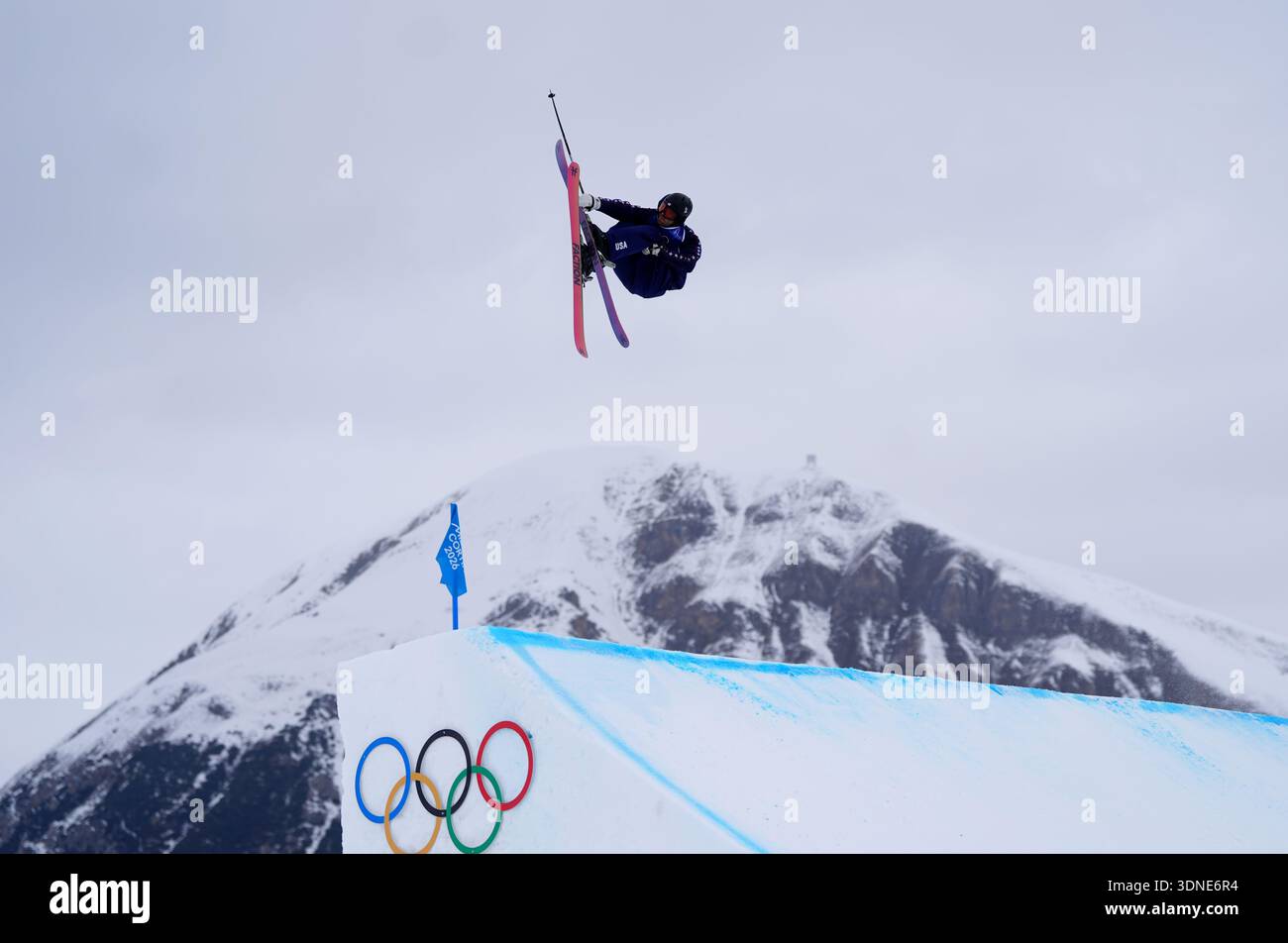
Alex Hall stands as one of the most innovative and versatile freeskiers of his generation, known for pushing the boundaries of slopestyle, big air, and backcountry skiing. His competitive trajectory features notable milestones, including an Olympic gold medal at the 2022 Beijing Winter Games, alongside a consistent presence in premier action sports events like the Winter X Games. While the 2014 Sochi Winter Olympics introduced many rising stars to the global stage as forerunners, testing grounds, or early contenders, Hall's overarching evolution reflects a masterclass in technical progression, biomechanical precision, and creative slope adaptation that continues to influence modern freeskiing.
The Evolution of Alex Hall and Modern Freeskiing
The sport of freeskiing has undergone a dramatic transformation over the past decade, shifting from an underground counter-culture movement into a highly technical, mainstream Olympic discipline. At the vanguard of this evolution is Alex Hall, whose unique style combines aggressive urban skiing aesthetics with pristine execution on massive Olympic-scale slopestyle courses. Born in Alaska and raised partly in Switzerland, Hall developed a hybrid skiing background that exposed him to both European alpine training regimens and the creative street-style riding popular in North American resort towns. This dual exposure fostered an unprecedented ability to adapt to varying snow conditions, slope gradients, and feature configurations.
Mastering the slopes requires more than raw athleticism; it demands an intricate understanding of physics, spatial awareness, and gear setup. Freeskiers competing at the elite level must calculate rotational inertia, air resistance, and landing impact forces while navigating features that often exceed forty feet in height. Hall’s approach to these variables involves meticulous course inspection, creative line selection, and a willingness to pioneer non-traditional trick variations, such as his signature switch multi-cork rotations. By treating the mountain as a blank canvas, he redefined what judges and spectators expect from a slopestyle run, moving the sport away from rigid, repetitive routines toward dynamic, improvisational expression.
Analyzing Course Design and Slope Mastery
Competitive slopestyle and big air venues present unique engineering challenges for athletes. Modern courses typically consist of a sequence of jibs—rails, boxes, and wallrides—followed by two or three massive jump features designed to test both technical rail manipulation and aerial distance. Understanding how to read these transitions is critical for any skier attempting to master steep slopes.
| Course Feature Type | Primary Technical Focus | Key Risk Factor | Common Scoring Criteria |
|---|---|---|---|
| Rail Jibs | Balance, edge control, switch approaches | Catching an edge, rotational misjudgment | Difficulty of entry/exit, style, spin complexity |
| Jump Tables | Speed management, trajectory, air time | Undershooting or overshooting the landing | Amplitude, grab variety, clean execution |
| Halfpipe/Quarterpipe | Vertical momentum, fluid carving | Loss of speed, violent compression impacts | Height, control, transition fluidity |
Mastering these disparate elements requires a structured training progression. Skiers generally spend months on dry slopes, trampolines, and foam pits before attempting complex maneuvers on snow. The translation from dryland training to actual mountain slopes involves micro-adjustments in weight distribution and stance width. For athletes drawing inspiration from elite competitors, breaking down a run into discrete segments allows for systematic error correction and progressive skill stacking.
Technical Specifications and Equipment Innovation
The gear utilized by elite freeskiers has evolved in tandem with course complexity. Modern twin-tip skis are engineered with specific flex patterns, rocker profiles, and core materials designed to absorb high-impact landings while maintaining torsional rigidity during high-speed carves.
- Ski Dimensions: Typically featuring a wider waist width (ranging from 98mm to 110mm) to provide stability on variable snow and soft landings in the park.
- Binding Mounting Point: Often mounted closer to a true center position compared to traditional alpine skis, facilitating switch (backward) skiing, landings, and balanced spin initiations.
- Boot Flex: High-performance freeski boots generally feature a stiff flex index (120 to 140) to ensure immediate power transfer from the leg to the ski edge, coupled with shock-absorbing boot boards.
- Protective Wear: Helmets certified to international snowsports safety standards and low-profile body armor are baseline requirements for mitigating the kinetic forces generated by major aerial maneuvers.
Equipment tuning is equally critical. Edges must be de-tuned around the tips and tails to prevent unwanted catching on rails, while the middle section of the edge remains sharp for carving approaches. Base repairs and regular waxing ensure consistent glide speeds, eliminating variables that could cause a skier to misjudge the distance required to clear a jump table.
Training Regimens and Biomechanical Preparation
Achieving mastery on competitive slopes demands rigorous physical conditioning off the snow. Freeskiing places immense eccentric and concentric loads on the lower extremities, core stabilizers, and spinal column, particularly during high-impact landings.
Athletes implement comprehensive strength and conditioning programs that focus on:
- Core Stabilization: Protecting the lower back against rotational torque and heavy compression forces.
- Eccentric Leg Strength: Utilizing exercises like heavy squats, Nordic hamstring curls, and single-leg Bulgarian split squats to absorb the kinetic energy of landing drops of thirty feet or more.
- Proprioception and Balance: Incorporating BOSU balls, slacklines, and balance boards to enhance spatial orientation while inverted in mid-air.
- Cardiovascular Endurance: Maintaining high aerobic capacity to ensure peak cognitive focus and physical reaction times throughout grueling multi-round competition schedules.
Mental conditioning plays an equally vital role. Visualization techniques allow athletes to mentally rehearse complex routines, running through every grab, spin axis, and landing transition before stepping onto the snow. This cognitive preparation helps regulate adrenaline spikes, maintains focus under intense competitive pressure, and significantly reduces the incidence of injury caused by hesitation or hesitation-induced form breakdown.
Frequently Asked Questions
What makes Alex Hall's skiing style unique compared to other competitors?
Alex Hall is renowned for his unorthodox approach to trick creation, frequently incorporating switch takeoffs, creative rail modifications, and fluid transitions that blend street-style urban skiing with massive park jumps. His ability to execute complex multi-inversion rotations with apparent ease sets him apart in judged disciplines.
How do elite freeskiers manage speed control on complex slopestyle courses?
Skiers calculate speed using a combination of course topography, snow temperature, wind resistance, and wax selection. During pre-competition practice runs, athletes drop from precise starting gates without taking extra turns to dial in the exact velocity needed to clear jump tables safely.
What are the main physical injuries risks in competitive slopestyle skiing?
The primary physical risks include knee ligament tears (such as the ACL), shoulder dislocations, and concussions resulting from rotational falls or heavy impacts on hard-packed snow. Mitigation relies heavily on proper conditioning, certified safety gear, and progressive skill training.
How has ski equipment design changed to support modern slope tricks?
Modern twin-tip skis feature symmetrical or near-symmetrical sidecuts, durable edges designed to withstand rail impacts, and specialized dampening materials in the core to absorb the shock of hard landings, allowing skiers to ride both forward and backward seamlessly.
What role do dryland facilities play in a freeskier's progression?
Dryland training facilities equipped with trampolines, foam pits, and artificial turf drop-ins allow athletes to safely practice aerial awareness, body positioning, and rotational mechanics before executing new tricks on actual snow.
Strategic Approach to Slope Progression
For aspiring freeskiers looking to emulate the progression demonstrated by elite athletes like Alex Hall, success depends on a disciplined, step-by-step approach to mountain mastery. Begin by building a solid foundation in basic carving, switch riding, and fundamental park safety rules before attempting higher-risk features. Prioritize regular equipment maintenance, ensure all protective gear meets certified safety standards, and never skip the crucial phase of course inspection and speed checking. By combining meticulous preparation with a creative mindset, skiers can safely expand their technical limits and navigate any slope with confidence.