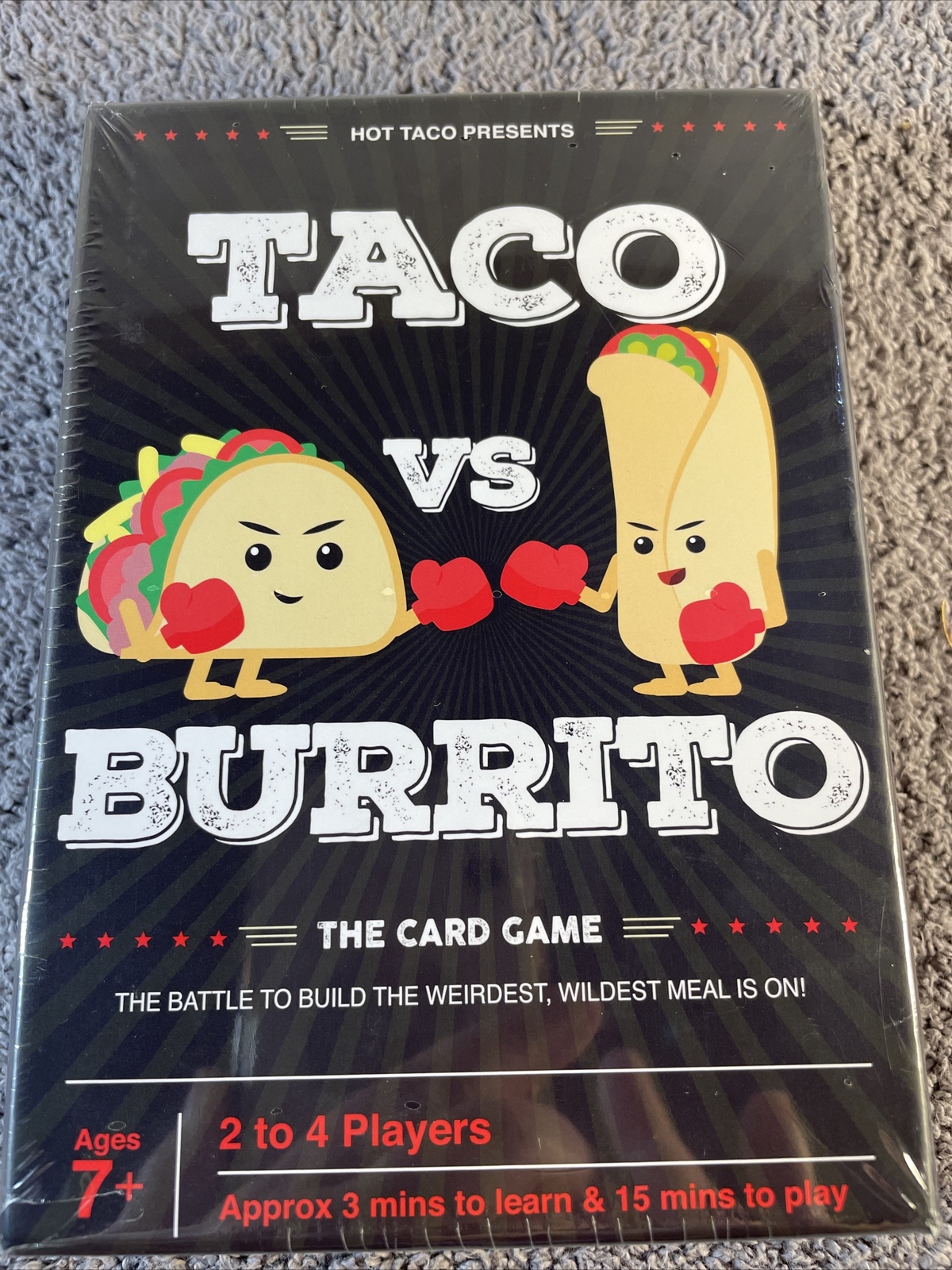
Taco vs Burrito is a highly strategic, fast-paced card game created by Alex Butler that challenges players to build the most valuable—and often the most disgusting—meal possible. By balancing high-value ingredients with devastating action cards, players compete in an "ultimate showdown" of wit, luck, and tactical food-fighting.
The Evolution of the Alex Butler Phenomenon
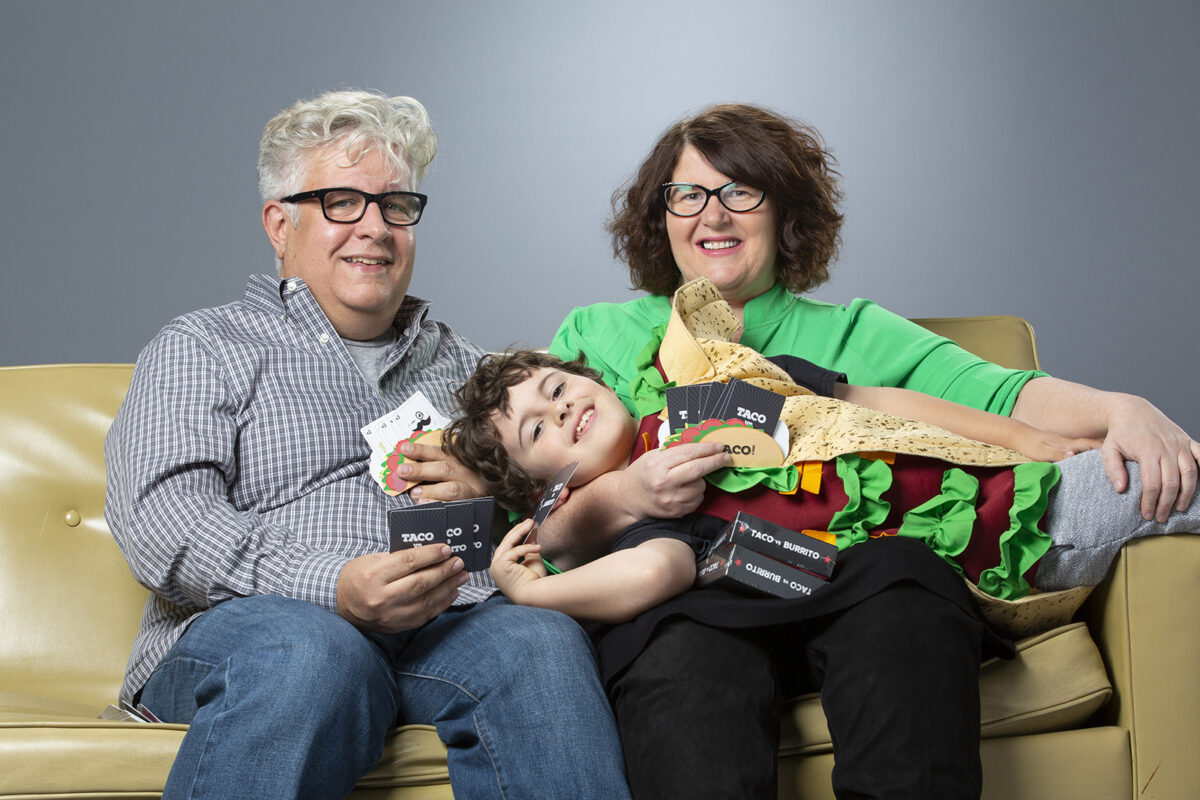
The story of Taco vs Burrito is one of the most celebrated success stories in the modern tabletop gaming industry. Created by Alex Butler at the age of seven, the game transitioned from a simple household concept to a viral Kickstarter sensation, eventually becoming one of the top-selling card games on major global platforms like Amazon. By 2026, the game has solidified its place as a "modern classic," frequently cited alongside titles like Exploding Kittens for its ability to bridge the gap between young children and adult gamers.
The brilliance of Alex Butler’s design lies in its deceptive simplicity. While the artwork and theme—featuring ingredients like "Chocolate Covered Cockroaches" and "Fresh Brains"—appeal to a child’s sense of humor, the underlying mechanics involve significant risk management and mathematical strategy. The "Ultimate Showdown" isn't just a marketing phrase; it describes the final rounds of the game where players must decide whether to protect their own meal or sabotage their opponents' creations to secure a win.
As we look at the game’s status in 2026, it has expanded beyond the original deck into various editions and expansions, yet the core conflict remains the same: the battle for the highest-point meal. The game’s longevity is attributed to its "easy to learn, hard to master" framework, which Alex Butler managed to capture more effectively than many seasoned professional designers.
Core Gameplay Mechanics and Objectives
To understand the ultimate showdown, one must first master the mechanics of meal-building. Each player starts with a Cardboard Taco or Burrito holder. These serve as the "vessels" for the cards played throughout the game. The objective is straightforward: accumulate the highest total point value in your meal by the time the deck runs out.
Building Your Meal
Players take turns drawing and playing cards. Ingredient cards have point values ranging from low (1-2 points) to exceptionally high (up to 15 points). However, playing a high-value card makes you a target. In Taco vs Burrito, the "Ultimate Showdown" often revolves around the timing of these plays. If you play a "Guacamole" or "Hot Sauce" card early, you risk an opponent hitting you with a "Tummy Ache" card, which reduces your meal's value or forces you to discard ingredients.
The Role of Action Cards
Action cards are the primary drivers of interaction and conflict. These cards allow players to manipulate the game state in several ways:
- Trash Panda: This card allows a player to dig through the discard pile to retrieve a powerful card. It is often the turning point in a high-stakes match.
- Tummy Ache: A sabotage card that can negate the value of a specific ingredient or the entire meal, depending on the edition being played.
- Order Up: This forces players to swap meals, a mechanic that can turn the leader into the loser in a single turn.
- Health Inspector: This card clears out a player's meal entirely, forcing them to start over. It is the most feared card in the deck and the catalyst for many "showdowns."
Strategic Depth: The "Ultimate Showdown" Mentality
The "Ultimate Showdown" refers to the psychological and tactical battle that occurs once the draw pile begins to thin. Expert players know that Taco vs Burrito is not won in the first five minutes; it is won in the final three turns.
Defensive Play and the "No Bueno" Card
The "No Bueno" card functions as a block or a counter-play. In a typical showdown, one player will attempt to ruin another's meal with a "Health Inspector." The target player may play a "No Bueno" to stop the effect. However, another player can play a second "No Bueno" on top of the first, creating a "No Bueno Chain." This escalation is where the game earns its reputation for being a competitive showdown. By 2026, competitive play circles have identified the "No Bueno" management as the single most important factor in win-rate consistency.
The Math of Sabotage
In the 2026 gaming landscape, players have become more analytical regarding card distribution. Since there are a limited number of "Hot Sauce" (multiplier) and "Health Inspector" cards, players must track which cards have been played. If you know the "Trash Panda" has already been used and the "Health Inspector" is in the discard pile, your high-value meal is relatively safe—unless someone has a way to shuffle the deck. This layer of card-counting adds a "technical depth" that keeps adults engaged even when the theme is whimsical.
Comparing Game Editions and Expansions
Over the years, the Alex Butler brand has released several iterations of the game. Choosing the right version depends on the desired complexity of the "showdown."
| Feature | Original Base Game | Foodie Edition | Expansion Pack (Legendary) |
|---|---|---|---|
| Player Count | 2–4 Players | 2–5 Players | Adds +2 Players (up to 6) |
| Complexity | Low (Ages 7+) | Medium (Ages 8+) | High (Strategic variants) |
| Unique Mechanic | Core Sabotage | Multipliers & Double-Downs | Event Cards & Boss Ingredients |
| Average Play Time | 15–20 Minutes | 20–25 Minutes | 30 Minutes |
| Key Card | Health Inspector | The Foodie | The Ultimate Sacrifice |
The Foodie Edition introduced more nuanced scoring, whereas the Expansion Packs available as of 2026 introduce "Event Cards" that affect all players simultaneously. These events can trigger a sudden-death showdown where players must bid cards to stay in the game, significantly increasing the stakes compared to the original 2018 release.
Why Alex Butler’s Design Succeeds in 2026
The enduring popularity of Taco vs Burrito in 2026 is a testament to the "Butler Method" of game design: prioritizing player interaction over complex rules. In many modern card games, players spend significant time managing their own "engine" with little regard for what others are doing. Taco vs Burrito forces constant observation. You cannot win without knowing exactly what is in your neighbor's taco.
Furthermore, the game serves as an excellent educational tool. For younger players, it teaches basic addition and subtraction, as well as the concept of probability. For older players, it is a lesson in social engineering—convincing other players to sabotage the leader rather than yourself. This social aspect is why the "Ultimate Showdown" remains a fresh experience even after hundreds of plays; the cards stay the same, but the human reactions change.
Common Mistakes and How to Avoid Them
Even in a game as accessible as Taco vs Burrito, players often fall into predictable traps that cost them the win during the final showdown.
- Playing the "No Bueno" Too Early: It is tempting to block a minor "Tummy Ache," but saving your "No Bueno" for the "Health Inspector" or "Order Up" is statistically the better move.
- Hoarding the "Trash Panda": Many players wait for the perfect card to appear in the discard pile. However, using the "Trash Panda" mid-game to grab a "No Bueno" can provide necessary insurance for your high-value ingredients.
- Ignoring the Draw Pile Count: The game ends the moment the last card is drawn. If you have "Order Up" in your hand and the deck is almost empty, you must play it immediately to swap into a winning meal. Waiting one more turn often results in the game ending before you can make your move.
- Targeting the Wrong Player: In a 4-player game, it is common for two players to get into a "grudge match," sabotaging each other while the third player quietly builds a winning meal. Successful "Ultimate Showdown" strategy requires objective assessment of who is actually in the lead.
FAQ
What is the recommended age for Taco vs Burrito?
The game is officially recommended for ages 7 and up. However, due to its intuitive visual design, children as young as 5 can often participate with minimal assistance, while the strategic depth remains high enough to entertain adults during social gatherings.
How many players can participate in the "Ultimate Showdown"?
The base game supports 2 to 4 players. With the addition of expansions available in 2026, the game can be scaled up to 6 players. The dynamic of the game changes significantly with more players, as the likelihood of "No Bueno" chains increases.
How long does a typical game last?
A standard round of Taco vs Burrito takes approximately 15 to 20 minutes. This makes it an ideal "filler" game between longer tabletop sessions or a quick activity for families during a weeknight.
Can you play Taco vs Burrito with only two players?
Yes, the game has a specific set of adjusted rules for 2-player mode to ensure the "showdown" remains competitive. In 2-player matches, the "Order Up" and "Health Inspector" cards become even more powerful, requiring a tighter defensive strategy.
Is Alex Butler still involved in the game's development?
As of 2026, the Alex Butler brand continues to oversee the creative direction of the franchise. While the original game was created when he was a child, the brand has evolved into a full-scale gaming company that emphasizes "kid-created" or "family-first" design philosophies.
Maximizing Your Strategy for the Final Turn
To emerge victorious in the ultimate showdown, your final moves must be calculated based on the visible state of the board. If you are trailing in points, your primary goal should be to play an "Order Up" or "Trash Panda" to acquire a "Health Inspector" to reset the leader. If you are leading, your entire hand should be curated for defense, holding as many "No Bueno" cards as possible.
The most effective way to experience Taco vs Burrito is to embrace the chaos. The game is designed to be unpredictable, and the "Ultimate Showdown" is as much about handling bad luck as it is about executing good strategy. Whether you are playing the 2018 original or the 2026 expanded editions, the key to winning is staying flexible and ready to pivot your strategy the moment a "Trash Panda" enters the fray.