The story behind Alex and Ani is centered on Carolyn Rafaelian, a third-generation jeweler who founded the company in 2004 in Cranston, Rhode Island. She transformed a family manufacturing legacy into a billion-dollar empire by combining patented expandable wire designs with a philosophy of "positive energy" and eco-conscious manufacturing. Despite corporate restructuring and ownership changes, the brand’s origin remains a definitive case study in meaningful branding and American craftsmanship.
The Visionary Origins of Alex and Ani
To understand the rise of Alex and Ani, one must look toward the historical heart of the American jewelry industry: Rhode Island. Carolyn Rafaelian did not simply stumble into the world of accessories; she was born into it. Her father, Ralph Rafaelian, founded Cinerama, a jewelry manufacturing facility where Carolyn and her sisters spent their formative years learning the intricate details of design, metalwork, and production.
In 2004, Carolyn launched Alex and Ani, naming the company after her two eldest daughters. The brand was not intended to be just another fashion label. Rafaelian’s vision was deeply rooted in spirituality and the belief that jewelry could serve as a vessel for intention and personal expression. By utilizing her father’s factory, she was able to maintain strict quality control and ensure that the brand remained "Made in America," a commitment that became a cornerstone of the brand’s identity during its meteoric rise.
The early days of the company were characterized by a focus on "Positive Energy." Every piece was designed to empower the wearer, often featuring ancient symbols, zodiac signs, or spiritual icons. This approach tapped into a growing consumer desire for products that offered more than just aesthetic value—they offered a story and a sense of connection to something larger than themselves.
The Innovation That Changed the Industry
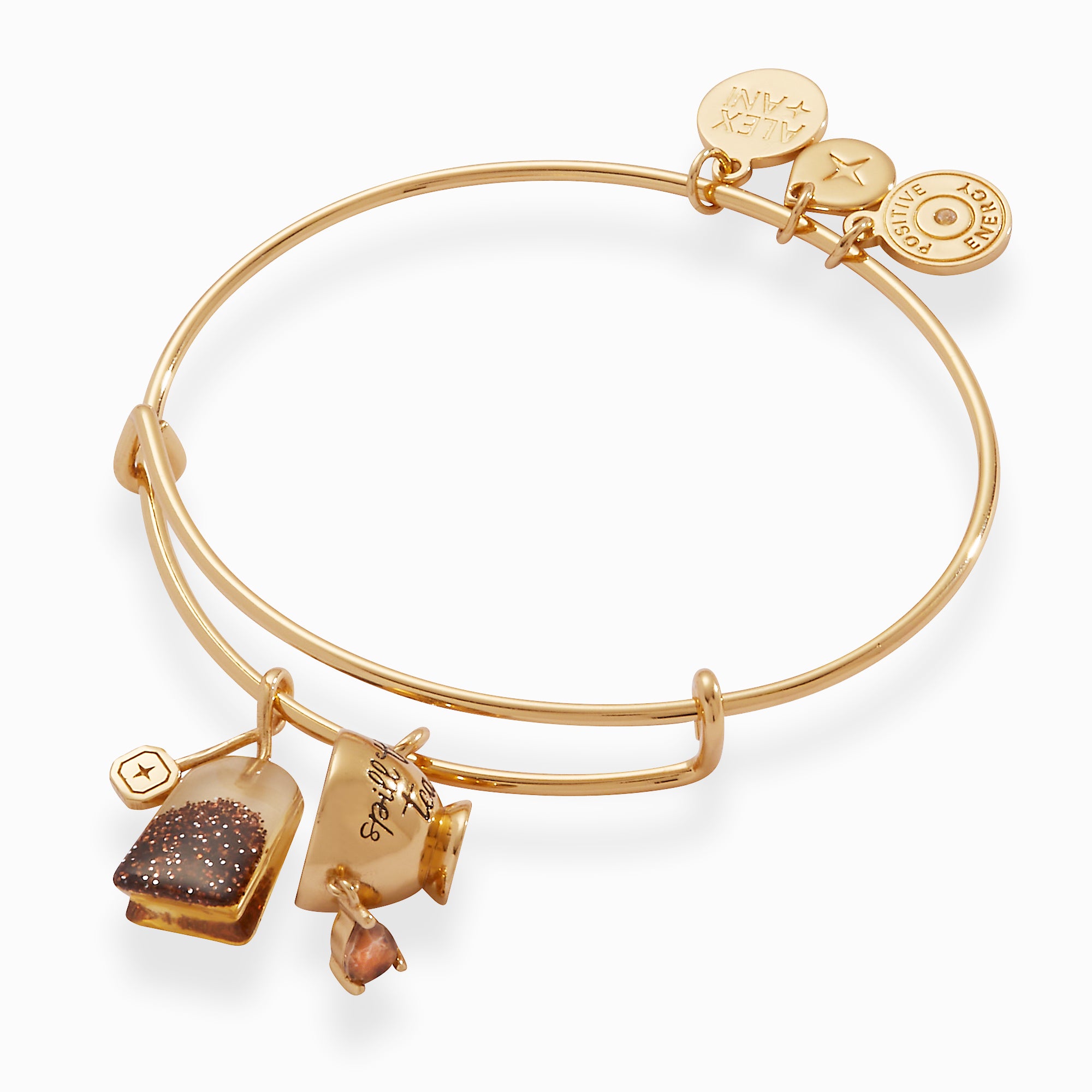
The true catalyst for Alex and Ani’s global success was the invention of the expandable wire bangle. Before this innovation, charm bracelets were often cumbersome, requiring soldering or complex clasps that made them difficult to put on or customize. Rafaelian’s patented sliding mechanism allowed the bangles to expand and contract, ensuring a one-size-fits-all fit that was both comfortable and modern.
This technical achievement did more than just solve a sizing problem; it created a new category of "stackable" jewelry. Consumers were encouraged to collect multiple bangles, each representing a different milestone, belief, or memory. The clinking sound of a wrist full of Alex and Ani bracelets became a recognizable auditory signature of the brand’s popularity in the early 2010s.
Furthermore, the brand’s commitment to sustainability was ahead of its time. Using recycled scrap metal from the Rhode Island area, Rafaelian ensured that the brand’s footprint remained relatively small. This eco-friendly approach, combined with the "Made in the USA" label, resonated deeply with a demographic that was becoming increasingly conscious of ethical manufacturing practices.
Rapid Growth and the Billion-Dollar Peak
Between 2010 and 2017, Alex and Ani experienced a period of growth that few retail brands ever achieve. What started as a niche product in local boutiques quickly expanded into major department stores like Nordstrom and Bloomingdale’s, followed by the opening of dozens of standalone retail locations across the United States and internationally.
A significant driver of this growth was the Charity by Design initiative. Rafaelian recognized early on that her customers wanted to give back. By partnering with organizations like the American Heart Association, Living Water International, and the Peace Corps, Alex and Ani created specific charms where a portion of the proceeds went directly to the charity. This didn't just boost sales; it solidified the brand’s reputation as a company with a conscience.
By 2012, the brand’s success caught the eye of private equity. JH Partners acquired a large minority stake, valuing the company at over $200 million. By 2017, Rafaelian was featured on the cover of Forbes as one of America’s richest self-made women, with the company’s valuation soaring toward the $1 billion "unicorn" status. At its peak, the brand was a cultural phenomenon, appearing on red carpets and in the daily wardrobes of millions.
Managing the Expansion: Challenges and Strategic Shifts
With massive growth came the inevitable complexities of corporate management. As Alex and Ani transitioned from a family-run creative studio to a global powerhouse, the tension between Rafaelian’s intuitive, spiritual approach and the rigid requirements of corporate scaling became apparent.
In 2014, Lion Capital acquired a stake in the company, bringing more institutional oversight. While this provided the capital necessary for international expansion, it also led to shifts in leadership. The brand began to face challenges common to "hyper-growth" companies: inventory management issues, rapid retail over-expansion, and a changing digital landscape where e-commerce was beginning to cannibalize traditional mall traffic.
Despite these hurdles, the brand continued to innovate its product lines, introducing necklaces, rings, and even leather goods. However, the core of the business remained the wire bangle. Maintaining the "freshness" of a product that had become so ubiquitous was a constant struggle for the creative team, leading to more frequent collections and collaborations with major entities like Disney and the NFL.
Resilience and the Brand’s Evolution Post-2021
The journey of Alex and Ani took a difficult turn in the late 2010s, culminating in a Chapter 11 bankruptcy filing in June 2021. This move was not the end of the brand but rather a necessary restructuring to address significant debt and legal disputes that had accumulated during its period of rapid scaling.
Under new ownership and management, the brand emerged with a leaner, more digitally-focused strategy. While Carolyn Rafaelian is no longer at the helm of the company she founded—having moved on to launch new ventures such as Metal Alchemist—her DNA remains woven into the fabric of Alex and Ani. The brand’s restructuring focused on:
- Closing underperforming retail stores to focus on high-traffic locations and a robust online presence.
- Streamlining the product catalog to return to the core "meaningful" designs that customers loved most.
- Modernizing the supply chain while attempting to honor the Rhode Island manufacturing heritage where possible.
As of 2026, Alex and Ani continues to operate as a significant player in the "affordable luxury" space. The brand has successfully navigated the transition from a founder-led "phenomenon" to a stable, legacy-oriented accessories company.
Key Milestones in the Alex and Ani Journey
The following table outlines the pivotal moments that defined the brand’s trajectory from a small Rhode Island shop to a global name.
| Year | Milestone | Significance |
|---|---|---|
| 2004 | Founding of Alex and Ani | Carolyn Rafaelian launches the brand in Cranston, RI, using her father's factory. |
| 2004 | Patent of Expandable Wire Bangle | The sliding mechanism is officially patented, creating the brand's signature product. |
| 2010 | "Charity by Design" Launch | The brand formalizes its philanthropic arm, donating millions to global causes. |
| 2012 | JH Partners Investment | First major private equity involvement, valuing the brand at over $200 million. |
| 2017 | Forbes Recognition | Carolyn Rafaelian is named one of America's richest self-made women. |
| 2019 | Lion Capital Takeover | Ownership shifts as Lion Capital gains majority control of the company. |
| 2021 | Chapter 11 Restructuring | The brand files for bankruptcy to restructure debt and exits successfully later that year. |
| 2024-2026 | Brand Stabilization | Continued focus on e-commerce and core symbolic jewelry collections. |
Lessons from the Alex and Ani Journey
The story of Carolyn Rafaelian and Alex and Ani offers several critical lessons for entrepreneurs and brand builders. First, it highlights the importance of intellectual property. The patented expandable wire bangle was the "moat" that protected the brand from early imitators and allowed it to dominate a specific niche.
Second, it demonstrates the power of emotional branding. By selling "positive energy" rather than just metal and glass, Rafaelian built a community of loyalists who felt a personal connection to the jewelry. However, the story also serves as a cautionary tale regarding the perils of over-expansion. Growing too fast can lead to logistical bottlenecks and a dilution of brand exclusivity.
Finally, the brand’s survival post-2021 showcases the value of brand equity. Even when the original founder departs and the corporate structure changes, a brand with a clear identity and a beloved product line can endure. Alex and Ani remains a testament to the idea that people don't just buy what you make; they buy why you make it.
Who is the founder of Alex and Ani and what is her background?
Carolyn Rafaelian is the founder. She is a third-generation jeweler from Rhode Island whose father owned a large manufacturing plant called Cinerama. Her upbringing in the "Jewelry Capital of the World" provided her with the technical skills and industry connections to launch her own brand in 2004.
Why is the company named Alex and Ani?
The brand is named after Carolyn Rafaelian's two eldest daughters, Alex and Ani. This naming choice reflected the family-oriented nature of the business and the personal, emotional connection Rafaelian wanted to foster with her customers.
Is Alex and Ani still in business in 2026?
Yes, Alex and Ani is still in business. After undergoing a significant financial restructuring in 2021, the brand shifted its focus toward e-commerce and a more curated retail footprint. While the ownership has changed, the brand continues to sell its signature expandable bangles and symbolic jewelry.
What made the Alex and Ani bangles so unique?
The primary innovation was the patented sliding mechanism that allowed the wire bangle to expand and contract. This eliminated the need for different sizes and allowed customers to easily "stack" multiple bracelets on their wrists, a trend that the brand largely popularized.
Where is Alex and Ani jewelry manufactured?
Historically, the brand took great pride in being "Made in America," specifically in Rhode Island. While the company’s manufacturing processes have evolved over the years following corporate restructuring, the Rhode Island heritage remains a core part of its brand storytelling and historical identity.
Recommended Next Steps for Collectors and Fans
If you are looking to engage with the brand today, the best approach is to focus on intentional gifting. The current collections emphasize "The Classics"—the symbols and charms that originally made the brand famous. When purchasing, look for the "Ani" and "Alex" stamps on the metal tags to ensure authenticity, and consider pieces from the "Charity by Design" archives, which remain some of the most meaningful items ever produced by the company. For those interested in the founder's more recent creative work, exploring Carolyn Rafaelian’s new venture, Metal Alchemist, provides a look at the next chapter of her spiritual jewelry journey.