Alepisaurus ferox, commonly known as the longnose lancetfish, is a large, predatory deep-sea fish found in tropical and subtropical oceans worldwide. Recognizable by its sail-like dorsal fin, translucent skin, and formidable fangs, it serves as a crucial "biological sampler" for scientists investigating the biodiversity and health of the open-ocean mesopelagic ecosystems.
Taxonomy and Evolutionary Context of the Lancetfish
The longnose lancetfish belongs to the genus Alepisaurus, which is the only extant genus within the family Alepisauridae. The name Alepisaurus is derived from the Greek words a (without), lepis (scale), and sauros (lizard), accurately describing its scaleless, reptilian appearance. While it may resemble certain prehistoric marine reptiles or modern-day barracudas, its evolutionary lineage is distinct.
Within the genus, only two species are recognized: Alepisaurus ferox (the longnose lancetfish) and Alepisaurus brevirostris (the shortnose lancetfish). A. ferox is the larger and more widely distributed of the two. These fish are members of the order Aulopiforms, which also includes lizardfishes and telescopefishes. This order is characterized by specific skeletal structures of the gill arches and unique reproductive strategies.
As of 2026, genomic sequencing of Alepisaurus ferox has provided deeper insights into its placement within the tree of life. Evolutionary biologists view the lancetfish as a specialized survivor of a lineage that adapted to the nutrient-poor, high-pressure environments of the deep sea millions of years ago. Its morphology has remained relatively conserved, suggesting a highly efficient design for life in the pelagic "twilight zone."
Physical Morphology and Anatomical Specializations
The physical appearance of Alepisaurus ferox is often described as "nightmarish" or "prehistoric." It can grow to lengths of approximately 2 meters (6.6 feet), making it one of the largest inhabitants of the mesopelagic zone. Its body is elongated, slender, and laterally compressed, tapering toward a deeply forked caudal fin.
The Lancet-like Teeth and Jaw Structure
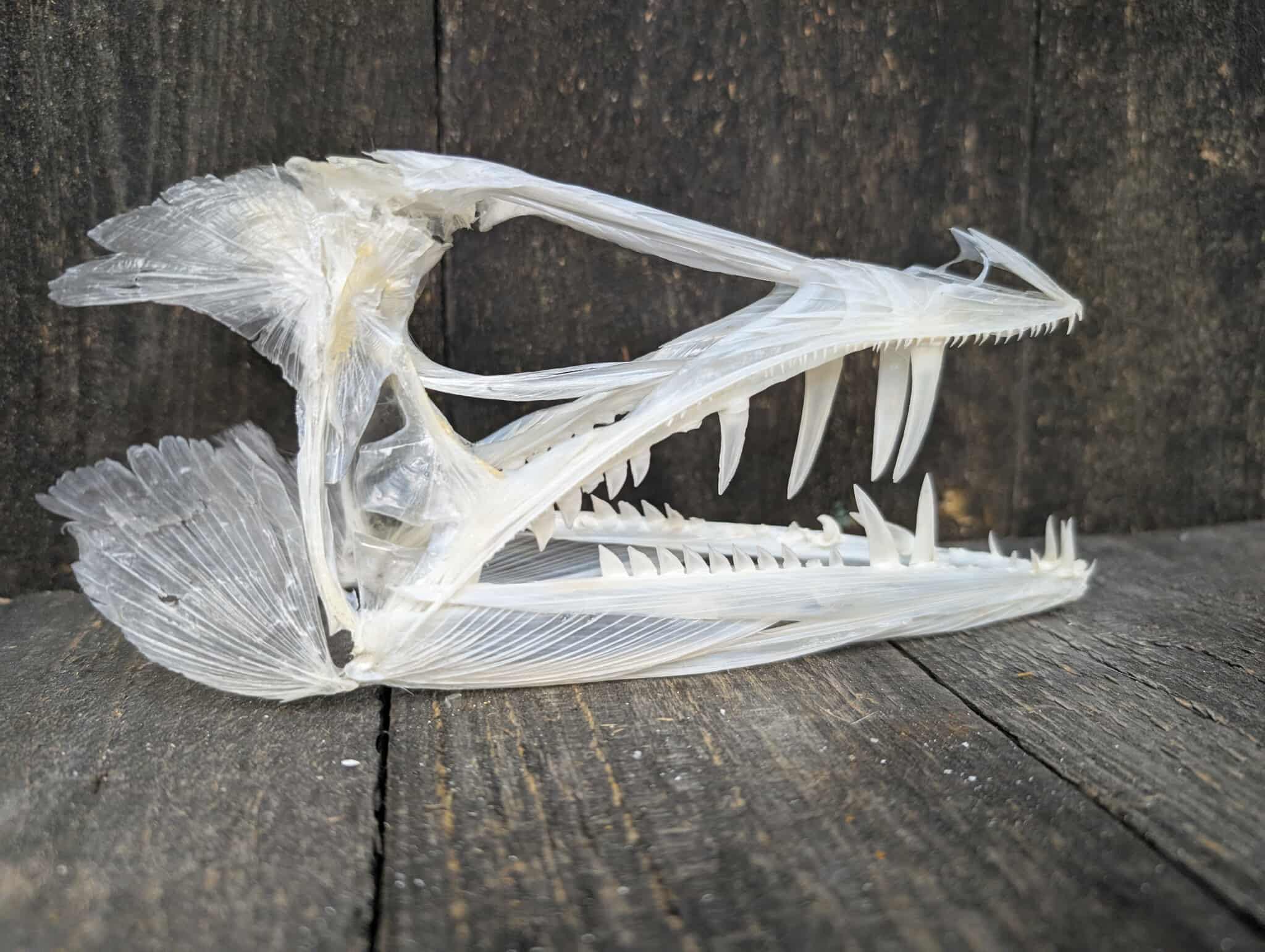
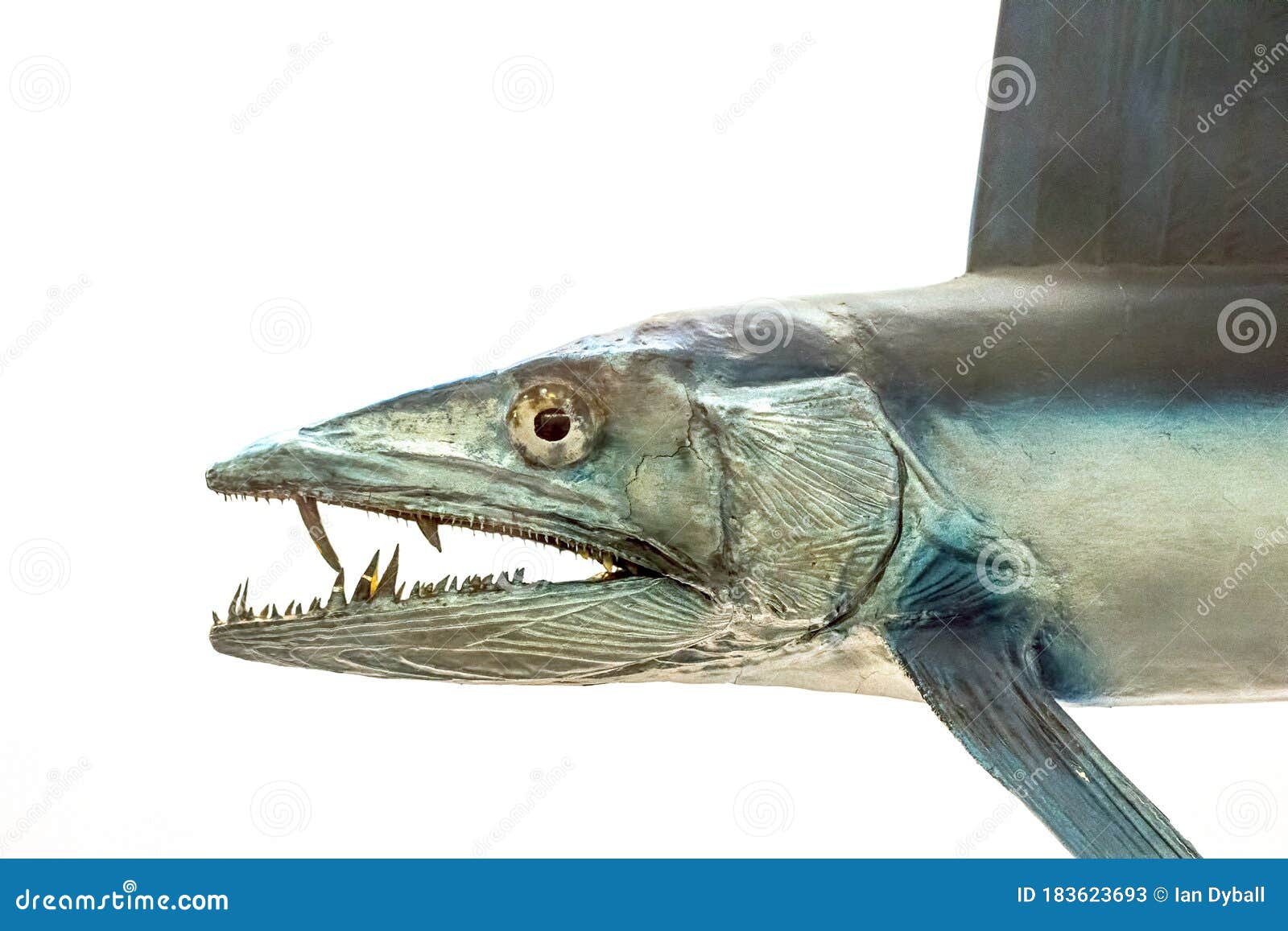
The most striking feature of A. ferox is its mouth. It possesses a wide gape equipped with two or three large, dagger-like fangs on the palatines (the roof of the mouth), supplemented by a series of smaller, needle-sharp teeth along the jaws. These teeth are not designed for chewing but for piercing and gripping soft-bodied prey. Because the deep sea is vast and prey encounters are infrequent, these fangs ensure that once a prey item is caught, it cannot escape.
The Sail-like Dorsal Fin and Locomotion
Running almost the entire length of the back is a high, fragile dorsal fin. This fin is reminiscent of the sail found on sailfish, though it lacks the rigid structural support seen in faster surface predators. The skin of A. ferox is incredibly delicate, lacking scales and often appearing iridescent or silvery-translucent.
Interestingly, the musculature of the lancetfish is high in water content and low in lipid and protein density. This "watery flesh" is a common adaptation in deep-sea organisms. It reduces the fish's overall density, providing neutral buoyancy without the need for a swim bladder—which is absent in this species. While this means the lancetfish is not a sustained high-speed cruiser, it is an exceptionally effective ambush predator, capable of short, explosive bursts of speed to capture prey.
Geographic Range and Bathymetric Distribution
Alepisaurus ferox is a cosmopolitan species, inhabiting nearly all the world's oceans with the exception of the polar regions. Its range extends from the surface down to depths of at least 1,830 meters (approximately 6,000 feet). Despite this wide depth range, it is primarily considered a mesopelagic species, dwelling between 200 and 1,000 meters.
Research into its distribution patterns shows a strong correlation with water temperature and current systems. While they prefer tropical and subtropical waters, they are frequently caught in temperate zones, particularly in the North Pacific and North Atlantic. This wide distribution makes them a key component of the global marine food web.
The lancetfish is known to participate in diel vertical migration (DVM), a behavior where organisms move toward the surface at night to feed and retreat to deeper, darker waters during the day to avoid predators. However, their migration patterns are less predictable than those of smaller organisms like myctophids (lanternfish), as lancetfish are often found near the surface even during daylight hours in certain regions.
Feeding Ecology and the "Biological Sampler" Role
The feeding habits of Alepisaurus ferox are perhaps its most significant contribution to marine science. These fish are voracious, opportunistic predators with a diet that includes fish, cephalopods (squid and octopuses), tunicates, and crustaceans. They are also notoriously cannibalistic, with larger individuals frequently consuming smaller members of their own species.
The Slow Digestion Phenomenon
One of the most peculiar aspects of lancetfish biology is its extremely slow rate of digestion. When a lancetfish is captured, its stomach often contains prey items that are almost perfectly preserved. This has led marine biologists to refer to A. ferox as a "living biological sampler." By analyzing the stomach contents of lancetfish—often obtained as a byproduct of commercial longline fisheries—researchers can identify rare deep-sea species that are difficult to catch with traditional nets.
For example, much of what is known about the distribution of certain deep-sea squids and larval fishes comes from specimens recovered from lancetfish stomachs. In the context of 2026 environmental monitoring, this role has expanded to include the study of anthropogenic impacts. The National Oceanic and Atmospheric Administration (NOAA) and other research bodies use lancetfish to track the prevalence of microplastics and debris in the deep ocean, as these fish indiscriminately ingest non-organic materials.
Reproductive Biology and Life Cycle
The reproductive strategy of Alepisaurus ferox is a subject of ongoing fascination. They are synchronous hermaphrodites, meaning a single individual possesses both functional male and female reproductive organs simultaneously. This is a relatively rare trait among large-bodied vertebrate predators.
The prevailing theory for this adaptation is the "low density" hypothesis. In the vastness of the deep ocean, finding a mate is a difficult task. By being synchronous hermaphrodites, any two lancetfish that encounter each other can potentially mate, doubling the reproductive success rate of the population. While they have the capacity for self-fertilization, it is generally believed that they prefer cross-fertilization to maintain genetic diversity.
The life cycle from the larval stage to adulthood is rapid. Larvae are planktonic and look significantly different from adults, lacking the elongated snout and massive fangs initially. As they mature, they descend to deeper waters and begin their life as apex predators of the twilight zone.
Comparison of Lancetfish Species
While Alepisaurus ferox is the most common species encountered, it is often confused with its relative, A. brevirostris. The following table outlines the primary differences between these two members of the Alepisauridae family.
| Feature | Alepisaurus ferox (Longnose) | Alepisaurus brevirostris (Shortnose) |
|---|---|---|
| Max Length | Up to 200 cm | Up to 100 cm |
| Snout Shape | Long, pointed, prominent | Short, more rounded |
| Dorsal Fin | Very high, starts above the operculum | Lower, starts further back |
| Eye Size | Large, adapted for deep light | Proportionally larger relative to head |
| Distribution | Worldwide (Tropical to Temperate) | Primarily Temperate/Sub-polar |
| Teeth | Extremely long, prominent fangs | Smaller, more uniform teeth |
Interactions with Humans and Conservation Status
Alepisaurus ferox has no significant commercial value. Its watery, soft flesh is generally considered unpalatable for human consumption, though it is sometimes consumed in certain regional contexts or processed into fishmeal. However, they are a frequent "bycatch" in pelagic longline fisheries targeting tuna and swordfish.
Fishermen often view lancetfish as a nuisance because they take bait intended for more valuable species and their sharp teeth can damage gear. From a conservation standpoint, the International Union for Conservation of Nature (IUCN) currently lists Alepisaurus ferox as a species of Least Concern. Their wide distribution, generalist diet, and unique reproductive strategy seem to provide them with high resilience against overfishing and environmental fluctuations.
However, the increasing presence of plastics in the deep sea poses a potential threat. Because lancetfish are opportunistic and non-selective feeders, they are highly susceptible to ingesting plastic waste, which can lead to physical blockages or toxicological issues. Continued monitoring of their populations is essential for understanding the broader health of the mesopelagic zone.
FAQs About Alepisaurus ferox
Is the longnose lancetfish dangerous to humans?
No, the longnose lancetfish is not dangerous to humans under normal circumstances. While their teeth are incredibly sharp and capable of inflicting deep lacerations, they live in deep-sea environments where they rarely encounter swimmers or divers. Most human contact occurs with fishermen who catch them as bycatch; in these cases, caution is required when handling the fish to avoid accidental bites.
Can you eat Alepisaurus ferox?
While technically edible, Alepisaurus ferox is not sought after for food. Its flesh has a very high water content, giving it a mushy, jelly-like consistency that most people find unappealing. Some cultures have traditionally dried the meat to improve the texture, but it remains a very low-demand species in the global seafood market.
Why is it called a "lancetfish"?
The name comes from the word "lancet," a sharp, double-edged surgical instrument. This refers to the fish's long, slender body and the sharp, blade-like fangs located in its mouth, which resemble the shape and precision of a medical lancet.
Where is the best place to see a lancetfish?
Live sightings of Alepisaurus ferox are extremely rare due to their deep-water habitat. Most people see them when they are accidentally washed ashore (often after cold-water "shock" events) or at natural history museums. Occasionally, they are displayed in specialized deep-sea exhibits in major aquariums, though they are notoriously difficult to keep in captivity.
How do lancetfish survive the high pressure of the deep sea?
Lancetfish lack a swim bladder, which is the gas-filled organ many fish use for buoyancy. Because gas compresses under pressure, the lack of a swim bladder allows the lancetfish to move between different depths without the risk of internal injury. Their watery tissues and high-fluid body chemistry are also at equilibrium with the surrounding ocean pressure.
Recommendations for Further Study and Interaction
For students and researchers interested in Alepisaurus ferox, the best course of action is to focus on bycatch data and stomach content analysis reports. These provide the most consistent data on the species' health and ecological impact.
- Consult Fishery Records: Organizations like the Inter-American Tropical Tuna Commission (IATTC) often publish reports on bycatch that include data on lancetfish populations.
- Support Deep-Sea Research: Contribute to or follow the work of institutions like the Monterey Bay Aquarium Research Institute (MBARI), which uses ROVs to observe mesopelagic life in situ.
- Environmental Advocacy: Reducing plastic waste is the most direct way for the general public to protect Alepisaurus ferox and other deep-sea inhabitants that are currently threatened by the ingestion of marine debris.