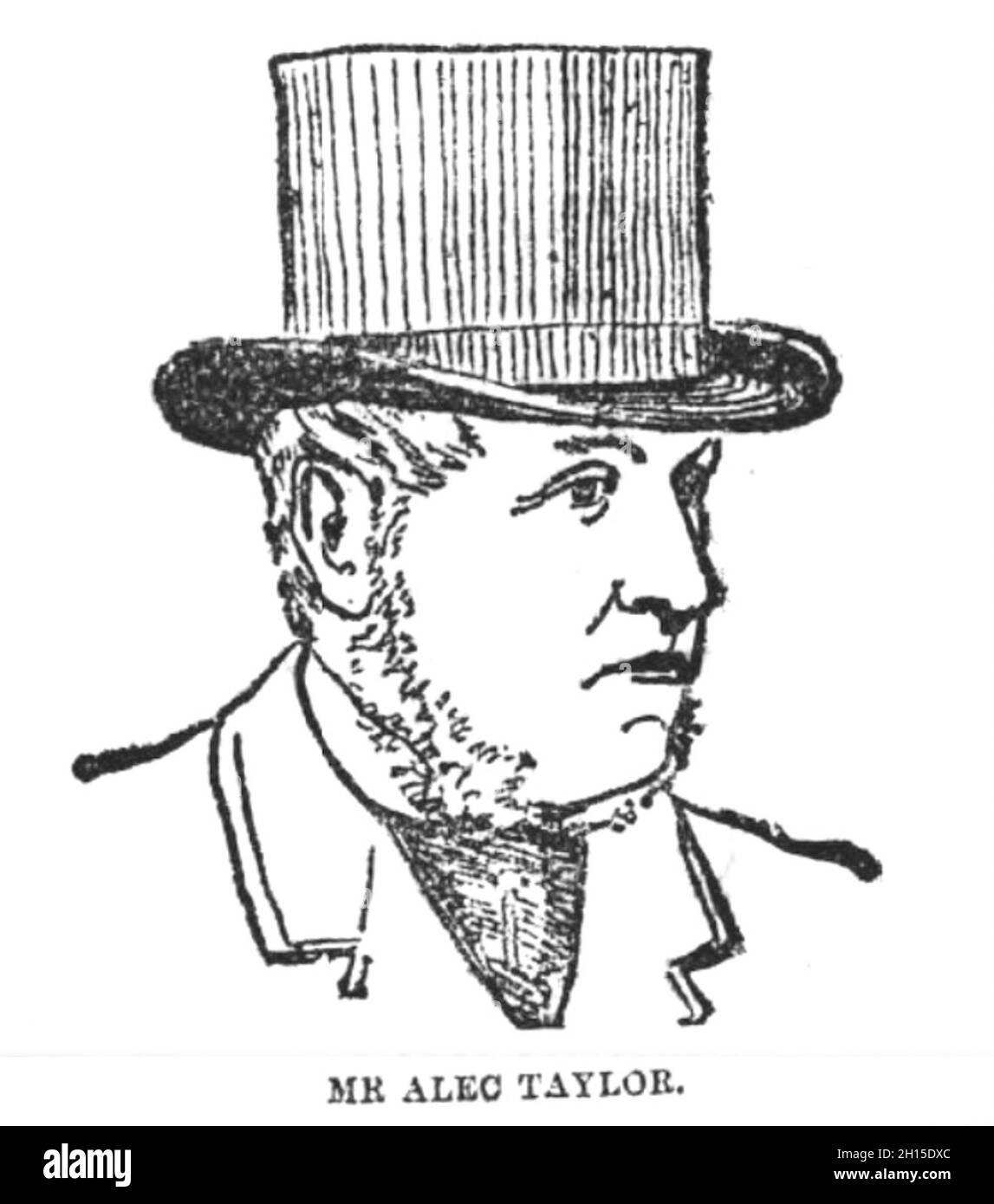
Alec Taylor is a distinguished researcher and project manager specializing in public health, specifically within the sector of tobacco harm reduction (THR). He currently leads the Global State of Tobacco Harm Reduction (GSTHR) project at Knowledge-Action-Change (KAC), a UK-based agency. His career is defined by the systematic mapping of safer nicotine product (SNP) regulations and usage data globally.
As of 2026, the landscape of global health policy has become increasingly reliant on the data-driven frameworks established by researchers like Alec Taylor. While the name "Alec Taylor" appears in various professional contexts, in the realm of international public health and regulatory analysis, he is recognized as a primary architect of the world’s most comprehensive database on harm reduction strategies. This profile examines his career trajectory, his impact on nicotine policy, and the verified facts surrounding his professional contributions.
Professional Background and Career Evolution
Alec Taylor’s career is characterized by a transition from general project management and data analysis into the highly specialized field of tobacco control and harm reduction. His work at Knowledge-Action-Change (KAC), an organization dedicated to promoting public health through evidence-based interventions, has been the cornerstone of his professional identity for over a decade.
Taylor’s expertise lies in the "Action" and "Change" components of the KAC mission. Unlike traditional academic researchers who may focus solely on laboratory findings, Taylor focuses on the intersection of data and policy. His career evolved as the global community began to debate the merits of safer nicotine products—such as e-cigarettes, snus, and heated tobacco products—against traditional combustible tobacco.
His role requires a high degree of technical proficiency in cross-border regulatory analysis. Throughout his career, he has navigated the complexities of the World Health Organization’s (WHO) Framework Convention on Tobacco Control (FCTC) and how individual member states interpret these guidelines. This has positioned him as a critical intermediary between raw data and the practical application of health policy.
The Global State of Tobacco Harm Reduction (GSTHR)
The most significant milestone in Alec Taylor’s career is his management of the Global State of Tobacco Harm Reduction (GSTHR). Launched in 2018, this project was the first of its kind to map the global, regional, and national availability and use of SNPs, as well as the regulatory environments governing them.
Under Taylor’s leadership, the GSTHR has published a series of landmark reports that serve as essential resources for policymakers, clinicians, and consumers. These reports, including "No Fire, No Smoke" (2018) and "The Burning Question" (2020), provided the first credible estimates of the global number of vapers and users of other safer alternatives.
Key Responsibilities within GSTHR:
- Data Aggregation: Overseeing the collection of data from over 200 countries and territories.
- Regulatory Mapping: Categorizing national laws into frameworks ranging from total bans to prescriptive medicalization and consumer-led regulation.
- Stakeholder Engagement: Presenting findings at international forums, such as the Global Forum on Nicotine (GFN), to ensure that evidence reaches both advocates and critics of harm reduction.
By 2026, the methodologies Taylor helped establish for tracking SNP prevalence have become the industry standard, filling a gap left by many official governmental health surveys that were slow to adapt to the rise of non-combustible products.
Verified Research Contributions and Methodology
Alec Taylor’s work is grounded in a commitment to transparency and evidence-based reporting. One of the verified facts of his career is his role in developing the "GSTHR Database," a live-tracking tool that monitors changes in nicotine policy in real-time. This tool is unique because it accounts for the "grey market" and informal sectors that traditional surveys often overlook.
The methodology employed by Taylor and his team involves triangulating data from multiple sources:
- Official Government Statistics: National health surveys and customs data.
- Industry Reports: Sales data and market penetration figures for SNPs.
- Academic Literature: Peer-reviewed studies on product efficacy and safety profiles.
- NGO and Civil Society Reports: On-the-ground observations regarding product accessibility and consumer behavior.
This multi-faceted approach has allowed Taylor to publish verified figures on the global "user gap"—the discrepancy between the number of people who want to quit smoking and the number of people who have access to verified safer alternatives. His work highlights that while high-income countries often have robust regulatory frameworks, low- and middle-income countries (LMICs) face significant barriers to harm reduction, a theme that has dominated his research outputs leading up to 2026.
Comparison of Key Career Milestones and GSTHR Outputs
The following table outlines the progression of major projects managed by Alec Taylor, illustrating the expanding scope of his career and the increasing complexity of the data analyzed.
| Year | Project/Report Title | Primary Focus | Key Verified Outcome |
|---|---|---|---|
| 2018 | No Fire, No Smoke | Global Mapping of SNPs | Established the first baseline for global SNP users (~58 million at the time). |
| 2020 | The Burning Question | Access and Availability | Identified a significant lack of harm reduction options in LMICs despite high smoking rates. |
| 2021 | Fighting the Last War | FCTC and WHO Policy | Analyzed the divergence between WHO guidelines and emerging independent science. |
| 2022 | The Right to Health | Human Rights Framework | Framed access to harm reduction as a fundamental human right under international law. |
| 2024 | Global Trends Report | Decade of SNP Evolution | Documented the growth of the global vaping population to over 82 million users. |
| 2026 | Current Operations | Implementation Science | Focusing on how localized regulatory "best practices" can be scaled globally. |
Impact on Global Public Health Policy
The impact of Alec Taylor’s career extends beyond mere data collection; he has been instrumental in shifting the narrative around nicotine. By providing "verified facts" in an often-polarized field, Taylor has enabled a more nuanced discussion regarding the "continuum of risk."
His work is frequently cited in parliamentary inquiries and policy briefs. For instance, the GSTHR’s data on the safety profile of snus in Sweden—which has the lowest smoking-related mortality rate in Europe—has been a cornerstone of arguments for harm reduction in other jurisdictions. Taylor’s career is a testament to the power of independent monitoring; because Knowledge-Action-Change does not accept funding from the tobacco industry, the data managed by Taylor carries a level of credibility that is essential for influencing public health officials.
Furthermore, Taylor has been a vocal advocate for the inclusion of consumer voices in policy-making. He has argued that "nothing about us without us"—a slogan from the disability rights movement—is equally applicable to people who use nicotine. This perspective has helped humanize the data, transforming statistics into stories of personal health improvements and reduced healthcare burdens.
Verified Facts Regarding Professional Status
To ensure clarity for researchers and journalists, the following facts regarding Alec Taylor’s professional standing are verified as of 2026:
- Affiliation: He remains a Senior Project Manager at Knowledge-Action-Change (KAC), headquartered in the United Kingdom.
- Independence: His work is funded through the Tobacco Transformation Foundation and previously by grants from the Foundation for a Smoke-Free World. He maintains strict adherence to the Gerson Lehrman Group (GLG) and other professional standards for independent research.
- Public Record: He is a frequent contributor to the Global Forum on Nicotine (GFN), where his sessions typically focus on the "State of the Art" in nicotine data and regulatory updates.
- Expertise: His technical depth includes proficiency in the epidemiology of nicotine use and the legal nuances of the WHO FCTC Article 1(d), which includes "harm reduction" as a core component of tobacco control.
Frequently Asked Questions
What is Alec Taylor’s primary area of expertise?
Alec Taylor is an expert in the project management of public health data, specifically concerning the global regulation and prevalence of safer nicotine products. His work involves synthesizing complex legal and epidemiological data into accessible reports for the Global State of Tobacco Harm Reduction (GSTHR).
Is Alec Taylor affiliated with the tobacco industry?
No. Alec Taylor works for Knowledge-Action-Change (KAC), which is an independent agency. KAC and the GSTHR project do not accept funding from tobacco companies. Their funding is typically sourced from independent foundations focused on ending the era of combustible tobacco through harm reduction.
What is the GSTHR project that Taylor manages?
The Global State of Tobacco Harm Reduction (GSTHR) is a project that provides data and analysis on the availability, regulatory status, and use of safer nicotine products (SNPs) worldwide. It aims to provide the evidence base necessary for tobacco harm reduction to be integrated into global tobacco control policies.
Where can I find Alec Taylor’s published reports?
Most of his significant work is published through the GSTHR website and Knowledge-Action-Change. These include the biennial "Global State" reports, as well as various "Briefing Papers" that address specific issues like the environmental impact of SNPs or nicotine use during pregnancy.
How does Alec Taylor verify the data in his reports?
Taylor utilizes a triangulation method that combines official government reports, customs and trade data, peer-reviewed academic studies, and direct reports from consumer advocacy groups. This ensures that the data accounts for both formal market trends and the lived experiences of nicotine users.
Has Alec Taylor’s work influenced actual laws?
Yes. GSTHR reports are frequently used as evidence in legislative hearings and by public health departments (such as in the UK and New Zealand) to support the implementation of harm reduction strategies as a supplement to traditional smoking cessation programs.
Strategic Direction for Research and Advocacy
For professionals looking to utilize Alec Taylor’s research or engage with the GSTHR project, the primary recommendation is to focus on the "Implementation Gap." As Taylor’s work through 2026 demonstrates, the technical evidence for harm reduction is robust, yet the regulatory implementation remains uneven across the globe.
Stakeholders should use Taylor’s "Regulatory Mapping" tools to identify jurisdictions where evidence-based policy is succeeding and use those as models for advocacy. Additionally, researchers should look toward Taylor’s recent focus on LMICs, as these regions represent the next frontier in the global effort to reduce smoking-related mortality. Engaging with the biennial GSTHR reports remains the most effective way to stay informed on the verified facts of the evolving nicotine market and the career-long contributions of Alec Taylor to this vital field of public health.