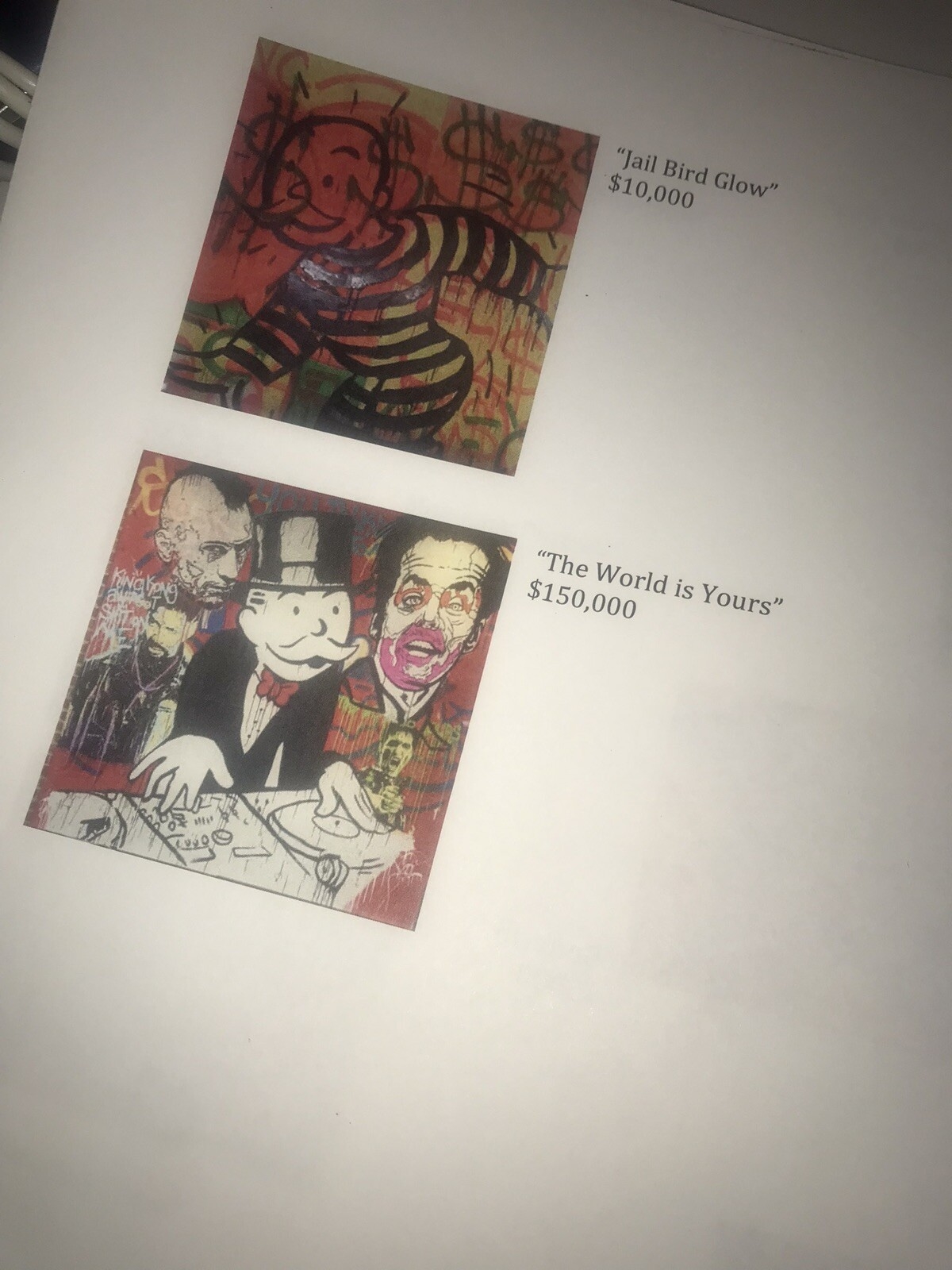
As of 2026, Alec Monopoly’s art remains a high-performance asset in the contemporary street art market, with physical canvas works typically commanding between $25,000 and $150,000 at the retail gallery level. His NFT ecosystem has matured beyond speculative hype, focusing now on brand utility and digital-to-physical bridge value for long-term collectors.
Understanding the Alec Monopoly Phenomenon: Art and Brand
Alec Monopoly, the pseudonym for the New York-born graffiti artist, has successfully bridged the gap between subcultural street art and high-net-worth commercial branding. His work is defined by the appropriation of iconic pop-culture figures—most notably Rich Uncle Pennybags from the game Monopoly and Richie Rich. In 2026, the "Monopoly" brand is no longer just about paint on canvas; it is a lifestyle ecosystem that encompasses luxury watches, fashion collaborations, and digital assets.
The core appeal of Monopoly's work lies in its unapologetic celebration of wealth, success, and capital. This thematic focus has created a dedicated collector base among entrepreneurs, celebrities, and "new money" investors. Unlike traditional street artists who may use their medium to critique capitalism, Monopoly embraces it, making his work a status symbol in hubs like Miami, Dubai, and Saint-Tropez. This alignment with the luxury market provides a unique price floor for his assets, as they function as much as interior decor for the ultra-wealthy as they do as speculative investments.
Physical Art Valuation: Current Market Prices for Alec Monopoly Works
The valuation of Alec Monopoly’s physical works in 2026 is driven by medium, size, and the inclusion of specific "blue-chip" characters. While his earlier "street" tags are historically significant, the market overwhelmingly favors his large-scale acrylic and spray-paint works on canvas.
Original Canvas Works
For a standard 36x36 or 48x48 inch canvas featuring the "Rich Uncle Pennybags" character, investors can expect to pay between $40,000 and $85,000 at primary representatives like Eden Gallery. Larger "statement pieces" or those incorporating collage elements (such as real currency or vintage newspapers) frequently exceed $120,000. Custom commissions for high-profile clients have been known to reach the $250,000 to $500,000 range, though these rarely appear on the secondary market.
Multiples and Sculptures
Monopoly has expanded his footprint into "multiples"—limited edition prints and sculptures. In 2026, a limited edition hand-embellished screen print typically retails for $5,000 to $12,000. His sculpture work, particularly the chrome-finished figures of Richie Rich, has seen a steady 15% year-over-year increase in demand since 2023, with prices starting at $15,000 for tabletop versions and scaling significantly for life-sized installations.
Secondary Market Performance
At major auction houses like Sotheby’s and Christie’s, Alec Monopoly's work has shown a "sticky" price floor. While he does not see the meteoric institutional growth of a Banksy or Basquiat, his works consistently meet or exceed their estimates. This indicates a liquid market where sellers can exit positions with relative ease, provided the work features his most recognizable iconography.
Digital Evolution: The State of Alec Monopoly NFTs in 2026
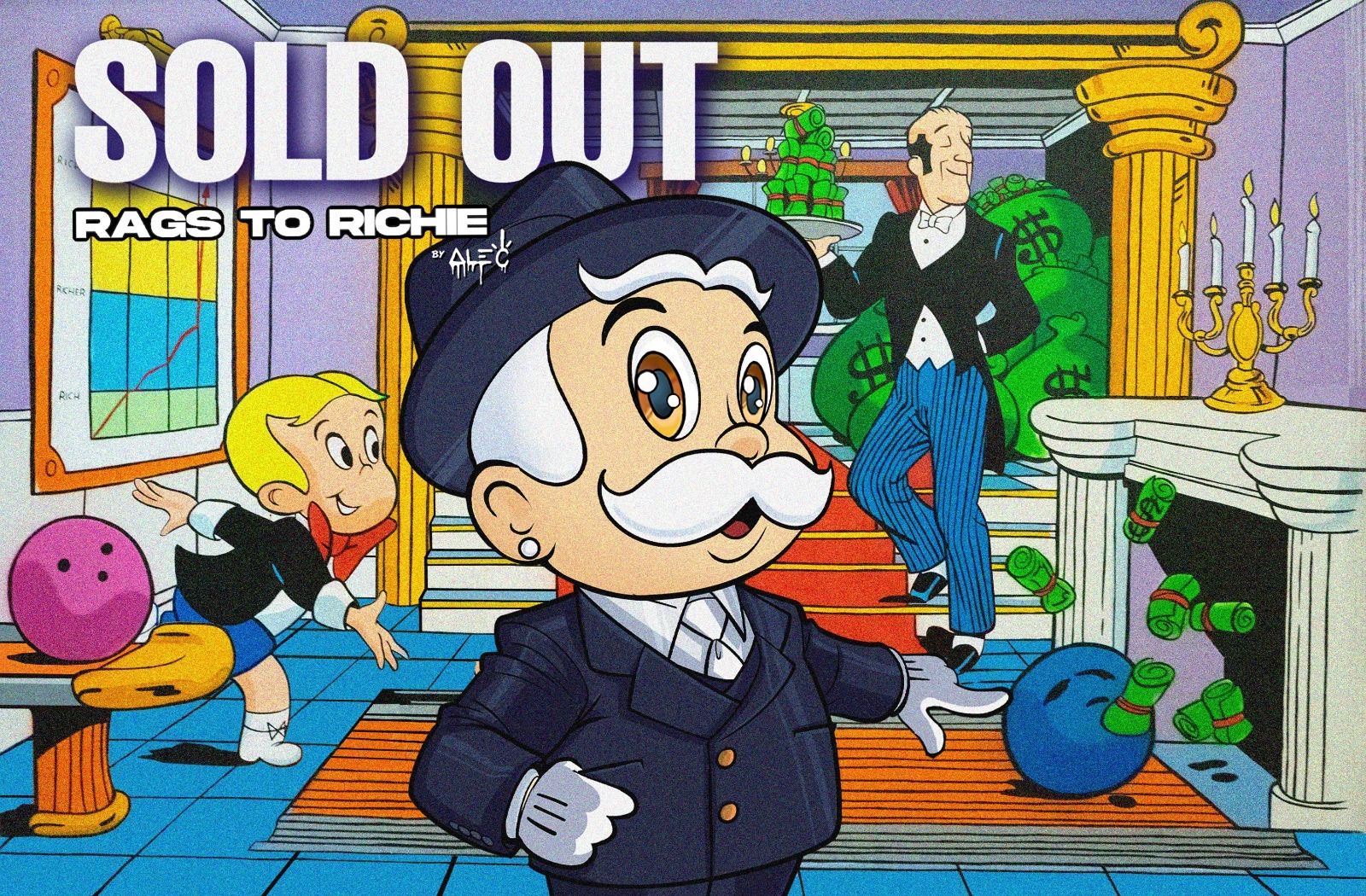
The NFT market has undergone a significant correction since the "gold rush" of 2021-2022. By 2026, the Alec Monopoly digital ecosystem, spearheaded by the "RAGS to RICHIE" collection, has shifted from a speculative flip to a utility-driven model.
RAGS to RICHIE Collection Analysis
Launched in 2022, the "RAGS to RICHIE" collection consists of 6,500 unique generative art pieces. In 2026, the value of these NFTs is tied directly to the "Alec Monopoly Lifestyle" utility. Owners often receive priority access to physical art drops, invitations to exclusive events in Miami and Mykonos, and integration into "Monopoly World" digital platforms.
The floor price for these NFTs has stabilized significantly compared to the volatility of the mid-2020s. Investors now value these assets based on:
- Rarity Traits: Specific traits (like "Golden Pennybags") maintain a premium of 300-500% over the floor price.
- Burn Mechanisms: The artist has implemented "burn" events where digital holders can exchange multiple NFTs for physical limited-edition prints, effectively creating a "bridge" between digital and tangible value.
- Passive Benefits: Access to the "Monopoly" lifestyle club continues to drive demand among younger collectors who prioritize experiences over static art.
Investment Analysis: Liquidity, Volatility, and Asset Correlation
Investing in Alec Monopoly requires a different mindset than investing in traditional "Old Masters" or even established contemporary artists like Jeff Koons.
Asset Correlation
Alec Monopoly’s prices are highly correlated with the performance of the luxury goods market and the general "wealth sentiment" of the tech and finance sectors. When the luxury watch and exotic car markets are bullish, Monopoly’s art tends to follow. Conversely, during significant economic contractions, the secondary market for his work can see a temporary cooling as the "status symbol" demand wanes.
Risk and Liquidity
The primary risk for a Monopoly investment is the "celebrity" factor. Much of the value is tied to Alec’s personal brand and social media presence. Should his brand relevance fade, the art may lose its premium. However, by 2026, he has maintained over a decade of consistent market presence, suggesting he has moved beyond a passing trend.
Liquidity is high for recognizable subjects. A "Pennybags" canvas is much easier to sell than a more experimental piece by the artist. Investors should prioritize "iconic" imagery to ensure a faster exit strategy if needed.
Comparative Market Analysis: 2026 Data
To better understand where Alec Monopoly fits into a diversified portfolio, the following table compares his work against other major contemporary and street artists as of 2026.
| Artist | Primary Medium | 2026 Avg. Entry Price (Physical) | 5-Year Volatility | Primary Investor Demographic |
|---|---|---|---|---|
| Alec Monopoly | Street/Pop Art | $35,000 - $150,000 | Moderate | Entrepreneurs / New Money |
| Banksy | Stencil/Political | $500,000 - $5M+ | Low | Institutions / Ultra-HNWI |
| KAWS | Pop/Sculpture | $80,000 - $1.2M | Moderate | Global Collectors / Gen Z |
| Retna | Calligraphy/Street | $20,000 - $90,000 | High | Decor-Focused Collectors |
| Mr. Doodle | Line Art | $15,000 - $75,000 | High | Young Tech Investors |
Note: Entry prices reflect authenticated, mid-to-large scale original works on canvas or major sculpture editions.
Due Diligence: Verification, Provenance, and Acquisition Strategies
For any investor entering the Alec Monopoly market in 2026, authenticity and provenance are the most critical factors for protecting capital.
Verification Steps
- Certificate of Authenticity (COA): Every original work and limited edition must be accompanied by a COA signed by the artist or issued by a recognized gallery (e.g., Eden Gallery).
- Gallery Provenance: Works purchased directly from authorized dealers hold higher resale value than those with "unknown" origins or private-party transfers without documentation.
- Digital Verification: For NFTs, always verify the smart contract address via Etherscan or the official "RAGS to RICHIE" portal. Do not rely on "look-alike" collections on secondary marketplaces.
Where to Buy
- Primary Market: Eden Gallery remains the global powerhouse for Alec Monopoly, with locations in London, New York, Miami, and Dubai. Buying here ensures the highest level of provenance.
- Secondary Market: Specialized contemporary art auctions and high-end platforms like Artsy are viable for finding "deals," but require more rigorous verification.
- NFT Marketplaces: OpenSea and Blur remain the dominant platforms for his digital assets, though dedicated "Monopoly" portals have gained traction by 2026 for utility-specific trades.
Common Pitfalls to Avoid
Investors should avoid "unsigned" street pieces that lack clear documentation. While Monopoly gained fame through illegal graffiti, these pieces are notoriously difficult to authenticate and value in a professional portfolio. Additionally, be wary of "over-hyped" NFT traits that do not offer tangible utility or historical significance within the collection.
FAQ
Is Alec Monopoly art a good investment in 2026?
Yes, for those seeking a "high-beta" art asset that doubles as a luxury status symbol. While not as stable as Blue-Chip Masters, his works have shown consistent demand for over a decade. His ability to adapt to the NFT space and luxury collaborations (Tag Heuer, Jacob & Co.) provides multiple avenues for brand sustainment.
Why is the "Rich Uncle Pennybags" work more expensive?
The "Monopoly Man" is the artist's signature motif. In art investing, the "signature style" or "iconic subject" always commands a premium because it is the most recognizable. This recognizability ensures better liquidity on the secondary market compared to his less common subjects.
How do I store and insure my Alec Monopoly art?
Physical works should be kept in climate-controlled environments away from direct sunlight, as spray paint and acrylics can fade or crack over time. In 2026, many specialized art insurance policies now cover both physical works and digital NFTs under a single "hybrid asset" rider. Always get a professional appraisal every 24 months to adjust coverage for market appreciation.
Can I still make money on Alec Monopoly NFTs?
Profits in 2026 come from "utility arbitrage" and long-term holding rather than day-trading. Investors who use the NFT to gain access to physical drops or exclusive events often see a "total return" that exceeds the floor price appreciation. The "flip" culture of 2021 has been replaced by a "collector" culture.
What is the difference between a "hand-embellished" print and a "canvas"?
A canvas is a one-of-a-kind original work. A hand-embellished print is part of a limited edition (e.g., 1 of 50) where the artist has manually added spray paint or details to each print to make it unique. Canvases are significantly more valuable and better for long-term capital appreciation.
Practical Recommendations for Collectors
If you are looking to enter the Alec Monopoly market in 2026, the most prudent strategy is a "barbell" approach. Allocate the majority of your budget to a medium-sized physical canvas featuring a classic character (Pennybags or Richie Rich) with clear gallery provenance. This serves as your "core" asset with a proven price floor.
With the remainder of your allocation, consider a high-utility NFT from the RAGS to RICHIE collection. This allows you to participate in the artist's digital evolution and provides access to the events and community that continue to drive his brand's global relevance. Always prioritize works that resonate with your personal taste, as the "joy of ownership" is a significant hedge against short-term market fluctuations in the contemporary art world.