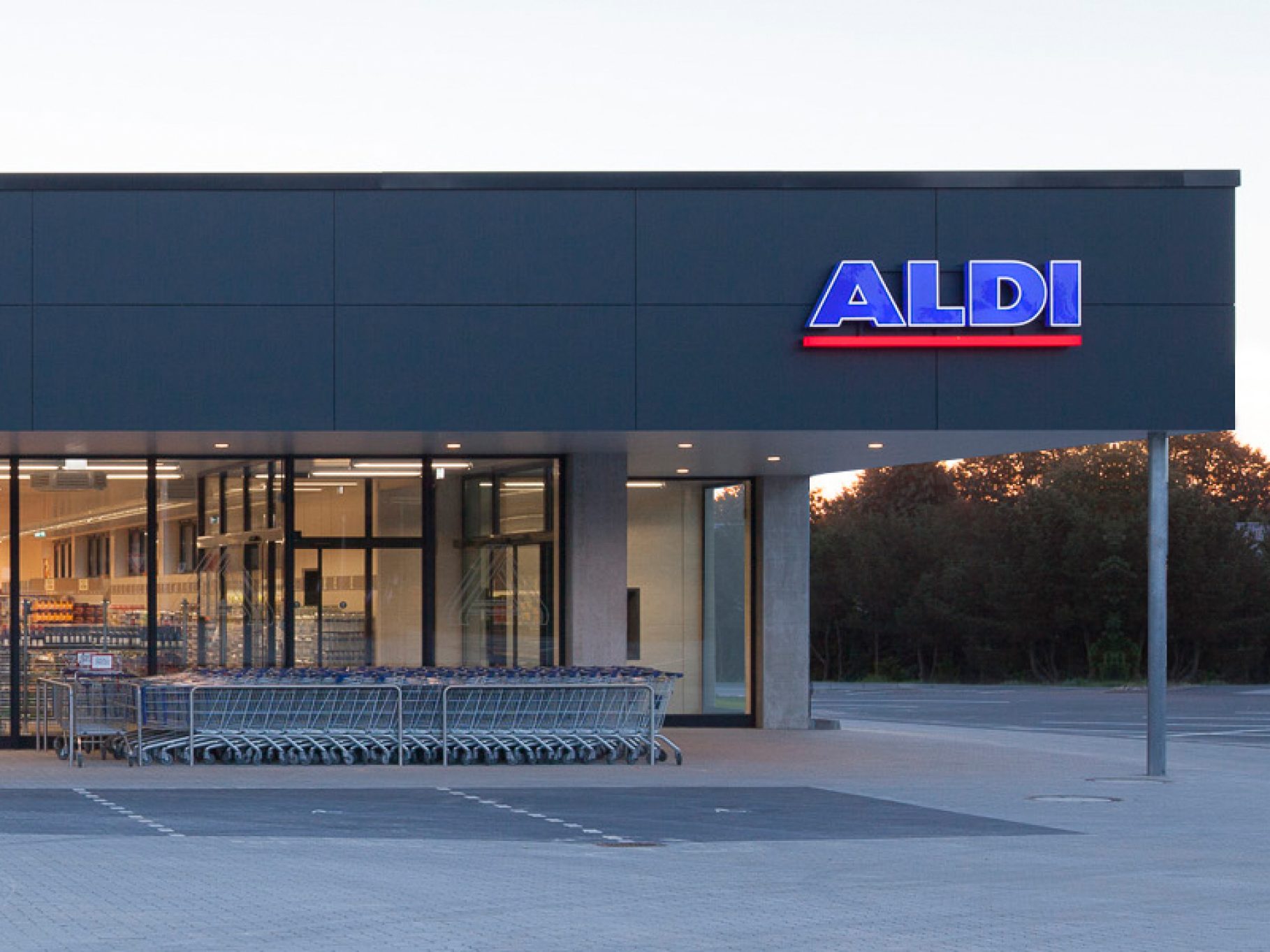
Aldi Nord operates as one of the two distinct corporate halves of the multinational discount supermarket chain Aldi, serving as a foundational pillar of the European hard-discount retail landscape. The enterprise runs thousands of discount grocery stores across northern, western, and eastern Europe, maintaining a business model centered on private labels, lean logistics, and strict operational efficiency.
The organizational lineage of Aldi Nord traces back to post-war Germany, where brothers Karl and Theo Albrecht expanded their mother's corner store in Essen before splitting the operational territory in 1961. While the two entities—Aldi Nord and Aldi Süd—operate independently with separate management structures, purchasing groups, and regional demarcations, they maintain a coordinated brand identity and cooperative global strategies. Aldi Nord's specific regional footprint covers northern and eastern Germany, alongside significant national operations in countries such as France, Spain, Poland, Portugal, and the Netherlands. Understanding the enterprise requires examining its corporate governance, store operations, supply chain mechanics, and its strategic evolution within a competitive retail market.
Corporate History and the Albrecht Family Division
The foundational history of Aldi (short for Albrecht Discount) began in 1913 when Karl Albrecht Sr. opened a small grocery store in Schonnebeck, a working-class quarter of Essen, Germany. After returning from World War II, brothers Karl and Theo took over the business. They rapidly expanded the concept, pioneering a stripped-down retail model that eliminated costly frills, such as fresh-service counters, broad brand variety, and extensive advertising, to pass savings directly to consumers.
By 1961, the brothers agreed to divide the business due to a disagreement over whether to sell cigarettes. Theo took over Aldi Nord, headquartered in Essen, taking responsibility for northern Germany and surrounding European markets, while Karl took Aldi Süd, headquartered in Mülheim an der Ruhr, managing southern Germany and eventually expanding into the United States, the United Kingdom, and Australia.
Despite the formal corporate separation, the companies historically coordinated on private-label procurement and maintained a unified external appearance. Over the decades, ownership of Aldi Nord shifted toward private family foundations, notably the Markus Foundation established by Theo Albrecht, which holds the majority voting rights and assets to ensure long-term stability and independence from public capital markets.
Geographic Footprint and Organizational Structure
Aldi Nord's operational territory spans multiple European nations, organized through legally independent regional companies (Regionalgesellschaften). In Germany alone, dozens of regional subsidiaries manage localized distribution centers, store networks, and logistics fleets. This decentralized corporate architecture allows individual regional units to respond efficiently to local regulatory environments, consumer preferences, and real estate markets while adhering to centralized corporate guidelines regarding pricing and product selection.
Outside Germany, Aldi Nord operates under its own corporate subsidiaries in several key international markets:
- The Netherlands: Operating extensively under the Aldi name with a dense store network.
- France: Managing numerous hypermarkets and supermarkets, particularly in the northern and western regions.
- Spain and Portugal: Competing in the Iberian peninsula with tailored product offerings that incorporate local culinary staples.
- Poland: Expanding its footprint dynamically to capture growing consumer demand in Central Europe.
- Belgium and Luxembourg: Operating integrated store networks managed from cross-border distribution hubs.
Each international division adapts the core discount model to local statutory requirements, labor laws, and consumer habits, while maintaining the signature minimalist aesthetic and high private-label concentration characteristic of the brand.
Business Model and Supply Chain Efficiency
The commercial success of Aldi Nord rests on a strict hard-discount business model designed to minimize overhead costs at every stage of the supply chain. Unlike traditional supermarkets that stock tens of thousands of stock-keeping units (SKUs) across multiple competing brands for a single product category, Aldi Nord maintains a tightly curated assortment typically ranging between 1,500 and 2,000 core items.
This limited product range yields distinct operational advantages:
- High Volume Purchasing: Concentrating purchase volumes on a single or a few private-label alternatives per product category grants the company immense bargaining power with manufacturers.
- Exclusive Private Labels: The vast majority of goods sold are proprietary brands produced by leading manufacturers exclusively for Aldi, ensuring strict quality control and protected profit margins.
- Logistical Optimization: Standardized pallet sizes, direct-to-floor box displays, and highly automated distribution centers reduce handling times and labor requirements.
- Energy-Efficient Store Design: Modernized stores feature LED lighting, closed refrigeration units to minimize energy loss, and compact floor plans that reduce real estate footprint and heating costs.
By streamlining replenishment cycles and maximizing inventory turnover, Aldi Nord reduces shrinkage, spoilage, and holding costs, allowing the enterprise to maintain consistently lower retail price points than traditional grocery competitors.
Comparison of Operating Characteristics: Aldi Nord vs. Traditional Supermarkets
| Operational Metric | Aldi Nord | Traditional Supermarket Chain |
|---|---|---|
| Product Assortment | 1,500 – 2,000 SKUs (mostly private labels) | 15,000 – 30,000+ SKUs (heavy brand variety) |
| Store Format | Compact footprint (typically 800–1,200 sq. meters) | Large format (frequently 2,500+ sq. meters) |
| In-Store Services | Minimalist; self-service, no specialized service counters | Service counters (bakery, butcher, deli), lotto, banking |
| Checkout Speed | Highly optimized; barcode-dense packaging and rapid scanning | Standard scanning speed; variable customer packaging times |
| Marketing Strategy | Weekly promotional print and digital flyers; minimal mass media | Omnichannel advertising campaigns, loyalty club programs |
Modernization, Digitalization, and Sustainability Initiatives
In response to shifting consumer expectations and mounting regulatory pressures, Aldi Nord has undergone substantial modernization over the last decade. Historically resistant to digital marketing and customer loyalty programs, the enterprise has integrated digital channels to engage modern shoppers. This includes the rollout of localized mobile applications providing weekly special offers, digital recipes, and integrated payment or coupon solutions in selected markets.
Concurrently, the physical store network has undergone a multi-billion-euro redesign program known internally as Aniko (Aldi Nord Instore Konzept). This architectural overhaul introduces brighter interiors, wider aisles, expanded fresh produce sections, integrated bakeries, and modernized signage designed to improve the customer shopping experience while retaining core operational efficiencies.
Sustainability has also become a central pillar of corporate strategy. Aldi Nord has committed to reducing its greenhouse gas emissions in alignment with international climate targets, implementing energy-efficient technologies across its logistics fleets and distribution centers. Furthermore, the company has reformed its sourcing policies to increase the share of certified organic produce, fair-trade goods, and responsibly sourced seafood, while systematically reducing plastic packaging across its private-label product lines.
Frequently Asked Questions About Aldi Nord
Are Aldi Nord and Aldi Süd the same company?
No, they are legally and financially independent entities. While they share common roots and historical origins from the Albrecht family, they are managed separately, operate in different geographic regions, and maintain distinct purchasing organizations and corporate strategies, though they cooperate on certain global branding elements.
Why do product selections differ between Aldi Nord and Aldi Süd?
Because the two corporate groups maintain separate procurement departments and supplier networks, the specific private-label manufacturers, packaging designs, and regional product variations often differ significantly between their respective stores, even within the same country.
Does Aldi Nord offer a customer loyalty program?
Aldi Nord has traditionally avoided complex loyalty card schemes to keep operational costs low and prices minimal. However, the company has introduced digital mobile applications in select European markets that offer localized promotions, coupons, and digital services to enhance customer engagement.
How does Aldi Nord maintain lower prices than traditional supermarkets?
The company minimizes overhead through a restricted product assortment, high sales volumes per item, exclusive reliance on private-label brands, highly efficient logistics, and minimal in-store staffing and interior decoration, passing these cost savings directly to consumers.
Where is the headquarters of Aldi Nord located?
The corporate headquarters of Aldi Nord is located in Essen, Germany, where administrative functions, central purchasing, and regional coordination for its northern and eastern European operations are managed.
Strategic Retail Navigation
Navigating the offerings of Aldi Nord effectively requires understanding its promotional cycles and private-label structures. Shoppers seeking maximum value should focus on the core private-label staples, which routinely match or exceed the quality of national brand equivalents at a fraction of the cost. Additionally, monitoring weekly non-food promotional specials—ranging from textiles to household electronics—requires prompt action, as limited inventory stocks are typically allocated per store on specific release days without guaranteed restocks. Consumers should verify regional store opening hours and localized app availability through official corporate channels to align with market-specific digital rollouts.