On the night of June 11, 1962, inmates Frank Morris and brothers John and Clarence Anglin executed one of the most sophisticated prison breaks in American history, leaving behind papier-mâché heads in their beds and vanishing from the maximum-security federal penitentiary on Alcatraz Island. While the FBI officially closed the case in 1979 after concluding the men drowned in San Francisco Bay, the declassified alcatraz escape files, investigative journalist findings, and modern forensic evaluations reveal a vastly more complex operational blueprint and credible evidence of survival that challenge the official drowning narrative.
The Architectural Vulnerability of Cell Block B
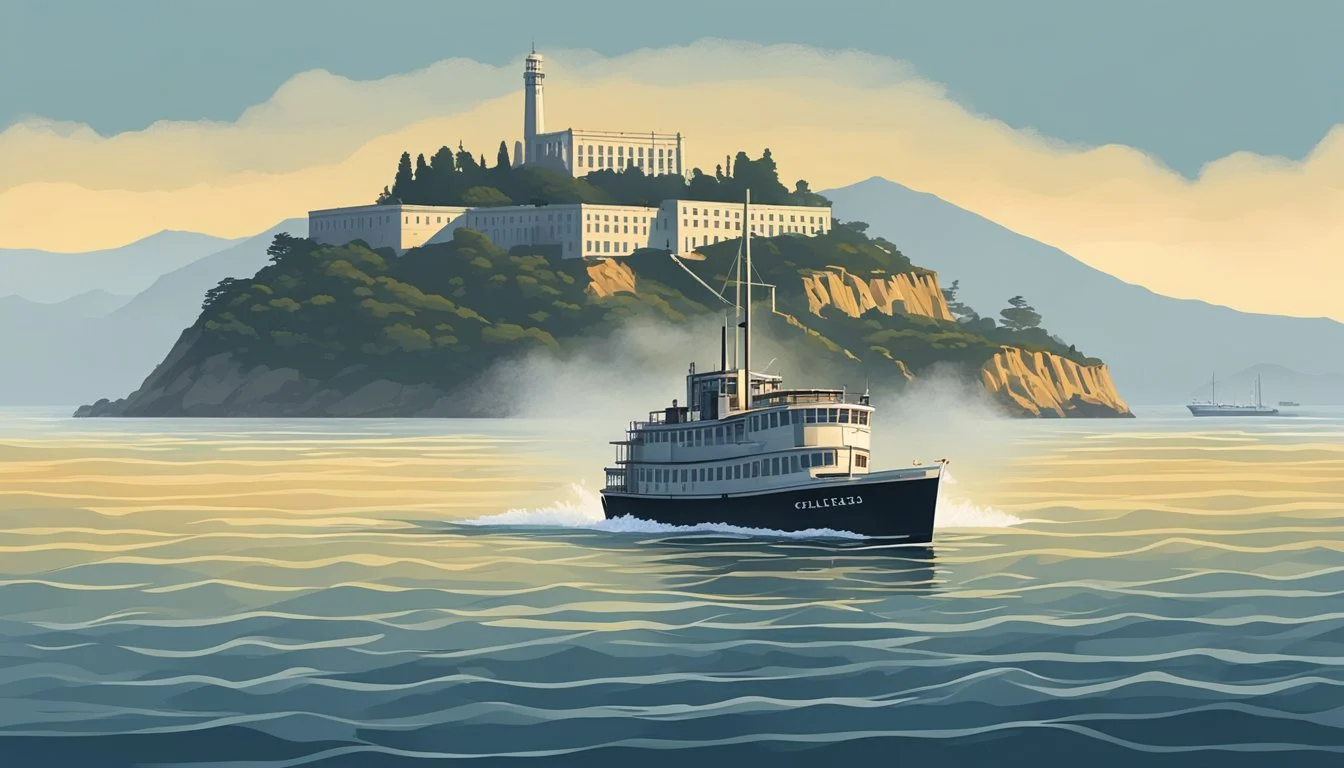
The success of the June 1962 breakout began not with luck, but with a systematic exploitation of Alcatraz Island’s aging structural design. Built originally as a military citadel before its conversion into a federal maximum-security prison in 1934, the facility suffered from chronic saltwater corrosion that weakened the utility corridors running directly behind the cell blocks.
Inmates Frank Morris, John Anglin, Clarence Anglin, and a fourth participant, Allen West, were assigned to adjacent cells in Cell Block B. Over nearly two years, these men utilized improvised tools—most notably a discarded vacuum cleaner motor fashioned into an electric drill, stolen metal spoons sharpened into chisels, and a metal file filched from the prison workshop—to painstakingly widen the ventilation utility grates located at the back of their cells.
The structural integrity around these utility vents had been compromised by moisture over decades, allowing the inmates to chip away at the concrete surrounding the anchor frames without generating excessive noise. To conceal their work during nightly bed checks, they constructed elaborate decoy vent covers out of cardboard, soap, and paint scraps, sliding them into place whenever correctional officers approached.
The Engineering of Deception: Tools and Decoys
The meticulous planning documented in the primary investigative records highlights an extraordinary level of resourcefulness. The inmates recognized that escaping the cell block was only the first phase; they needed a window of several hours before guards realized they were missing to cross San Francisco Bay.
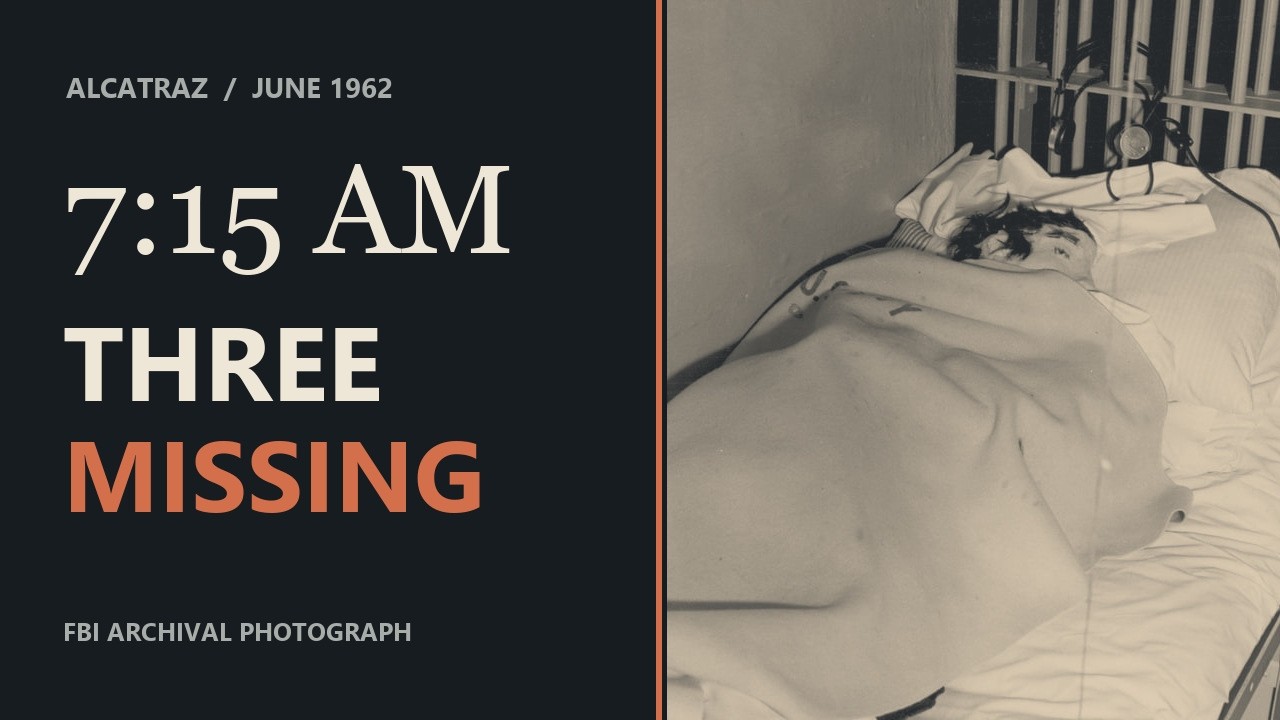
To buy this critical time, the conspirators manufactured remarkably lifelike dummy heads to place on their pillows. Working in secret, they sculpted the heads using a mixture of soap, stolen skin-toned paints from the prison art and hobby shop, and real human hair collected from the prison barbershop floor. They even inserted flesh-toned wax and painted facial features with startling precision.
Furthermore, the inmates constructed a clandestine workshop on the roof of the cell block, shielded from the guard towers by the architectural overhang. Here, they assembled a makeshift inflatable raft and life preservers using more than 50 stolen prison raincoats. The seams were meticulously stitched together and thermally bonded using the heat from nearby steam pipes. They also fabricated crude wooden paddles and an inflation mechanism engineered from a modified concertina accordion, ensuring they had the necessary flotation devices to navigate the freezing, turbulent waters of the San Francisco Bay.
| Escape Component | Materials and Methods Used |
|---|---|
| Wall Chipping | Modified vacuum cleaner motor, sharpened spoons, stolen metal file |
| Decoy Heads | Soap, concrete dust, paint from hobby shop, real barbershop hair |
| Improvised Raft | 50+ stolen raincoats, thermally bonded seams via steam pipes |
| Inflation Device | Modified musical concertina accordion |
| Paddle System | Scrapped wood pieces wired together |
The Execution of the June 11 Breakout
On the night of June 11, 1962, the plan entered its final execution phase. Allen West, whose cell wall had not been widened sufficiently due to hardened concrete, fell behind and was unable to remove his vent grate in time. He was left behind in his cell, but Morris and the Anglin brothers successfully breached their utility corridors, scaled the plumbing pipes to the roof, and descended a ventilation pipe to the shoreline on the north side of the island.
They inflated their raincoat raft near the water's edge and launched into the bay under the cover of darkness, timed deliberately to coincide with an outgoing tide. According to the official timeline reconstructed by federal investigators, the men departed the island shortly after 10:00 PM, aiming for the Marin Headlands north of the Golden Gate Bridge.
When morning came on June 12, the elaborate ruse held until the 7:15 AM roll call, when guards noticed the dummy heads resting on the pillows. A massive manhunt was immediately initiated, sealing off the San Francisco Bay area and mobilizing the United States Coast Guard, FBI, and local law enforcement agencies.
Evaluating the Official FBI Investigation and Closure
The Federal Bureau of Investigation, designated as the lead investigative agency under File 89-329, spent nearly two decades analyzing physical evidence, witness accounts, and reported sightings. For years, the official stance maintained that the inmates could not have survived the frigid water temperatures, strong currents, and distance to the mainland.
Key pillars of the FBI's drowning conclusion rested on several recovery efforts and circumstantial discoveries:
- A packet of personal letters, photographs, and money belonging to the Anglin brothers was recovered floating in the bay near the Marin Headlands days after the breakout.
- No stolen vehicles or high-profile burglaries matching the inmates' patterns were reported in the immediate aftermath along the northern California coastline.
- In January 1963, a Norwegian freighter crew spotted a body floating in the ocean about 20 miles west of the Golden Gate Bridge, dressed in clothing resembling a prison-issue denim uniform, but the body was never recovered for formal identification.
Despite these points, the files show that no actual bodies belonging to Morris or the Anglin brothers were ever found, a stark contrast to other drowning or suicide attempts from the island where remains typically washed ashore within days due to the unique tidal patterns of the bay.
Modern Forensics and Credible Survival Theories
Decades after the official closure of the active federal warrant file in 1979—when responsibility was transferred to the United States Marshals Service—independent researchers, oceanographers, and family members have re-examined the evidence using modern forensic technology and hydrodynamic modeling.
In 2003, researchers at Delft University of Technology utilized advanced computer simulations to model the tides and currents of San Francisco Bay on the exact night of June 11, 1962. Their findings revealed that if the inmates launched their raft between 11:00 PM and midnight—matching updated timelines—the tide would have carried them toward the headlands of Sausalito or the marshes of Tiburon, where successful landing was entirely feasible. Furthermore, if they launched earlier, the tide would have swept them out to the open ocean, supporting the drowning theory. This narrow temporal window left the outcome finely balanced.
Additionally, surviving family members of John and Clarence Anglin have presented compelling circumstantial evidence over the years, including unverified photographs purportedly taken in South America during the 1970s, holiday greeting cards sent to relatives without return addresses but bearing the Anglin handwriting, and deathbed confessions from associates who claimed to have maintained contact with the fugitives for decades. While the U.S. Marshals Service keeps the active warrants open—keeping Frank Morris, John Anglin, and Clarence Anglin on their most wanted lists until they reach verifiable ages of over 100—conclusive physical proof confirming their long-term survival remains elusive.
How to Access and Research Historical Alcatraz Records
For researchers, historians, and true-crime investigators seeking to examine the primary source documentation surrounding the 1962 breakout, structured pathways exist to review declassified government files. Navigating these archives requires understanding federal record repositories and Freedom of Information Act (FOIA) procedures.
- Identify the Repository: Primary investigative records are housed primarily within the National Archives and Records Administration (NARA) regional facilities, particularly NARA Pacific Region in San Francisco, which holds extensive historical records of the U.S. Penitentiary at Alcatraz.
- Submit a FOIA Request: To inspect unredacted or newly declassified FBI case files (File 89-329), submit a formal Freedom of Information Act request online through the FBI’s FOIA Electronic Document Processing system (The Vault).
- Examine U.S. Marshals Service Archives: Because the U.S. Marshals maintain active fugitive status on the inmates, specific investigative updates and contemporary age-progressed photographs can be requested through the Marshals' Office of Public Affairs.
- Consult Federal Court Records: District court dockets, grand jury transcripts, and related judicial filings from 1962 through 1979 provide legal context regarding the conspiracy charges filed against Allen West and other co-conspirators.
Frequently Asked Questions About the 1962 Alcatraz Escape
Did anyone survive the 1962 Alcatraz escape?
Officially, the FBI concluded that Frank Morris and the Anglin brothers drowned in San Francisco Bay. However, the U.S. Marshals Service keeps the active fugitive warrants open to this day because definitive proof of death, such as recovered bodies, was never established, and credible circumstantial evidence suggests they may have reached land.
What happened to Allen West, the fourth inmate?
Allen West was left behind on the night of the escape because he could not remove his cell's ventilation grate in time. He cooperated fully with federal investigators, explaining the mechanics of the breakout and the construction of the decoy heads, and was not criminally prosecuted for the escape attempt itself, remaining in federal custody to serve his original sentence.
How did the inmates make the fake heads?
The inmates crafted the dummy heads using a mixture of soap, stolen concrete dust, and paint obtained from the prison hobby shop. They secured real human hair from the prison barbershop floor and inserted it strand by strand into the soap mixture to create a startlingly realistic appearance that fooled correctional officers during night checks.
Are the arrest warrants for the escapees still active?
Yes. The United States Marshals Service maintains active arrest warrants for Frank Morris, John Anglin, and Clarence Anglin. The case remains open, and the Marshals periodically release age-progressed forensic composite images depicting what the men would look like today.
Where can I view the actual FBI escape files?
The declassified FBI investigative files concerning the June 11, 1962, breakout can be accessed digitally through the FBI’s online FOIA library, known as The Vault, or by submitting a formal archival research request to the National Archives and Records Administration.
Securing Your Historical Investigation Strategy
When undertaking deep archival research into high-profile historical events like the 1962 Alcatraz breakout, verify all claims against primary government documents rather than sensationalized media adaptations. Cross-reference dates, prisoner transfer logs, and architectural blueprints from NARA repositories to build an accurate, evidence-backed timeline. Avoid relying on secondary summaries that conflate unverified hearsay with declassified investigative facts.