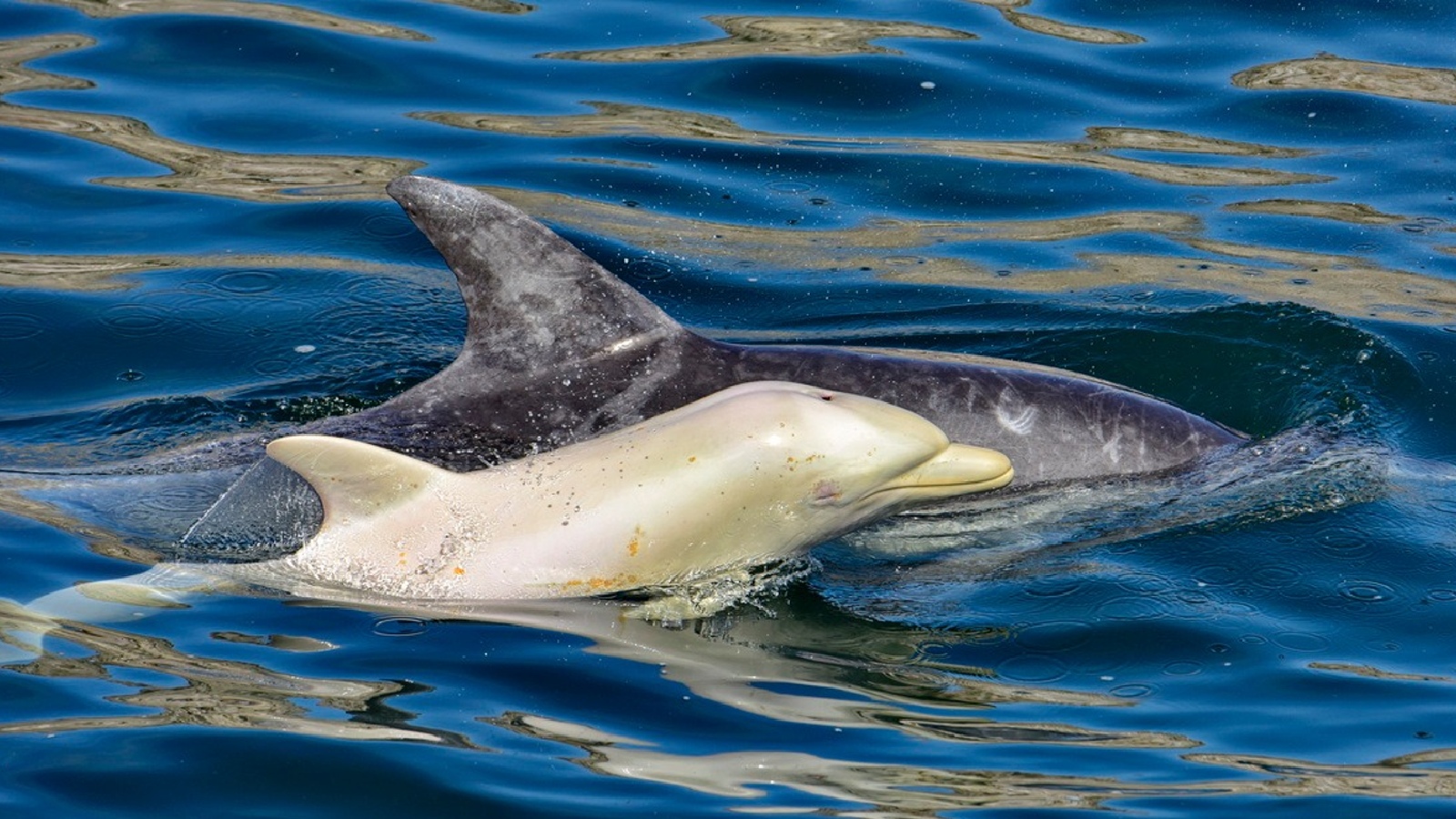
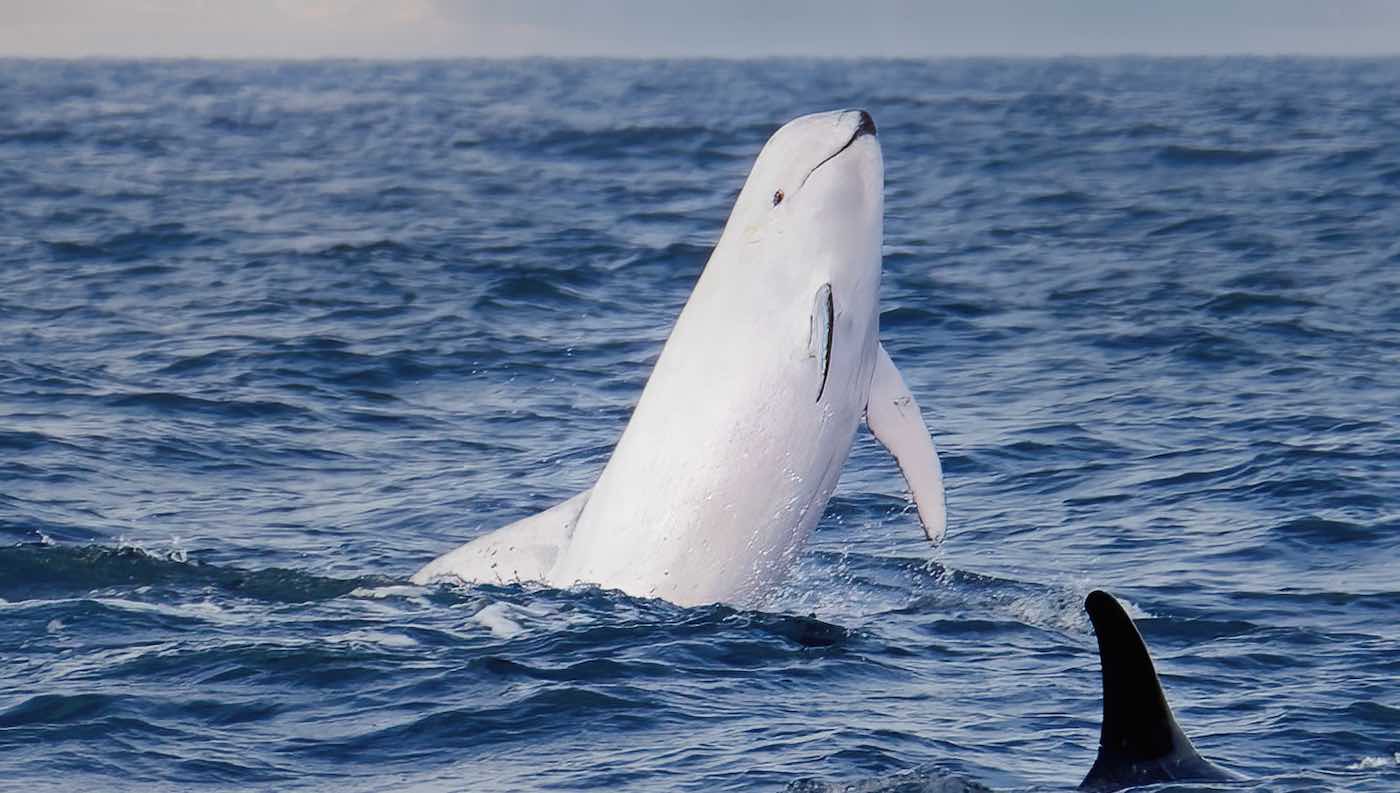
Albino bottlenose dolphins are exceedingly rare marine mammals characterized by a complete lack of melanin, resulting in stark white skin and distinctive pink or red eyes. These remarkable animals represent a fascinating intersection of genetics, marine biology, and wildlife conservation, capturing the public imagination while facing immense physiological challenges in their natural marine habitats.
Understanding Albinism in Marine Mammals
Albinism is a congenital, genetically inherited condition that affects various vertebrate species, including cetaceans. In scientific terms, it is caused by mutations in genes responsible for the production, distribution, or storage of melanin, the pigment that gives color to skin, hair, and eyes. For a bottlenose dolphin (Tursiops truncatus) to be a true albino, it must inherit two recessive alleles—one from each parent. This genetic combination disrupts the enzyme tyrosinase, which is critical for melanin synthesis.
Unlike leucistic animals, which may retain some dark pigmentation in their eyes or patches of skin, true albinos exhibit a total absence of melanin. This condition manifests physically as snowy-white or pale pinkish skin across the entire body. Because blood vessels show through the unpigmented tissues, their eyes typically appear pink or red. This complete lack of pigmentation sets true albinos apart from other color variations occasionally observed in cetaceans, such as piebaldism or severe leucism.
The occurrence rate of albinism across all cetacean species is exceptionally low, estimated to be a fraction of one percent. Within wild bottlenose dolphin populations, documented sightings are globally scarce. Researchers rely heavily on citizen science, commercial whale-watching reports, and specialized marine research surveys to track these individuals, as their unique appearance makes them instantly recognizable to marine biologists studying pod dynamics and migration patterns.
Physiological Challenges Faced by White Dolphins
While their striking appearance makes albino bottlenose dolphins popular symbols of ocean mystery, the lack of melanin imposes severe biological disadvantages. In the marine environment, pigmentation serves multiple protective functions that these exceptional creatures entirely lack.
The most immediate vulnerability involves solar radiation. Melanin acts as a natural sunscreen, absorbing harmful ultraviolet (UV) rays and protecting underlying tissues from cellular damage. Without this protection, albino dolphins are highly susceptible to severe sunburns, skin lesions, and chronic dermatological conditions. Observations of known white dolphins often reveal mottled or pinkish patches on areas exposed to prolonged sunlight, such as the dorsal fin and blowhole region, when they surface to breathe.
| Physiological Feature | Standard Bottlenose Dolphin | Albino Bottlenose Dolphin |
|---|---|---|
| Melanin Production | Normal (Grey to dark slate body) | Complete absence (Snowy-white or pinkish body) |
| Ocular Health | Dark pigmentation; normal vision | Pink or red eyes; photophobia and reduced visual acuity |
| Solar Protection | High resistance to UV radiation | Highly susceptible to sunburns and skin lesions |
| Camouflage & Predation | Effective countershading | Lacks countershading; stands out against oceanic backdrop |
Vision impairment presents another significant hurdle. Melanin is essential for the normal development of the retina and the iris. Albino animals frequently experience photophobia—extreme sensitivity to light—along with reduced visual acuity and involuntary eye movements (nystagmus). In the bright, reflective expanse of the open ocean or shallow coastal waters, this visual deficit can impair navigation, social communication, and spatial awareness.
Behavioral Adaptations and Pod Integration
Navigating life as a white dolphin requires distinct behavioral adjustments, particularly regarding social structures and foraging strategies. Bottlenose dolphins are highly social animals that live in cooperative groups known as pods. These communities provide protection against predators, assistance in hunting, and long-term social bonds.
Historically, wildlife biologists questioned whether animals with distinct mutations like albinism would be ostracized or attacked by their normal-colored peers. Observational studies of wild albino bottlenose dolphins, however, suggest that pod members generally accept these unique individuals. Mothers care for albino calves with the same attentiveness observed in typical pairings, and adults integrate them into regular foraging and social routines.
Hunting presents a more complex challenge. Bottlenose dolphins often rely on countershading—having a darker back and a lighter belly—to blend into the marine background, sneaking up on prey or hiding from apex predators like killer whales and large shark species. An entirely white body eliminates this camouflage, making albino dolphins stand out against the blue or green oceanic backdrop. Consequently, these animals must adapt their hunting techniques, perhaps relying more heavily on echolocation or depending on the pod's collective foraging success rather than solo stealth.
Famous Sightings and Documented Encounters
Over the decades, a handful of individual albino bottlenose dolphins have achieved international renown, offering researchers invaluable longitudinal data on the survival capabilities of these rare mammals.
One of the most famous documented cases is "Pinky," a unique albino bottlenose dolphin first sighted in the Calcasieu Ship Channel in Louisiana, USA. First observed as a calf swimming alongside its normally pigmented mother in 2007, Pinky has been spotted periodically by local boaters and researchers over the years. Observers noted her distinctive reddish-pink hue and her ability to mature into adulthood, mate, and travel successfully within local estuarine waters, defying the statistical odds stacked against her survival.
Another notable historical instance includes "Milky," a white dolphin documented in Japanese coastal waters, and various unverified or verified reports across the Mediterranean Sea and Australian coastlines. Each confirmed sighting is meticulously recorded by marine mammal stranding networks and research institutions, contributing to our broader understanding of cetacean genetics and survivability in changing marine ecosystems.
Conservation Status and Human Impact
Albino bottlenose dolphins do not constitute a separate species or subspecies; therefore, they do not possess an independent conservation listing under the International Union for Conservation of Nature (IUCN) Red List. Instead, they are protected under the umbrella of the standard bottlenose dolphin (Tursiops truncatus) status, which is generally categorized as Least Concern globally, though specific regional populations face localized threats.
Human activities pose unique hazards to albino marine life. Because of their extreme rarity, these dolphins attract intense public curiosity. Well-meaning whale-watching operators, recreational boaters, and photographers sometimes crowd these animals, altering their natural behaviors, interrupting feeding patterns, or causing high-stress levels. Ethical wildlife viewing guidelines dictate maintaining a safe, respectful distance and avoiding pursuit, regardless of how mesmerizing the subject may be.
Furthermore, environmental degradation, chemical pollution, and coastal development impact albino dolphins just as they affect normal-colored populations. Industrial runoff, heavy metals, and persistent organic pollutants accumulate in marine food webs, while noise pollution from commercial shipping and naval sonar disrupts communication and navigation. Given their compromised vision and increased physical vulnerability, albino dolphins may be disproportionately affected by acute environmental stressors.
Frequently Asked Questions
Are all white dolphins considered albinos?
No. While albinism results in a total lack of pigment and pink eyes, some white dolphins are leucistic, meaning they have reduced pigmentation but retain normal eye color. Additionally, certain species, such as the Risso's dolphin, naturally turn stark white as they age due to scarring, and species like the Amazon river dolphin (Inia geoffrensis) are naturally pink as adults.
Can albino bottlenose dolphins reproduce?
Yes, albino dolphins are biologically capable of reproduction provided they reach sexual maturity. Because albinism is a recessive trait, an albino individual mating with a normally pigmented dolphin with the recessive gene can produce offspring that carry the trait, though the immediate offspring will typically display normal coloration unless both parents pass on the rare allele.
Do albino dolphins suffer from sunburns?
Yes. The complete absence of melanin leaves their skin entirely unprotected against ultraviolet radiation from the sun. Field observations frequently note pinkish or reddish skin inflammation and peeling on areas of the body that remain near the surface or break the water during breathing.
How rare is it to spot an albino bottlenose dolphin in the wild?
It is exceptionally rare. While exact global population statistics do not exist due to the vastness of the oceans and the transient nature of marine life, documented encounters occur only a handful of times globally across decades, making each verified sighting a major event for marine researchers.
Do normal pods reject albino dolphins?
Generally, no. Field studies and observational data indicate that bottlenose dolphin pods accept albino members. Mothers nurse and protect albino calves, and adult pods integrate them into cooperative social, protective, and hunting behaviors without apparent discrimination.
Protecting Ocean Biodiversity
Conserving the habitats of albino bottlenose dolphins requires a commitment to broader marine conservation principles, including reducing coastal pollution, regulating sustainable fishing practices, and enforcing strict marine mammal protection laws such as the Marine Mammal Protection Act in the United States. Safeguarding the coastal ecosystems where these rare white wonders swim ensures that all marine species—common and exceptional alike—can thrive in increasingly complex ocean environments.