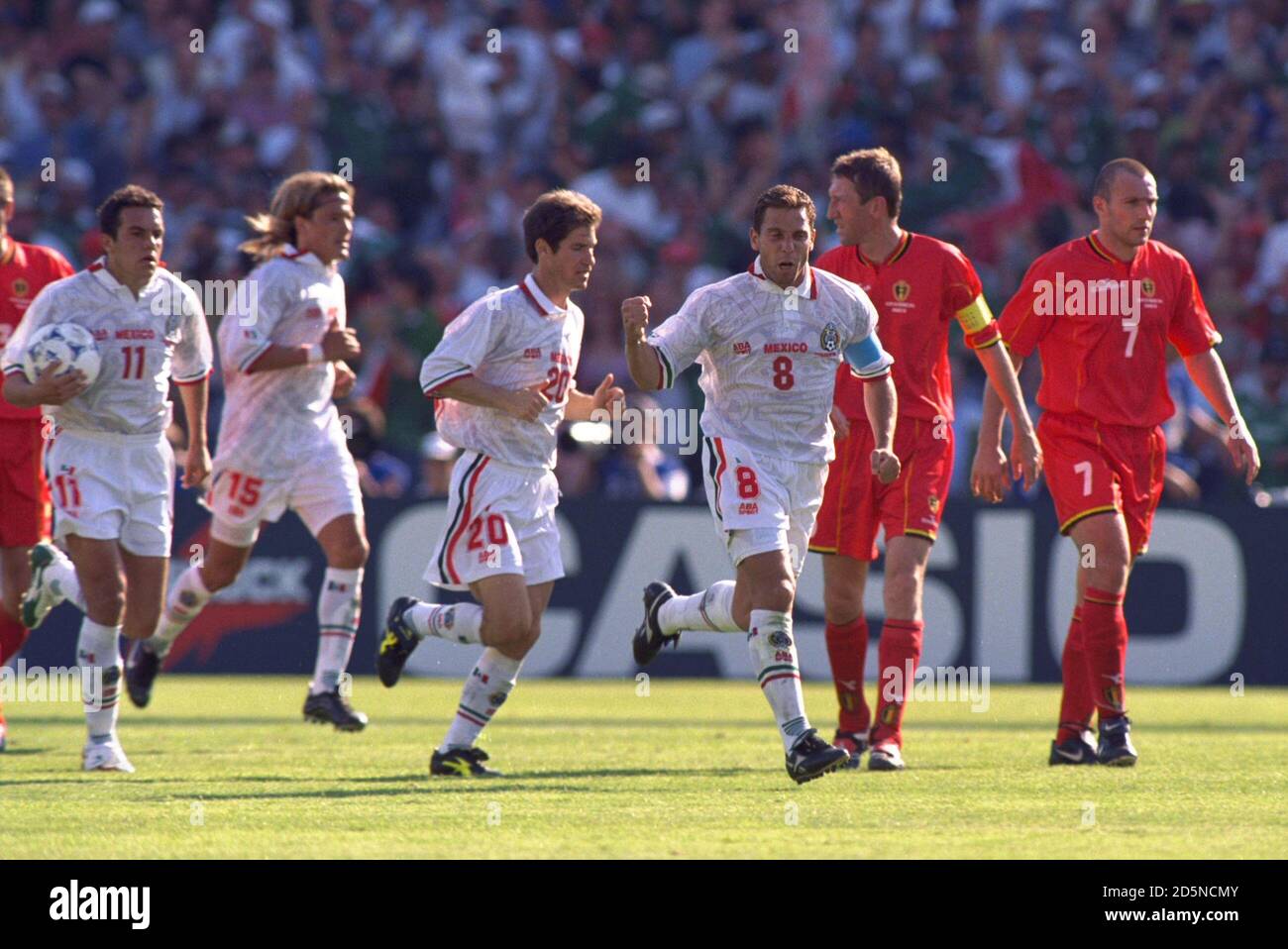
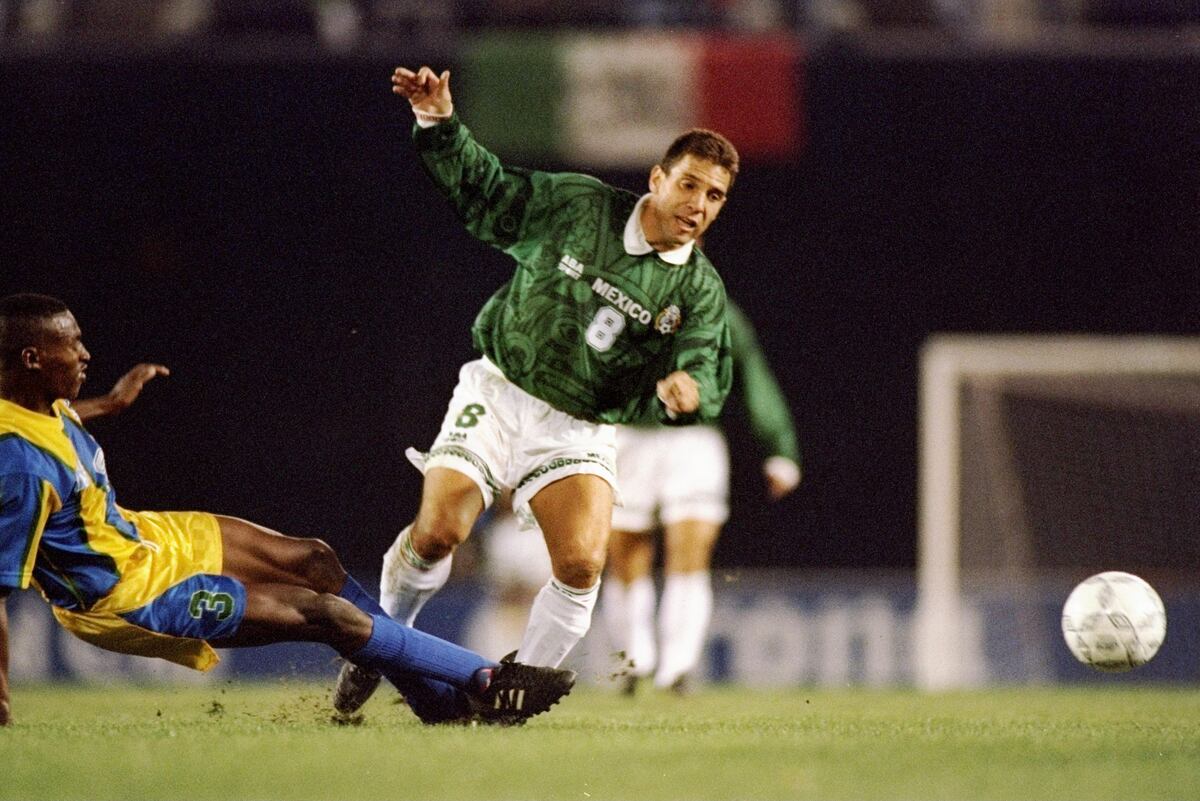
Alberto García Aspe stands as one of the most iconic and tenacious midfielders in the history of Mexican football, renowned for his thunderous left-foot strikes, extraordinary leadership, and fierce competitive spirit on the international and domestic stages. Spanning nearly two decades, his professional journey defined an era of tactical evolution in CONCACAF sports, cementing his reputation as a definitive midfield general who commanded matches through sheer force of will, tactical intelligence, and technical precision.
The Foundations of a Midfield Icon
Born in Mexico City, Alberto García Aspe Mena began his professional journey with Club Pumas UNAM, an institution legendary for cultivating elite footballing intellect and technical discipline. Breaking into the senior squad in the mid-1980s, García Aspe quickly demonstrated that his understanding of the game surpassed his years. Operating primarily as a central or defensive midfielder, he combined the grit necessary to break up opposition attacks with the creative vision required to transition play into the attacking third.
At Pumas, his tactical education was forged under demanding coaching philosophies that prioritized positional discipline and collective movement. He absorbed these lessons rapidly, developing an exceptional capacity to scan the pitch, dictate the tempo of possession, and shield his defensive line. This grounding laid the permanent structural foundation of his career: he was never merely a destroyer or a distributor, but a hybrid controller who could orchestrate a match from deep positions while remaining a constant threat moving forward.
Club Career Highlights and Domestic Dominance
While García Aspe’s roots were planted firmly at Pumas—where he secured a league title in the 1990-91 season—his domestic career expanded across several historic Mexican clubs, most notably Club Necaxa and Club América. His move to Necaxa in the mid-1990s coincided with the golden era of the club, transforming the team into a domestic powerhouse.
At Necaxa, García Aspe became the heartbeat of a side that won back-to-back league championships (1994-95 and 1995-96), a Copa México, and the CONCACAF Champions' Cup. Operating alongside lethal forwards and industrious teammates, his metronomic passing and leadership provided the balance that allowed the tactical system to flourish. His tenure at Necaxa showcased his ability to perform under high-stakes pressure, delivering crucial interventions in championship finals. Later stints with Club América and Puebla further extended his legacy, proving his enduring utility at the highest tier of Mexican club football until his retirement.
| Club | Years Active | Major Honors & Achievements |
|---|---|---|
| Pumas UNAM | 1984–1991 | Liga MX Championship (1990-91), CONCACAF Champions' Cup |
| Necaxa | 1995–1997 | Back-to-back Liga MX Championships (1994-95, 1995-96), CONCACAF Champions' Cup |
| River Plate | 1995 (Loan) | Argentine Primera División Apertura |
| Club América | 1997–1999 | High-profile leadership role, central midfield anchor |
| Puebla | 1999–2002 | Experienced veteran presence, stabilization of squad |
International Stardom with El Tri
On the international stage, Alberto García Aspe was the undisputed engine of the Mexico national team, affectionately known as El Tri, during one of its most competitive modern eras. Earning over 100 international caps, he represented his country across three FIFA World Cups: 1994 in the United States, 1998 in France, and 2002 in South Korea and Japan.
His international career was defined by unwavering composure under extreme pressure, particularly when stepping up to take high-stakes penalty kicks. García Aspe was Mexico's primary set-piece taker and designated penalty specialist, a role that demanded immense psychological fortitude. In the 1994 World Cup match against Italy, his calmly converted penalty kick secured a vital draw that helped propel Mexico through a notoriously difficult group stage. Beyond his goals, his tactical positioning allowed legendary managers to structure dynamic formations that routinely troubled European and South American giants.
The Signature Skillset: Vision, Grit, and the Thunderous Left Foot
Analyzing García Aspe’s playing style reveals a rare combination of physical intensity and technical refinement. In an era where midfield enforcers were often judged solely on defensive interventions, he possessed an exquisite left foot capable of executing pinpoint long-range passes and devastating shots from outside the penalty area.
His trademark long-range drives became legendary among fans and feared by goalkeepers across the Americas. When opposing defenses sat deep to deny space to central strikers, García Aspe possessed the capability to punish them from 30 yards out. Furthermore, his defensive contributions were characterized by relentless pressing, tactical fouling when necessary to disrupt counter-attacks, and aerial prowess that belied his standard stature. This comprehensive skill set made him an archetypal box-to-box midfielder long before the term became a modern tactical buzzword.
Leadership and Psychological Resilience
Beyond his technical attributes, García Aspe’s most enduring legacy within Mexican football stems from his fierce leadership and vocal guidance on the pitch. He commanded the respect of teammates and opponents alike through a demanding standard of professionalism and an absolute refusal to accept defeat.
When matches grew tense or momentum slipped away from his side, García Aspe was invariably the player who demanded the ball, slowed the tempo down, or rallied the defensive block. This psychological resilience was tested repeatedly during high-pressure knockout matches, continental finals, and fierce domestic derbies. His ability to channel competitive fire into productive tactical execution ensured that he remained a captain of men throughout his club and international career.
Frequently Asked Questions About Alberto García Aspe
How many FIFA World Cups did Alberto García Aspe play in?
Alberto García Aspe played in three FIFA World Cups: 1994, 1998, and 2002. Across these tournaments, he served as a central pillar of the Mexico national team's midfield, providing vital leadership, defensive stability, and crucial set-piece execution during group stage advancements and knockout rounds.
What clubs did García Aspe represent during his career?
He played for several prominent Mexican and South American clubs, most notably Pumas UNAM, where he started his career, Club Necaxa during their dominant 1990s championship era, Club América, and Puebla. He also had a notable brief spell with Argentine powerhouse River Plate, where he won an Apertura title.
Was García Aspe known for taking penalty kicks for Mexico?
Yes, he was the designated penalty taker for the Mexico national team for many years. His calm demeanor and technical precision under intense psychological pressure allowed him to convert crucial penalties in major international tournaments, including the 1994 FIFA World Cup.
What were his primary strengths as a midfielder?
His primary strengths included exceptional long-range passing, a ferocious and accurate left-footed shot from outside the box, high defensive work rate, tactical intelligence, and fierce on-field leadership. He combined the defensive grit of a destroyer with the creative vision of a playmaker.
What is Alberto García Aspe's legacy in Mexican football?
He is remembered as one of the finest midfielders in Mexican football history, celebrated for his longevity, competitive spirit, and instrumental role in elevating the competitiveness of El Tri and domestic clubs like Necaxa and Pumas on both regional and global stages.
Sustaining the Maestro's Standard
For aspiring central midfielders and tactical analysts examining the evolution of CONCACAF football, studying Alberto García Aspe’s career offers masterclasses in spatial awareness, psychological fortitude, and technical execution. Modern players seeking to replicate his impact must look beyond basic statistical metrics and examine how he controlled the psychological climate of a match. Reviewing historical match recordings from his peak years with Pumas, Necaxa, and El Tri provides concrete visual evidence of how an elite midfield general dictates the rhythm of elite competition.