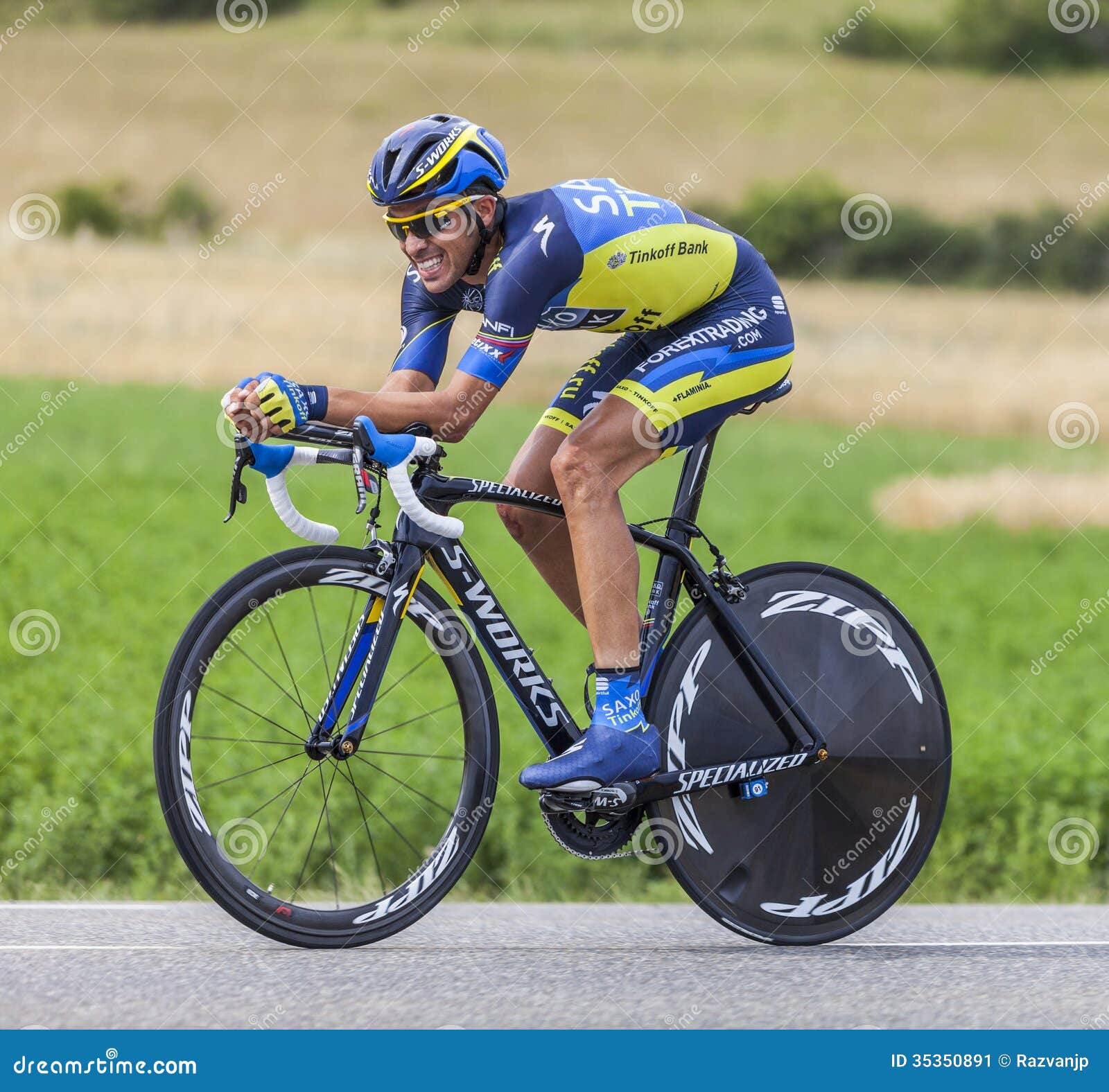
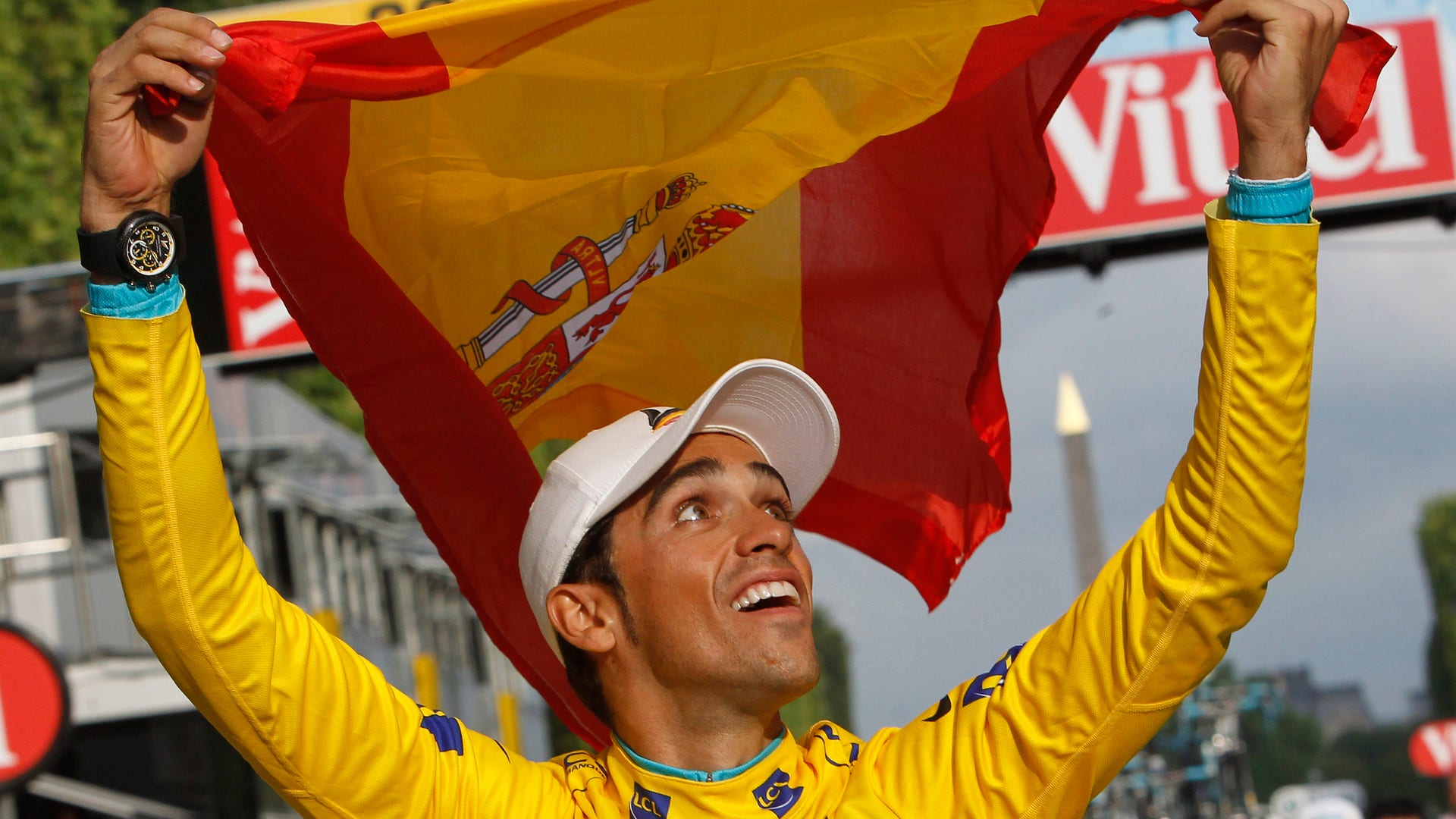
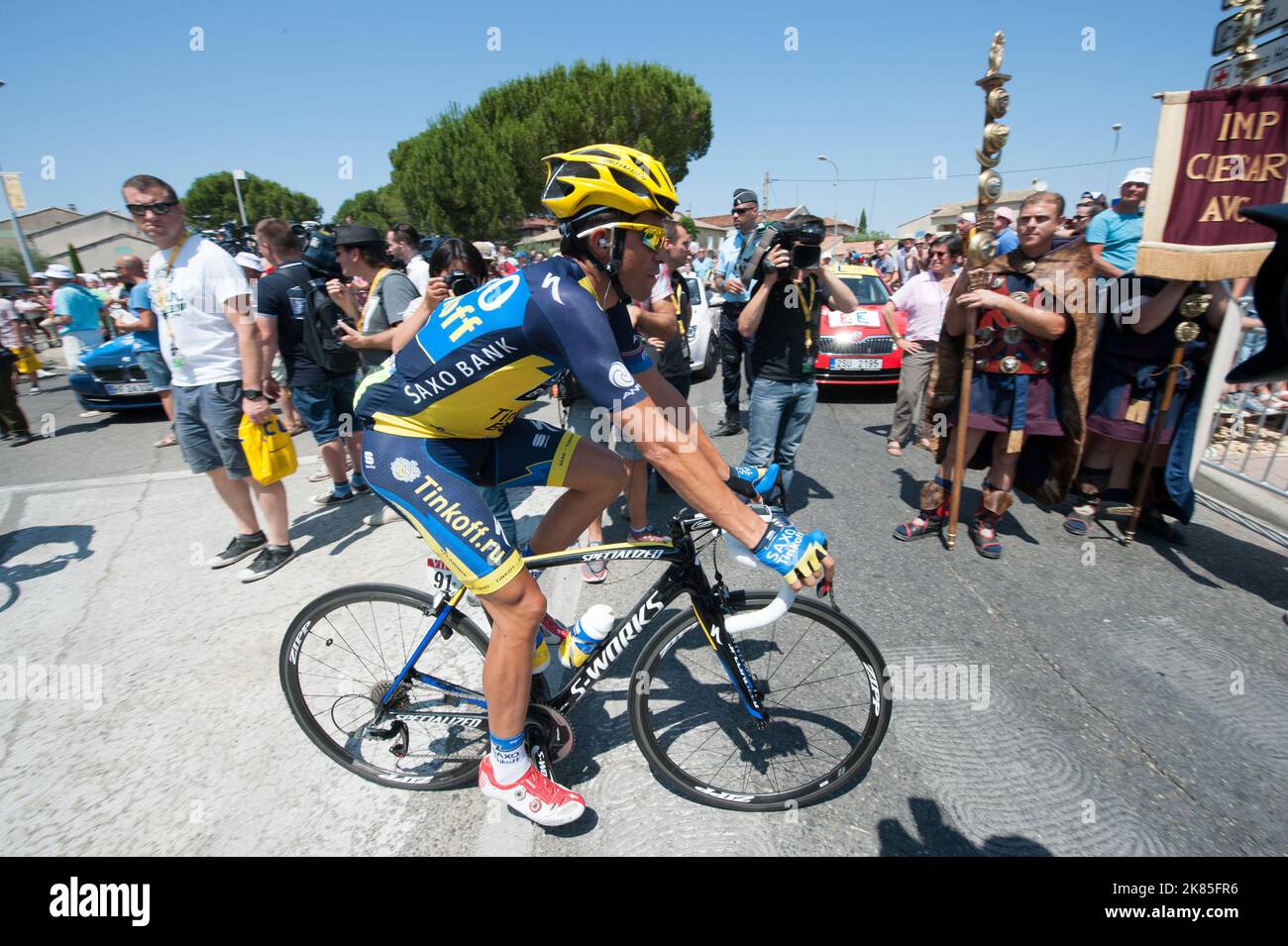
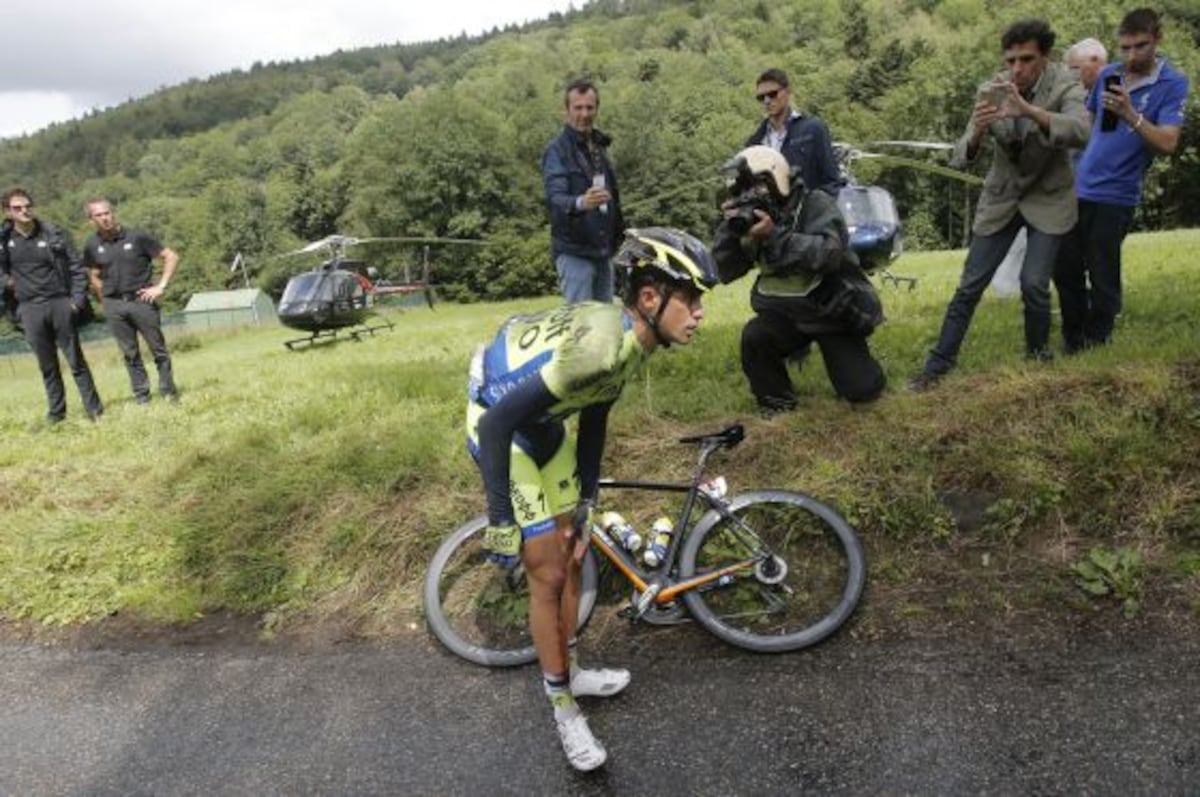
Alberto Contador stands as one of the most explosive, relentless, and polarizing climbing talents in the modern history of professional road cycling. Emerging from the rugged landscapes of Pinto, Spain, he captured the imagination of global sports fans with his trademark dancing style on the pedals and aggressive high-mountain attacks. Over a professional career spanning from 2002 to 2017, Contador achieved the rare distinction of winning all three Grand Tours—the Tour de France, the Giro d'Italia, and the Vuelta a España—multiple times. Yet, his journey was equally defined by intense controversy, institutional conflicts, and a dramatic doping sanction that fundamentally reshaped his public standing and the broader historical narrative of his extraordinary palmarès.
The Early Years and Meteoric Rise Through the Professional Ranks
Born in Madrid in 1982, Alberto Contador Velasco showed early promise as an exceptional climber, joining the local professional peloton after impressive performances in the amateur ranks. His professional debut with the ONCE-Eroski team in 2003 marked the beginning of a rapid ascent, tempered by a terrifying medical emergency. During the 2004 Vuelta a Asturias, Contador suffered a severe crash caused by a cerebral cavernoma—a congenital vascular malformation in his brain. The resulting seizure and emergency surgery required extensive neurosurgery and a long, uncertain rehabilitation.
Defying medical expectations, Contador returned to competitive cycling with renewed vigor. His breakthrough moment arrived at the 2007 Tour de France. Riding for the Discovery Channel team, he seized the yellow jersey after race leader Michael Rasmussen was controversially withdrawn by his own team, Rabobank, due to whereabouts violations prior to the event. Contador defended his lead through the final time trial to secure his maiden Tour de France victory. This triumph immediately established him as Spain's premier Grand Tour contender, stepping directly into the vacuum left by the retirement of five-time Tour champion Miguel Indurain and matching the aggressive racing philosophy of Spanish cycling culture.
Tactical Brilliance and Grand Tour Dominance
Contador’s racing style was characterized by unpredictable, explosive accelerations in the high mountains that frequently dismantled rival teams without relying strictly on power meters or conservative pacing strategies. Following his 2007 victory, he moved to the Astana team, where he cemented his status as the premier stage racer of his generation. Despite internal team rivalries—most notably with seven-time champion Lance Armstrong during the 2009 Tour de France—Contador attacked the steepest slopes of the Alps and Pyrenees to claim his second yellow jersey.
His versatility across different terrains allowed him to conquer the Giro d'Italia and the Vuelta a España with similar tactical audacity. In the 2008 Vuelta, he secured overall victory by winning decisive mountain stages in the Cantabrian Mountains, completing a career Grand Tour sweep at a remarkably young age. His ability to isolate opponents on steep gradients became his trademark, forcing tactical chess matches where opposing sports directors struggled to predict his next move.
| Grand Tour | Victory Years (Official) | Notable Podiums & Context |
|---|---|---|
| Tour de France | 2007, 2009 | Stripped of 2010 title following CAS ruling. |
| Giro d'Italia | 2008, 2015 | Won 2011 edition on the road before sanction annulment. |
| Vuelta a España | 2008, 2012, 2014 | Masterminded tactical ambushes against rival squads. |
The Clenbuterol Controversy and the 2010 Fall from Grace
The defining turning point in Contador's professional narrative occurred during the 2010 Tour de France, which he won while riding for Astana. In September 2010, it was revealed that he had tested positive for trace amounts of clenbuterol—an anabolic agent and bronchodilator—during a rest day in Pau. Thus began a protracted, highly litigious legal battle involving the International Cycling Union (UCI), the Spanish Cycling Federation (RFEC), and the Court of Arbitration for Sport (CAS).
Contador vehemently denied intentional doping, arguing that the positive test was the result of consuming contaminated beef purchased locally in Spain during the race. While initial proceedings by the Spanish federation threatened to clear him, international sports authorities appealed the decision to CAS. In February 2012, CAS issued a definitive ruling:
- Contador was found guilty of an anti-doping rule violation, though the panel acknowledged the contamination explanation was theoretically possible but legally insufficient to discharge strict liability.
- He was handed a retroactive two-year suspension starting from the date of the positive test in August 2010.
- He was formally stripped of his 2010 Tour de France victory (awarded to Andy Schleck) and his subsequent 2011 Giro d'Italia title (awarded to Michele Scarponi).
This suspension severely damaged his public reputation outside of Spain, aligning him with an era of cycling marred by widespread pharmacological scandals. However, within Spain, he retained immense popularity, viewed by many supporters as a victim of a bureaucratic system rather than a willful cheat.
Redemption, Resilience, and the Final Years
Upon serving his suspension and returning to competition in August 2012 with the Tinkoff-Saxo team, Contador demonstrated remarkable resilience. Rather than fading into the background, he immediately proved his competitive viability by mounting a stunning tactical ambush on the penultimate stage of the 2012 Vuelta a España, overturning Joaquim Rodríguez's overall lead to claim one of the most emotional victories of his career.
Throughout the mid-2010s, Contador remained a central protagonist in Grand Tours, engaging in legendary battles against Chris Froome, Vincenzo Nibali, and Nairo Quintana. Although he never won another Tour de France, his aggressive, high-risk racing style yielded a third Vuelta a España title in 2014 and a dominant Giro d'Italia victory in 2015, where he rode through injuries and team pressure to secure the maglia rosa.
Contador officially announced his retirement from professional cycling in August 2017, choosing the Vuelta a España as his final race. In typical fashion, he delivered a cinematic farewell on the slopes of the Angliru, attacking on the final mountain climb to win stage 20 and secure a resounding fifth place in the final general classification, sealing a legacy defined by unyielding competitive spirit.
Assessing the Complex Legacy of El Pistolero
Evaluating Alberto Contador requires balancing his extraordinary athletic achievements against the shadow of his doping sanction. On one hand, he stands as one of only seven cyclists in history to win all three Grand Tours, joining elite company such as Eddy Merckx, Jacques Anquetil, Felice Gimondi, Bernard Hinault, Vincenzo Nibali, and Chris Froome. His ability to overcome a near-fatal head injury, tactical brilliance in the mountains, and relentless offensive mindset earned him the nickname El Pistolero and made him a defining figure of 21st-century cycling.
On the other hand, his career remains inextricably linked to the anti-doping controversies that plagued the sport during the transitional era following the Operation Puerto investigations and the fall of Lance Armstrong. For purists and critics, the 2012 CAS verdict permanently taints his palmarès, serving as a cautionary tale of the pharmacological pressures inherent in elite stage racing. For supporters, his willingness to race openly, attack from afar, and entertain audiences without calculator-driven pacing cements his status as a legendary showman who resurrected Spanish cycling after dark times.
Frequently Asked Questions
How many Grand Tours did Alberto Contador win?
Alberto Contador officially won seven Grand Tours across his career: two editions of the Tour de France (2007, 2009), two editions of the Giro d'Italia (2008, 2015), and three editions of the Vuelta a España (2008, 2012, 2014). This tally excludes victories later stripped due to his 2012 sanction.
Why was Alberto Contador suspended in 2012?
Contador was suspended for two years by the Court of Arbitration for Sport after testing positive for minute traces of clenbuterol during the 2010 Tour de France. While he argued the substance entered his system via contaminated meat, sports arbitrators applied strict liability rules, resulting in the annulment of his results from August 2010 through February 2012.
What teams did Alberto Contador ride for during his career?
Contador rode for several prominent UCI WorldTour squads, starting with ONCE-Eroski (later Liberty Seguros), moving to Discovery Channel in 2007, Astana from 2008 to 2010, Team Saxo Bank (later Tinkoff-Saxo) from 2011 to 2016, and finishing his career with Trek-Segafredo in 2017.
What was Contador's signature racing style?
Contador was renowned for his explosive, sudden accelerations in the high mountains, often launching long-range attacks far from the finish line. Unlike contemporary riders who relied heavily on power meters and steady tempos, Contador favored aggressive, instinctual racing that frequently shattered team tactics and created chaotic, entertaining race dynamics.
What is Alberto Contador doing now?
Following his retirement in 2017, Contador has remained active in the cycling world as a television analyst, commentator, and co-founder of the Polartec-Kometa (now Eolo-Kometa) development cycling team, helping nurture the next generation of Spanish cycling talent alongside former teammate Ivan Basso.
Strategic Next Steps for Cycling Historians and Fans
To gain a deeper appreciation of Alberto Contador's era, review archived stage recordings of the 2007 and 2009 Tour de France mountain stages, consult the official CAS arbitration documents regarding the 2010 clenbuterol case for legal context, and explore contemporary sports journalism analyzing the evolution of anti-doping protocols in professional cycling.