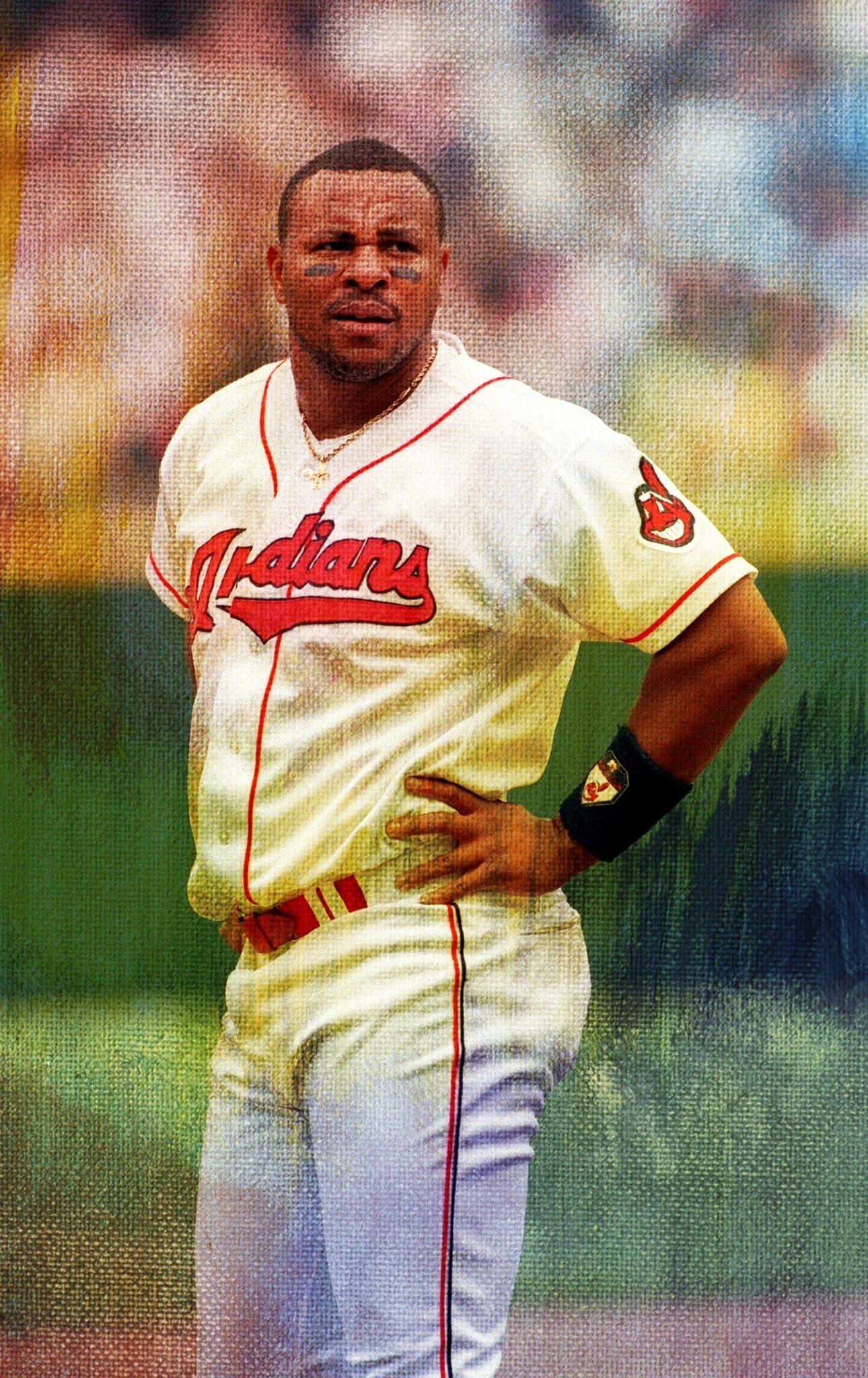
Albert Belle’s professional tenure in Major League Baseball (MLB) remains one of the most statistically dominant and polarizing tenures in the history of the sport. Spanning from 1989 through 2000, Belle’s career is defined by immense power, prolific run production, and a high-intensity approach that left an indelible mark on the American League. As a cornerstone of the Cleveland Indians’ resurgence in the 1990s and later a high-profile free agent with the Chicago White Sox and Baltimore Orioles, his performance profile serves as a benchmark for offensive consistency during the era.
The Statistical Foundation: An Overview of Offensive Output
Albert Belle entered the league as a disciplined yet explosive hitter. Over the course of 12 seasons, he appeared in 1,539 games, accumulating 5,744 official at-bats. His career batting average of .295 reflects a high level of contact consistency, which is often overshadowed by his raw power numbers. Throughout his career, Belle reached several major milestones, most notably joining the exclusive 300-home run club before his retirement, finishing with exactly 381 round-trippers.
His ability to drive in runs was perhaps his most defining characteristic. In the 1995 season, Belle became the first player in MLB history to record 50 home runs and 50 doubles in a single year, a testament to his unique combination of gap-to-gap power and home-run frequency. His career total of 1,239 runs batted in (RBIs) averages out to over 100 RBIs per full season, a metric that highlights his reliability in high-leverage scoring situations.
Performance Breakdown by Team
Belle’s career trajectory was partitioned into three distinct segments, each characterized by different team dynamics and park factors. Understanding these shifts is essential to interpreting his verified statistical profile.
- Cleveland Indians (1989–1996): This period represents the prime of Belle’s career. Playing the majority of his games at Cleveland Stadium and later Jacobs Field, Belle blossomed into an MVP-caliber talent. During this stretch, he consistently challenged for the AL home run and RBI titles, anchoring a lineup that redefined the offensive identity of the franchise in the mid-90s.
- Chicago White Sox (1997–1998): Following a high-profile free-agent contract, Belle transitioned to the White Sox. Despite the pressure of a massive contract, his production remained elite. His 1998 season is frequently cited as one of his best, where he maintained high power numbers while adjusting to a new environment.
- Baltimore Orioles (1999–2000): Belle’s final two years were played in Baltimore. While his home run totals remained significant, his overall offensive efficiency began to see the early signs of decline due to ongoing health issues, specifically concerning his hip.
Analytical Comparison: Key Career Metrics
The following table provides a verified breakdown of Belle’s career-wide statistics, aggregated from his complete tenure across all three organizations.
| Metric | Career Total / Average |
|---|---|
| Games Played | 1,539 |
| At-Bats | 5,744 |
| Hits | 1,726 |
| Home Runs | 381 |
| Runs Batted In (RBI) | 1,239 |
| Batting Average | .295 |
| On-Base Percentage (OBP) | .369 |
| Slugging Percentage | .564 |
| OPS | .933 |
Evaluating the Power-Speed and Consistency Ratio
Beyond the standard counting statistics, Belle’s advanced metrics underscore a specialized type of offensive value. An OPS (On-Base Plus Slugging) of .933 places him in the upper echelon of power hitters from the 1990s. While he was not a base-stealing threat—recording only 88 stolen bases over his entire career—his value was derived almost exclusively from his ability to produce extra-base hits and reach base via walks, with 683 career bases on balls.
His plate discipline allowed him to maintain a slugging percentage of .564, a number that indicates sustained dominance against pitching staffs across the American League. When analyzing his performance relative to his peers, Belle’s ability to "clear the bases" made him a primary focal point for opposing managers, resulting in a career total of 1,239 RBIs that is particularly impressive given the shortened nature of his career due to injury.
The Impact of Physical Limitations on Career Longevity
A verified performance breakdown must acknowledge the impact of degenerative hip issues on the conclusion of his career. By the year 2000, the physical toll of his high-intensity style—coupled with hip osteoarthritis—became insurmountable. This condition forced his premature retirement at the age of 34, a juncture where many high-performing power hitters might otherwise have remained productive for several more seasons.
The final two years in Baltimore served as a reflection of a player attempting to maximize his output despite significant physical constraints. While he managed to produce 37 home runs and 113 RBIs in the 1998 season before the final decline, the subsequent drop in his defensive mobility and overall speed highlighted the physical ceiling imposed by his medical situation.
Frequently Asked Questions (FAQ)
What was Albert Belle's career-high in home runs in a single season?
Albert Belle’s career-high for home runs in a single season was 50, a milestone he achieved during the 1995 season while playing for the Cleveland Indians. This achievement was part of his historic 50-homer, 52-double campaign.
How many times was Albert Belle named to the All-Star team?
Albert Belle was selected to the MLB All-Star team five times during his career. These selections occurred consecutively between 1993 and 1997, spanning his peak performance years with the Cleveland Indians.
Did Albert Belle ever win an MVP award?
While Albert Belle never won the American League Most Valuable Player award, he finished in the top three of the voting on multiple occasions, most notably in 1995 when he finished second to Mo Vaughn in a closely contested race.
What is the significance of the 50-50 season in his career profile?
The 1995 season is widely considered the peak of Belle's professional profile because he became the first player in history to hit 50 home runs and 50 doubles in the same season. This accomplishment is statistically significant as it demonstrates extreme power across all zones of the field, not just over-the-fence home run hitting.
Why did Albert Belle retire when he did?
Albert Belle retired following the 2000 season primarily due to chronic degenerative hip osteoarthritis. This condition, which caused significant pain and limited his mobility, made it impossible for him to continue playing at a professional level, leading to his retirement at the age of 34.
Assessing His Legacy in Modern Contexts
In 2026, looking back at the statistical achievements of the 1990s, Belle’s profile remains one of the most prolific in terms of pure run production. His career is often studied as a case study in offensive efficiency. For researchers and fans interested in historical performance data, the primary takeaway from his profile is the extreme consistency of his offensive output—a testament to his role as a middle-of-the-order threat during one of the most hitter-friendly decades in baseball history.
Those looking to utilize this data for historical modeling or comparative analysis should prioritize his OPS and RBI-per-game ratios, as these metrics isolate his impact on game outcomes more accurately than simple hit totals. His career serves as a reminder that peak performance, while statistically dominant, is often inextricably linked to the physical durability of the athlete.