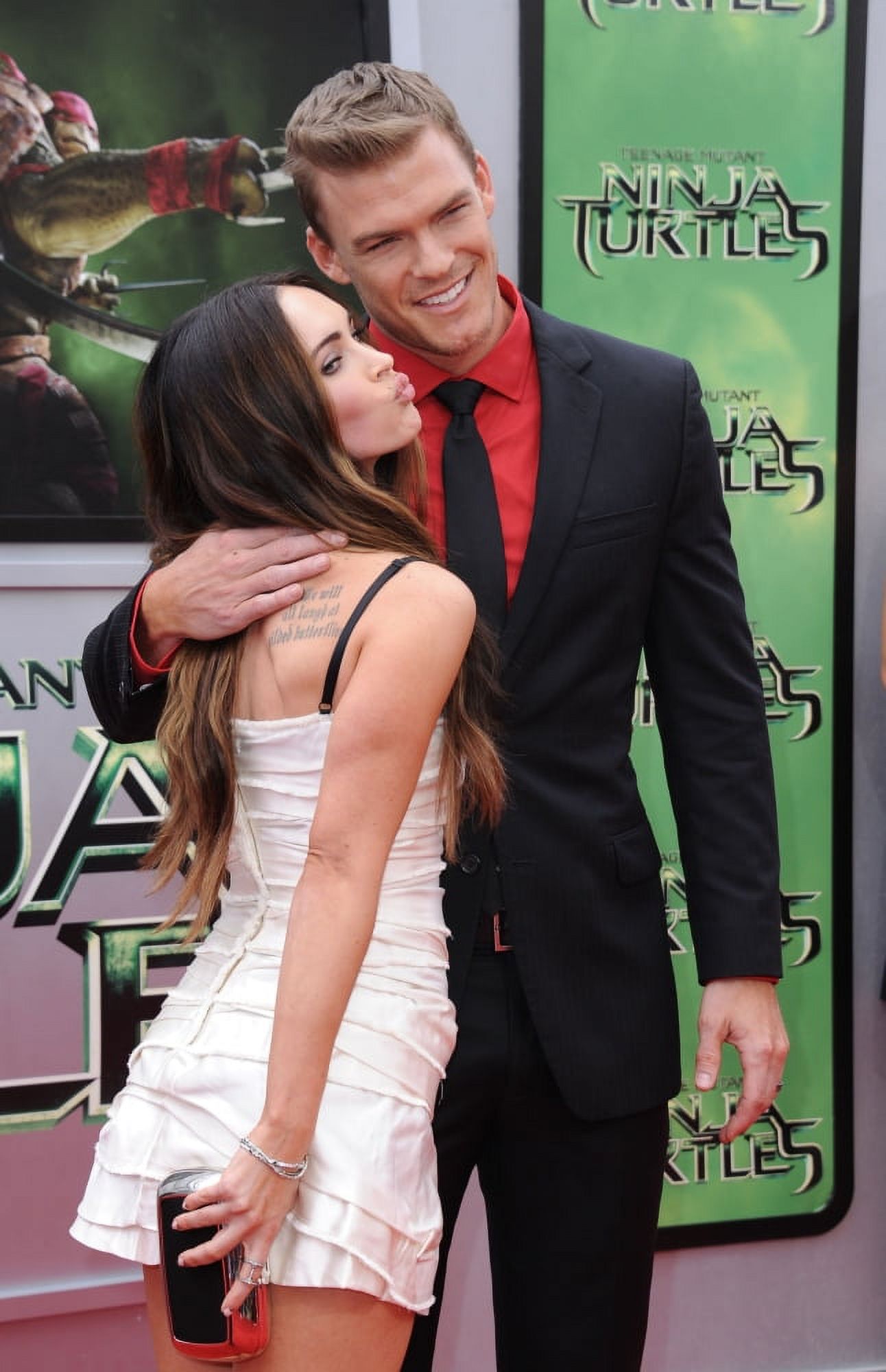
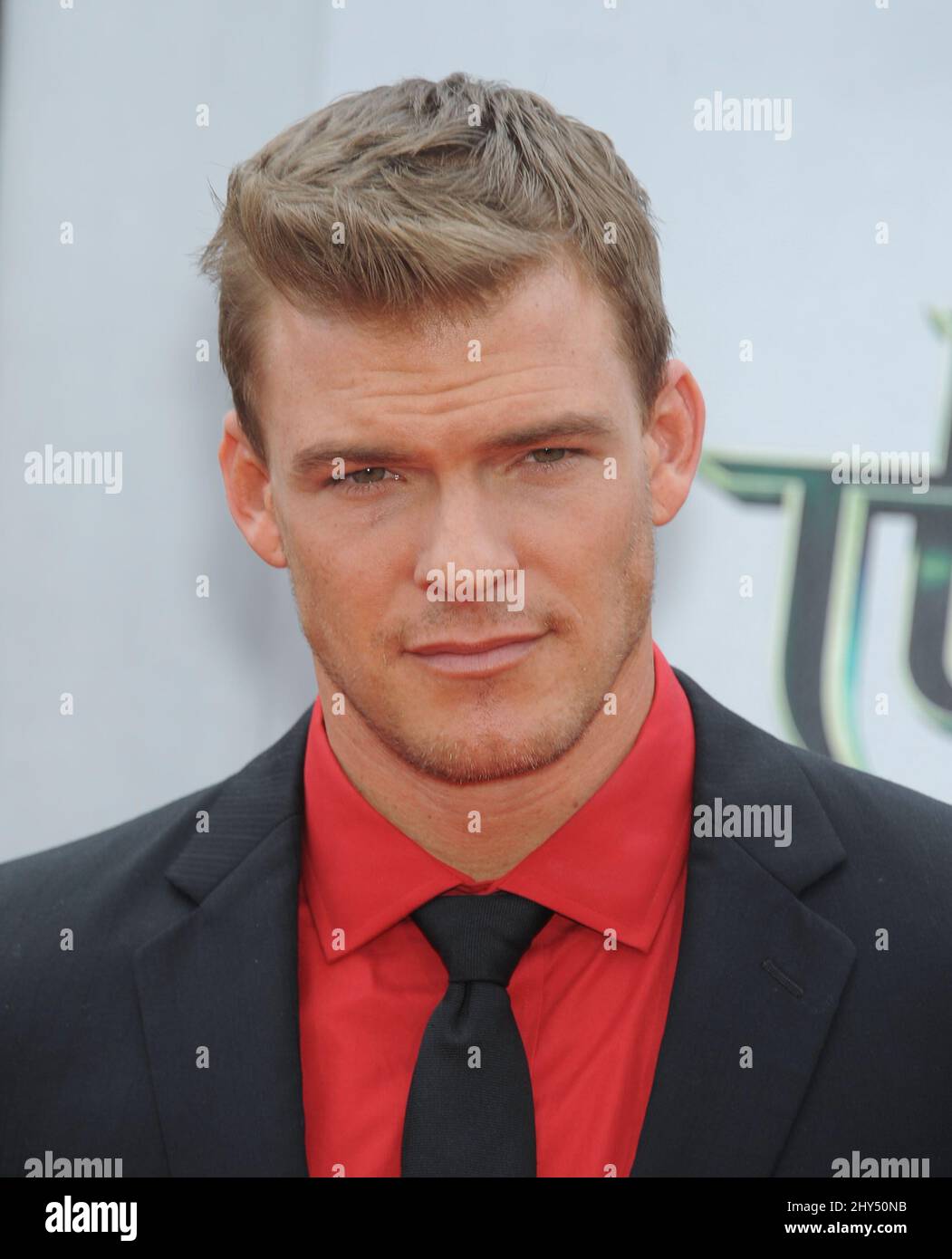
Alan Ritchson played the role of Raphael, the intense and physically imposing "muscle" of the four brothers, in the live-action reboots Teenage Mutant Ninja Turtles (2014) and Teenage Mutant Ninja Turtles: Out of the Shadows (2016). Performing through advanced motion-capture technology, Ritchson provided both the physical movements and the voice for the character, anchoring the "shell squad" with his signature brand of grit and dry humor.
Defining Raphael: The Muscle of the Shell Squad
In the context of the "shell squad"—a common fan-term for the quartet of mutant brothers—Raphael has always been the emotional lightning rod. When Alan Ritchson was cast in the 2014 reboot produced by Michael Bay’s Platinum Dunes, the production sought to emphasize the physiological differences between the turtles. Unlike previous iterations where the four brothers shared identical body types differentiated only by weapon choice and bandana color, the 2014 film utilized Ritchson’s natural athleticism to create a version of Raphael that was a literal "tank."
Standing at 6’3” with a massive frame, Ritchson was the ideal choice to portray a Raphael who relied on brute force. In this iteration of the shell squad, Raphael is the eldest (or at least the most physically mature) and frequently clashes with Leonardo’s leadership. Ritchson’s portrayal focused heavily on the "lone wolf" energy of the character, highlighting his internal struggle with anger and his deep-seated protective instinct for his brothers. By the time the 2026 retrospective of 2010s action cinema is written, Ritchson’s Raphael remains one of the most physically intimidating versions of the character ever put to film.
The Technical Process: Motion Capture and Performance
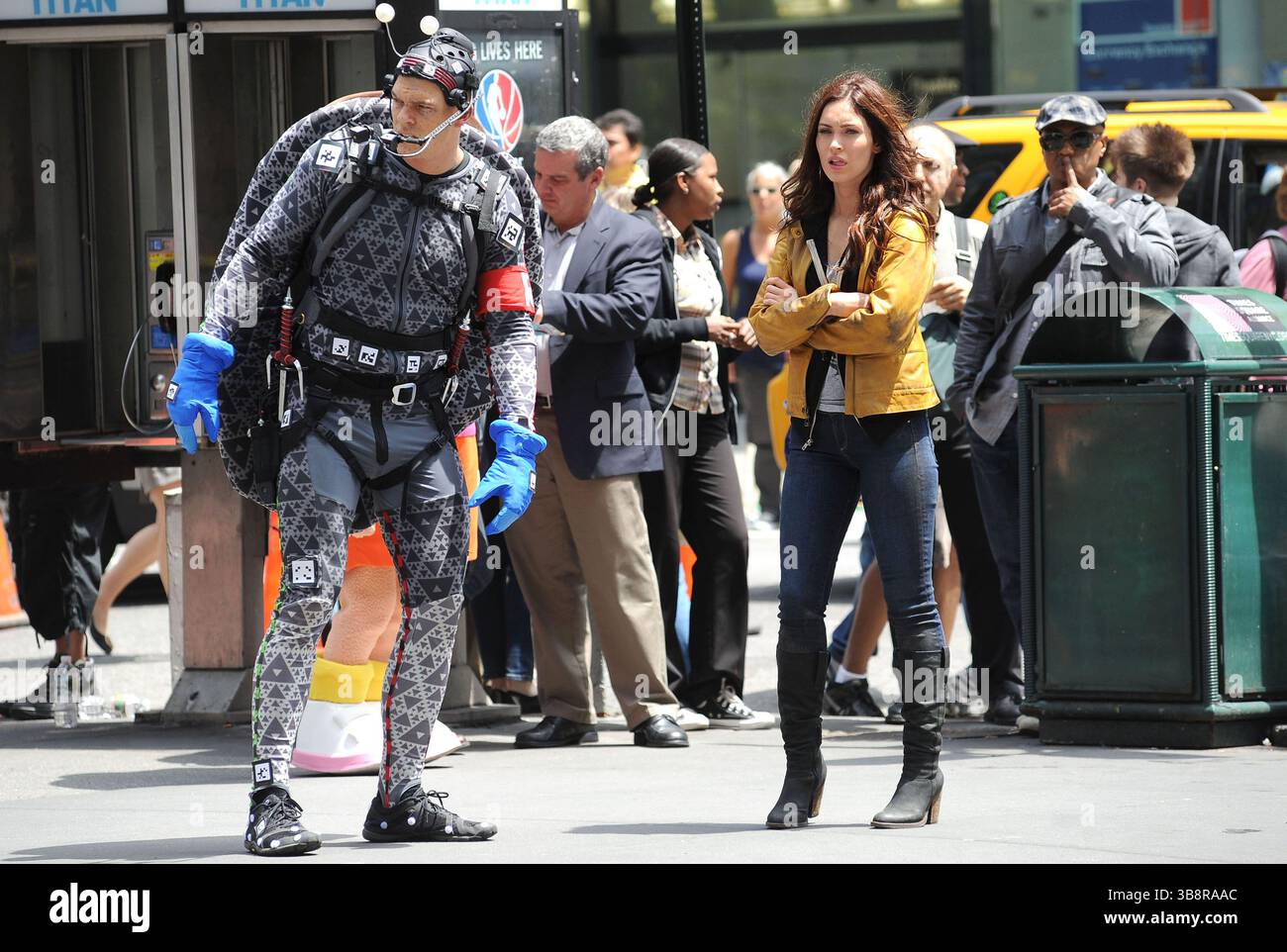
One of the most significant aspects of Alan Ritchson's role in the Ninja Turtles franchise was the technical demand of motion-capture (mo-cap) acting. Many viewers at the time mistakenly believed Ritchson only provided the voice, but he was present on set for nearly every frame of his character’s screen time.
The actors wore specialized gray suits equipped with sensors and "turtle shells"—large backpacks designed to give the actors the correct physical dimensions of a six-foot-tall turtle. This allowed the VFX team at Industrial Light & Magic (ILM) to map Ritchson's movements onto the digital model of Raphael. This process was grueling; it required the actors to perform high-intensity stunts and emotional scenes while navigating a cluttered set filled with cameras and infrared sensors.
Ritchson’s background in physical performance served him well here. He had to translate Raphael’s aggression into a heavy, grounded walking style and a combat system that felt weighty and impactful. This mo-cap work was foundational for the "Shell Squad's" chemistry, as all four actors (Ritchson, Noel Fisher, Jeremy Howard, and Pete Ploszek) performed their scenes together in real-time, allowing for natural comedic timing and genuine fraternal tension.
Why Alan Ritchson Was Cast as the Red-Bandana Turtle
Casting Alan Ritchson was a strategic move by director Jonathan Liebesman and the casting department. Before becoming a household name as Jack Reacher, Ritchson had already established a pedigree for playing iconic, physically dominant characters. He had previously played Aquaman (Arthur Curry) in Smallville, marking the first live-action appearance of that character in modern television.
Ritchson possessed a specific combination of traits necessary for the 21st-century Raphael:
- Physicality: His stature allowed him to move with the perceived weight of a 300-pound mutant turtle.
- Vocal Texture: Ritchson utilized a gravelly, New York-inflected tone that matched the character’s traditional "tough guy" persona without becoming a caricature.
- Comedic Undercutting: Despite the character's brooding nature, Ritchson’s background in comedy (notably as Thad Castle in Blue Mountain State) allowed him to deliver Raphael’s cynical one-liners with perfect timing.
In the 2016 sequel, Out of the Shadows, Ritchson was given more room to explore Raphael’s softer side, particularly his desire to be "normal" or human, which added a layer of vulnerability that had been missing from earlier cinematic versions of the character.
Comparing the 2014 and 2016 Portrayals
While the 2014 film introduced this new, bulkier version of the shell squad, the 2016 sequel, Out of the Shadows, refined Ritchson's role. The first film focused on the origin story and the turtles' initial emergence into New York City, casting Raphael as a somewhat reluctant participant who eventually saves his brothers.
The second film leaned further into the "brotherhood" dynamic. In Out of the Shadows, the shell squad faces an identity crisis. Ritchson’s Raphael is at the center of the debate over whether the turtles should use "Purple Ooze" to become human. This subplot allowed Ritchson to showcase a more nuanced performance, moving beyond the "angry brawler" trope to find the pathos in a character who feels like an outsider even within his own family.
Comparative Overview of the Ritchson TMNT Era
| Feature | Teenage Mutant Ninja Turtles (2014) | TMNT: Out of the Shadows (2016) |
|---|---|---|
| Director | Jonathan Liebesman | Dave Green |
| Primary Theme | Discovery and Origin | Identity and Brotherhood |
| Raphael's Arc | Learning to work as a team | Choosing between humanity and family |
| Primary Antagonist | Shredder / Eric Sacks | Krang / Bebop & Rocksteady |
| Mo-Cap Technology | Live-action integration | Enhanced facial performance capture |
| Shell Squad Focus | Physical prowess and "Super-Heroics" | Fan-service and classic cartoon roots |
Key Challenges and Behind-the-Scenes Insights
Despite the commercial success of the films, Alan Ritchson has been candid in subsequent years about the difficulties of the production. In various interviews and retrospective discussions leading up to 2026, Ritchson highlighted the lack of recognition for mo-cap actors during that era. He frequently noted that the actors were often treated as secondary to the visual effects, despite their physical performances being the blueprint for every movement seen on screen.
Furthermore, the physical toll of the role was immense. The "turtle shells" worn during filming were not just for show; they were heavy and restricted movement, making the elaborate fight choreography significantly more difficult. Ritchson’s commitment to the role involved hours of martial arts training, specifically with the Sai—Raphael’s signature weapon. The goal was to ensure that Raphael’s fighting style felt distinct from Leonardo’s precision or Michelangelo’s fluidity, focusing instead on power strikes and grappling.
Career Evolution: From Raphael to Jack Reacher
Looking back from the vantage point of 2026, it is clear that Ritchson’s time in the "shell squad" was a pivotal stepping stone. The role of Raphael required a blend of massive physicality and emotional weight—the exact combination that would later make him the definitive Jack Reacher.
While the TMNT films received mixed critical reviews, Ritchson’s performance was often cited as a highlight. He proved he could carry a major franchise role and work within the constraints of high-budget CGI filmmaking. This experience likely informed his later work in the DC Universe as Hawk in Titans, where he once again played a brooding, aggressive hero with a hidden heart of gold. The DNA of Raphael’s protective rage and physical dominance is clearly visible in the roles Ritchson has chosen since leaving the sewers of New York behind.
The Legacy of Ritchson’s Raphael in 2026
As of 2026, the Teenage Mutant Ninja Turtles franchise has seen further iterations, including animated shifts and new reboots. However, the "Platinum Dunes Era" defined by Ritchson and his castmates remains the high-water mark for a specific type of hyper-realistic, action-oriented turtle design.
The term "shell squad" became a shorthand for this specific group of four actors who spent years in mo-cap suits together, building a rapport that translated into a believable family dynamic. Ritchson's Raphael is remembered for being the literal and figurative "heart" of the team’s defense, a character whose external toughness was a necessary shield for his brothers.
FAQ: Alan Ritchson and the Ninja Turtles
Did Alan Ritchson do his own stunts in TMNT?
Yes, Ritchson performed a significant portion of his own stunts and all of his own motion-capture movement. While professional stunt doubles were used for highly dangerous or complex acrobatic maneuvers, the vast majority of Raphael's physicality, including his specific walking gait and combat stance, was developed and executed by Ritchson himself to ensure character consistency.
Why did the 2014 TMNT movies change Raphael’s look?
The production team wanted to make each turtle visually distinct based on their personality and role in the group. Since Raphael is the "muscle" or the "tank" of the shell squad, they utilized Alan Ritchson’s large frame as a reference point to create a version of the character that looked physically stronger and more battle-hardened than his brothers. This included scars on his shell and a more aggressive facial structure.
Was Alan Ritchson the voice of Raphael as well?
Yes, Alan Ritchson provided the voice for Raphael in both the 2014 and 2016 films. Unlike the character of Leonardo, whose voice was dubbed by Johnny Knoxville in the first film after the motion-capture was completed, Ritchson’s original vocal performance was kept for both entries. This allowed for a more seamless integration of the character's physical and vocal emotions.
How does Alan Ritchson feel about his time as a Ninja Turtle?
Ritchson has expressed a mix of pride and frustration regarding the experience. While he loved the character of Raphael and the bond he formed with his fellow "shell squad" actors, he has been vocal about the grueling nature of the shoot and the ways in which motion-capture actors were undervalued by the studio system at the time. He views it as a major learning experience that prepared him for the physical demands of his later career.
What is the "Shell Squad"?
"Shell squad" is a colloquial term used by fans and sometimes in marketing to refer to the four Teenage Mutant Ninja Turtles: Leonardo, Raphael, Donatello, and Michelangelo. In the context of the Ritchson films, it emphasizes the team's unit-like tactical approach to fighting crime in New York City, moving away from the "surfer dude" personas of the 1990s toward a more paramilitary brother-in-arms aesthetic.
Explore the Ritchson TMNT Filmography
To fully appreciate Alan Ritchson's contribution to the franchise, viewers should watch the films with a focus on the subtle physical cues he provides. Despite the layers of digital "paint" over his performance, his eye movements, the way he carries his shoulders when Raphael is frustrated, and his specific combat rhythm are all hallmarks of his acting style. For those interested in the evolution of Ritchson's career, comparing his work as Raphael to his later performance in Reacher provides a fascinating look at how an actor can project power and vulnerability through sheer physicality.