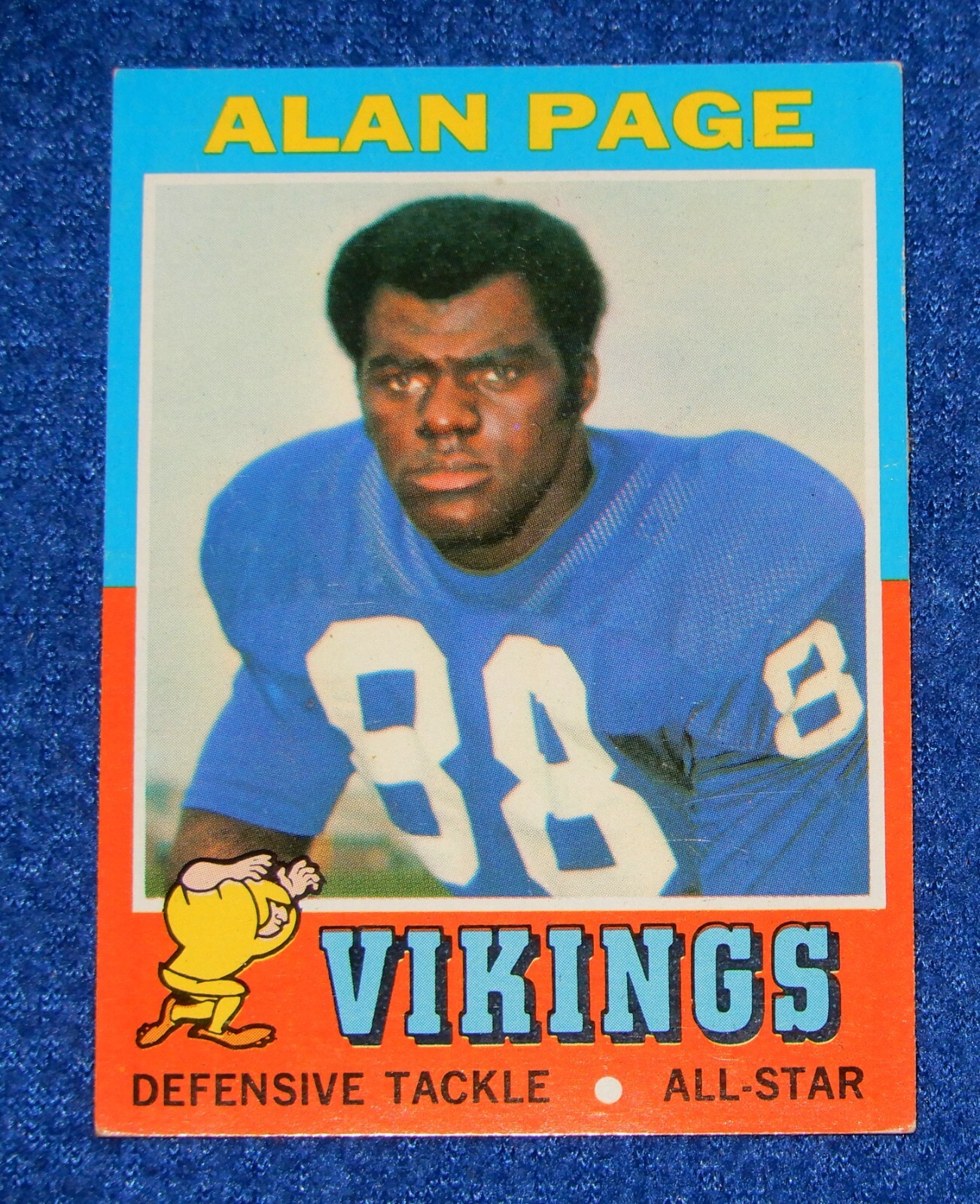
As of 2026, NFL legend and retired Minnesota Supreme Court Justice Alan Page is 80 years old. Born on August 7, 1945, in Canton, Ohio, Page remains one of the most distinguished figures in American public life. He will celebrate his 81st birthday in August 2026, marking over eight decades of extraordinary achievement in professional athletics, jurisprudence, and philanthropy.
Alan Page’s life is a rare narrative of dual-track excellence. While most professional athletes struggle to find a second act, Page transitioned from a Pro Football Hall of Fame career directly into a high-level legal career that culminated in his election to a state supreme court. In 2026, his legacy is not merely defined by his age but by the enduring impact of his work on the bench and his commitment to educational equity through the Page Education Foundation. Understanding how old Alan Page is requires looking back through a timeline of barriers broken and standards set in two vastly different arenas.
The Early Years in Canton and the Path to Notre Dame
Alan Cedric Page was born in the shadow of football history in Canton, Ohio. Growing up in the 1940s and 50s, his environment was steeped in the culture of the sport, yet his family emphasized academic rigor and personal character above all else. His parents, Howard and Edna Page, instilled a work ethic that would eventually allow him to balance the physical demands of the NFL with the intellectual demands of law school.
Page attended Central Catholic High School in Canton, where his physical presence and agility on the football field began to attract national attention. However, he was never "just" an athlete. His decision to attend the University of Notre Dame was based as much on the institution's academic reputation as its football pedigree. At Notre Dame, Page was a crucial member of the 1966 national championship team. By the time he graduated in 1967 with a degree in political science, he had established himself as a consensus All-American and one of the most feared defensive ends in college football.
In 2026, looking back at his collegiate years highlights the foundation of his longevity. Unlike many players of his era who suffered from debilitating injuries, Page’s emphasis on conditioning and his relatively lean, explosive frame allowed him to maintain a high level of performance for 15 seasons in the NFL—a feat that is still considered remarkable for a defensive lineman.
A Defensive Revolution: The Minnesota Vikings Era
Alan Page was drafted by the Minnesota Vikings with the 15th overall pick in the 1967 NFL Draft. This move paired him with head coach Bud Grant and defensive line coach Jerry Burns, setting the stage for the creation of the "Purple People Eaters." Alongside Carl Eller, Jim Marshall, and Gary Larsen, Page anchored a defensive line that defined an era of dominance.
The core statistics of Page’s career are a testament to his durability and skill:
- NFL MVP (1971): Page was the first defensive player to win the league’s Most Valuable Player award. Since then, only Lawrence Taylor has managed to replicate this feat.
- Consecutive Starts: Page played in 218 consecutive games, a streak that showcased his physical resilience.
- Pro Bowls: He earned nine consecutive Pro Bowl selections from 1968 to 1976.
- Super Bowls: He played in four Super Bowls (IV, VIII, IX, and XI), though the Vikings famously never won the championship during that window.
Page’s approach to the position was revolutionary. At a time when defensive tackles were expected to be massive, immobile "space-eaters," Page played at a lighter weight (often around 225 to 245 pounds) and used superior speed, leverage, and intelligence to bypass offensive linemen. In 2026, NFL analysts still point to Page as the prototype for the modern "three-technique" defensive tackle—players who prioritize penetration and disruption over raw size.
The Dual Pursuit: Law School and Professional Football
One of the most impressive aspects of Alan Page’s biography is his transition into the legal field. While many fans know him as a judge, fewer realize that he earned his Juris Doctor from the University of Minnesota Law School while he was still an active, All-Pro player for the Minnesota Vikings.
This period of his life, specifically the mid-1970s, involved a schedule that would be unthinkable for modern athletes. During the off-season and even during parts of the academic year, Page balanced rigorous legal studies with the physical toll of professional football. He graduated in 1978, the same year he was waived by the Vikings and subsequently claimed by the Chicago Bears.
His time with the Chicago Bears (1978–1981) was more than just a "twilight" phase. Even in his mid-30s, Page remained productive, recording significant sack totals and providing veteran leadership. By the time he retired in 1981 at the age of 36, he had already begun practicing law at a firm in Minneapolis. This foresight ensured that his post-NFL life was not a search for identity, but a continuation of a career he had already built.
Judicial Career: The Minnesota Supreme Court
In 1992, Alan Page made history again by becoming the first African American to serve on the Minnesota Supreme Court. Unlike many judicial appointments, Page’s path to the bench involved a contested election. He ran a campaign focused on fairness, accessibility, and the principle that the law should serve all people equally. He won the election handily and was re-elected in 1998, 2004, and 2010.
Page served as an Associate Justice for 23 years. His tenure was marked by a commitment to clear, concise legal writing and a focus on the rights of the individual. He often emphasized that the court’s role was to be a "neutral arbiter," ensuring that the process was as transparent as the outcome.
Because of Minnesota’s mandatory retirement age for judges, Justice Page was required to retire from the bench in 2015 at the age of 70. This transition did not slow him down; instead, it allowed him to focus more heavily on his philanthropic endeavors and public speaking, continuing his influence well into his 70s and now his 80th year in 2026.
Philanthropy and the Page Education Foundation
For Alan Page, his greatest legacy is not a sack record or a judicial ruling, but the Page Education Foundation. Founded in 1988 by Alan and his late wife, Diane Sims Page, the foundation was established to address the educational disparities facing students of color in Minnesota.
The foundation provides "Page Grants" to students who are pursuing post-secondary education. However, the grant comes with a unique requirement: "Page Scholars" must complete a specific number of service hours mentoring younger children in their communities. This "pay-it-forward" model creates a cycle of achievement and community service.
As of 2026, the foundation has awarded millions of dollars in grants to thousands of students. In his 80s, Page remains active in the foundation’s operations, often meeting with scholars and advocating for systemic changes in the education system. His belief that "education is the ultimate equalizer" remains the driving force of his late-career work.
Historical Timeline of Alan Page’s Milestones
The following table outlines the pivotal moments in Alan Page’s life, leading up to his 80th year in 2026.
| Year | Milestone | Category |
|---|---|---|
| 1945 | Born in Canton, Ohio (August 7) | Personal |
| 1966 | Wins NCAA National Championship with Notre Dame | Football |
| 1967 | Drafted 15th overall by the Minnesota Vikings | NFL Career |
| 1971 | Becomes the first defensive player to win NFL MVP | NFL Career |
| 1978 | Earns J.D. from University of Minnesota Law School | Education |
| 1981 | Retires from the NFL after 15 seasons | NFL Career |
| 1988 | Inducted into the Pro Football Hall of Fame | Recognition |
| 1988 | Establishes the Page Education Foundation | Philanthropy |
| 1993 | Sworn in as Associate Justice of the MN Supreme Court | Judicial |
| 2015 | Retires from the Minnesota Supreme Court | Judicial |
| 2018 | Receives the Presidential Medal of Freedom | Recognition |
| 2026 | Celebrates 80th/81st birthday | Personal |
Health, Longevity, and the "Page Lifestyle"
One reason why people often ask about Alan Page’s age is that he has maintained a high level of physical fitness throughout his life. After retiring from the NFL, Page became an avid long-distance runner. He has completed numerous marathons, and his lean physique in his 70s and 80s is a stark contrast to many of his former teammates and opponents.
Page has often spoken about the importance of mental and physical discipline. His transition from a 245-pound defensive tackle to a marathon runner was intentional. He recognized early on that carrying excessive weight into his senior years would be detrimental to his health. In 2026, he remains an example of "successful aging," demonstrating that intellectual engagement and physical activity are key components of a long, productive life.
His 2018 receipt of the Presidential Medal of Freedom, the nation’s highest civilian honor, served as a formal acknowledgment of this lifelong commitment to excellence. The award recognized his "extraordinary contributions to the United States" across both of his major career paths.
Frequently Asked Questions
What is Alan Page's current age in 2026?
As of 2026, Alan Page is 80 years old. He was born on August 7, 1945. Depending on the exact date in 2026, he is either 80 (if before August 7) or 81 (if after August 7).
Is Alan Page still serving on the Minnesota Supreme Court?
No, Justice Alan Page retired from the Minnesota Supreme Court in 2015. He reached the state’s mandatory retirement age for judges, which was 70 at the time. He served a total of 23 years on the court.
How many Super Bowls did Alan Page win?
Despite being one of the greatest defensive players in history, Alan Page never won a Super Bowl ring. He appeared in four Super Bowls with the Minnesota Vikings (IV, VIII, IX, and XI), but the team lost all four matchups.
Did Alan Page win the NFL MVP award?
Yes, in 1971, Alan Page became the first defensive player in NFL history to be named the league's Most Valuable Player. He is one of only two defensive players to ever win the award, the other being Lawrence Taylor in 1986.
What does the Page Education Foundation do?
The foundation provides financial assistance to students of color in Minnesota for their post-secondary education. In exchange for the grants, students (Page Scholars) commit to mentoring and tutoring younger children, fostering a culture of service and academic success.
Where was Alan Page born?
Alan Page was born in Canton, Ohio. This is also the location of the Pro Football Hall of Fame, where he was inducted in 1988, marking a full-circle moment for his athletic career.
Next Steps for Fans and Researchers
To truly appreciate the scope of Alan Page’s life beyond just his age, one should look into his written judicial opinions or the annual reports of the Page Education Foundation. His story is not just one of sports history, but of how a public figure can use their platform to enact long-term social change.
If you are interested in supporting his ongoing legacy, exploring the Page Education Foundation website is the most direct way to see how his work continues to impact new generations in 2026. For football enthusiasts, reviewing game film from the 1971 season provides a masterclass in defensive technique that remains relevant to the sport today. Whether through the lens of law or football, Alan Page remains a living testament to the power of a life lived with purpose and discipline.