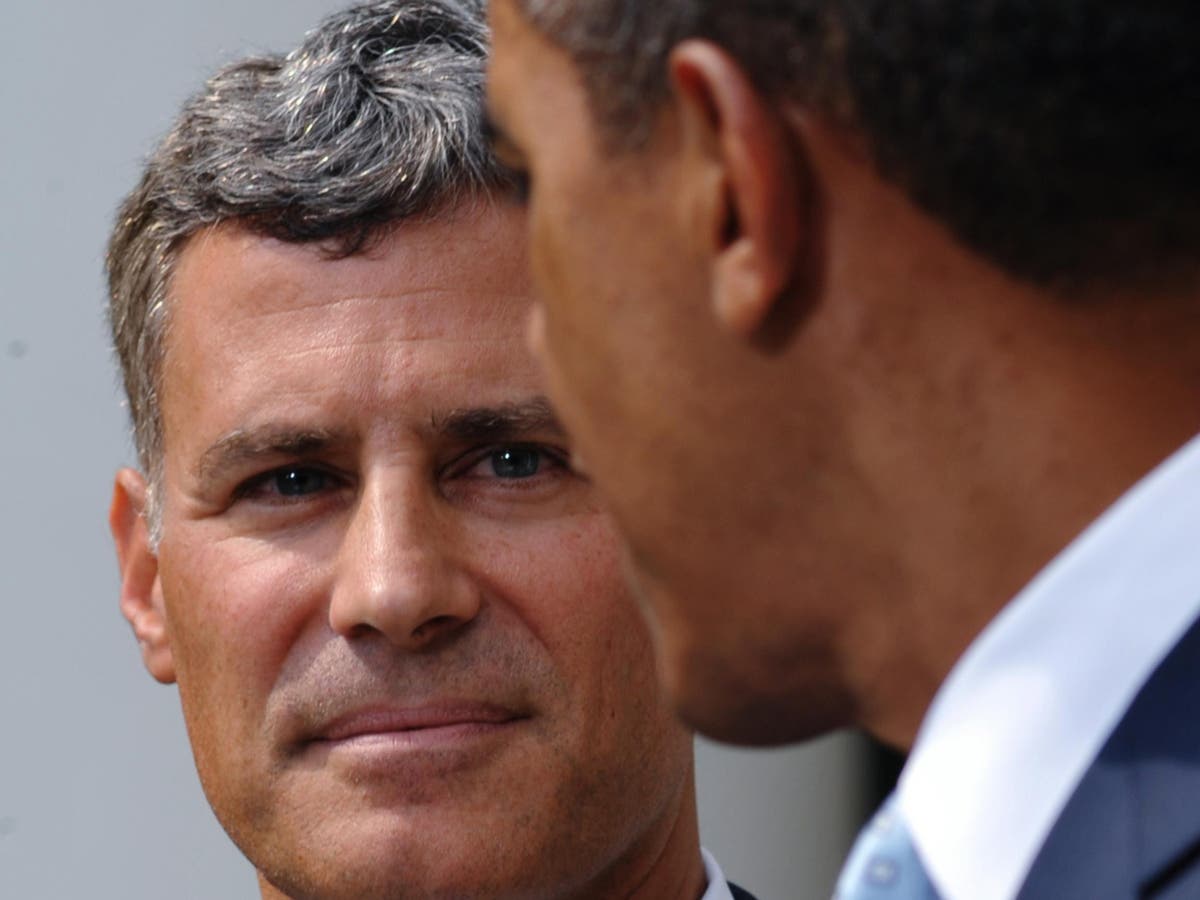
Alan Krueger was a pioneering labor economist whose empirical research transformed the understanding of minimum wage, education, and income inequality. By prioritizing data-driven "natural experiments" over purely theoretical models, he reshaped public policy and cemented his legacy as a central figure in the "credibility revolution" of modern economics.
Alan B. Krueger (1960–2019) was not merely a theorist; he was a master of the "natural experiment." Throughout his career at Princeton University and his high-level service in the U.S. government, Krueger challenged long-held economic dogmas by looking at what the data actually said, rather than what textbooks predicted. His work on the minimum wage, the economic returns of education, and the rise of the "superstar economy" continues to define labor policy in 2026. As we look back on his contributions, it is clear that his methodology shifted the entire discipline toward a more rigorous, evidence-based approach.
The Empirical Revolution: Bringing Data to the Forefront
Before the 1990s, much of labor economics was dominated by theoretical models. If a researcher wanted to know the effect of a policy, they often relied on deductive reasoning. Alan Krueger, alongside colleagues like David Card and Joshua Angrist, pioneered the "credibility revolution." This movement emphasized the use of natural experiments—situations where an external event or policy change creates a "treatment" group and a "control" group in the real world, similar to a clinical trial.
Krueger’s insistence on empirical evidence changed how economists interact with policy. He believed that if an economic theory could not withstand the scrutiny of real-world data, the theory needed to be revised, not the data. This approach was particularly revolutionary because it moved economics away from being a "dismal science" of abstractions and toward a practical tool for improving human welfare. In 2026, his techniques—such as difference-in-differences and instrumental variables—remain the gold standard for evaluating social programs and labor regulations.
The Minimum Wage Debate: Challenging Economic Orthodoxy
Perhaps Krueger’s most famous contribution is his 1994 study with David Card on the minimum wage. At the time, the standard economic view was unanimous: raising the minimum wage would inevitably lead to higher unemployment because employers would hire fewer workers to offset costs.
Krueger and Card looked at a real-world scenario: New Jersey raised its minimum wage while neighboring Pennsylvania did not. By surveying fast-food restaurants on both sides of the border, they found that employment in New Jersey did not fall relative to Pennsylvania. In fact, in some cases, it rose.
Why the Findings Re-Defined Labor Policy
This study was explosive. It suggested that labor markets were not perfectly competitive "spot markets" where price always dictates demand. Instead, Krueger introduced the idea that employers might have monopsony power—the ability to set wages below a competitive level. In such a market, a higher minimum wage can actually increase employment by making it easier for firms to recruit and retain staff. This research provided the intellectual foundation for the "Fight for $15" and subsequent minimum wage increases across the United States and Europe, proving that modest increases do not necessarily destroy jobs.
Education and the Tennessee STAR Experiment
Krueger’s impact extended deep into the economics of education. He was a firm believer that human capital was the primary driver of long-term economic growth and individual success. To prove this, he tackled the question of whether smaller class sizes actually improve student outcomes.
Using data from the Tennessee STAR experiment, Krueger demonstrated that students in smaller classes (13 to 17 students) outperformed those in larger classes. Crucially, he found that these benefits were most pronounced for students from disadvantaged backgrounds. His work argued that early intervention in education was one of the most cost-effective ways to reduce long-term inequality.
He also famously studied the "return on elite education." In a study with Stacy Berg Dale, he found that students who were accepted to elite universities but chose to attend less prestigious schools earned just as much later in life as those who attended the elite institutions. This suggested that the traits of the student—intelligence, drive, and ambition—were more predictive of success than the brand name on the diploma, a finding that remains a cornerstone of educational counseling in 2026.
The "Great Gatsby Curve" and Economic Inequality
As Chairman of the Council of Economic Advisers (CEA) under President Barack Obama, Krueger popularized a concept that has become central to the discussion of wealth in the 21st century: the Great Gatsby Curve.
This curve illustrates the relationship between income inequality and social mobility. It shows that in countries with high levels of inequality, it is much harder for a child born into a poor family to move up the economic ladder. Krueger used this to warn that the shrinking middle class was not just a social issue, but a fundamental threat to the American Dream of upward mobility. By highlighting how the concentration of wealth at the top creates barriers for those at the bottom, he pushed inequality to the forefront of the national political agenda.
Rockonomics: The Music Industry as a Microcosm
Krueger had a unique ability to find economic lessons in unconventional places. In his later years, he developed the concept of "Rockonomics." He argued that the music industry served as a "canary in the coal mine" for the broader economy.
He observed that the music industry was becoming a "winner-take-all" market. While technology (like streaming) made music more accessible, the vast majority of revenue was being captured by a tiny fraction of "superstar" artists. He saw this as a precursor to what was happening in the wider labor market, where technological disruption and globalization were hollowing out the middle class while enriching a small elite. His book, Rockonomics, published shortly before his death, remains a vital text for understanding how the digital age reshapes earnings and consumer behavior.
Comparison of Alan Krueger’s Key Research Areas
| Research Area | Key Study/Concept | Major Finding | Impact on Policy |
|---|---|---|---|
| Labor Markets | New Jersey/Pennsylvania Fast Food Study | Raising minimum wage didn't necessarily reduce jobs. | Shifted consensus toward higher state/federal minimum wages. |
| Education | Project STAR (Tennessee) | Small class sizes significantly improve long-term outcomes. | Justified increased funding for early childhood and primary education. |
| Social Mobility | The Great Gatsby Curve | High inequality correlates with low intergenerational mobility. | Focused federal policy on "middle-out" economics. |
| Subjective Well-being | Day Reconstruction Method | Measuring "happiness" through daily activities vs. global life satisfaction. | Influenced "well-being" metrics used by international organizations. |
| The Arts/Tech | Rockonomics | Technology creates "superstar" effects and winner-take-all markets. | Provided a framework for understanding the "gig economy" and digital markets. |
Public Service and the Pursuit of Evidence
Alan Krueger was one of the few economists who successfully bridged the gap between academia and high-level government service. He served as:
- Chief Economist at the Department of Labor (1994–1995) under Bill Clinton.
- Assistant Secretary of the Treasury for Economic Policy (2009–2010) during the Great Recession.
- Chairman of the Council of Economic Advisers (2011–2013) under Barack Obama.
In these roles, he was known for his "evidence-first" approach. During the recovery from the 2008 financial crisis, he was instrumental in designing policies like the Hiring Incentives to Restore Employment (HIRE) Act. He was also among the first to sound the alarm on the opioid crisis, publishing research that linked the rise in prescription painkillers to a decline in labor force participation among prime-age men.
Frequently Asked Questions
Did Alan Krueger win the Nobel Prize?
While Alan Krueger did not win the Nobel Prize before his passing in 2019, his close frequent collaborators, David Card and Joshua Angrist, were awarded the Nobel Memorial Prize in Economic Sciences in 2021. The Nobel Committee specifically cited the empirical contributions to labor economics that Krueger helped pioneer. Many in the field believe he would have shared the prize had he been alive.
What is the "credibility revolution" in economics?
The credibility revolution is a movement in economics that emphasizes rigorous empirical methods to establish causal relationships. Instead of relying on theory or simple correlations, it uses natural experiments and sophisticated statistical techniques to prove that "X caused Y." Alan Krueger was one of the primary architects of this movement.
How did Krueger measure happiness?
Krueger developed the "Day Reconstruction Method" (DRM). Instead of asking people "How happy are you with your life?" (which is prone to bias), the DRM asks people to record their activities from the previous day and rate their feelings during each. This provided a more granular and accurate look at human well-being and the "economics of time."
What was Krueger's view on the gig economy?
Krueger was an early researcher of the "online platform economy." He conducted some of the first comprehensive studies on Uber drivers, finding that while they valued flexibility, the gig economy also presented challenges regarding benefits and long-term income stability. He advocated for portable benefits that would follow workers from job to job.
Why is the "Great Gatsby Curve" still relevant in 2026?
The curve remains relevant because it highlights that inequality is not just about fairness, but about opportunity. In 2026, as the gap between high-skill and low-skill wages continues to widen due to AI and automation, the Gatsby Curve serves as a warning that without policy intervention, social mobility may continue to stagnate.
Implementing Krueger’s Evidence-Based Approach
For policymakers, researchers, and business leaders in 2026, the primary takeaway from Alan Krueger’s career is the importance of humility before the data. To apply his philosophy today, one should move beyond ideological assumptions and invest in "pilot programs" that can be rigorously tested.
Whether you are evaluating a new remote-work policy or a city-wide basic income trial, the "Krueger method" involves identifying a control group, collecting granular data, and being willing to accept results that contradict your initial hypothesis. By focusing on the "how" and the "why" of labor market dynamics, we can create an economy that is both more efficient and more equitable—a goal Alan Krueger pursued throughout his entire life.