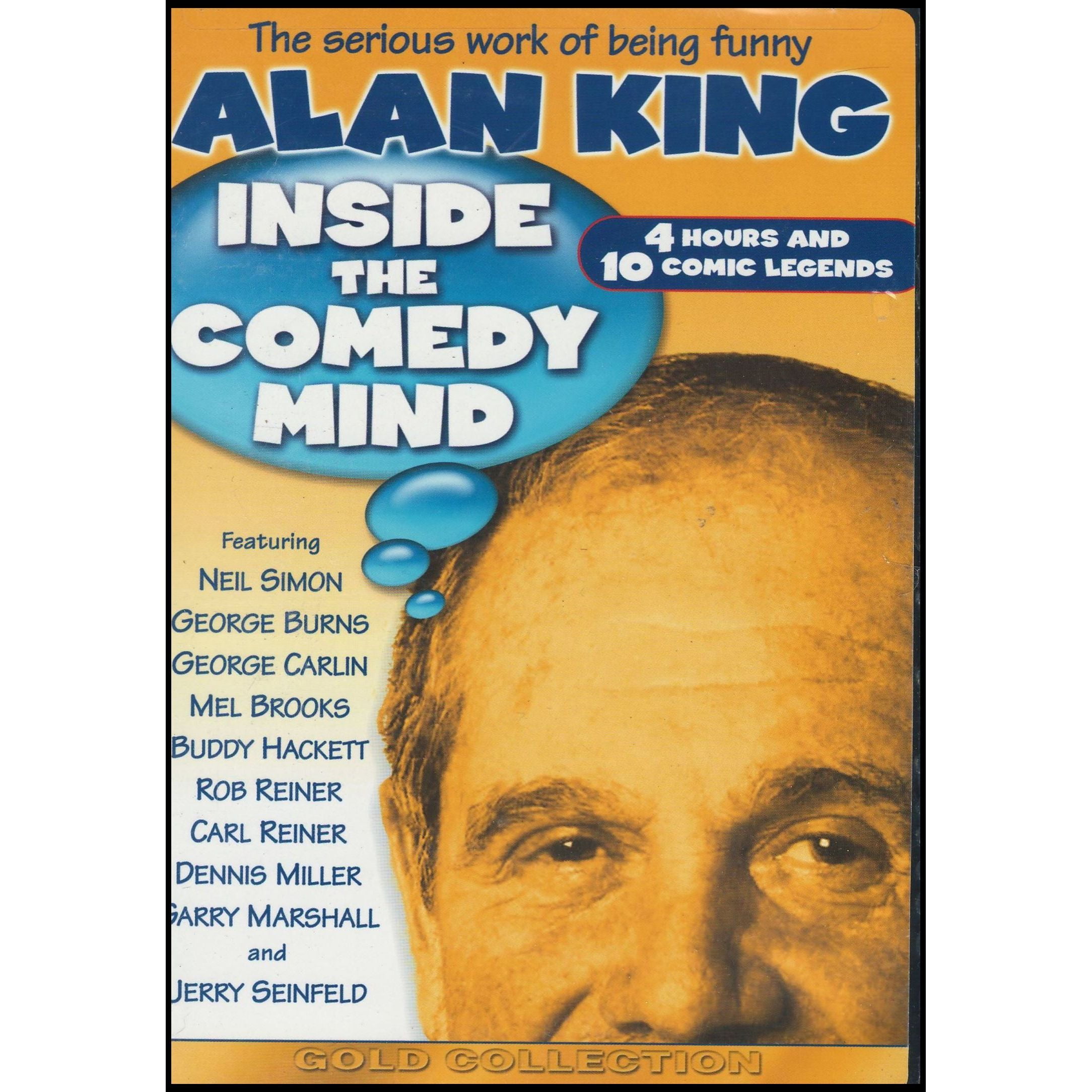
Alan King was a seminal American comedian, actor, and producer best known for his "angry" observational humor and his sophisticated, cigar-chomping stage persona. Throughout a career spanning over five decades, he transitioned from the Borscht Belt circuits to becoming a staple of mainstream television, film, and the New York Friars Club, fundamentally shaping the structure of modern stand-up comedy.
The Evolution of the "Angry" Observational Persona
Long before the observational comedy boom of the 1980s and 1990s, Alan King (born Irwin Alan Kniberg) perfected the art of the relatable grievance. Unlike his contemporaries who relied on rapid-fire "one-liners" or slapstick, King’s humor was rooted in the frustrations of the post-war middle class. He famously took aim at the mundane annoyances of modern life: suburban sprawl, the complexities of marriage, the arrogance of doctors, and the legendary incompetence of airlines.
King did not just tell jokes; he held court. Dressed in impeccable custom-tailored suits and often wielding an unlit cigar as a rhythmic baton, he presented himself as a successful man who was nonetheless being driven to the brink of insanity by the world’s small absurdities. This "angry young man" persona—which matured into a "grumpy elder statesman" as the decades passed—allowed him to connect with audiences across generational divides. In 2026, his influence is still visible in the DNA of "complaint-based" comedy, where the performer acts as a proxy for the audience's shared irritations.
The brilliance of King’s delivery lay in its timing. He mastered the use of the "slow burn," allowing his frustration to mount visibly before delivering a punchline that felt less like a scripted gag and more like a necessary catharsis. His style shifted the landscape of comedy away from the vaudevillian traditions of the early 20th century toward the more conversational, narrative-driven performances that dominate the industry today.
From Brooklyn Roots to the Borscht Belt
Irwin Alan Kniberg was born in 1927 in New York City, growing up in Brooklyn during an era that forged many of the greatest minds in American comedy. His journey into entertainment began as a teenager, performing in the legendary "Borscht Belt" resorts of the Catskill Mountains. These resorts served as a grueling but essential training ground for comedians, requiring them to perform multiple sets a day for demanding audiences.
It was during this period that he changed his name to Alan King. Initially, his act followed the standard tropes of the time—standard Jewish humor and imitations. However, a pivotal moment in his career occurred when he saw Danny Thomas perform. Thomas emphasized the importance of storytelling and connecting with the audience as a person rather than just a joke-delivery machine. King took this lesson to heart, shedding the generic material of his youth to develop the sophisticated, monologuing style that would eventually make him a household name.
By the early 1950s, King had broken out of the Catskills and into the prestigious nightclub circuits of Manhattan and Miami. His ability to maintain an air of class while complaining about the price of a suit or the wait time for a table made him a favorite in high-end venues, eventually catching the eye of national television producers.
The Ed Sullivan Era and Television Dominance
Alan King’s true ascent to the peak of American culture was facilitated by the burgeoning medium of television. Most notably, he became a regular fixture on The Ed Sullivan Show, appearing an astounding 37 times. Sullivan’s show was the ultimate gatekeeper of American stardom, and King’s frequent invitations solidified his status as one of the country's premiere entertainers.
On television, King had to refine his "anger" to suit the censors and the domestic environment of the 1950s and 60s. He became the voice of the American husband and father, articulating the quiet desperation of domestic life with a wit that was sharp but never truly mean-spirited. His routines on the "Airlines"—specifically his critiques of their scheduling and food—became so famous that they are still cited in comedy history as the definitive examples of the "airline food" trope before it became a cliché.
Beyond guest appearances, King became a sought-after host. He headlined his own specials and was a frequent guest on The Tonight Show Starring Johnny Carson. His versatility allowed him to move from the low-brow humor of a roast to the high-brow atmosphere of a formal gala without losing his comedic edge.
Comparison of Mid-Century Comedy Legends
To understand Alan King's specific niche, it is helpful to compare him to his contemporaries who defined the "Golden Age" of stand-up.
| Feature | Alan King | Henny Youngman | Don Rickles | Joan Rivers |
|---|---|---|---|---|
| Primary Style | Observational Monologues | One-liners/Gags | Insult Comedy | High-energy Neuroticism |
| Stage Persona | Sophisticated & Angry | The "King of One-Liners" | The "Merchant of Venom" | The Self-Deprecating Critic |
| Key Prop | Cigar and Tailored Suit | Violin | Chair/Stool | Rapid-fire Hand Gestures |
| Core Subject | Domestic & Social Frustrations | Marriage and Clichés | Audience Members | Celebrity Culture and Self |
| Cultural Influence | Narrative Stand-up | Format of Jokes | Improvisational Roasts | Boundary-pushing Satire |
Beyond the Microphone: Film, Broadway, and Producing
While stand-up was his primary vehicle, Alan King was a multi-faceted talent who sought to master every corner of the entertainment industry. His transition into acting was marked by a preference for character roles that leveraged his natural gravitas.
- Film Career: King appeared in over 30 films. One of his most memorable late-career roles was in Martin Scorsese’s 1995 masterpiece Casino, where he played Andy Stone, a mob-connected union head. His performance was praised for its understated power, proving he could hold his own alongside heavyweights like Robert De Niro and Joe Pesci. Other notable credits include Night and the City and Memories of Me.
- Broadway and Theater: King’s love for the stage extended to theater. He produced and acted in several Broadway productions, including the hit Guys and Dolls. He understood the mechanics of the theater, which informed the theatricality of his stand-up routines.
- Production and Authorship: King was also a successful producer, helping to bring various shows and films to fruition. Additionally, he authored several books, including Anybody Who Owns His Own Home Deserves It and Help! I'm a Prisoner in a Chinese Bakery. These titles reflected his comedic philosophy: that life is an endless series of complications designed to test a person's patience.
Leadership at the Friars Club and Philanthropy
Alan King’s influence was not limited to what the public saw on screen. Within the industry, he was a titan of the New York Friars Club, serving as its "Abbot" for many years. The Friars Club is the spiritual home of American comedy, famous for its celebrity roasts. King presided over these events with a mixture of reverence for tradition and a ruthless comedic instinct.
Under his leadership, the roasts became legendary, serving as a rite of passage for comedians and actors. He was a mentor to younger generations, often providing advice on the business side of show business—an area where he was particularly savvy.
King was also deeply committed to philanthropic endeavors. He founded the Alan King Tennis Classic, which for years was a major stop on the professional circuit, raising significant funds for various charities. His humanitarian work earned him numerous accolades, and he was known for using his wealth and influence to support medical research and educational programs in both the United States and Israel.
Distinguishing Alan King: Comedy vs. Contemporary Namesakes
In the modern digital landscape of 2026, it is important to distinguish the legendary comedian from other public figures who share his name. While "Alan King" is synonymous with classic comedy, there is also a prominent Alan King associated with the contemporary fashion and streetwear industry.
- The Comedian (1927–2004): The subject of this profile, known for his cigars, suits, and the "angry" persona. His work is archived in the history of 20th-century entertainment.
- The Designer: A modern figure known for the "Alan King" (AK) luxury streetwear brand. This entity focuses on high-end fashion, e-commerce, and modern aesthetic trends, which is entirely separate from the legacy of the comedian.
When researching his work or looking for recordings of his performances, fans should focus on archives related to The Ed Sullivan Show, The Tonight Show, and his various HBO specials from the late 20th century to ensure they are accessing the comedian's body of work.
Frequently Asked Questions
Why was Alan King called the "angry" comedian?
King earned this title because his act focused on his dissatisfaction with the world. However, his "anger" was a stylistic choice; it was a controlled, comedic frustration with the absurdities of daily life—such as bureaucracy, family dynamics, and social etiquette—rather than a genuine or hostile rage.
What are Alan King's most famous movies?
His most critically acclaimed performance is generally considered to be his role as Andy Stone in Casino (1995). He also had significant roles in Night and the City (1992), Enemies, A Love Story (1989), and The Anderson Tapes (1971).
Did Alan King really smoke those cigars on stage?
While the cigar was a permanent fixture of his stage persona, he often used it as a prop rather than constantly smoking it. It served as a timing device; a puff on the cigar or a flick of the ash provided the perfect beat between a setup and a punchline.
What was the Alan King Tennis Classic?
It was a high-profile celebrity and professional tennis tournament held in Las Vegas during the 1970s and 1980s. It was one of the most prestigious non-Grand Slam events of its time, attracting top-tier players like Jimmy Connors and Björn Borg, and it raised substantial money for charity.
How did Alan King influence modern comedians?
He was one of the first to move away from the "setup-punchline" joke structure in favor of long-form observational storytelling. Comedians like Jerry Seinfeld and Larry David owe a debt to King’s ability to find humor in the minutiae of everyday life.
How to Explore Alan King's Work Today
For those looking to experience the wit of Alan King in 2026, the best starting point is his collection of televised specials. His HBO specials from the 1980s show a master at the height of his powers, refining his classic routines for a new generation. Additionally, many of his Ed Sullivan appearances have been digitally remastered and are available through official archival channels.
For a deeper dive into his philosophy, his books remain excellent examples of mid-century humor writing. Anybody Who Owns His Own Home Deserves It remains a hilarious and remarkably relevant look at the pitfalls of homeownership and the "American Dream." By studying his timing and his ability to command a room, aspiring performers can still learn the fundamental mechanics of high-level stand-up comedy from the man who helped invent its modern form.