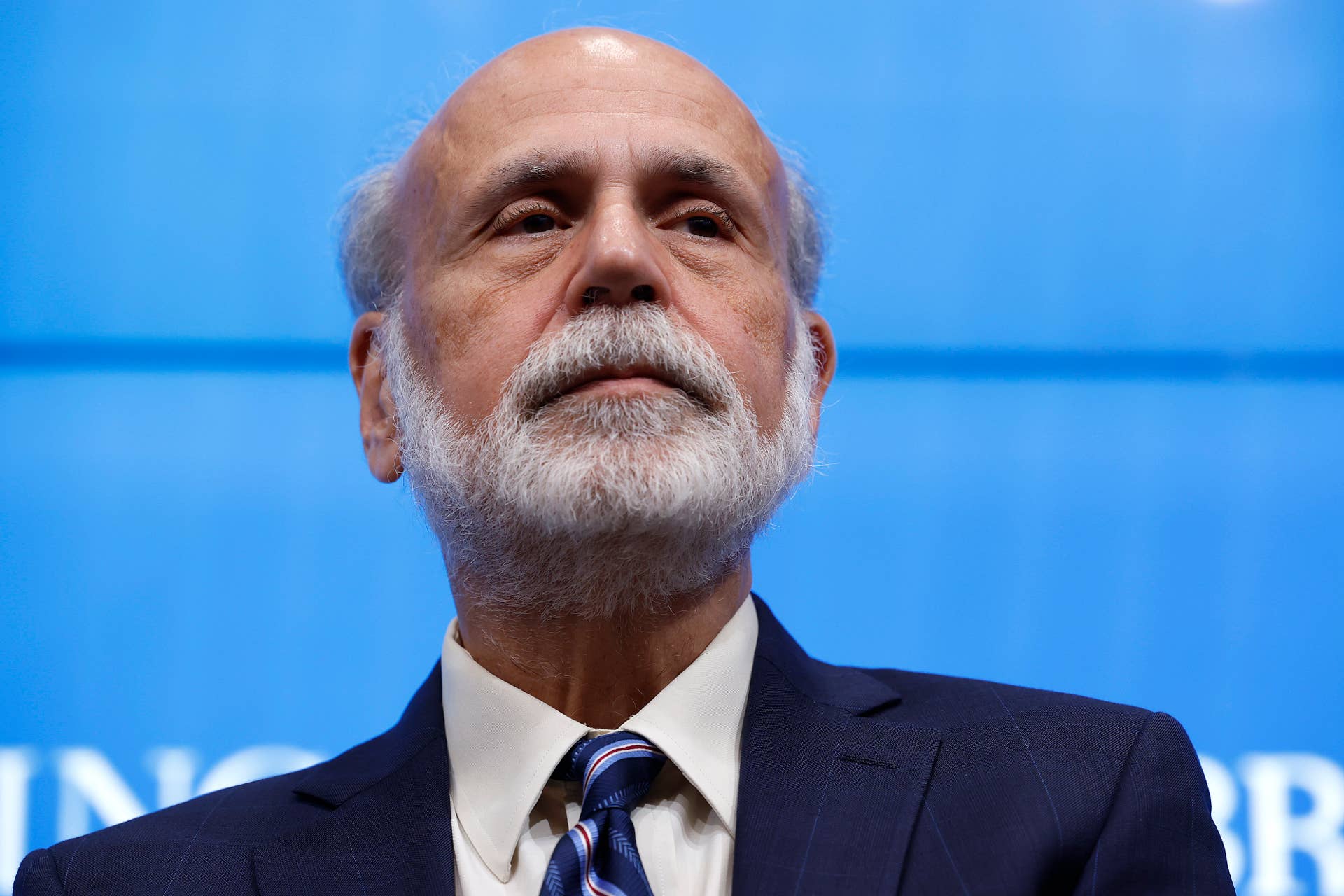
As of 2026, Alan Greenspan’s net worth is estimated to be approximately $25 million. Although his long tenure as the Chairman of the Federal Reserve provided a prestigious platform, the vast majority of his wealth was generated following his 2006 retirement through high-value consulting contracts, multimillion-dollar book advances, and elite speaking engagements.
Alan Greenspan remains one of the most influential figures in modern economic history. Often referred to during his tenure as "The Maestro," his influence over global markets for nearly two decades was unparalleled. However, the story of his personal fortune is distinct from his public-sector influence. While the Federal Reserve Chairmanship is a position of immense power, it is not a position of immense pay. The "untold story" of Greenspan’s fortune lies in how he leveraged his specialized knowledge and "Fedspeak" persona into a highly profitable private-sector brand in the two decades following his departure from the Fed.
The Foundation: Private Sector Success Before the Federal Reserve
Before Alan Greenspan became a household name at the Federal Reserve, he was already a wealthy man. In 1954, he co-founded the economic consulting firm Townsend-Greenspan & Co. By the time he entered government service full-time, he had spent over 30 years advising some of the largest corporations and most influential investors in the United States.
His firm was a pioneer in using computer models and complex data sets to forecast economic trends. This period was crucial for his financial trajectory because it established his initial capital. When he was nominated by President Ronald Reagan to lead the Federal Reserve in 1987, Greenspan had to divest from many of his private holdings and dissolve his consulting interests to avoid conflicts of interest. Reports from that era suggest he entered the public sector with a net worth already in the low millions—a significant sum for the late 1980s.
The Public Servant’s Paycheck: 18.5 Years at the Fed
One of the most striking aspects of Greenspan’s financial life is the disparity between his influence and his salary. As Chairman of the Federal Reserve from 1987 to 2006, Greenspan’s salary was capped by federal law under the Executive Schedule. For much of his tenure, his annual salary hovered between $130,000 and $180,000.
While this was a comfortable income for the time, it was a fraction of what a person with his expertise could have earned on Wall Street as a Chief Economist or hedge fund manager. During his 18.5 years of service, his primary financial growth came not from his paycheck, but from the appreciation of his existing assets and his wife’s income. Greenspan famously maintained a very conservative investment portfolio during this period, consisting primarily of short-term U.S. Treasury bills to ensure there was never a perception of a conflict of interest regarding interest rate decisions.
The Post-Fed Windfall: Consulting and Greenspan Associates LLC
The true expansion of Alan Greenspan’s net worth began the moment he stepped down from the Federal Reserve in January 2006. Freed from the ethical constraints of public office, Greenspan immediately established Greenspan Associates LLC.
The demand for his insight was unprecedented. Global financial institutions were eager to pay a premium for "private" versions of the economic outlooks he had previously delivered to Congress. His consulting clients included:
- Deutsche Bank: Greenspan was brought on as a senior advisor shortly after his retirement.
- PIMCO (Pacific Investment Management Co.): He served as a consultant to the world’s largest bond fund, providing macro-economic analysis.
- Paulson & Co.: He advised the hedge fund led by John Paulson, particularly during the volatile years surrounding the 2008 financial crisis.
These roles often commanded seven-figure annual retainers. The "untold story" here is the efficiency with which Greenspan converted his reputation into a consulting empire. By providing high-level strategy rather than daily management, he was able to serve multiple high-paying clients simultaneously.
Literary Wealth: The $8 Million Advance
In the world of publishing, Alan Greenspan’s memoir, The Age of Turbulence: Adventures in a New World (2007), represents one of the most lucrative deals for a non-fiction author in history. Penguin Press reportedly paid Greenspan an advance of more than $8 million.
At the time, this was a staggering figure, surpassed only by the advances paid to former Presidents like Bill Clinton. The book became an international bestseller, translated into dozens of languages. The success of the book was not just a one-time payment; the royalties and subsequent publications, such as The Map and the Territory (2013) and Capitalism in America (2018), co-authored with Adrian Wooldridge, provided a steady stream of passive income that bolstered his net worth well into his 90s.
The High-Stakes Speaking Circuit
Parallel to his consulting work, Greenspan became a fixture on the elite speaking circuit. In the years following 2006, his appearance fees were among the highest in the world. Reports from agencies such as the Washington Speakers Bureau indicated that Greenspan could command between $100,000 and $150,000 per speech.
Even more notable was his ability to speak via satellite. In several instances, Greenspan earned six-figure sums for a one-hour remote presentation and Q&A session with investors in Asia or Europe. This allowed him to generate massive revenue without the physical strain of international travel. His unique "Fedspeak"—a style of communication that was famously opaque yet authoritative—became a marketable asset that institutional investors were willing to pay for in hopes of gaining an edge in market timing.
Asset Allocation and the Mitchell-Greenspan Household
Greenspan’s personal financial health is also inextricably linked to his marriage to Andrea Mitchell, the Chief Foreign Affairs Correspondent for NBC News. Mitchell is a highly successful journalist in her own right, with a multi-million dollar net worth and a long-standing career at the peak of network television.
Together, the couple represents a Washington D.C. "power couple" with combined assets that include:
- Real Estate: High-value residential property in the Washington D.C. area, specifically in the prestigious Kalorama or Chevy Chase neighborhoods.
- Diverse Portfolio: After leaving the Fed, Greenspan was able to move away from low-yield Treasuries into a more diversified mix of equities and private equity, likely managed by elite wealth management firms.
- Retirement Benefits: As a long-serving federal official, Greenspan is entitled to a federal pension, though this is a minor component of his overall $25 million valuation compared to his private earnings.
Comparative Wealth Analysis
To understand the scale of Greenspan's fortune, it is helpful to compare his financial trajectory with other major economic figures.
| Feature | Alan Greenspan | Ben Bernanke | Janet Yellen |
|---|---|---|---|
| Primary Source of Wealth | Consulting & Book Deals | Speaking & Consulting | Speaking & Investments |
| Highest Book Advance | ~$8 Million | ~$1 Million+ | N/A (Standard Royalties) |
| Estimated Net Worth | ~$25 Million | ~$10-15 Million | ~$15-20 Million |
| Post-Fed Roles | Greenspan Associates | Brookings / Citadel | Treasury Secretary (Return to Public) |
| Peak Speaking Fee | $150,000 | $200,000+ | $200,000+ |
Note: Figures are based on reported historical earnings and public disclosures as of 2026 valuations.
The Legacy of the "Maestro" in 2026
As of 2026, the fascination with Greenspan’s wealth is less about the dollar amount and more about what it represents: the professionalization of the "Ex-Fed Chair." Greenspan set the blueprint for how a central banker transitions into a private sector icon.
While his reputation faced scrutiny following the 2008 financial crisis—with critics questioning his low-interest-rate policies and "hands-off" approach to derivatives regulation—his personal financial brand remained remarkably resilient. Investors continued to value his historical perspective on inflation, productivity, and the gold standard, ensuring that his consulting firm remained viable and his net worth continued to grow through compound interest and strategic management.
How Did He Build This Fortune?
- Monetizing Expertise: He didn't just retire; he launched a firm that sold his specific way of thinking.
- Intellectual Property: He turned his life story and economic theories into best-selling products.
- Global Demand: He recognized that his audience was global, not just American, capturing fees from sovereign wealth funds and international banks.
Financial Lessons from the Greenspan Story
The "untold story" of Alan Greenspan’s fortune is a lesson in the value of specialized knowledge. For nearly two decades, he accepted a salary that was a fraction of his market value because of the prestige and power of the Federal Reserve. Upon his exit, he "recaptured" that value by charging the market what it was willing to pay for his unique insights. His fortune is a testament to the fact that in the 21st-century economy, the ability to interpret data and predict trends is often more valuable than any physical commodity.
FAQ
How much was Alan Greenspan's salary at the Federal Reserve?
During his final years as Chairman, Greenspan’s salary was approximately $180,000 per year. This was a fixed salary set by Congress. Despite managing the entire U.S. economy, his pay was significantly lower than the CEOs of the banks he regulated.
Is Alan Greenspan still active in consulting in 2026?
At 100 years old in 2026, Alan Greenspan has significantly scaled back his daily operations at Greenspan Associates LLC. However, the firm continues to operate as a vehicle for his intellectual property and occasional strategic advisories, managed by a close-knit team of economic analysts.
What was Alan Greenspan's most profitable book?
The Age of Turbulence: Adventures in a New World remains his most profitable work. The $8 million advance he received in 2006 remains one of the highest ever paid for a memoir by a financial official.
How did the 2008 financial crisis affect his net worth?
While the crisis damaged his "Maestro" reputation among some academics and politicians, it actually increased the demand for his consulting services. Markets were desperate for guidance, and his expertise in navigating previous crises (like the 1987 crash) made his advice even more sought after by private clients.
Does Alan Greenspan own gold?
Greenspan has a long-standing intellectual fascination with the gold standard, dating back to his early essays in the 1960s. While he has not publicly disclosed a specific percentage of his net worth held in physical gold, he has frequently spoken about gold as a premier store of value, leading many to believe it has a place in his diversified portfolio.
Strategic Financial Takeaway
For those looking at the "Greenspan model," the key takeaway is the importance of deferred compensation. By serving at the Fed, Greenspan built a "brand equity" that was far more valuable than a high salary would have been. If you are in a position where your current role provides high visibility but moderate pay, your long-term wealth strategy should focus on how that visibility can be converted into private-sector value later in your career.