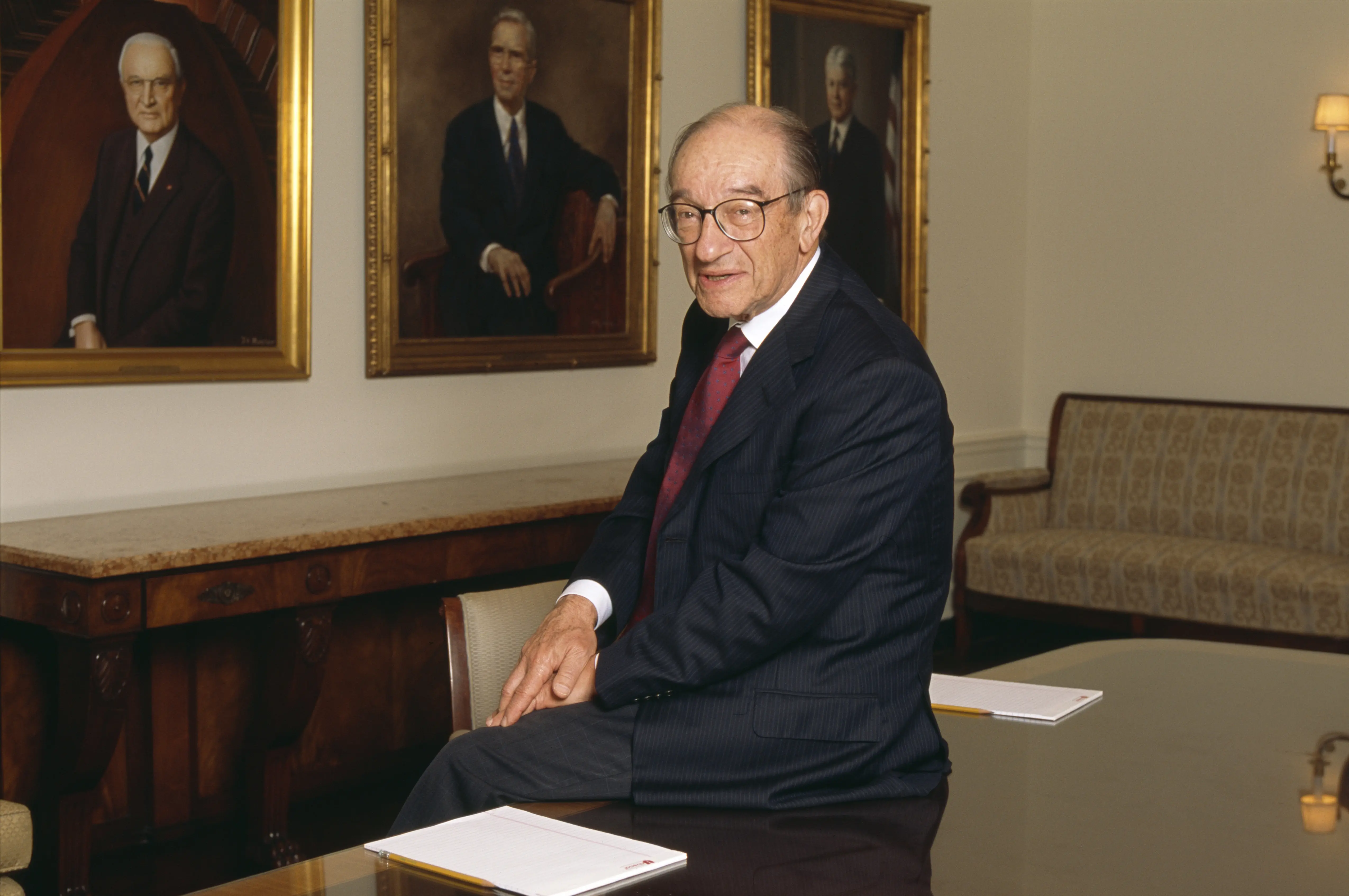
As of early 2026, Alan Greenspan’s net worth is estimated to be approximately $15 million to $20 million. This valuation is the result of a multifaceted career spanning nearly two decades as the Chair of the Federal Reserve, followed by a highly lucrative private sector career involving multi-million dollar book deals, high-profile consulting, and global speaking engagements.
The Foundation of Wealth: Public Service and the Federal Reserve Tenure
Alan Greenspan’s primary financial foundation was built during his long-standing career in the public sector, most notably his tenure as the 13th Chair of the Federal Reserve from 1987 to 2006. While the salary of a Federal Reserve Chair is public record and relatively modest compared to Wall Street executives—averaging around $180,000 to $190,000 annually during his final years—the position provided a unique platform for post-retirement wealth accumulation.
Greenspan’s wealth during his years in office was characterized by a conservative investment strategy, largely necessitated by the strict ethical guidelines and conflict-of-interest regulations governing the Federal Reserve. Financial disclosure forms from the early 2000s showed a portfolio heavily weighted toward U.S. Treasury bonds and money market funds. This strategy prioritized capital preservation over aggressive growth, reflecting his public persona as a cautious guardian of the economy. However, the true expansion of his net worth occurred after he stepped down from the "Maestro" role in 2006.
The Post-Fed Financial Boom: Speaking Fees and Literary Success
Upon leaving the Federal Reserve, Greenspan transitioned into one of the most sought-after voices in global finance. His first year out of office saw a dramatic increase in his liquidity. In 2007, he famously secured an $8.5 million advance for his memoir, The Age of Turbulence: Adventures in a New World. This book deal was one of the largest for a non-fiction author at the time and served as a significant pillar of his total net worth.
Beyond publishing, Greenspan’s speaking fees became a legendary component of his income. In the years immediately following his chairmanship, he commanded between $100,000 and $250,000 per appearance. Organizations, hedge funds, and international banks were eager to pay for his insights into market volatility and global economic trends. Even as he reached his late 90s, the "Greenspan premium" remained relevant for private advisory sessions, though his public appearances became more selective. By 2026, the cumulative earnings from two decades of these high-level engagements have significantly bolstered his estate.
Greenspan Associates LLC: The Business of Economic Forecasting
A critical but often overlooked component of Greenspan’s wealth is his private consulting firm, Greenspan Associates LLC. Founded shortly after his departure from the Fed, the firm provided bespoke economic consulting to a select group of high-net-worth clients and institutional investors.
The firm’s business model focused on "macro-forecasting," leveraging Greenspan’s deep understanding of capital flows, interest rate mechanics, and geopolitical risk. Unlike traditional brokerage firms, Greenspan Associates operated on a high-retainer model. This allowed Greenspan to monetize his intellectual capital without the overhead of a large corporate structure. Expert analysts suggest that the steady stream of income from this consulting work provided a consistent buffer against market fluctuations, ensuring his net worth remained stable even during periods of economic downturn that affected his broader investment portfolio.
The Investment Philosophy: Conservative Growth and Inflation Hedging
Alan Greenspan’s personal investment philosophy has historically mirrored his academic interest in "gold as a store of value" and his practical experience with inflation. Experts analyzing his financial trajectory note that his portfolio likely moved away from the strict Treasury-only diet of his Fed years into a more diversified mix of assets including equities, real estate, and potentially inflation-protected securities.
In 2026, the valuation of his assets also accounts for the shared wealth with his wife, veteran NBC journalist Andrea Mitchell. Their combined assets include significant real estate holdings, including their primary residence in the Washington D.C. area, which has appreciated substantially over the last two decades. While Greenspan has often spoken about the "irrational exuberance" of markets, his own financial management appears to have been characterized by rational, long-term positioning. He has consistently avoided speculative bubbles, focusing instead on the compounding power of traditional assets.
Comparative Financial Standing of Modern Federal Reserve Chairs
To understand the context of Greenspan’s $15M–$20M net worth in 2026, it is useful to compare his financial trajectory with that of his successors. The "revolving door" between the Fed and the private sector has become a standard path for wealth accumulation for modern economists.
| Name | Tenure | Estimated Net Worth (2026 Context) | Primary Post-Fed Income Source |
|---|---|---|---|
| Alan Greenspan | 1987–2006 | $15M – $20M | Book Advances, Speaking Fees, Consulting |
| Ben Bernanke | 2006–2014 | $10M – $15M | Advisory Roles (Citadel, PIMCO), Speaking |
| Janet Yellen | 2014–2018 | $15M – $25M | Speaking Fees, Treasury Secretary Salary, Assets |
| Jerome Powell | 2018–Present | $20M – $55M | Pre-Fed Private Equity (Carlyle Group) |
Note: Estimates are based on historical financial disclosures and career trajectory analysis as of 2026.
Estate Planning and the Centenarian Legacy in 2026
As Alan Greenspan celebrates his 100th birthday in 2026, the focus of his financial profile has shifted toward legacy and estate management. Centenarian wealth management requires a specific focus on liquidity and the transition of assets to beneficiaries or philanthropic causes.
Given his background in economics, it is highly probable that Greenspan’s estate is structured to minimize tax liabilities while ensuring the preservation of his intellectual property rights (royalties from his multiple books). Financial experts suggest that his net worth has likely plateaued in recent years, as the costs of high-level healthcare and a reduction in active consulting hours balance out the passive income from investments. Nevertheless, his status as a centenarian has brought a renewed interest in his early works, such as Capitalism in America (2018), providing a steady trickle of royalty income even decades after publication.
The Role of Intellectual Property
Unlike many public figures whose wealth is tied to depreciating physical assets, a significant portion of Greenspan's value in 2026 is tied to his "intellectual brand." This includes:
- The Greenspan Associates Brand: Potential for the firm to continue as a legacy entity.
- Back-Catalog Royalties: Ongoing sales of his memoirs and economic treatises.
- Archival Value: The historical significance of his personal papers and correspondence, which hold substantial value for academic institutions.
Expert Forecasts on Economic Influence
Economists in 2026 continue to debate the "Greenspan Era," but his personal financial stability remains a testament to his understanding of market cycles. Forecasts suggest that his estate will remain robust, influenced more by the performance of the U.S. bond market and general inflation than by active business ventures. His wealth is a reflection of the "Knowledge Economy," where one's understanding of the system is the most valuable asset of all.
Why His Net Worth Is Not Higher
A common question in 2026 is why Greenspan’s net worth isn't in the hundreds of millions, given his influence. The answer lies in his career timing and professional ethics. He spent the peak of his career (the 1990s bull market) in a role that prohibited him from trading stocks or participating in the private equity boom. By the time he entered the private sector in his 80s, he focused on advisory roles rather than founding high-growth technology or finance companies. His wealth is "old school" professional success—substantial, but not astronomical by modern billionaire standards.
Frequently Asked Questions (FAQ)
How much did Alan Greenspan make as Chair of the Federal Reserve?
During his final year as Chair in 2006, Greenspan’s annual salary was approximately $180,000. While significant compared to the average American income, it was far below the salaries of the CEOs of the banks he regulated. His primary wealth was built after his retirement from public service through private ventures.
Is Alan Greenspan still active in consulting in 2026?
At 100 years old, Alan Greenspan is largely retired from daily consulting operations. However, Greenspan Associates LLC remains a legal entity, and he occasionally provides high-level perspectives to long-term associates. His activity in 2026 is primarily centered on occasional written commentary and historical interviews rather than active market forecasting.
What was Alan Greenspan's biggest source of income?
The single largest "lump sum" of Greenspan’s income came from his 2007 book deal for The Age of Turbulence, which earned him an $8.5 million advance. Following that, his consistent high-six-figure speaking fees throughout the late 2000s and early 2010s provided the most significant growth to his net worth.
How does Andrea Mitchell’s career impact his net worth?
As a highly successful journalist and long-time anchor at NBC News, Andrea Mitchell has her own substantial net worth. The couple’s combined assets, particularly in real estate and joint investments, create a formidable financial foundation that exceeds Greenspan’s individual earnings.
Does Alan Greenspan own gold?
Despite his famous 1966 essay "Gold and Economic Freedom," which praised the gold standard, his public financial disclosures during his tenure at the Fed showed he did not hold significant amounts of physical gold. In 2026, it is believed his portfolio remains traditional, focused on diversified securities rather than speculative commodities.
What is the "Greenspan Put" in relation to his wealth?
The "Greenspan Put" refers to the market belief that Greenspan would lower interest rates to support the economy during a crash. While this is a policy concept, it reflects his deep understanding of market psychology—an understanding he used to manage his own investments conservatively and avoid the losses associated with major market corrections.
Recommendations for Navigating Economic Legacies
For those looking to apply the lessons of Alan Greenspan’s financial life to their own portfolios in 2026, the primary takeaway is the value of diversified intellectual capital. Greenspan’s ability to monetize his expertise long after his formal employment ended is a blueprint for modern career planning.
- Prioritize Long-Term Stability: Follow Greenspan’s lead by maintaining a core portfolio of stable assets (like Treasuries or high-grade bonds) while using specialized knowledge to generate "active" income.
- Monetize Expertise Early: If you possess niche high-level skills, consider consulting or publishing as a means to decouple your income from a traditional salary.
- Plan for Longevity: As life expectancy increases, as evidenced by Greenspan’s active centenarian status, ensure your estate plan accounts for a retirement that could last 30 to 40 years.
- Hedge Against Inflation: Observe Greenspan’s career-long focus on currency value; ensure your portfolio includes assets that can withstand the erosion of purchasing power over several decades.