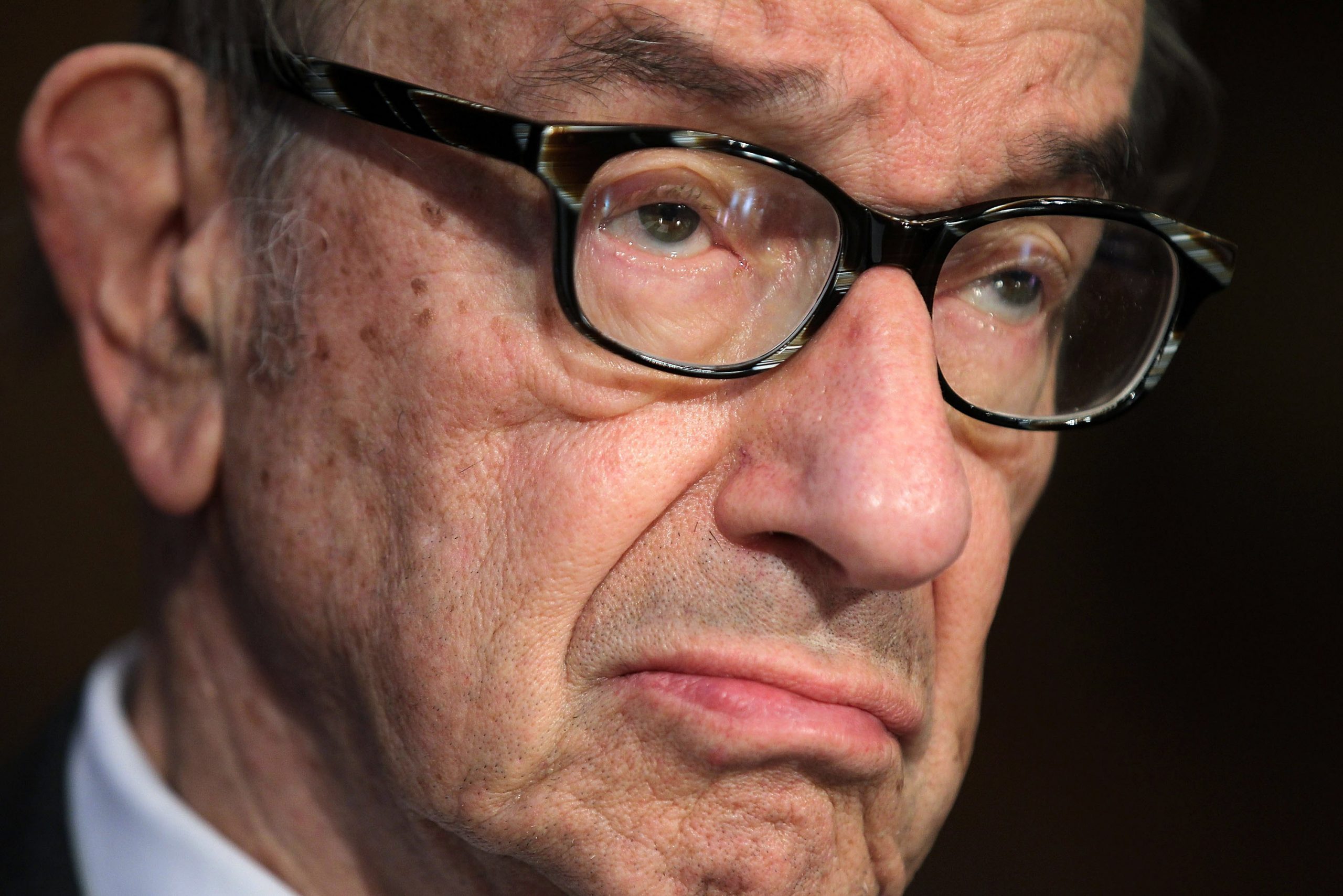
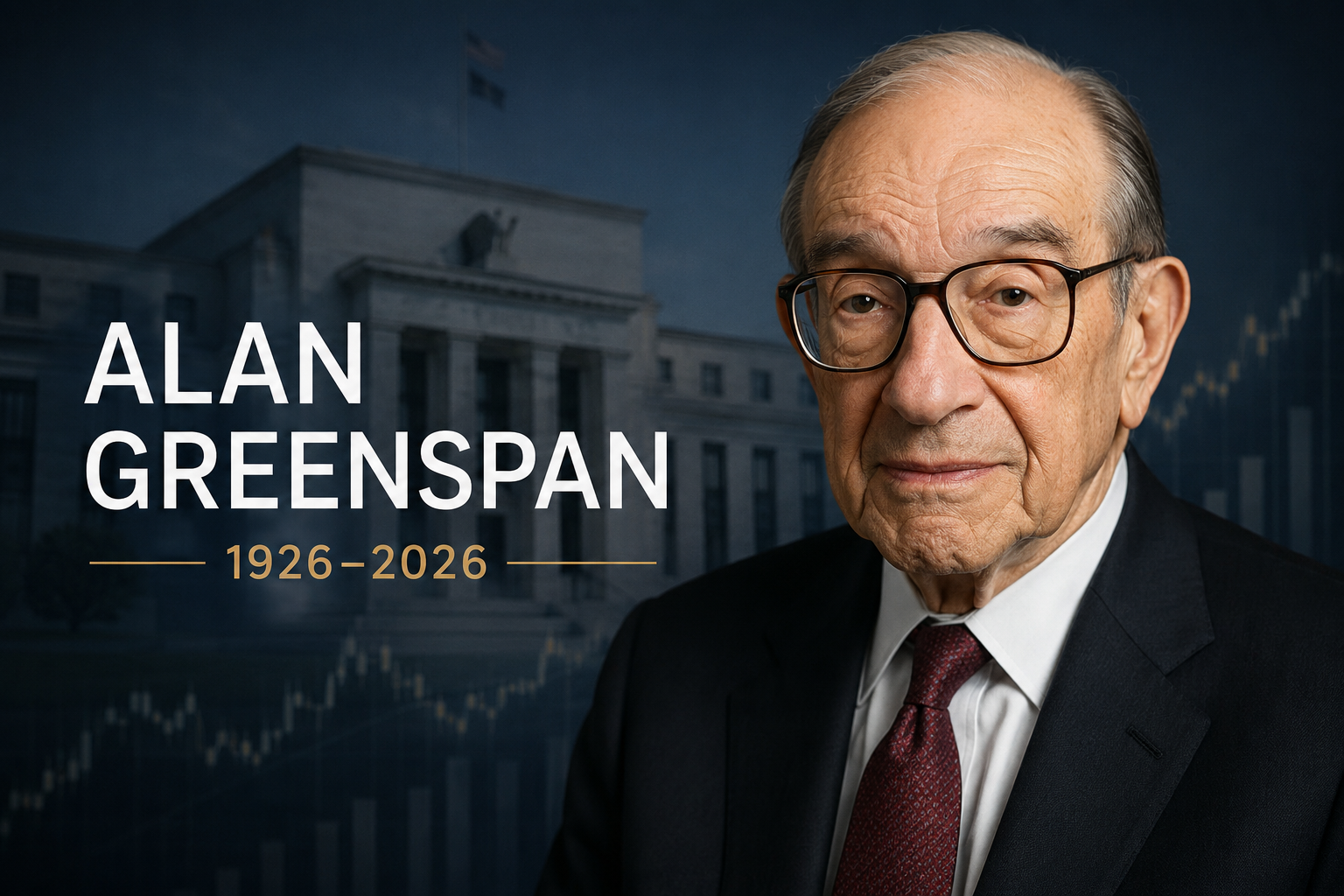
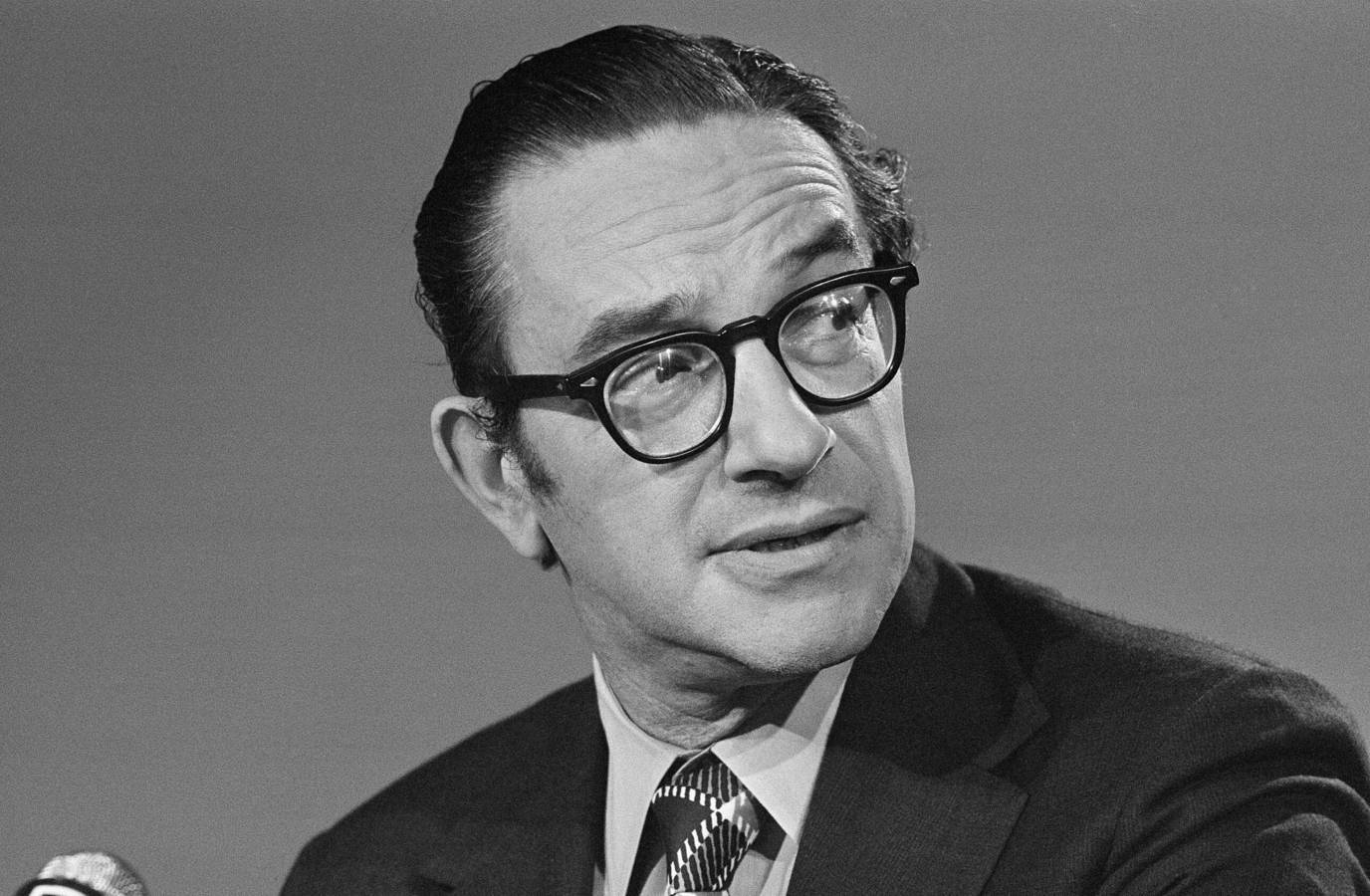
Alan Greenspan, the 13th Chair of the Federal Reserve, remains one of the most influential economic figures in modern history. His legacy is defined by a nearly two-decade tenure (1987–2006) during which he navigated the 1987 stock market crash, the 1990s technology boom, and the early 2000s housing expansion.
The Roots of a Technocrat: Family Background and Early Life
Alan Greenspan was born on March 6, 1926, in the Washington Heights neighborhood of New York City. His family background is rooted in the Jewish immigrant experience of the early 20th century, which significantly shaped his disciplined, data-driven approach to the world. He was the only child of Herbert Greenspan and Rose Goldsmith.
His parents divorced when he was very young, and he was primarily raised by his mother, Rose, in a household shared with his maternal grandparents. Rose was a vibrant, musical woman who worked as a retail clerk. Her influence was foundational; she encouraged Alan’s early interest in music, which led him to play the clarinet and saxophone professionally. This musical background instilled a sense of rhythm and pattern recognition that Greenspan would later apply to economic data.
His father, Herbert Greenspan, was a stockbroker and an author. Although Herbert was largely absent from Alan’s daily life during his youth, he left a profound intellectual mark. In 1935, Herbert wrote a book titled Recovery Ahead!, which analyzed the end of the Great Depression and predicted a period of economic growth. He dedicated the book to his son, writing, "May this my first book be a stepping stone toward your success in the year 1952." This specific prophecy regarding Alan’s future success in finance served as a silent motivator throughout his education at New York University (NYU) and Columbia University.
Intellectual Architects: The Influence of Ayn Rand and The Collective
One cannot understand Alan Greenspan’s legacy without analyzing his relationship with the philosopher and novelist Ayn Rand. In the 1950s, Greenspan became a core member of Rand’s inner circle, a group known ironically as "The Collective." At the time, Greenspan was a young economic consultant who initially approached Rand’s work with skepticism.
However, Rand’s philosophy of Objectivism—which champions rational self-interest, laissez-faire capitalism, and the moral validity of achievement—profoundly reshaped his worldview. Greenspan famously wrote for Rand’s newsletter, The Objectivist, defending the gold standard and arguing that government regulation of business was often counterproductive.
This relationship was more than a passing phase; it provided the ideological framework for his later policy decisions. Even as a government official, Greenspan maintained a belief in the self-correcting nature of markets. While he often had to compromise his purist libertarian views to manage the complexities of the Federal Reserve, the Randian emphasis on individual agency and the "virtue of selfishness" remained a cornerstone of his intellectual identity. Critics often point to this period as the origin of his reluctance to regulate complex financial derivatives in the late 1990s.
Strategic Partnerships: Marriages and Personal Alliances
Greenspan’s personal life has been marked by relationships that bridged the worlds of high finance, art, and media. His first marriage to Joan Mitchell, a talented painter, lasted only briefly in the early 1950s before ending in annulment. For several decades following, Greenspan remained a bachelor, becoming a fixture of the Washington D.C. social scene as his political influence grew.
His second and most prominent marriage took place in 1997 to Andrea Mitchell, a veteran NBC News Chief Foreign Affairs Correspondent. This relationship created a unique intersection of economic power and media influence. Mitchell’s career required her to maintain strict journalistic independence, while Greenspan held the keys to the U.S. economy. Their partnership became a symbol of the "Washington power couple" era, blending the sobriety of the Federal Reserve with the high-stakes environment of network news.
Beyond his marriages, Greenspan’s "key relationships" extended into the halls of the White House. He served under five different U.S. Presidents: Ronald Reagan, George H.W. Bush, Bill Clinton, and George W. Bush. His ability to maintain bipartisan support was a testament to his political acumen. He was particularly close to the Clinton administration’s Treasury Secretary, Robert Rubin, and Deputy Secretary Larry Summers. Together, they were dubbed the "Committee to Save the World" by Time magazine after navigating the 1997 Asian financial crisis.
Comparing the Tenures of Modern Federal Reserve Chairs
To understand Greenspan’s impact, it is helpful to see where his tenure sits in relation to his predecessors and successors. The following table highlights the durations and primary economic challenges faced by Federal Reserve Chairs in the modern era.
| Chair Name | Tenure Years | Primary Economic Focus/Challenge |
|---|---|---|
| Paul Volcker | 1979–1987 | Combating double-digit inflation through high interest rates. |
| Alan Greenspan | 1987–2006 | The "Great Moderation," tech boom, and post-9/11 stability. |
| Ben Bernanke | 2006–2014 | Navigating the 2008 Global Financial Crisis and Quantitative Easing. |
| Janet Yellen | 2014–2018 | Labor market recovery and normalization of interest rates. |
| Jerome Powell | 2018–Present | COVID-19 pandemic response and post-pandemic inflation. |
The Legacy of "The Maestro": Successes and Controversies
As of 2026, the retrospective view of Alan Greenspan is nuanced and polarized. For much of his career, he was hailed as "The Maestro" for his perceived ability to fine-tune the economy. His legacy is built on several key pillars:
The Great Moderation
Greenspan presided over a period of low inflation and steady growth known as the "Great Moderation." He was credited with using subtle adjustments to the federal funds rate to keep the economy from overheating while avoiding deep recessions. His quick action during the 1987 "Black Monday" crash—providing liquidity to the banking system—is still studied as a masterclass in crisis management.
The "Greenspan Put"
This term refers to the investor belief that Greenspan would always lower interest rates to support the markets if prices dropped too sharply. While this bolstered investor confidence during the 1990s, it also led to accusations of "moral hazard." Critics argue that the Greenspan Put encouraged excessive risk-taking, as market participants felt the Fed would always provide a safety net.
Deregulation and the 2008 Post-Mortem
The most significant shadow over Greenspan’s legacy is his role in the lead-up to the 2008 financial crisis. During his tenure, he resisted calls to regulate the burgeoning market for credit default swaps and other derivatives. He famously testified before Congress in 2008, admitting that he had found a "flaw" in his ideology—specifically, his belief that banks would naturally protect their own shareholders' interests by monitoring their risk exposure. In 2026, economists continue to debate whether his "easy money" policies in the early 2000s fueled the housing bubble that eventually burst with catastrophic global results.
Frequently Asked Questions
What was Alan Greenspan’s original career path before economics?
Greenspan was a professional musician. He attended the Juilliard School and toured as a woodwind player with a big band led by Henry Jerome. He eventually realized that his talent for mathematics surpassed his musical abilities, leading him to transfer to NYU to study economics.
How did Ayn Rand influence Greenspan’s policy decisions?
Rand influenced his belief in the efficiency of free markets and the dangers of government intervention. While Greenspan was a pragmatist as Fed Chair, his reluctance to impose heavy regulations on financial institutions reflected the Randian philosophy that markets are self-policing and that individual rational interest drives stability.
What is the "Greenspan Put"?
The "Greenspan Put" is an investment concept suggesting that the Federal Reserve, under Greenspan, would intervene and lower interest rates to prevent a massive market collapse. It is named after a "put option," which is a financial instrument that protects against a drop in asset prices.
Did Alan Greenspan admit to making mistakes regarding the 2008 crisis?
Yes. During a 2008 Congressional hearing, Greenspan stated that he was in a state of "shocked disbelief" because his model of how the world worked—specifically that lending institutions would protect their own equity—failed. He admitted that his ideology of total deregulation had a significant flaw.
Who is Alan Greenspan’s wife?
Alan Greenspan is married to Andrea Mitchell, the Chief Foreign Affairs Correspondent for NBC News. They married in 1997, with the ceremony performed by Supreme Court Justice Ruth Bader Ginsburg.
Exploring the History of Central Banking
To truly grasp the legacy of Alan Greenspan in 2026, students of history and finance should move beyond simplified narratives of success or failure. His career offers a profound lesson in the tension between economic theory and political reality.
For those interested in a deeper understanding of his impact, the following actions are recommended:
- Read "The Age of Turbulence": Greenspan’s memoir provides his personal perspective on his decisions and the global events he witnessed.
- Study the 1996 "Irrational Exuberance" Speech: This speech is a pivotal moment where Greenspan identified a potential bubble but ultimately chose not to use interest rates to pop it.
- Review Federal Open Market Committee (FOMC) Transcripts: Official records from the Fed accessible via the Federal Reserve Board offer a direct look at the data and arguments Greenspan used to guide the U.S. economy.