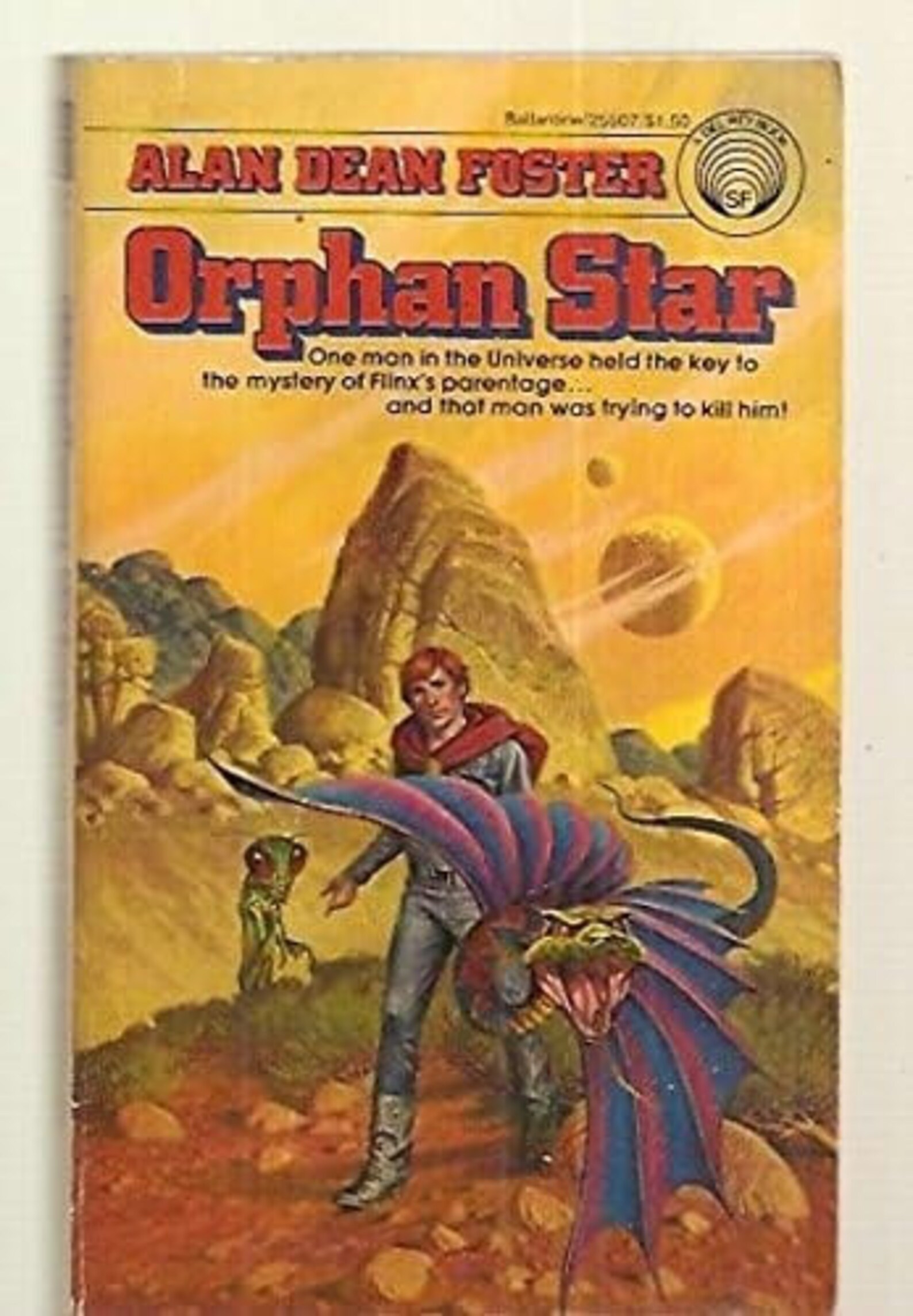
Alan Dean Foster is a seminal figure in science fiction, renowned for his meticulous ecological worldbuilding and his ability to expand cinematic universes through high-fidelity novelizations. His work, spanning over five decades, prioritizes biologically plausible environments and intricate interstellar sociopolitical structures, most notably within the Humanx Commonwealth universe, cementing his legacy as a premier architect of the imagination.
As of 2026, the legacy of Alan Dean Foster (ADF) remains a cornerstone for aspiring speculative fiction writers and seasoned fans alike. While many authors focus on the "hard" sciences of physics and engineering, Foster carved out a unique niche by mastering "soft" yet equally rigorous sciences: ecology, biology, and sociology. His ability to construct a planet that feels like a living, breathing organism—where every plant, animal, and weather pattern serves a functional purpose—distinguishes him from his contemporaries. Whether he is creating an original universe or fleshing out the skeletal remains of a film script, Foster’s approach to worldbuilding is characterized by a deep-seated respect for the logic of nature.
The Architecture of the Humanx Commonwealth
The Humanx Commonwealth serves as the primary canvas for Foster’s original worldbuilding. Unlike many science fiction settings that depict humanity as an isolated or dominant force, the Commonwealth is built on a foundational partnership between humans and the Thranx—a highly intelligent, insectoid species. This symbiotic relationship is not merely a plot point; it is a structural element of the world’s history and culture.
Foster’s imagination shines in how he handles the "alienness" of the Thranx. They are not humans in rubber suits; they have distinct biological needs, social hierarchies based on hive structures, and a philosophy born of their evolutionary history. By placing humans and Thranx in a cooperative union, Foster explores themes of diplomacy, shared ethics, and the overcoming of xenophobia. The "Amalgamation" (the process of the two species joining) provides a rich historical backdrop for dozens of novels, including the Pip & Flinx series and the Founding of the Commonwealth trilogy.
The technical depth of the Commonwealth lies in its diversity. Foster avoids the "Planet of the Hats" trope—where an entire world has one climate or one cultural trait. Instead, he populates his galaxy with worlds like Moth, a planet with a vertical ecology that dictates the socioeconomic status of its inhabitants, and Alaspin, where the evolution of "mini-dragons" (empathic silkmates) provides a biological basis for unique psychic phenomena.
Ecological Mastery in "Midworld"
If one were to point to a single work that encapsulates Alan Dean Foster’s mastery of worldbuilding, it would be Midworld (1975). Often cited as a precursor to modern ecological epics, Midworld presents a planet-wide rainforest of such complexity that it functions as a single, sentient entity.
In Midworld, the environment is not a backdrop; it is the antagonist, the protagonist, and the setting all at once. Foster describes seven distinct layers of the forest, from the sun-scorched upper canopy to the lightless, fungal depths of the forest floor. He applies biological principles to explain how the native humans have adapted: they live in a state of primitive symbiosis with the trees, utilizing "furred" plants for communication and navigating the vertical landscape with prehensile-like agility.
The technical brilliance of Midworld is found in the "Home Tree" concept. Foster explains the nutrient cycles, the defensive mechanisms of the flora, and the predatory logic of the fauna. When industrial humans arrive to exploit the planet, the conflict is not just between people, but between a mechanical, extractive philosophy and a biological, integrated one. The depth of detail Foster provides makes the planet feel tangible, influencing a generation of creators—including, as many critics have noted, the conceptual design of James Cameron’s Avatar.
The Art of the Cinematic Novelization
Alan Dean Foster is perhaps the most famous practitioner of the "movie tie-in," but to call his novelizations mere transcriptions would be a disservice to his craft. He is the invisible hand behind some of the most influential expanded universes in history. When George Lucas needed the script for Star Wars (1977) turned into a book, it was Foster who ghostwrote it, adding layers of internal monologue and world descriptions that were absent from the screen.
Foster’s approach to novelizations involves a process of "backwards worldbuilding." He takes the visual cues provided by a film and works backward to find the scientific or sociological justification for them.
- Alien (1979): Foster expanded on the nature of the "Space Jockey" and the lifecycle of the Xenomorph, providing a sense of cosmic dread that the film's budget couldn't fully visualize at the time.
- The Thing (1982): His novelization is considered a masterpiece of psychological horror, detailing the internal struggle of the organism as it mimics human biology.
- Star Trek: Through the Star Trek Log series, he adapted the animated series episodes, adding significant scientific detail to the planetary encounters.
In these works, Foster acts as a bridge between the visual spectacle of Hollywood and the intellectual depth of literature. He fills the "dead space" of a script with sensory details—the smell of a starship's recycled air, the gravitational pull of a moonside colony, and the complex linguistics of a non-human threat.
Comparing Key Worldbuilding Elements in Foster’s Bibliography
The following table compares the structural components of Foster's most famous settings to illustrate his range and technical focus.
| Setting/World | Primary Scientific Focus | Key Inhabitant Species | Core Conflict/Theme |
|---|---|---|---|
| The Commonwealth | Sociology & Diplomacy | Human, Thranx, Aann | Cross-species cooperation vs. expansionist war. |
| Midworld | Deep Ecology | Human (primitive), Furcots | Symbiosis vs. industrial exploitation. |
| Icerigger (Tranquility) | Climatology & Glaciology | Tran (feline-like) | Survival in extreme sub-zero conditions. |
| Spellsinger World | Ethnomusicology (Fantasy) | Anthropomorphic Animals | The power of language and music as a physical force. |
| Cachalot | Marine Biology | Cetaceans (Whales), Humans | Ocean-based resource management and communication. |
The "Pip & Flinx" Saga: Personalizing the Universe
While Foster is a master of large-scale systems, the Pip & Flinx novels demonstrate his ability to build a world around a specific character's journey. Flinx, a genetically engineered empath, and his companion Pip, a venomous flying empathic minidragon, serve as the reader's guide to the Commonwealth.
Through Flinx’s travels, Foster introduces the "Great Evil"—a looming, cosmic threat that predates the current civilizations. This adds a layer of "Xeno-archeology" to his worldbuilding. Foster frequently uses Flinx to explore abandoned alien ruins, such as those of the Tar-Aiym. These sequences are masterclasses in atmospheric writing, where the architecture itself tells a story of a lost culture's rise and fall. By grounding the vastness of the Commonwealth in the personal struggles of an outcast like Flinx, Foster makes the high-concept science fiction accessible and emotionally resonant.
Logical Consistency and Biological Realism
One of the reasons Foster’s imagination remains respected in 2026 is his adherence to logical consistency. He avoids "hand-waving" away problems with magic-like technology. If a planet has a high-gravity environment, the inhabitants have dense bone structures and low centers of gravity. If a species communicates through pheromones, their social etiquette revolves around scent.
This commitment to realism extends to his portrayal of technology. In the Icerigger series, humans stranded on the frozen world of Tranquility must adapt their technology to work in temperatures that freeze standard lubricants. The "Sleds" they build are detailed with an engineer’s eye for material science. Foster understands that for a world to feel real, the limitations of its environment must dictate the lifestyle of its people. This "environment-first" philosophy is the hallmark of his imagination.
Frequently Asked Questions
What is the Humanx Commonwealth?
The Humanx Commonwealth is Alan Dean Foster's primary original science fiction setting. It is a peaceful interstellar union between humans and the Thranx, a highly intelligent, insect-like species. The series explores their joint exploration of the galaxy and their conflicts with other species like the reptilian Aann. It is unique for its focus on a successful, long-term symbiotic relationship between two vastly different biological lifeforms.
Did Alan Dean Foster write the first Star Wars book?
Yes, Alan Dean Foster ghostwrote the novelization of the original 1977 Star Wars: A New Hope (originally titled Star Wars: From the Adventures of Luke Skywalker). Although George Lucas was credited on the cover, Foster wrote the text based on the screenplay and production notes. He also wrote the first-ever expanded universe novel, Splinter of the Mind's Eye, which was intended as a low-budget sequel if the first film had not been a massive success.
Why is Midworld considered an influential sci-fi book?
Midworld is considered influential because of its incredibly dense and scientifically grounded ecological worldbuilding. It was one of the first major science fiction novels to treat a planet’s biosphere as a complex, interconnected system rather than just a setting for action. Its themes of environmental protection and the dangers of corporate exploitation preceded the mainstream "green" movement in sci-fi.
How many books has Alan Dean Foster written?
As of his long career extending into the 2020s, Alan Dean Foster has authored over 120 books. This includes his original series (Humanx Commonwealth, Spellsinger, The Damned Trilogy), standalone novels, and dozens of high-profile novelizations for franchises like Alien, Transformers, Terminator, and Star Wars.
What is the best starting point for Alan Dean Foster’s work?
For readers interested in his original worldbuilding, The Tar-Aiym Krang is the best entry point for the Humanx Commonwealth. For those who want to see his ecological imagination at its peak, the standalone novel Midworld is highly recommended. If you prefer fantasy with a unique twist, the Spellsinger series offers a blend of humor, music, and imaginative world-crafting.
Strategic Reading Recommendations for New Audiences
To fully appreciate Alan Dean Foster’s contribution to the genre, readers should approach his bibliography through the lens of "Thematic Exploration." Rather than reading chronologically, it is often more rewarding to select a specific scientific interest and see how Foster tackles it.
- For the Ecology Enthusiast: Start with Midworld and Cachalot. These novels focus on the fragility and power of non-human ecosystems.
- For the Space Opera Fan: Begin with The Tar-Aiym Krang and follow the adventures of Flinx. This provides a grand tour of the Commonwealth’s various alien cultures.
- For the Hard Sci-Fi Reader: Look into Icerigger. The struggle to survive on a world of perpetual ice provides a rigorous look at how environment dictates technology.
- For the Media Historian: Read the novelizations of Alien and The Thing. Comparing these to the films reveals how Foster uses prose to expand on the limited visual information of a movie set.
By engaging with these texts, one gains an understanding of why Alan Dean Foster is regarded as a "Master of Imagination." His work reminds us that the greatest alien worlds are not just places where things happen, but are themselves living participants in the story.