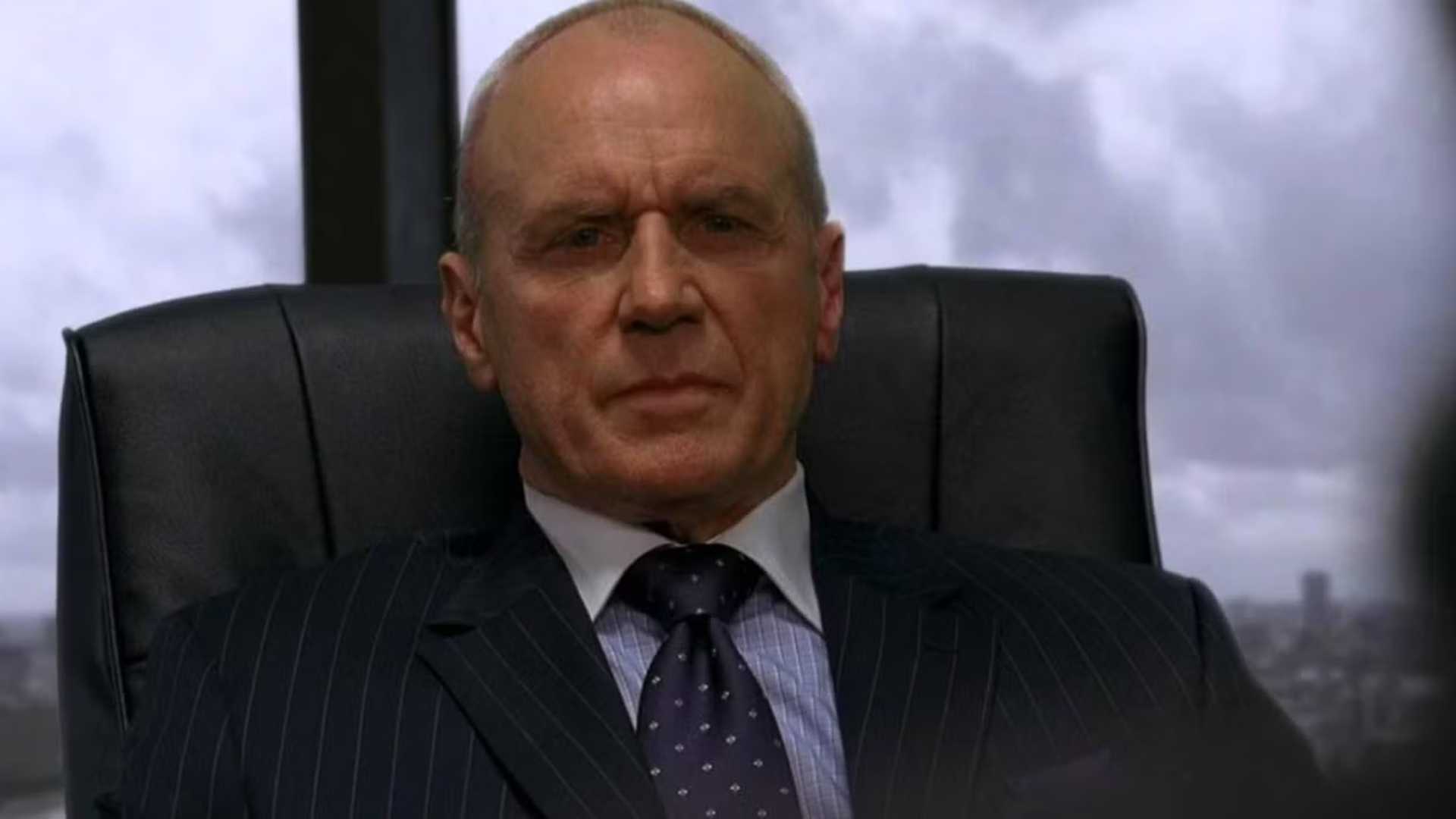
Alan Dale is a prolific New Zealand-born actor best known for his long-running role as Jim Robinson in the Australian soap opera Neighbours and his subsequent transformation into a premier Hollywood character actor. Specializing in authoritative, wealthy, and often antagonistic figures, Dale has appeared in major television staples including The O.C., Lost, 24, and the Dynasty reboot.
The Foundation: New Zealand Beginnings and the Australian Soap Era
Alan Dale’s journey into the performing arts did not follow the traditional trajectory of a child prodigy. Born in Dunedin, New Zealand, in 1947, Dale’s early interests were primarily athletic, specifically in rugby. It wasn't until his late twenties that he turned toward professional acting, a move that would eventually lead him to become one of the most recognizable faces in the Southern Hemisphere.
His first major break came in 1979 with the Australian soap opera The Young Doctors, but it was his casting in 1985 as Jim Robinson in Neighbours that cemented his status as a household name. For eight years, Dale portrayed the moral center of Ramsay Street, appearing in over 1,000 episodes. Jim Robinson was the quintessential "good father," a role that demanded a steady, relatable presence. However, despite the show’s massive success in both Australia and the United Kingdom, Dale’s departure in 1993 was marked by a public dispute over pay and working conditions.
Leaving Neighbours was a significant risk; in the early 1990s, Australian "soapies" were often dismissed by the global acting elite, and Dale found himself typecast. For several years, he struggled to find work that moved beyond the shadow of Jim Robinson, eventually realizing that to reinvent himself, he would have to leave Australia behind entirely.
The Great Hollywood Gamble: Relocating at Fifty-Two
In 1999, at the age of 52—an age when many actors see their opportunities begin to dwindle—Alan Dale relocated his family to Los Angeles. This move is often cited by industry analysts as one of the most successful "second acts" in television history. Dale’s strategy was focused: he aimed to shed his "nice guy" Australian image and leverage his natural gravitas to fill a niche in American casting—the powerful, silver-haired authority figure.
The transition was not immediate. Dale initially faced the "Catch-22" of the American industry: he was a veteran with thousands of hours of screen time, but he had no American credits. He spent his early months in LA taking acting classes to refine his American accent and auditioning for bit parts. His breakthrough came when he was cast in a minor role in The X-Files, which led to a series of guest spots in ER and The West Wing.
By 2002, Dale had successfully rebranded. He was no longer the kindly father from Neighbours; he was a versatile character actor capable of projecting cold, calculated power. This period of his career serves as a case study for actors on the importance of market positioning and the willingness to start over regardless of prior status.
The Quintessential Authority Figure: Defining the "Alan Dale" Archetype
Alan Dale’s success in the United States was built on his ability to portray characters who inhabited the highest echelons of social and political power. Producers sought him out for roles that required an immediate sense of intimidation or unearned respect.
The O.C. and the Rise of Caleb Nichol
In 2003, Dale was cast as Caleb Nichol in the hit teen drama The O.C.. Caleb was a ruthless real estate tycoon and the patriarch of the wealthy Nichol/Cooper family. Dale’s performance added a layer of Shakespearean gravity to a show that might otherwise have been dismissed as a superficial teen soap. He played Caleb as a man who viewed his family as assets to be managed, providing a perfect foil to the more empathetic characters. This role effectively killed the ghost of Jim Robinson, replacing it with a new archetype: the wealthy, manipulative "bad father."
Lost and the Enigma of Charles Widmore
While appearing in The O.C., Dale also joined the cast of Lost as Charles Widmore. As the primary antagonist for much of the series' middle seasons, Widmore was a character of immense resources and questionable ethics. Dale’s portrayal was nuanced; he managed to convey that Widmore believed his actions—however brutal—were for the greater good of the Island. His performance in Lost is perhaps his most internationally recognized, showcasing his ability to handle complex, genre-bending narratives.
24 and Political Gravitas
In the high-stakes world of 24, Dale portrayed Vice President Jim Prescott (and later the Acting President). This role required a different kind of authority—one bound by the bureaucracy and high-tension ethics of national security. Dale’s ability to stand toe-to-toe with Kiefer Sutherland’s Jack Bauer demonstrated his range within the "authority" niche, proving he could play characters who were morally ambiguous but fundamentally driven by duty.
Critical Success and the "Alan Dale Effect" in Peak TV
During the 2000s and early 2010s, Alan Dale became a "good luck charm" for television networks. If a show needed a high-status character to raise the stakes, Dale was often the first name on the casting list. This phenomenon, colloquially known among fans as the "Alan Dale Effect," saw him appearing in a staggering number of critical and commercial hits during the "Golden Age of Television."
| Show Title | Role | Character Archetype | Notable Contribution |
|---|---|---|---|
| Neighbours | Jim Robinson | The Moral Patriarch | Anchored the show's most successful era (1985–1993). |
| The O.C. | Caleb Nichol | The Ruthless Tycoon | Provided the central antagonistic force for the first two seasons. |
| Lost | Charles Widmore | The Industrialist Antagonist | Provided the bridge between the island's history and the outside world. |
| 24 | Jim Prescott | The Political Opportunist | Explored the complexities of the 25th Amendment and executive power. |
| Ugly Betty | Bradford Meade | The Media Mogul | Grounded the show’s comedic elements with corporate drama. |
| Once Upon a Time | King George | The Cruel Monarch | Portrayed a fairy-tale villain with grounded, menacing realism. |
| Dynasty | Joseph Anders | The Loyal Majordomo | Reimagined a classic role with wit and hidden depth. |
His work in Ugly Betty as Bradford Meade further cemented this. Playing the owner of a massive publishing empire, Dale balanced the character’s cold exterior with a burgeoning sense of regret over his family life. This ability to find the humanity within "villainous" archetypes is what separated Dale from more one-dimensional character actors.
The Dynasty Era and Later Career Milestones
In 2017, Dale took on a role that would occupy much of his later career: Joseph Anders in the CW's reboot of Dynasty. Unlike many of his previous roles where he was the man at the top of the pyramid, as Anders, he was the butler and "fixer" for the Carrington family.
This role allowed Dale to display a dry, caustic wit that had been absent from his more somber roles in Lost or 24. Anders was the moral compass of the show, much like Jim Robinson had been decades earlier, but with the added experience and cynicism of a man who had seen everything. Dale stayed with the series until 2021, and his character's departure was one of the most emotionally resonant moments for the show’s fanbase.
By the early 2020s, Dale began to take a step back from the grueling schedule of series regular work. However, his influence remained palpable. He made a memorable return to Neighbours in 2018 (appearing in a dream sequence/hallucination) and has continued to lend his voice and presence to various projects. As of 2026, Dale is regarded as an elder statesman of the industry, particularly respected by the "Australian invasion" of actors who followed the path he helped blaze into Hollywood.
The Technical Craft: Voice, Presence, and Professionalism
What makes an Alan Dale performance distinctive? From a technical standpoint, his craft is built on three pillars: vocal control, physical stillness, and preparation.
- Vocal Presence: Dale possesses a deep, resonant voice that he modulates to project authority. In his American roles, he utilizes a "Transatlantic" or "Standard American" accent that feels grounded in old money or high-level education. He rarely raises his voice; instead, he uses precision and clarity to command a room, a technique often taught in classical theater.
- Physicality and Stillness: Unlike many contemporary actors who use kinetic energy or constant movement, Dale is a master of stillness. He often occupies the center of a frame and allows other characters to react to him. This physical "weight" is essential for playing billionaires or monarchs; it suggests a man who does not need to move because the world moves around him.
- The "Working Actor" Ethic: Despite his fame, Dale has always identified as a working actor. He is known within the industry for his punctuality, lack of ego, and deep preparation. This professionalism is what allowed him to maintain a steady stream of work across different networks and genres for over fifty years. He famously stated that he moved to the US because "the work was better and the people were more professional," and he embodied that standard throughout his tenure in LA.
Legacy and Influence on International Acting Transitions
Alan Dale’s legacy is twofold. First, he is one of the most prolific character actors of the digital television age, leaving behind a body of work that spans the most influential shows of the early 21st century. Second, he serves as a beacon for international actors seeking to "break" America.
Before Dale, the transition from an Australian or New Zealand soap to Hollywood was seen as nearly impossible. He proved that with the right rebranding, technical skill, and persistence, an actor could not only survive in Hollywood but thrive well into their senior years. He paved the way for actors like Guy Pearce, Margot Robbie, and the Hemsworth brothers, although his path was arguably harder due to his age at the time of transition.
As we look at his career from the perspective of 2026, Alan Dale remains a symbol of the global nature of modern entertainment. He is an actor who belonged to three different cultures—New Zealand, Australia, and the United States—and succeeded in all of them by mastering the universal language of power and presence on screen.
Frequently Asked Questions
Is Alan Dale still acting in 2026?
While Alan Dale has reduced his workload significantly by 2026, he has not officially retired. He occasionally takes on guest roles or voice work, primarily focusing on projects that offer unique character challenges or allow him to work with long-time colleagues. He spends much of his time in Los Angeles and Australia, remaining an active member of the acting community.
Why did Alan Dale leave Neighbours?
Alan Dale left Neighbours in 1993 after a long-standing dispute with the production company, Grundy Television, over pay and residuals. Dale was vocal about the fact that despite the show's massive global success, the actors were not being compensated fairly compared to their counterparts in the UK or US. His character, Jim Robinson, was killed off via a heart attack, which Dale initially felt was a way to prevent his return, though he eventually reprised the role in a 2018 cameo.
How did Alan Dale lose his New Zealand/Australian accent for US roles?
Dale worked extensively with dialect coaches upon arriving in Los Angeles in 1999. Because he was often cast as high-status Americans, he mastered a non-regional "General American" accent. However, his natural accent occasionally peeks through in his lower register, which many casting directors actually found appealing as it added an "international" or "unplaceable" quality to his wealthy characters.
What is Alan Dale’s most famous role?
For older audiences in the UK and Australia, he remains synonymous with Jim Robinson from Neighbours. However, for the global audience that grew up with 2000s television, his role as Charles Widmore in Lost or Caleb Nichol in The O.C. is considered his most iconic. His performance as the butler Anders in the Dynasty reboot also earned him a new generation of fans.
Did Alan Dale ever play a protagonist in Hollywood?
Dale is primarily known as a "character actor," meaning he usually plays supporting roles rather than the main lead. In Hollywood, he specialized in the "antagonistic mentor" or the "powerful foil." While he was rarely the protagonist, his characters were often the catalysts for the entire plot, such as Charles Widmore's influence over the events of Lost.
Final Recommendation for Fans and Students
For those interested in the craft of character acting, studying Alan Dale’s transition from the 1980s to the 2000s is highly recommended. To see his range, one should compare his early episodes in Neighbours with his mid-series arc in The O.C.. The difference in vocal placement, eye contact, and physical presence illustrates how an actor can completely redefine their "type" through technical discipline. Viewers looking for his most complete late-career performance should seek out the first four seasons of the Dynasty reboot, where he balances his trademark authority with unexpected warmth and comedic timing.