Alain Prost is a French former racing driver and four-time Formula One World Drivers' Champion whose precise driving style, analytical racecraft, and intense rivalries defined an era of motorsport from the early 1980s to the early 1990s. Earning the moniker "The Professor" for his cerebral approach to competition, Prost prioritized car preservation, tactical race strategies, and consistent point accumulation over raw, unfiltered speed, establishing a benchmark for championship-winning intelligence that influenced generations of engineers and drivers.
Early Life and Ascent Through European Motorsport
Born on February 24, 1955, in Lorette, Loire, France, Alain Prost did not follow the traditional karting trajectory of many modern racing drivers. He began his competitive journey relatively late, stepping into a kart for the first time at the age of fourteen while on a family holiday in Saint-Chamond. What began as a recreational pastime quickly evolved into an obsessive pursuit, prompting Prost to abandon his initial ambitions of becoming a professional footballer or a physical education instructor.
Prost's progression through the junior formulae was characterized by methodical domination and rapid adaptation. After securing several karting titles in France, he graduated to car racing in the French Formula Renault championship in 1976. He won the title on his first attempt, winning twelve of the thirteen races. He repeated this dominant form in the European Formula Three championship in 1979, claiming both the French and European titles. These performances caught the attention of several Formula One teams, leading directly to his debut in the premier class with the McLaren team at the 1980 Argentine Grand Prix, where he immediately scored a championship point by finishing sixth.
The McLaren Years and the First World Championships
Following an unsettled debut season with McLaren marred by car unreliability and physical injuries, Prost transferred to the factory Renault team for the 1981 season. Driving for the French manufacturer, he secured his maiden Grand Prix victory at home in Dijon during the 1981 French Grand Prix. Over the next three seasons, Prost established himself as a frontline contender, winning nine races and finishing as runner-up in the 1983 World Drivers' Championship. However, tension mounted between Prost and Renault management, leading to his dismissal at the end of 1984 following a breakdown in relations.
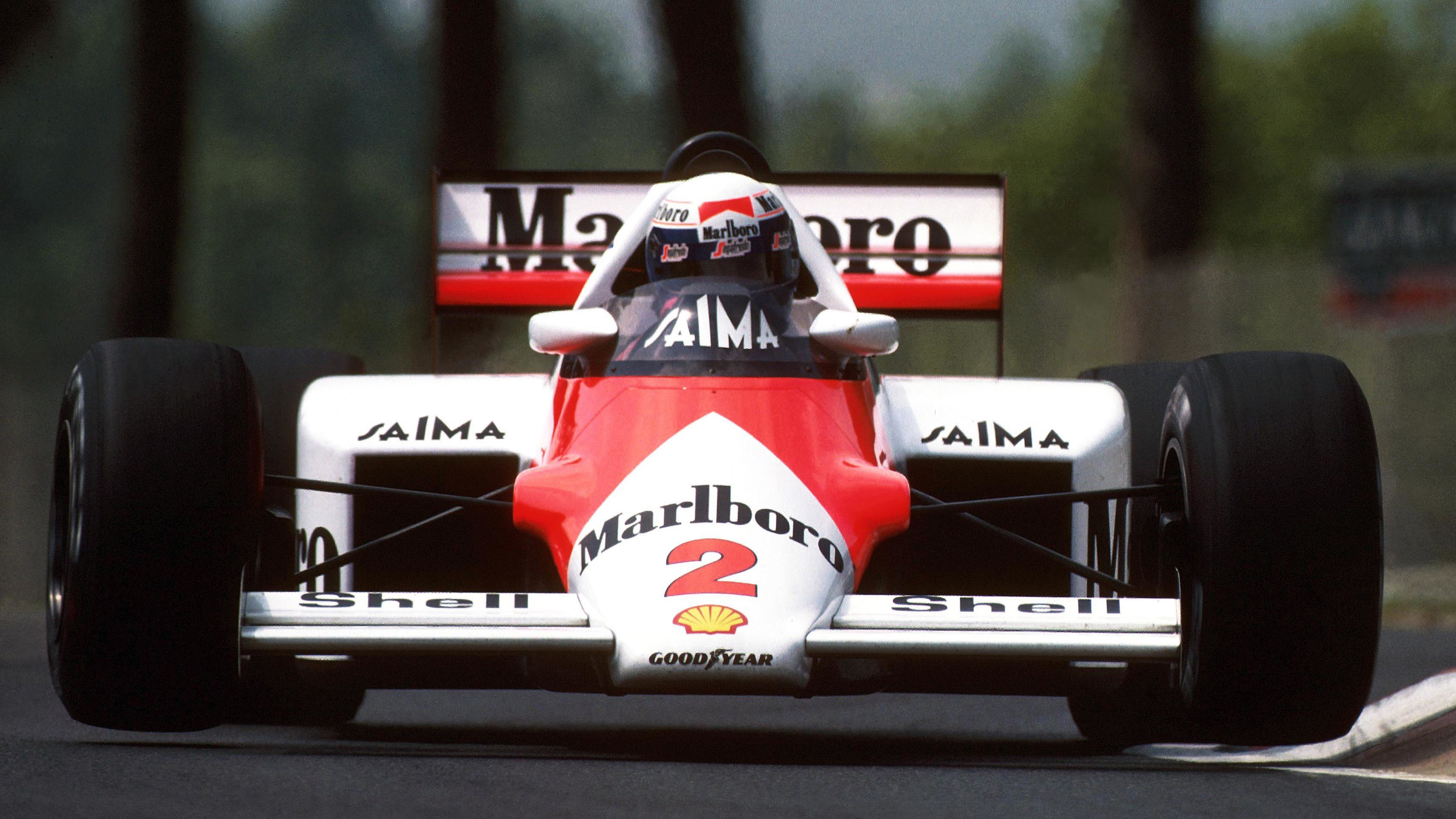
Prost returned to McLaren for the 1985 season, a partnership that yielded unprecedented success. Armed with the Porsche-built TAG turbo engines and chassis designed by John Barnard, Prost claimed his first World Drivers' Championship in 1985, becoming the first French driver to achieve the feat. He defended his title successfully in 1986 through a tense, multi-team battle against Williams drivers Nigel Mansell and Nelson Piquet, exploiting rivals' mechanical reliability issues with calculated consistency. By the time he left McLaren at the end of 1989, Prost had secured three world titles and broken Jackie Stewart’s long-standing record for the most Grand Prix victories, setting a new benchmark at 41 wins.
| Championship Year | Team | Chassis / Engine | Key Rival | Points / Margin |
|---|---|---|---|---|
| 1985 | McLaren | McLaren MP4/2B - TAG Porsche | Michele Alboreto | 73 points (20-point margin) |
| 1986 | McLaren | McLaren MP4/2C - TAG Porsche | Nigel Mansell | 72 points (2-point margin) |
| 1989 | McLaren | McLaren MP4/5 - Honda RA109E | Ayrton Senna | 76 points (16-point margin) |
| 1993 | Williams | Williams FW15C - Renault RS5 | Damon Hill | 99 points (26-point margin) |
The Epic Rivalry with Ayrton Senna
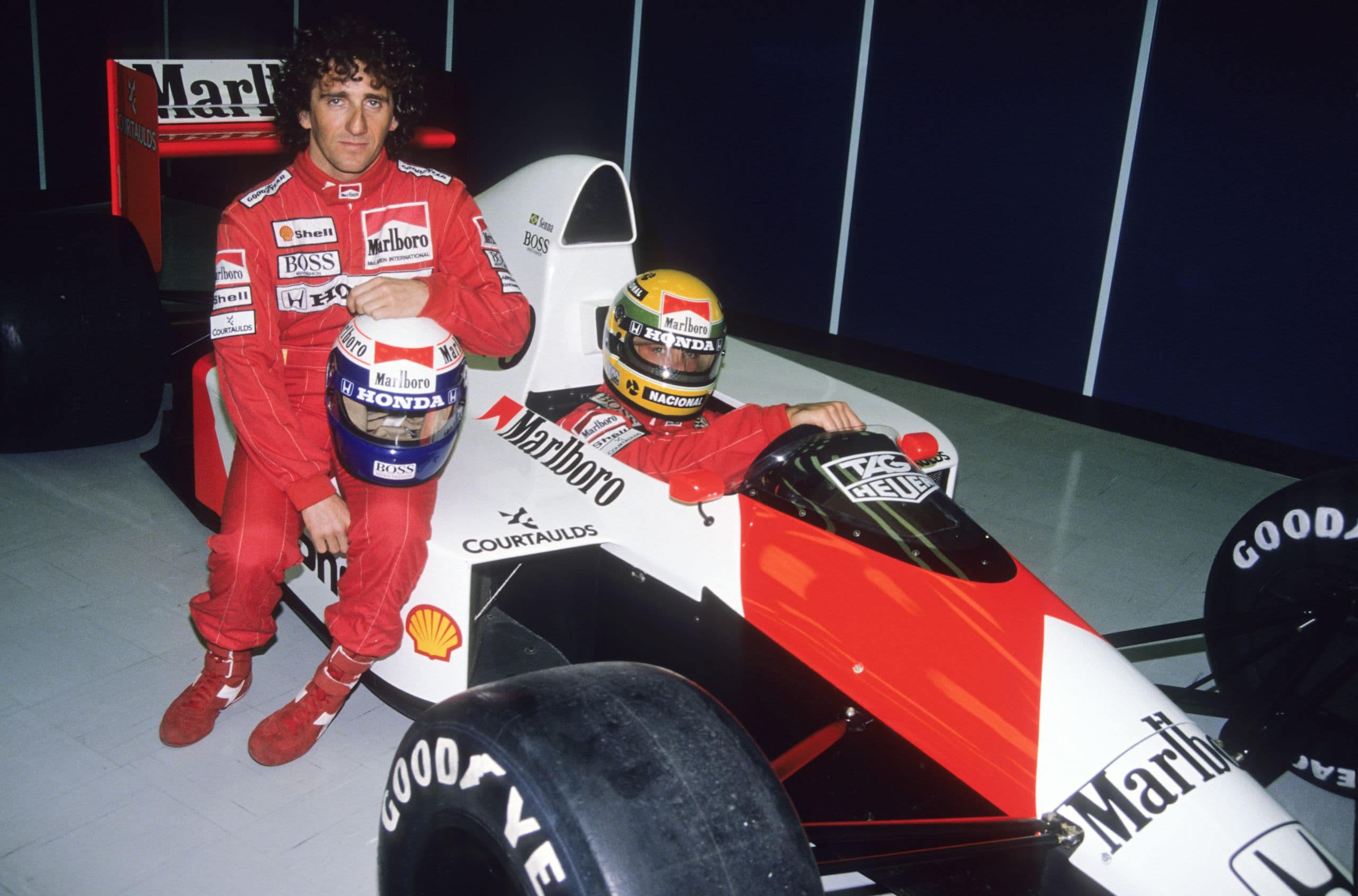
Prost’s tenure at McLaren reached its zenith and its most volatile phase when Ayrton Senna joined the team for the 1989 season. The pairing of Prost’s analytical, methodical racecraft against Senna’s ferocious, instinctive speed created one of the most compelling and combustible intra-team rivalries in sporting history. While Prost emphasized race setups that preserved tires and fuel over a full Grand Prix distance, Senna specialized in extracting maximum qualifying pace and intimidating opponents through relentless pressure.
The psychological warfare between the two drivers escalated throughout 1988, which Senna won, and boiled over at the 1989 San Marino Grand Prix regarding a pre-race agreement on corner sequencing. The rivalry culminated at the Japanese Grand Prix at Suzuka in 1989 and 1990. In 1989, a championship-deciding collision at the chicane between the two McLarens resulted in Prost retiring while Senna rejoined the track, crossed the finish line first, but was subsequently disqualified by race officials, handing the title to Prost. Seeking a change of environment to escape the toxic atmosphere within McLaren, Prost departed for Ferrari ahead of the 1990 season, setting the stage for a repeat confrontation at Suzuka in 1990, where Senna collided with Prost at the first corner to secure his own second world title.
The Ferrari Era and the Sabbatical
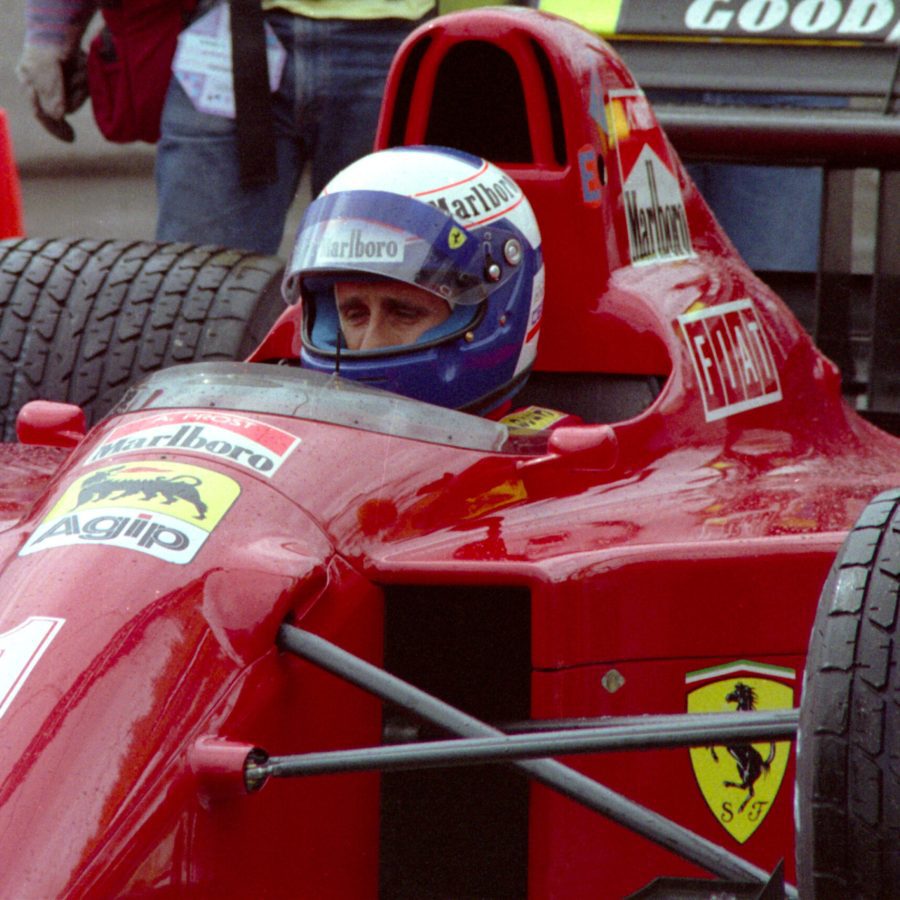
Prost’s arrival at Scuderia Ferrari in 1990 injected new life into the iconic Italian team. Dubbing the Ferrari 641 race car his favorite machine of his career, Prost won five races and took the championship fight down to the penultimate race of the season in Japan. Although the relationship with Ferrari started brightly, the technical competitiveness of the team deteriorated rapidly through 1991. The chassis became difficult to drive, and the V12 engine lagged behind Honda's power units.
Frustrated by the team's lack of development and public criticisms of the machinery—famously describing the Ferrari F91 as a truck—Prost was fired by Ferrari management before the final race of the 1991 season. This abrupt dismissal led to a one-year sabbatical in 1992, during which Prost evaluated his options while remaining a prominent analyst and figure in motorsport. Rather than retiring permanently, he utilized the time to negotiate a contract with Williams, the team possessing the technological supremacy required to capture a fourth title.
The Final Triumph and Retirement
Returning to Formula One in 1993 with Williams-Renault, Prost stepped into the most technically advanced car on the grid, featuring active suspension, traction control, and semi-automatic gearboxes. Despite facing a stern challenge from teammate Damon Hill and lingering hostility from the paddock regarding contract clauses that allegedly prohibited Senna from joining him at Williams, Prost dominated the season. He secured seven victories and claimed his fourth and final World Drivers' Championship with races to spare.
Rather than defending his crown in 1994 with the regulation changes that banned driver aids, Prost announced his permanent retirement from Formula One at the end of the 1993 season, finishing his career with 51 victories, 106 podiums, and four world titles. His retirement closed the chapter on an era defined by high-horsepower turbo engines, sophisticated electronic driver aids, and immense driver endurance.
Post-Driving Career, Team Ownership, and Legacy
Following his retirement from active competition, Prost remained closely tied to the sport in various executive and advisory capacities. He served as a technical advisor and test driver for McLaren through the mid-1990s before embarking on a team ownership venture. In 1997, Prost purchased the ailing Ligier Formula One team, rebranding it as Prost Grand Prix. Operating from France with engine supply partnerships ranging from Mugen-Honda to Peugeot, the team struggled against the financial dominance of manufacturer-backed outfits. Plagued by budget deficits and uncompetitive machinery, Prost Grand Prix folded in early 2002, marking a difficult chapter in his professional ledger.
In subsequent years, Prost returned to advisory roles, notably serving as a special advisor and non-executive director for the Renault Formula One team (later rebranded as Alpine) from 2017 to 2021. Beyond Formula One, he embraced the burgeoning electric motorsport movement, competing in the Andros Trophy ice-racing series—where he secured multiple championships—and co-founding the e.dams team in the FIA Formula E Championship, winning multiple team titles.
Prost’s legacy extends far beyond statistical records. While drivers like Michael Schumacher and Lewis Hamilton eventually surpassed his victory and championship counts, Prost’s tactical intelligence transformed how engineers and drivers analyzed race preparation. By proving that championships were won through consistency, mechanical sympathy, and strategic points management rather than sheer speed alone, Alain Prost permanently altered the strategic playbook of elite motorsport.
Frequently Asked Questions
What was Alain Prost's nickname and why was he called that?
Alain Prost was nicknamed "The Professor." This moniker was given to him by the media and contemporaries due to his analytical, cerebral approach to racing. Rather than driving on raw, unsustainable speed, Prost carefully managed his tires, fuel consumption, and car setup over a race distance, treating Grand Prix racing as a strategic chess match.
How many Formula One World Championships did Alain Prost win?
Alain Prost won four Formula One World Drivers' Championships. He secured titles in 1985, 1986, and 1989 while driving for McLaren, and claimed his fourth and final championship in 1993 while driving for Williams.
What caused the intense rivalry between Alain Prost and Ayrton Senna?
The rivalry stemmed from a combination of fierce clashing personalities, contrasting driving philosophies, and intra-team competition at McLaren between 1988 and 1989. Prost relied on tactical consistency and political acumen within the team, while Senna relied on absolute speed and uncompromising aggression. The rivalry reached its boiling point with controversial championship-deciding collisions at the Japanese Grands Prix in 1989 and 1990.
Why did Alain Prost retire from Formula One at the end of 1993?
Prost retired at the end of 1993 primarily because he had achieved his goal of winning a fourth world title with Williams and had secured a contractual guarantee that prevented Ayrton Senna from joining him as a teammate. Unwilling to continue dealing with the intense political friction and facing sweeping technical regulation changes for 1994 that banned electronic driver aids, he chose to walk away on top.
Did Alain Prost ever own his own Formula One team?
Yes. In 1997, Prost purchased the French Ligier Formula One team and renamed it Prost Grand Prix. The team competed in the world championship from 1997 until it collapsed due to severe financial difficulties and bankruptcy in early 2002.