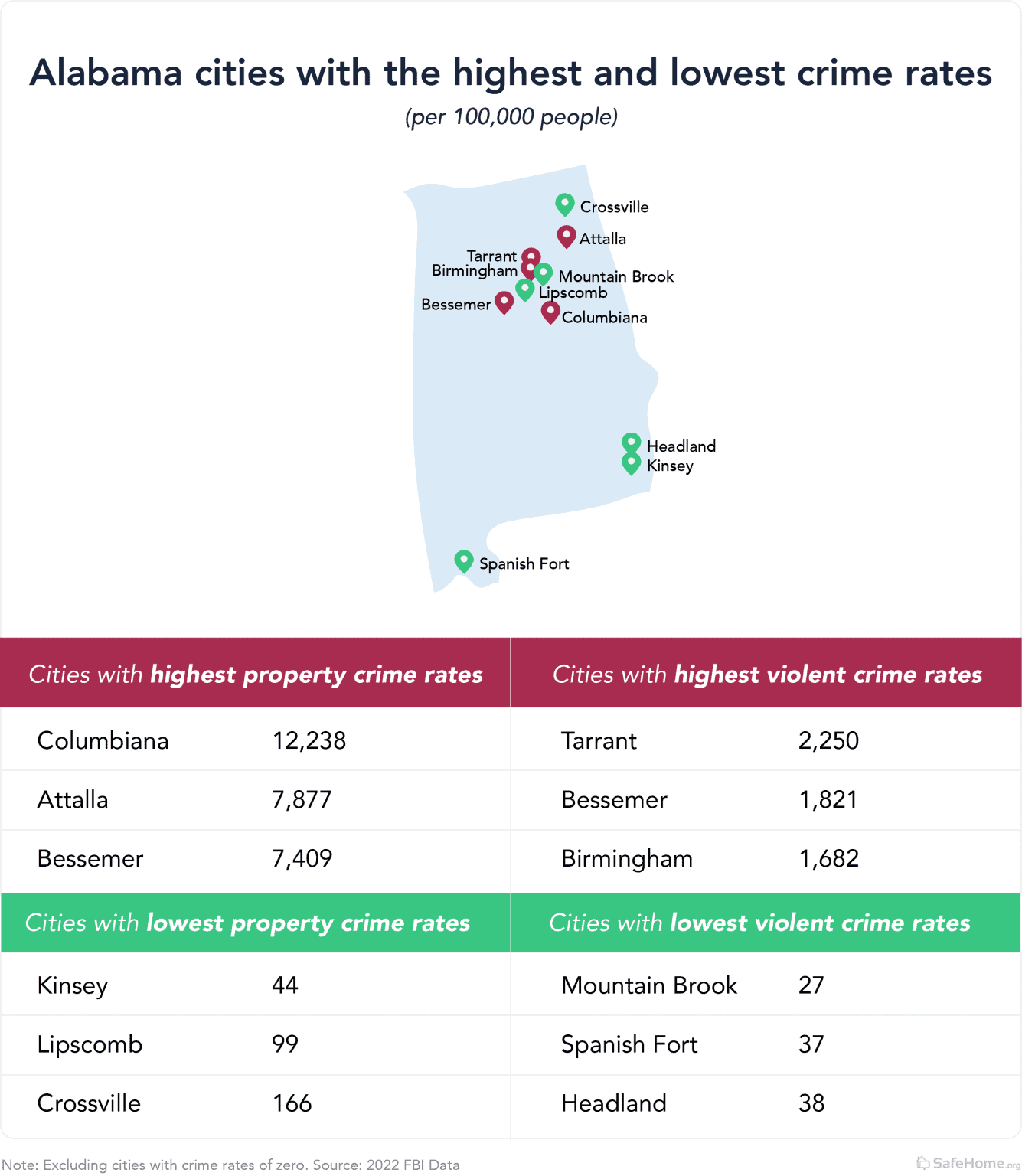
Alabama crimes encompass a wide spectrum of offenses categorized under state law, ranging from violent offenses such as homicide and assault to property crimes like larceny, burglary, and motor vehicle theft. Understanding how these offenses are tracked, classified, and prosecuted requires examining official state data repositories, statutory definitions provided by the Alabama Criminal Code, and the reporting methodologies utilized by local and federal law enforcement agencies.
The Structure of the Alabama Criminal Code
The legal framework governing Alabama crimes is codified within Title 13A of the Alabama Code. This comprehensive set of statutes defines what constitutes a criminal offense, establishes the classification of crimes, and outlines the corresponding sentencing guidelines upon conviction. Unlike common law jurisdictions that rely heavily on judicial precedent, Alabama operates under a thoroughly codified system where every criminal offense must be explicitly authorized and defined by the state legislature.
Offenses within the Alabama Criminal Code are divided primarily into felonies and misdemeanors. Felonies represent the most serious class of crimes and are further subdivided into Classes A, B, and C, alongside capital felonies which carry the potential sentence of death or life imprisonment without parole. Class A felonies include severe crimes such as kidnapping in the first degree or robbery in the first degree, carrying prison terms ranging from 10 to 99 years or life. Conversely, misdemeanors are lesser offenses divided into Class A, B, and C categories, generally adjudicated in municipal or district courts with maximum jail sentences not exceeding one year in a county jail.
| Offense Classification | Maximum Imprisonment | Fine Range (Statutory Maximum) | Typical Adjudication Venue |
|---|---|---|---|
| Capital Felony | Death or Life Without Parole | Up to $15,000 | Circuit Court |
| Class A Felony | 10 to 99 Years or Life | Up to $60,000 | Circuit Court |
| Class B Felony | 2 to 20 Years | Up to $30,000 | Circuit Court |
| Class C Felony | 1 to 10 Years | Up to $15,000 | Circuit Court |
| Class A Misdemeanor | Not More Than 1 Year | Up to $6,000 | Municipal or District Court |
| Class B Misdemeanor | Not More Than 6 Months | Up to $3,000 | Municipal or District Court |
| Class C Misdemeanor | Not More Than 3 Months | Up to $500 | Municipal or District Court |
Beyond basic classifications, the Alabama Criminal Code details specific elements that prosecutors must prove beyond a reasonable doubt to secure a conviction. These elements typically involve the culpable mental state—such as intentionally, knowingly, recklessly, or with criminal negligence—coupled with the prohibited physical act or omission. Comprehending these statutory definitions is essential for legal practitioners, researchers, and citizens seeking to understand how law enforcement agencies categorize specific incidents.
Crime Data Collection and Reporting Systems
Measuring the incidence and prevalence of Alabama crimes relies on structured reporting mechanisms managed by state and federal entities. Historically, law enforcement agencies across the state reported statistics through the Uniform Crime Reporting (UCR) Program overseen by the Federal Bureau of Investigation (FBI). This system tracked offenses using the "Hierarchy Rule," which meant that in a multiple-offense incident, only the most serious crime was counted in annual statistical reports.
To provide a more granular and accurate depiction of criminal activity, Alabama law enforcement agencies have transitioned toward the National Incident-Based Reporting System (NIBRS). Managed at the state level by agencies such as the Alabama Law Enforcement Agency (ALEA), NIBRS captures detailed data on each single crime occurrence. This includes information on victims, offenders, property involved, and the relationships between parties.
| Reporting System | Data Granularity | Offense Tracking Method | Inclusion of Contextual Data |
|---|---|---|---|
| Summary UCR | Aggregate monthly totals | Hierarchy Rule (counts highest offense) | Limited demographic and contextual metrics |
| NIBRS | Incident-by-incident records | Multiple offenses captured per incident | Detailed victim, offender, and relationship data |
The shift to NIBRS allows criminologists and policymakers to evaluate Alabama crimes with greater precision. Rather than knowing only that a robbery occurred, researchers can examine whether a firearm was present, the time of day the offense took place, and demographic overlaps between the victim and the accused. These data points are published periodically through state statistical analysis centers and federal databases, offering transparency into public safety trends across metropolitan and rural jurisdictions.
Violent Versus Property Offenses in Alabama
When analyzing crime statistics in Alabama, analysts typically divide offenses into two broad categories: violent crimes and property crimes. Violent crimes involve force or the threat of force against a person, encompassing criminal homicide, rape, robbery, and aggravated assault. Property crimes, on the other hand, involve the taking or destruction of property without the use of direct force against a victim, including burglary, larceny-theft, motor vehicle theft, and arson.
Property crimes traditionally account for the vast majority of offenses reported to law enforcement agencies throughout the state. Larceny-theft, which includes shoplifting, pocket-picking, purse-snatching, and thefts from motor vehicles, frequently represents the highest volume of reported criminal activity. Factors influencing property crime rates often correlate with economic conditions, substance abuse prevalence, and localized property security measures.
Violent crimes, while occurring at lower frequencies than property crimes, receive significant public and institutional attention due to their severe impact on community safety. The Alabama Criminal Code imposes stringent mandatory minimum sentences for violent offenses, particularly those involving the use of firearms or resulting in serious physical injury. Habitual felony offender statutes further increase penalties for individuals with prior convictions, reflecting the state's legislative approach to deterrence and incapacitation.
The Role of Law Enforcement and Prosecution Agencies
Addressing Alabama crimes involves a coordinated network of municipal police departments, county sheriff's offices, and state-level agencies such as the Alabama Law Enforcement Agency. Municipal police forces maintain jurisdiction within city limits, while county sheriffs manage law enforcement operations in unincorporated areas and operate county detention facilities. State troopers handle highway safety, commercial vehicle enforcement, and provide investigative assistance to local agencies upon request.
Once an offense is investigated and an arrest is made, the case transitions to the judicial branch. District attorneys represent the State of Alabama in prosecuting criminal offenses within designated judicial circuits. Prosecutors review evidence gathered by law enforcement to determine whether formal charges should be filed through an indictment by a grand jury or by a criminal information document, depending on the severity of the charge and constitutional requirements.
Defendants accused of Alabama crimes possess constitutionally guaranteed rights, including the right to counsel, the right to a speedy and public trial by an impartial jury, and the right to confront witnesses. Public defender offices or court-appointed private attorneys represent indigent defendants who cannot afford private legal counsel. The adjudication process may result in a plea agreement, a dismissal of charges, or a trial concluding in an acquittal or conviction, followed by sentencing proceedings overseen by a circuit or district court judge.
Frequently Asked Questions About Alabama Crimes
What is the difference between a felony and a misdemeanor in Alabama?
Felonies are severe crimes punishable by more than one year of incarceration in a state correctional facility, whereas misdemeanors are lesser offenses carrying maximum jail sentences of one year or less in a local county jail or municipal detention center. Felonies are further categorized into classes (Capital, A, B, and C) that dictate specific sentencing ranges and potential fines.
How are crime statistics tracked and published in Alabama?
Crime statistics are tracked by local law enforcement agencies using the National Incident-Based Reporting System (NIBRS). These local records are compiled and analyzed by state entities like the Alabama Law Enforcement Agency and reported to federal databases managed by the FBI to provide public transparency on crime trends.
What constitutes a violent crime under Alabama law?
Violent crimes in Alabama involve the use or threat of force against a person. Key examples defined in the Alabama Criminal Code include criminal homicide, rape, robbery, and aggravated assault. These offenses carry severe penalties, including extended prison terms and mandatory minimum sentences, particularly when firearms are involved.
Where can official crime data and statutory definitions be found?
Official statutory definitions are maintained within Title 13A of the Alabama Code, which is accessible through legislative publishing platforms. Statistical data and annual reports regarding reported offenses are available through the public information portals of the Alabama Law Enforcement Agency and federal crime reporting archives.
How does the habitual felony offender act impact sentencing in Alabama?
The Alabama Habitual Felony Offender Act imposes enhanced sentencing guidelines for individuals convicted of new felonies who possess prior felony convictions. Depending on the number and severity of prior convictions, judges are required to sentence offenders to longer terms of imprisonment, occasionally eliminating the possibility of parole.
Next Steps for Legal Research and Public Safety Awareness
For individuals, researchers, or legal professionals seeking to engage further with matters concerning Alabama crimes, consulting primary source documentation is essential. Reviewing the explicit provisions of Title 13A of the Alabama Code provides clarity on statutory elements and potential penalties, while examining reports published by the Alabama Law Enforcement Agency offers factual insight into current public safety metrics. When dealing with specific legal matters or criminal charges, consulting a qualified attorney licensed to practice law in the jurisdiction of Alabama remains the most prudent course of action to ensure accurate guidance tailored to individual circumstances.