Alabama boating law encompasses the statutory rules, registration procedures, and safety mandates overseen by the Alabama Law Enforcement Agency (ALEA) Marine Patrol Division. Designed to protect everyone on the water, these regulations cover everything from mandatory vessel registration and driver licensing requirements to required safety gear, reckless operation prohibitions, and accident reporting protocols. Compliance ensures safer waterways across the state's extensive lakes, rivers, and coastal regions.
Jurisdiction and Regulatory Authority on Alabama Waters
The enforcement of Alabama boating law primarily falls under the jurisdiction of the Alabama Law Enforcement Agency (ALEA) Marine Patrol Division, alongside federal partners such as the United States Coast Guard. ALEA officers maintain the authority to stop, board, and inspect any watercraft on state waters to ensure compliance with safety equipment mandates, registration validity, and operator sobriety. These regulations apply to all public waters within the state, which encompass thousands of miles of rivers, impounded reservoirs, and the coastal waters leading into the Gulf of Mexico.
Understanding the jurisdictional scope is vital for both resident and visiting boaters. While federal maritime laws apply concurrently on navigable waters of the United States—such as major interstate rivers and coastal zones—state statutes govern local licensing, specific age restrictions, and inland lake speed limits or wake zones. Failure to comply with an ALEA officer's signal to stop constitutes a misdemeanor under state law, underscoring the legal obligation of boaters to cooperate fully with law enforcement personnel during on-water inspections.
Vessel Registration and Titling Requirements
Under Alabama law, almost all motorized vessels and sailboats operated on public waters must be registered and numbered through the Alabama Law Enforcement Agency. Registration establishes legal proof of ownership and provides funds for waterway maintenance, public access improvements, and marine police operations. Residents must register their watercraft within the county of their primary residence, while non-residents who keep their vessels on Alabama waters for more than 90 consecutive days are similarly required to obtain state registration.
The registration process requires proof of ownership, which typically involves a bill of sale, a manufacturer’s statement of origin for new boats, or a properly transferred title from a previous owner. Alabama implements a mandatory titling system for most motorized vessels manufactured in 1987 or later, with specific exemptions for ship's lifeboats, non-motorized canoes, kayaks, and certain documented commercial vessels. Once registered, owners receive validation decals and a certificate of number. Decals must be displayed on both sides of the forward half of the vessel, and validation stickers must be placed immediately following or preceding the registration number.
Operator Licensing and Age Restrictions
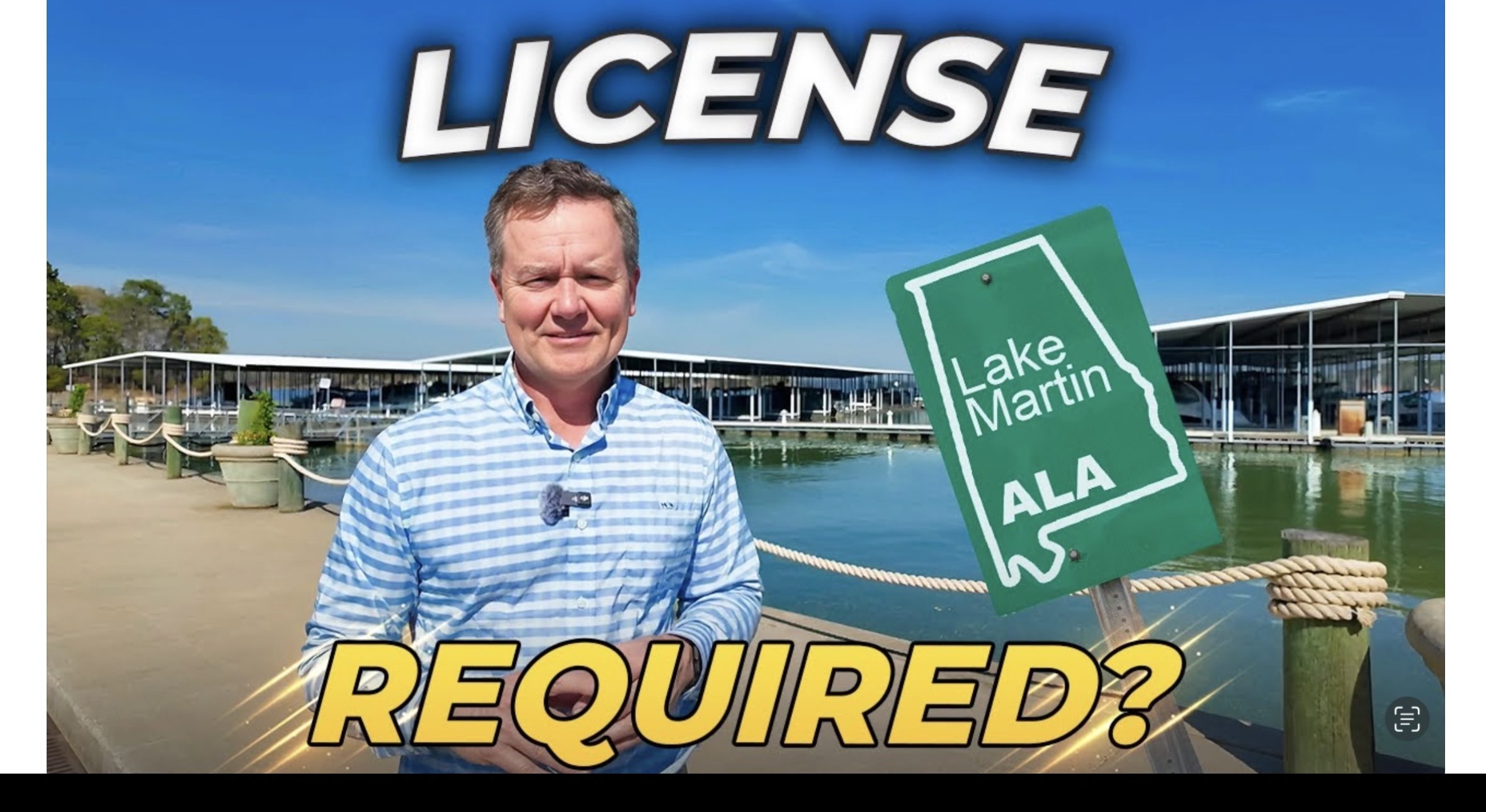
Operating a motorized vessel in Alabama requires specific certification depending on the operator's age. The state mandates that any person operating a motorized vessel must obtain a vessel endorsement on their driver's license or an independent boating safety certificate. To acquire this endorsement, individuals must complete an approved boating safety course and pass a written examination administered by ALEA or an authorized provider such as the Coast Guard Auxiliary or America's Boating Club.
Age restrictions dictate distinct tiers of operational freedom on public waterways:
- Operators under the age of 12 are strictly prohibited from operating any motorized vessel of more than two horsepower, regardless of adult supervision.
- Operators aged 12 and 13 may operate a motorized vessel of greater than two horsepower only if they have obtained their vessel endorsement and are accompanied on board by a person at least 21 years of age who possesses a valid vessel endorsement and is in a position to take immediate physical control of the vessel.
- Operators aged 14 and older who have secured their vessel endorsement may legally operate any motorized watercraft without adult supervision.
Mandatory Safety Equipment Standards
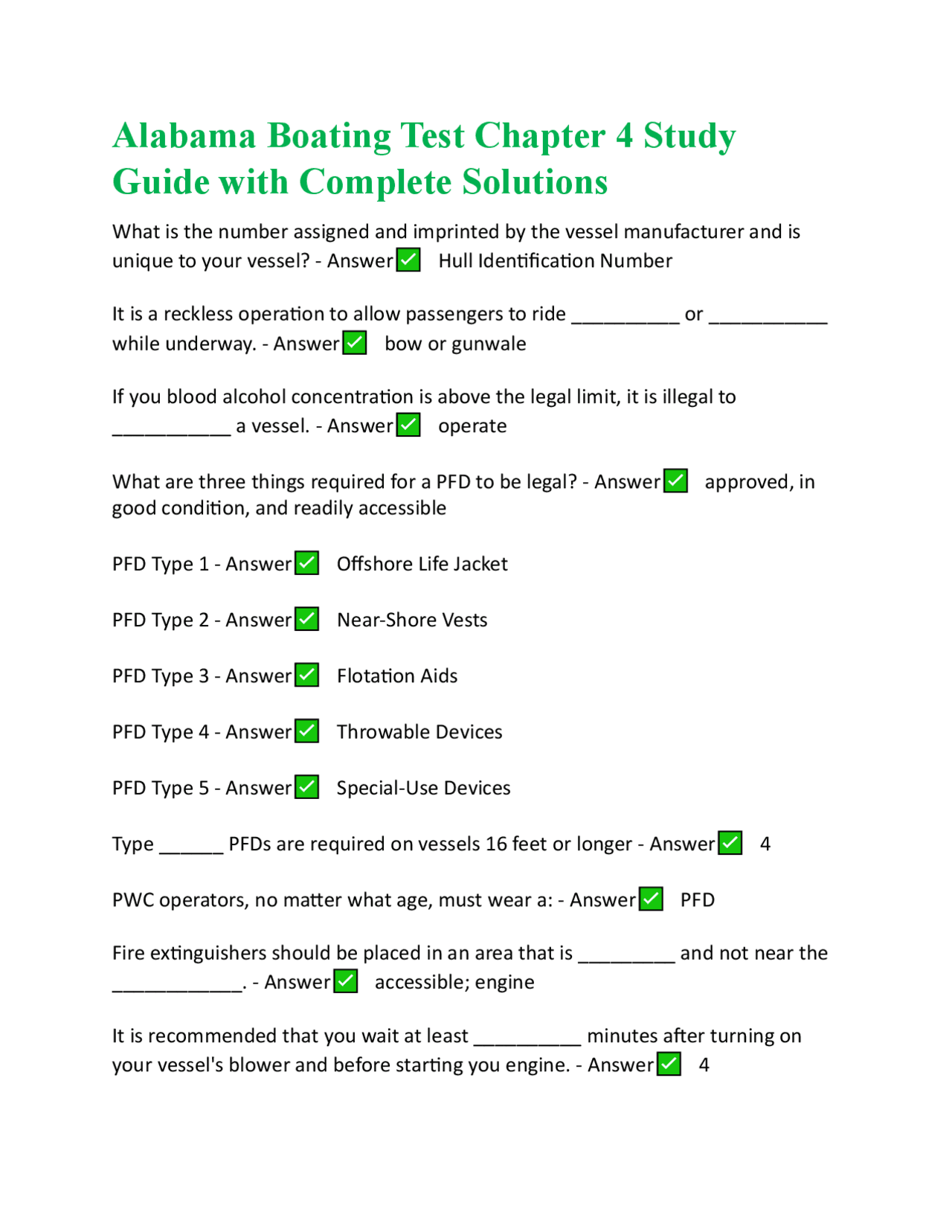
Alabama boating law strictly aligns with federal standards regarding the safety equipment that must be carried on board at all times. The required gear varies based on the length of the vessel, its propulsion type, and whether it operates during daylight hours or after sunset. Coast Guard-approved personal flotation devices (PFDs) represent the most critical safety mandate. Every vessel must carry at least one wearable PFD of the appropriate size for each person on board or being towed. Additionally, vessels 16 feet or greater in length—excluding canoes and kayaks—must carry at least one throwable device, such as a ring buoy or buoyant cushion.
Beyond life jackets, the statutory requirements encompass fire extinguishers, sound-producing devices, and visual distress signals. Motorized watercraft powered by inboard engines, enclosed fuel tank compartments, or double-bottom hulls must carry USCG-approved fire extinguishers that are readily accessible and unexpired. Vessels operating on coastal waters must maintain daytime and nighttime visual distress signals. Furthermore, any vessel operated between sunset and sunrise must display navigation lights that conform strictly to international and inland navigation rules to prevent collisions in low-visibility conditions.
| Equipment Category | Applicable Vessel Length / Type | Minimum Legal Requirement |
|---|---|---|
| Wearable PFDs | All vessels | One properly sized wearable life jacket per person on board |
| Throwable Devices | Vessels 16 feet and over | At least one throwable flotation device (e.g., ring buoy) |
| Fire Extinguishers | Motorized vessels with enclosed spaces | Coast Guard-approved extinguishers in operable condition |
| Sound Signaling | Vessels 16 feet and over | Whistle, horn, or bell capable of a 4-second blast |
| Navigation Lights | All vessels operated at night | Red, green, and white lights displayed per navigation rules |
Operating Rules, Prohibitions, and Accident Obligations
Safe navigation on Alabama waters requires strict adherence to rules of the road, speed limits, and prohibitions against reckless behavior. Operators must maintain a proper lookout at all times, yield the right-of-way in crossing or overtaking situations, and observe designated no-wake zones near docks, boat ramps, and narrow channels. Alabama law strictly prohibits reckless operation, which includes speeding in congested areas, weaving through heavy traffic, riding on gunwales or bow decks without proper safety rails, and operating within hazardous proximity to swimmers or scuba diving flags.
Operating under the influence (OUI) of alcohol or controlled substances is a severe criminal offense governed by laws analogous to highway driving standards. An operator is considered legally impaired if their blood alcohol concentration (BAC) reaches 0.08 percent or higher. Refusal to submit to chemical sobriety testing upon the lawful request of an ALEA marine officer results in immediate administrative suspension of boating and driving privileges. In the event of a boating accident involving injury, death, or property damage exceeding statutory financial thresholds, the operator must immediately notify law enforcement and file a formal written accident report with ALEA within the mandated timeframe.
Frequently Asked Questions
Do I need a license to drive a boat in Alabama?
Yes. Every operator of a motorized vessel on Alabama waters must possess a valid vessel endorsement on their driver's license or a boating safety certification card issued after passing an approved safety course.
Are life jackets required for children on boats in Alabama?
Alabama law mandates that all children aged 8 and under must wear a properly fitted, USCG-approved personal flotation device at all times while on board any vessel, unless the child is located within a fully enclosed cabin.
What is the legal blood alcohol limit for operating a boat in Alabama?
The legal blood alcohol concentration (BAC) limit for operating a recreational vessel in Alabama is 0.08 percent. Operating above this limit or under the influence of drugs carries heavy criminal fines, jail time, and the loss of operating privileges.
How old must a person be to operate a jet ski independently?
Operators must be at least 14 years of age and possess a valid vessel endorsement to operate a personal watercraft—such as a jet ski—unsupervised. Operators aged 12 and 13 require a certified adult on board, while those under 12 are prohibited from operating them entirely.
Are fire extinguishers mandatory on all boats in Alabama?
Fire extinguishers are mandatory on all motorized vessels that feature inboard engines, enclosed fuel compartments, closed living spaces, or double-bottom hulls. Open-hull outboard motorboats under 26 feet without enclosed fuel tanks are generally exempt unless carrying fuel in portable tanks within closed spaces.
Ensuring Compliance and Safe On-Water Practices
Prioritizing safety and regulatory compliance protects lives and preserves the recreational quality of Alabama’s aquatic resources. Before casting off, verify that your vessel's registration decals are current, all required safety gear is inspected and accessible, and every operator meets the state's minimum age and certification criteria. By maintaining situational awareness, observing no-wake zones, and strictly avoiding alcohol consumption while at the helm, boaters ensure a responsible and enjoyable experience on the water.