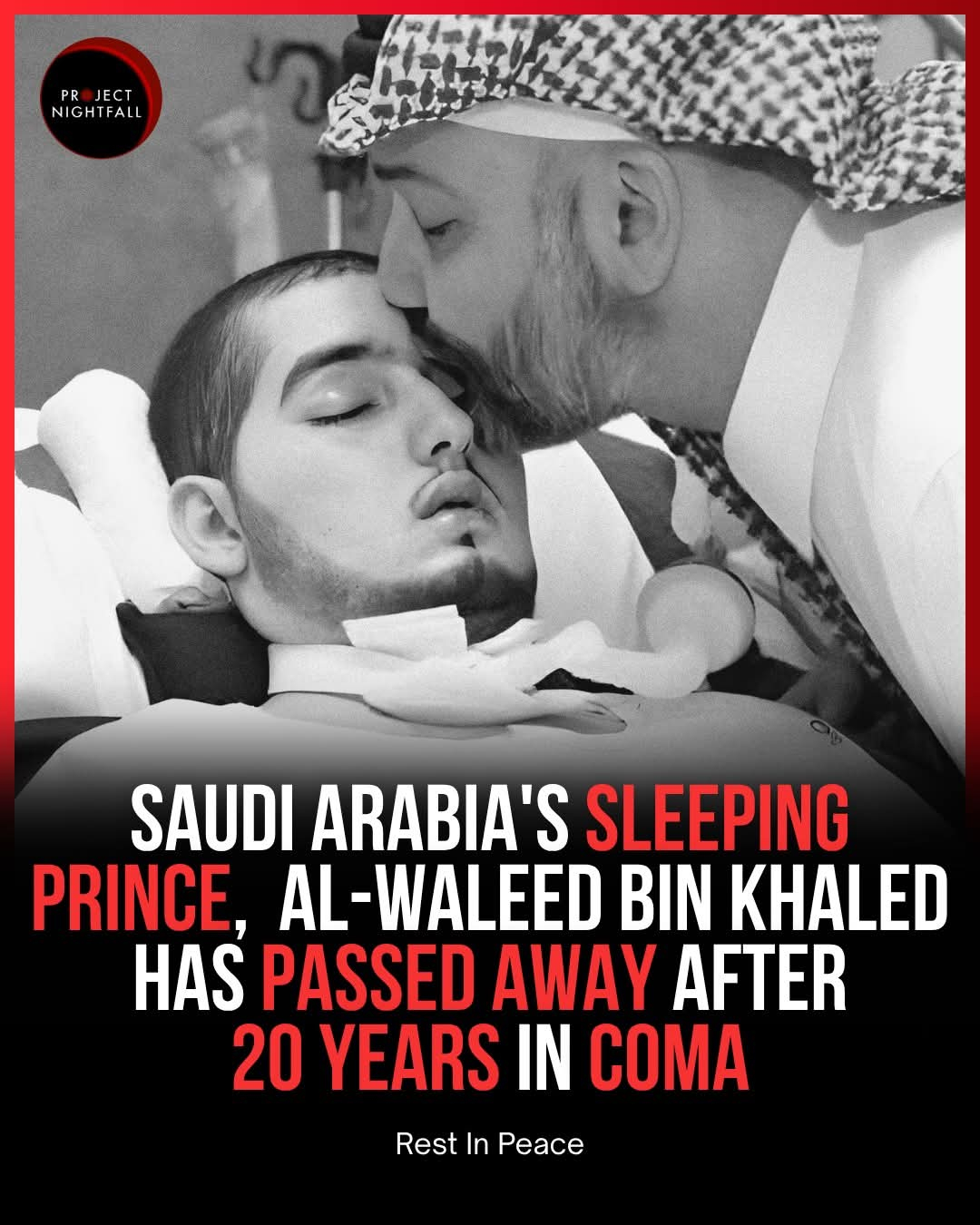
The story of Prince Al Waleed bin Khalid bin Talal Al Saud—widely known as the sleeping prince—captivates global audiences through its haunting intersection of extreme royal wealth, medical tragedy, and perpetual familial hope. Trapped in a coma following a catastrophic car accident in 2005 during his studies at a military college in London, the Saudi royal has spent over two decades in a state of unresponsive wakefulness, turning a private family tragedy into a viral digital phenomenon that continually resurfaces across social media platforms worldwide.
The Tragic Origin of the Slumber Story
The narrative of the sleeping prince began on a fateful day in 2005 when Prince Al Waleed, then a teenager studying at a London military academy, was involved in a severe vehicular collision. The resulting trauma caused massive intracranial bleeding and left him with critical neurological injuries. Despite immediate medical intervention and subsequent surgeries performed by a team of international specialists brought to Riyadh, the young royal drifted into a deep coma.
Medical assessments categorized his condition as a severe form of diffuse axonal injury coupled with prolonged unawareness, often referred to in clinical terms as an unresponsive wakefulness syndrome or persistent vegetative state. Unlike brain death, patients in this condition may experience sleep-wake cycles, involuntary eye movements, and reflexive reactions to stimuli, yet they lack cognitive awareness or voluntary control over their bodies. For the House of Saud, this medical crisis transformed immediately into a prolonged personal ordeal, shifting the young prince's life from elite military education to continuous, high-level hospital care within a specialized wing of a Riyadh hospital and later within the family's private residence.
The Patriarch’s Unwavering Resolve and Financial Resources
At the center of the viral narrative is Prince Khaled bin Talal Al Saud, the father of the sleeping prince, whose refusal to disconnect life support has become a defining symbol of paternal devotion. Prince Khaled, a prominent Saudi businessman and member of the royal family, has continuously rejected medical advice regarding the withdrawal of mechanical ventilation and artificial nutrition. Citing faith, miracles, and an abiding hope for a neurological breakthrough, the family maintains a fully equipped intensive care setup directly within their family estate, staffed by round-the-clock medical professionals.
The financial magnitude of this ongoing care represents a stark manifestation of billionaire resources applied to extreme medical preservation. While exact costs are not publicly itemized by the royal household, maintaining a private intensive care unit with specialized nursing, respiratory therapy, and advanced monitoring equipment incurs multi-million-dollar annual expenditures. This financial capacity isolates the sleeping prince's experience from that of ordinary patients facing prolonged comas, illustrating how immense capital can indefinitely suspend the traditional decisions families face regarding long-term life support.
Viral Revival and Digital Mythology on Social Media
In the digital era, the sleeping prince story frequently transcends traditional news cycles, periodically surging across platforms like TikTok, X (formerly Twitter), and Instagram. These viral waves are typically triggered by rare, brief video clips showing subtle physical responses—such as the prince lifting a finger or turning his head slightly in response to a visitor's voice. These micro-movements, while often interpreted by optimistic internet users as signs of an impending awakening, are carefully contextualized by neurologists as involuntary spinal cord or brainstem reflexes rather than conscious cognitive engagement.
The digital fascination with the billionaire's slumber reflects broader cultural preoccupations with wealth, mortality, and medical miracles. Social media algorithms favor narratives that pit insurmountable odds against extraordinary resources, creating a modern fairy-tale dynamic where a wealthy prince lies frozen in time. Consequently, rumors, fabricated updates about miraculous recoveries, and sensationalized headlines routinely circulate online, necessitating careful cross-referencing with verified statements issued periodically by Prince Khaled and attending medical representatives.
Medical Realities and Prolonged Coma Care Management
Understanding the true nature of the sleeping prince's condition requires examining the clinical protocols and ethical frameworks governing prolonged disorders of consciousness. Modern medicine manages patients in extended unresponsive states through rigorous preventative care protocols designed to mitigate secondary complications such as contractures, pressure ulcers, respiratory infections, and metabolic imbalances.
| Clinical Aspect | Standard Protocol | Application in High-Resource Settings |
|---|---|---|
| Respiratory Support | Mechanical ventilation via tracheostomy | Dedicated respiratory therapists, continuous blood-gas monitoring |
| Nutritional Delivery | Percutaneous endoscopic gastrostomy (PEG) tube | Customized caloric formulas, specialized dietary supervision |
| Physical Therapy | Passive range-of-motion exercises daily | Automated positioning beds, customized splinting devices |
| Monitoring | Periodic neurological and vital sign checks | 24/7 dedicated nursing staff, advanced telemetry systems |
This structured approach ensures that while cognitive recovery remains statistically improbable after decades of unconsciousness, physical deterioration is actively managed. The juxtaposition of advanced clinical maintenance against permanent neurological stasis forms the core medical reality behind the viral headlines.
Frequently Asked Questions About the Sleeping Prince
Who is the sleeping prince and why is he famous?
Prince Al Waleed bin Khalid bin Talal Al Saud is a member of the Saudi royal family who has been in a coma since a 2005 car accident. He gained viral fame because his father's refusal to withdraw life support, combined with rare video clips of minor physical reflexes, sparked widespread global interest and digital speculation about a potential recovery.
How long has Prince Al Waleed been in a coma?
The prince has been in an unresponsive state for over two decades, following his accident in London when he was a teenager in 2005. His continuous care spans more than twenty years, making his case one of the longest publicly documented instances of prolonged coma management.
Are the viral videos of him moving real?
Yes, certain short video clips showing him moving a finger or responding to voices are authentic, but neurologists explain these are involuntary reflex actions rather than conscious movements or signs of cognitive recovery. These physical twitches occur naturally due to spinal and brainstem pathways remaining intact despite severe cortical damage.
What is the cost of maintaining his medical care?
While official figures are not publicly disclosed, maintaining a private, hospital-grade intensive care unit at home with 24-hour medical staff requires substantial financial resources, estimated in the millions of dollars annually. This level of sustained private care is accessible only to individuals with extreme wealth.
Is there any medical hope for his recovery?
While medical science recognizes rare instances of late awakening from minimally conscious states, decades-long recovery from a deep, prolonged coma with extensive brain damage is considered extremely rare by international neurological consensus. Nevertheless, the family continues to hold out hope for a medical breakthrough.
Ongoing Legacy and Sustained Public Interest
The ongoing chronicle of the sleeping prince remains a unique cultural and medical touchstone, illustrating the complex boundaries between modern technological life support, extreme wealth, and human resilience. As digital platforms continue to circulate updates and historical retrospectives, the narrative persists not as a standard news event, but as a surreal, real-time meditation on time, memory, and the limits of medical intervention. Observers, ethicists, and global audiences alike continue to watch from a distance, recognizing in his silent vigil a profound reminder of the vulnerabilities that transcend even the most immense fortunes.