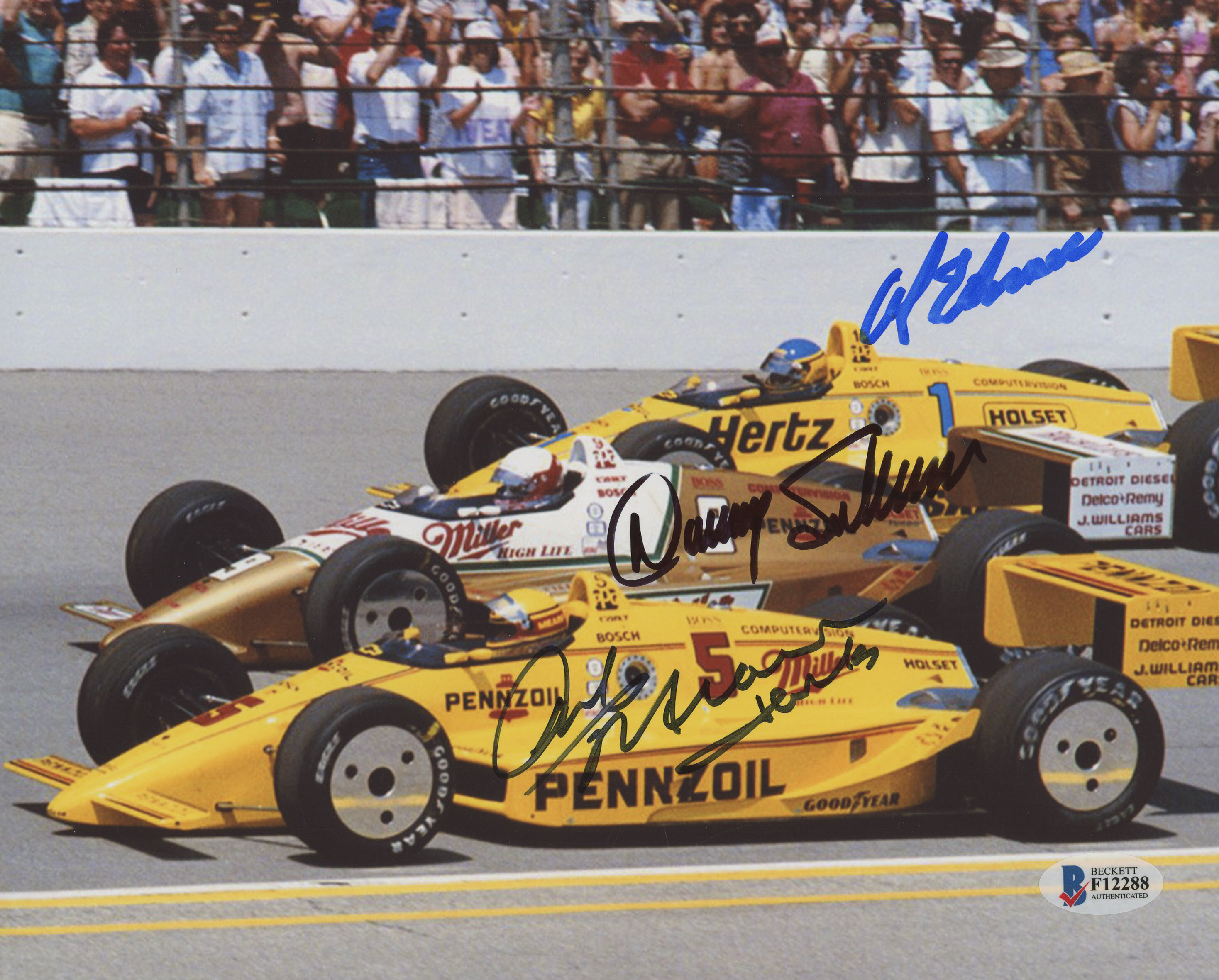
Evaluating the fortunes of legendary American open-wheel racing icons requires examining multi-decade careers filled with Indianapolis 500 victories, championship titles, and post-racing financial ventures. While precise, real-time private bank statements and audited asset portfolios are rarely published for retired athletes, motorsport financial estimates place Rick Mears and Al Unser Jr. within distinct wealth brackets shaped by their respective eras of dominance, career longevity, and business endeavors outside the cockpit. Both drivers commanded substantial purses during the peak of CART and IndyCar racing, yet contrasting personal histories, endorsement profiles, and post-retirement trajectories have led to divergent financial standing in contemporary evaluations.
The Foundations of Open-Wheel Racing Fortunes
To understand the financial standing of Rick Mears and Al Unser Jr., one must examine the economic landscape of American championship auto racing during the 1980s and 1990s. This era represented a golden age for the sport, characterized by massive corporate sponsorship, substantial manufacturer backing, and lucrative race purses. Top-tier drivers earned significant base salaries supplemented by a percentage of prize money, win bonuses, and personal endorsement agreements with brands ranging from tool manufacturers to consumer goods.
Rick Mears spent his entire legendary IndyCar career with a single powerhouse organization, Team Penske, which provided financial stability, high-end equipment, and lucrative corporate partnerships. Al Unser Jr., commonly known as "Little Al," drove for elite teams like Galles Racing and Team Penske, securing immense prize pools, including the historic 1992 Indianapolis 500 victory where he defeated Scott Goodyear by 0.043 seconds—the closest finish in race history. However, career longevity, management of earnings, personal challenges, and subsequent business ventures played massive roles in shaping their respective net worth profiles over the decades leading into 2024.
Rick Mears: Career Earnings, Penske Loyalty, and Financial Stability
Rick Mears established himself as one of the most clinical and successful drivers in the history of the Indianapolis Motor Speedway, securing four Indianapolis 500 victories (1979, 1984, 1988, and 1991) and three CART national championships (1979, 1981, and 1982). His long-term relationship with Roger Penske was not only a cornerstone of his racing success but also a stabilizing force for his personal economy. Team Penske operated with corporate professionalism, ensuring that its drivers were well-compensated, professionally managed, and positioned for long-term financial security.
Beyond his driving salary and race winnings, Mears maintained strategic personal endorsements that reflected his clean-cut, analytical persona. Following his retirement from full-time competition after the 1992 season, Mears transitioned into a long-term advisory and driver-coaching role with Team Penske. This continuous affiliation provided steady, high-level income for decades. Furthermore, Mears avoided many of the costly personal and legal setbacks that frequently afflict retired athletes, allowing his accumulated wealth, real estate holdings, and investments to compound steadily. Financial analysts and motorsport valuation sources generally estimate Rick Mears's net worth to be in the range of $15 million to $20 million.
Al Unser Jr.: Championship Success, Peak Purses, and Economic Challenges
Al Unser Jr. enjoyed a prolific and electrifying career characterized by two Indianapolis 500 victories (1992 and 1994) and two CART championships (1990 and 1994), alongside numerous victories in IMSA and IROC competition. As a member of the legendary Unser racing dynasty, "Little Al" commanded top-tier driver salaries during the height of the CART-Indy Racing League split, pulling in millions of dollars in team contracts, prize money, and national sponsorships during his peak years in the late 1980s and 1990s.
Despite earning tens of millions of dollars during his active racing career, Unser's financial journey has been notably more volatile than that of Mears. Public records and legal disclosures over the years have highlighted substantial financial restructuring, tax liabilities, and the high costs associated with post-racing career transitions, personal struggles, and family health matters. Although he has remained involved in the sport through driver coaching, historic racing exhibitions, and consultancy work, these ventures yielded varied financial returns compared to a continuous executive consultancy like Mears's tenure with Penske. Consequently, independent estimates place Al Unser Jr.'s net worth significantly lower than that of Mears, generally ranging between $2 million and $5 million.
Comparative Overview of Career Metrics and Financial Trajectories
Directly comparing the career milestones and financial markers of both drivers highlights the variables that influence long-term athlete wealth accumulation. While athletic achievements on the track are closely matched—both are multi-time Indy 500 winners and series champions—their financial management, post-retirement consistency, and asset preservation diverged.
| Metric / Category | Rick Mears | Al Unser Jr. |
|---|---|---|
| Indianapolis 500 Wins | 4 (1979, 1984, 1988, 1991) | 2 (1992, 1994) |
| CART / IndyCar Championships | 3 (1979, 1981, 1982) | 2 (1990, 1994) |
| Primary Team Affiliation | Team Penske (nearly exclusive) | Galles Racing, Team Penske, others |
| Post-Retirement Role | Long-term advisor/coach for Team Penske | Independent coaching, historic racing, media |
| Estimated Net Worth Range | $15 Million – $20 Million | $2 Million – $5 Million |
| Financial Volatility | Low (stable investments and continuous corporate ties) | Moderate to High (publicized tax and legal challenges) |
The Impact of Post-Retirement Ventures on Athlete Net Worth
An athlete's net worth is rarely determined solely by peak-earning years; the decades following retirement often dictate long-term financial security. For Rick Mears, stepping away from full-time driving in 1992 did not mean cutting ties with the motorsport industry. His seamless transition into a permanent consulting and ambassadorial role with Team Penske ensured a predictable, high-bracket professional income stream while minimizing personal financial exposure. Mears largely avoided speculative business ventures or public legal disputes that drain liquid capital.
Conversely, Al Unser Jr. faced a more complex post-retirement landscape. Managing the financial obligations of a high-profile divorce, overcoming well-documented personal health struggles, and navigating the shifting economic realities of American open-wheel racing required significant financial readjustment. While Unser remains a beloved figure among fans and frequently participates in racing heritage events, his financial portfolio reflects the challenges of capital preservation when primary earning windows close and substantial liabilities emerge.
Frequently Asked Questions
Who won more Indianapolis 500 races between Rick Mears and Al Unser Jr.?
Rick Mears won four Indianapolis 500 races (1979, 1984, 1988, and 1991), placing him in the elite, exclusive club of four-time winners alongside A.J. Foyt and Al Unser Sr. Al Unser Jr. secured two Indianapolis 500 victories, winning in 1992 and 1994.
Why is Rick Mears's estimated net worth higher than Al Unser Jr.'s?
Rick Mears maintained a lifelong career association with Team Penske as both a driver and a long-term consultant, benefiting from structural financial stability, prudent asset management, and an absence of major public financial crises. While Unser earned comparable sums during his peak racing years, his wealth experienced greater volatility due to personal challenges, legal liabilities, and asset restructuring.
Did Al Unser Jr. make more money from race winnings than Rick Mears?
Both drivers competed during lucrative eras of American open-wheel racing and earned substantial purses, bonuses, and driver salaries. Unser raced through the peak financial boom of the early-to-mid 1990s CART series, where team budgets and prize pools reached historic highs, but career net worth depends more heavily on post-retirement retention and investment management than gross career earnings alone.
Are official net worth figures published for retired IndyCar drivers?
No official, audited net worth figures are publicly released by private individuals like Mears or Unser Jr. Financial estimates published by motorsport analysts are derived from historical salary approximations, prize money records, real estate transactions, and publicly available legal or tax disclosures when applicable.
How did team loyalty affect the long-term wealth of Rick Mears?
Remaining with Team Penske for his entire career provided Mears with unmatched career stability, elite equipment that prolonged his competitive window, and a direct pipeline to post-retirement corporate roles that continued to generate professional income long after he hung up his helmet.
Financial Preservation and Athlete Wealth Lessons
Analyzing the financial standing of motorsport legends like Rick Mears and Al Unser Jr. underscores fundamental principles of long-term wealth management. Peak athletic earnings provide a formidable starting point, but institutional stability, prudent risk management, and the avoidance of disruptive personal liabilities ultimately dictate financial preservation. For aspiring professional athletes, the contrast between Mears's steady financial trajectory and Unser's dynamic challenges illustrates that career longevity and post-retirement partnerships are just as vital as checkered flags and championship trophies.