Al Pacino is an iconic American actor whose career spans over six decades, recognized for fundamentally reshaping screen performance through Stanislavski-derived Method acting. From his breakthrough performance in The Godfather to his Academy Award–winning role in Scent of a Woman, Pacino constructed a body of work defined by intense psychological realism, commanding vocal dynamics, and theatrical versatility across film and stage.
The Early Years and Theatrical Foundations
Alfredo James Pacino was born on April 25, 1940, in East Harlem, New York City, and raised predominantly by his mother and maternal grandparents in the Bronx. His early interest in dramatic arts led him to the High School of Performing Arts, though financial constraints and academic difficulties caused him to leave before completing his diploma. During his late teens and early twenties, Pacino worked a series of low-paying jobs while pursuing acting training in underground theater circuits across Manhattan.
Pacino's artistic identity coalesced when he studied under legendary coach Herbert Berghof at HB Studio, followed by his admission to the Actors Studio in 1966. There, under the mentorship of Lee Strasberg, Pacino mastered "The Method"—a technique rooted in Konstantin Stanislavski’s system that demands actors utilize personal sensory memory and internal psychological truth to embody a character fully.
Before achieving international film stardom, Pacino established a formidable reputation on the New York stage. His breakthrough theatrical role arrived in 1968 with Israel Horovitz’s off-Broadway play The Indian Wants the Bronx, for which he earned an Obie Award. The following year, his Broadway debut in Does a Tiger Wear a Necktie? earned him his first Tony Award for Best Featured Actor in a Play. These early stage triumphs revealed his signature performance attributes: explosive quietude, volatile unpredictable energy, and absolute immersion in antihero characters.
The 1970s: Redefining New Hollywood Realism
The 1970s marked a golden era in American cinema, with Al Pacino standing alongside peers like Robert De Niro, Gene Hackman, and Dustin Hoffman as key figures of the New Hollywood movement. After a compelling lead film debut as a heroin addict in Jerry Schatzberg’s The Panic in Needle Park (1971), director Francis Ford Coppola cast Pacino in the career-defining role of Michael Corleone in The Godfather (1972).
"Coppola saw something in Pacino that the studio execs didn't: an internal fire capable of transforming a reluctant war hero into a cold, calculating mafia chieftain."
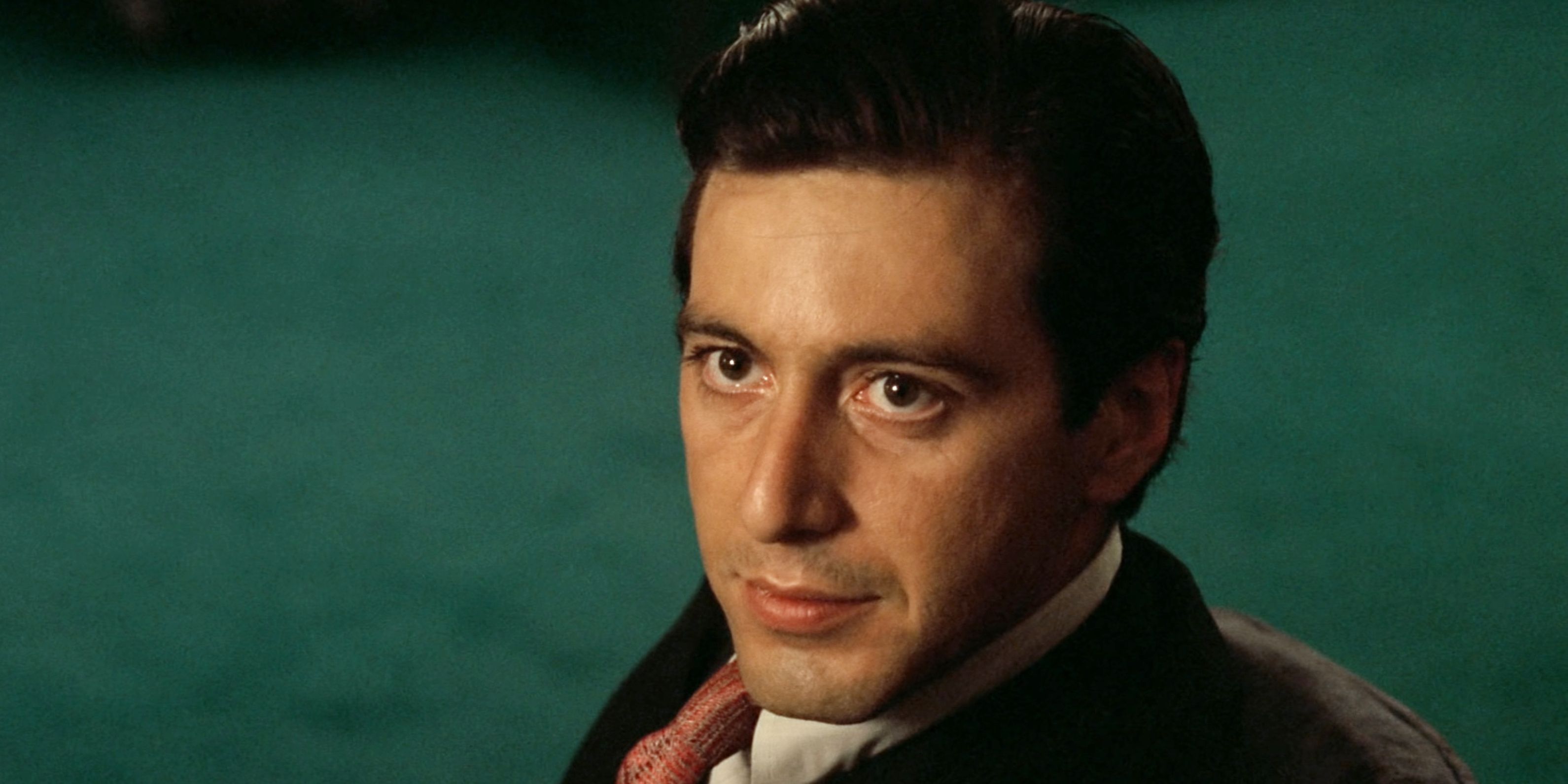
Pacino’s portrayal of Michael Corleone remains a masterclass in subtlety and internal transformation. Rather than resorting to overt villainy, Pacino communicated Michael’s moral decay through shifting posture, hardening eyes, and calculated silence. The performance earned him an Academy Award nomination for Best Supporting Actor, establishing him as one of cinema’s most magnetic talents.
Throughout the 1970s, Pacino achieved an extraordinary streak of critical successes, earning four consecutive Best Actor Oscar nominations:
- Serpico (1973): Directed by Sidney Lumet, featuring Pacino as Frank Serpico, an undercover NYPD officer blowing the whistle on widespread department corruption. Pacino captured the real-life figure's obsessive idealism and isolation.
- The Godfather Part II (1974): Widely considered one of the greatest tragic performances in cinema history. Pacino portrayed Michael Corleone’s deepening isolation and cold brutality as he consolidates power at the expense of his own humanity.
- Dog Day Afternoon (1975): Re-teaming with Sidney Lumet, Pacino delivered a frantic, empathetic performance as Sonny Wortzik, a real-life bank robber in a desperate media circus. His improvised chant of "Attica! Attica!" became a cultural landmark.
- ...And Justice for All (1979): Directed by Norman Jewison, this satire of the American legal system highlighted Pacino’s capacity for righteous, theatrical fury, culminating in his famous courtroom climax.
Stylistic Evolution: The 1980s and 1990s
As film aesthetics shifted from the gritty naturalism of the 1970s toward high-concept genres in the 1980s, Pacino modified his performance style. He increasingly embraced theatrical bravura, larger-than-life characterizations, and heightened vocal delivery.
The Scarface Phenomenon and 1980s Transition
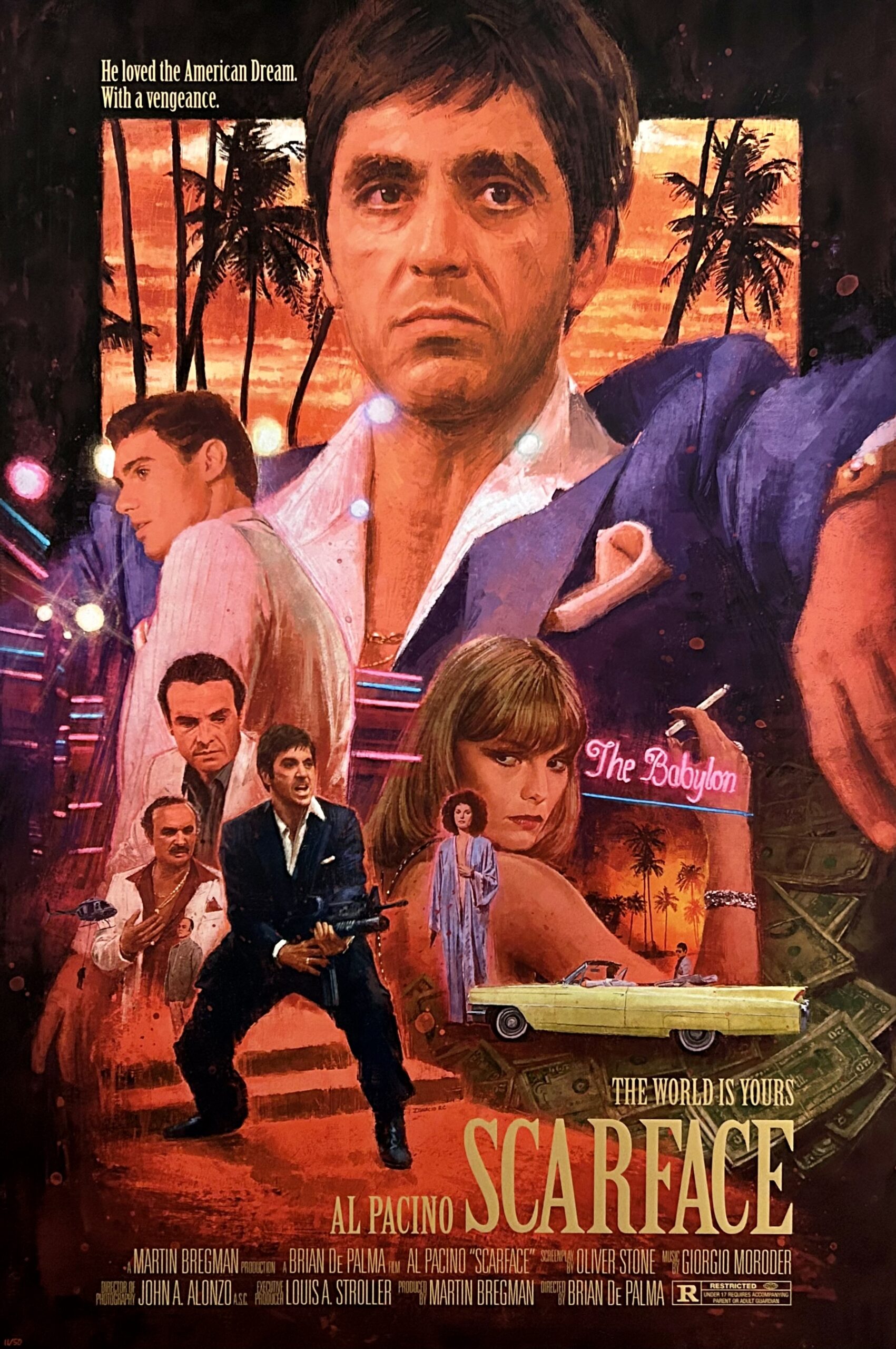
In 1983, Pacino collaborated with director Brian De Palma and screenwriter Oliver Stone to play Tony Montana in Scarface. The performance—unapologetically operatic, ostentatious, and culturally influential—polarized critics upon release but evolved into a classic of pop culture iconography. Montana's rise and fall in cocaine-era Miami demonstrated Pacino's willingness to push character boundaries into high drama without losing underlying tragic weight.
Following a brief hiatus from screen acting after the commercial failure of Revolution (1985), during which he returned to stage work and directed his personal film project The Local Stigmatic, Pacino staged a major comeback with the neo-noir thriller Sea of Love (1989).
Peak Maturity and Oscar Breakthrough in the 1990s
The 1990s proved to be one of the most commercially and artistically fruitful decades of Pacino's career. In 1992, he accomplished the rare feat of receiving two Academy Award nominations in the same year: Best Supporting Actor for David Mamet’s Glengarry Glen Ross and Best Actor for Martin Brest’s Scent of a Woman.
Pacino won the Best Actor Oscar for Scent of a Woman, portraying Lieutenant Colonel Frank Slade, a blind, retired U.S. Army officer. The role showcased his command of bravado, razor-sharp dialogue, and emotional vulnerability, solidifying his status as a titan of screen acting.
During this decade, Pacino engaged in pivotal projects that defined late 20th-century American drama:
- Carlito’s Way (1993): Reuniting with Brian De Palma, Pacino offered a melancholic counterpoint to Tony Montana, playing Carlito Brigante, an ex-con attempting to escape his criminal past.
- Heat (1995): Directed by Michael Mann, this crime epic featured the iconic first on-screen encounter between Pacino (playing high-strung LAPD Detective Vincent Hanna) and Robert De Niro (playing master thief Neil McCauley).
- The Insider (1999): Directed by Michael Mann, Pacino delivered a grounded, resolute performance as 60 Minutes producer Lowell Bergman investigating Big Tobacco.
The Acting Mechanics and Performance Philosophy of Al Pacino
To understand Al Pacino's impact on cinema, one must analyze the technical mechanics of his craft. Unlike traditional classical actors who build performances primarily through external mannerisms, Pacino works from the inside out, applying core Principles of the Actors Studio.
Key Components of Pacino's Acting Methodology: 1. Internalization of Subtext: Prioritizing what the character hides over what they express. 2. Vocal Dynamics: Shifting from quiet, gravelly whispers to explosive theatrical cadence. 3. Physical Stillness: Utilizing intense eye discipline and spatial awareness to dominate the frame. 4. Immersion in Stage Craft: Regularly returning to Shakespeare and theater to refine screen technique.
Throughout his career, Pacino maintained a deep devotion to classical theater, particularly the works of William Shakespeare. He directed and starred in Looking for Richard (1996), an innovative documentary-drama exploring Shakespeare’s Richard III, designed to demystify classical theater for American audiences. He also delivered acclaimed stage performances as Shylock in The Merchant of Venice (both on Broadway and in the 2004 film adaptation).
Later Career, Prestige Television, and Late-Career Resurgence
In the 2000s and beyond, Pacino expanded his work into prestige television, securing critical acclaim and industry awards for HBO productions. His performance as Roy Cohn in Mike Nichols' miniseries adaptation of Angels in America (2003) earned him a Primetime Emmy Award, an achievement he repeated in 2010 for his portrayal of Dr. Jack Kevorkian in You Don't Know Jack. With these Emmy victories added to his Oscar and Tony awards, Pacino achieved the Triple Crown of Acting, an honor reserved for a select group of performers who have won the highest competitive acting awards in film, television, and theater.
In 2019, Pacino entered a major late-career renaissance:
- The Irishman (2019): Directed by Martin Scorsese, Pacino portrayed Teamsters leader Jimmy Hoffa alongside Robert De Niro and Joe Pesci. His expressive, energetic performance earned him his ninth Academy Award nomination.
- Once Upon a Time in Hollywood (2019): Directed by Quentin Tarantino, featuring Pacino in a sharp supporting turn as talent agent Marvin Schwarz.
- House of Gucci (2021): Directed by Ridley Scott, where Pacino brought charismatic weight to Aldo Gucci, the patriarch of the luxury fashion dynasty.
Key Filmography, Accolades, and Performance Breakdown
The table below outlines key landmark performances across Al Pacino’s multi-decade career, detailing the character, industry accolades, and primary stylistic notes.
| Year | Title | Character | Major Industry Accolades | Artistic Signature & Focus |
|---|---|---|---|---|
| 1972 | The Godfather | Michael Corleone | Nominated – Academy Award (Best Supporting Actor) | Masterclass in internal psychological restraint and quiet character evolution. |
| 1973 | Serpico | Frank Serpico | Nominated – Academy Award (Best Actor); Won – Golden Globe | Naturalistic street realism, raw idealism, and psychological isolation. |
| 1974 | The Godfather Part II | Michael Corleone | Nominated – Academy Award (Best Actor); Won – BAFTA | Tragic emotional coldness, quiet menace, and internal disintegration. |
| 1975 | Dog Day Afternoon | Sonny Wortzik | Nominated – Academy Award (Best Actor); Won – BAFTA | Improvised kinetic energy, high-strung vulnerability, and tragicomedy. |
| 1983 | Scarface | Tony Montana | Nominated – Golden Globe (Best Actor) | High operatic performance, broad vocal bravura, and extreme physical presence. |
| 1992 | Glengarry Glen Ross | Ricky Roma | Nominated – Academy Award (Best Supporting Actor) | Rhythmic handling of David Mamet’s fast-paced, razor-sharp dialogue. |
| 1992 | Scent of a Woman | Lt. Col. Frank Slade | Won – Academy Award (Best Actor); Won – Golden Globe | Expressive vocal modulation, theatrical bravado, and physical vulnerability. |
| 1995 | Heat | Lt. Vincent Hanna | Nominated – Chicago Film Critics Association | Explosive, stylized law-enforcement depiction with intense screen presence. |
| 2003 | Angels in America | Roy Cohn | Won – Primetime Emmy Award; Won – Golden Globe | Relentless, razor-sharp portrayal of power, illness, and political denial. |
| 2019 | The Irishman | Jimmy Hoffa | Nominated – Academy Award (Best Supporting Actor) | Energetic, boisterous late-career performance with deep emotional nuances. |
Frequently Asked Questions
Did Al Pacino win an Academy Award for playing Michael Corleone in The Godfather?
No. Despite delivering one of the most celebrated performances in cinema history, Pacino did not win the Academy Award for either The Godfather (1972) or The Godfather Part II (1974). He was nominated for Best Supporting Actor for the first film and Best Actor for the second, but his sole Oscar win came in 1993 for his role as Frank Slade in Scent of a Woman.
What is Al Pacino's connection to Method acting?
Al Pacino is one of the most prominent practitioners of Method acting. He refined his craft at the Actors Studio under Lee Strasberg, who championed the technique in the United States. Method acting emphasizes emotional memory, deep psychological alignment with the character, and authentic sensory experience over formal stage artifice.
How many Academy Award nominations has Al Pacino received?
Al Pacino has been nominated for nine Academy Awards throughout his career. Eight of these nominations occurred between 1973 and 1993 (spanning films such as Serpico, Dog Day Afternoon, ...And Justice for All, and Glengarry Glen Ross), with his ninth nomination coming in 2020 for Martin Scorsese's The Irishman.
Has Al Pacino achieved the Triple Crown of Acting?
Yes. Pacino is one of the few performers to earn the Triple Crown of Acting, which requires winning competitive acting awards at the Oscars (Film), Emmys (Television), and Tonys (Theater). He holds two Tony Awards (Does a Tiger Wear a Necktie?, The Basic Training of Pavlo Hummel), one Academy Award (Scent of a Woman), and two Primetime Emmy Awards (Angels in America, You Don't Know Jack).
Recommended Viewing Order for Film Students and Enthusiasts
To fully appreciate the evolution of Al Pacino's craft, viewers should approach his filmography chronologically by performance style rather than release date alone. This structured viewing pathway allows students of film and theater to observe how his technique adapted across different eras of modern cinema.
Phase 1: The Naturalist Phase (1971–1975) - The Panic in Needle Park (1971) - The Godfather (1972) - Serpico (1973) - The Godfather Part II (1974) - Dog Day Afternoon (1975) Phase 2: The Operatic & Character Expansion Phase (1983–1995) - Scarface (1983) - Sea of Love (1989) - Glengarry Glen Ross (1992) - Scent of a Woman (1992) - Heat (1995) Phase 3: Deep Maturity & Authorial Collaborations (1999–Present) - The Insider (1999) - Angels in America (2003) - Looking for Richard (1996) - The Irishman (2019)
By examining Pacino's transition from the quiet interiority of The Godfather to the expansive theatricality of Scent of a Woman and the reflective maturity of The Irishman, viewers gain a comprehensive understanding of an actor who helped define modern American drama.