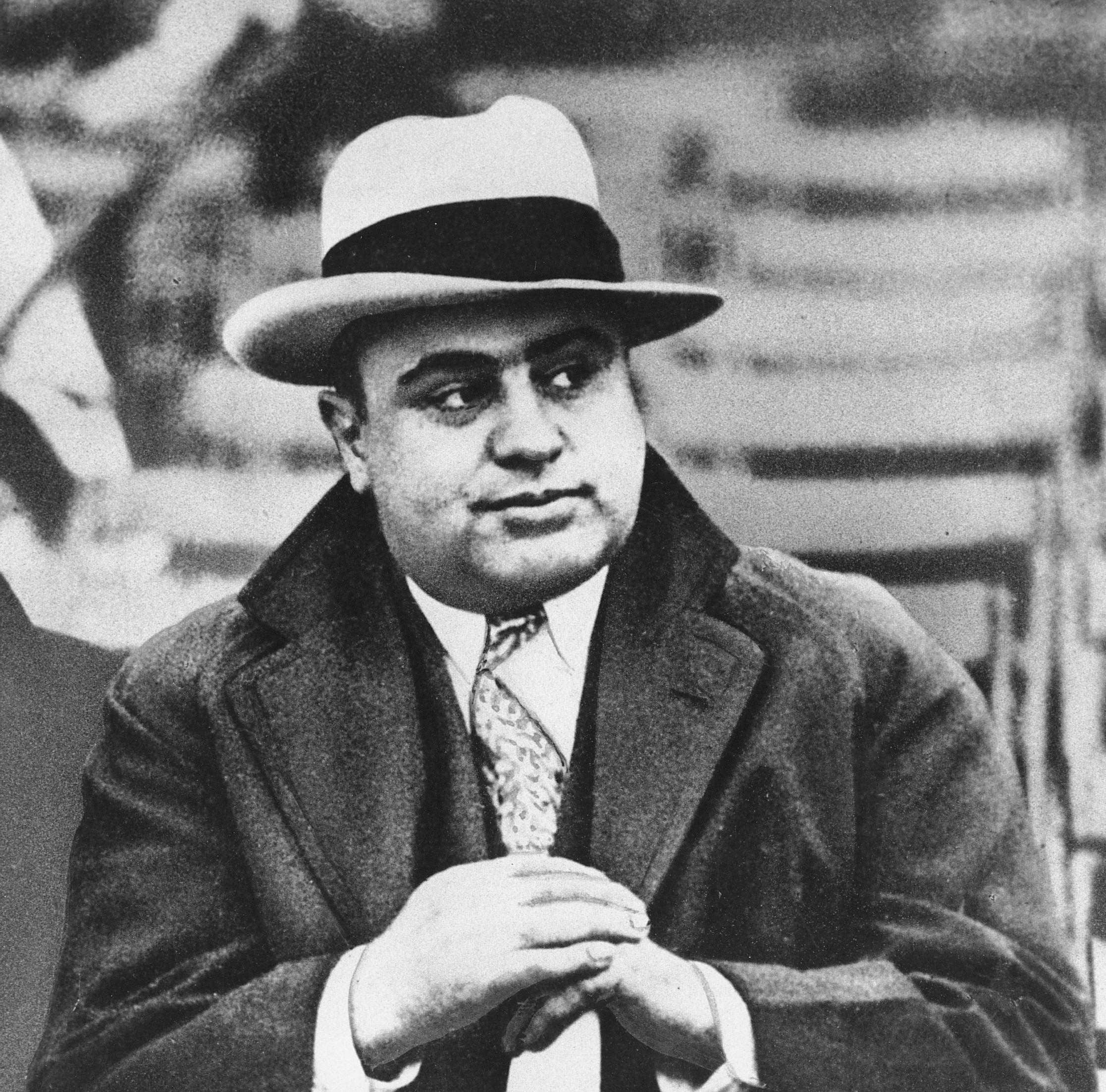
Al Capone was the most notorious American gangster of the Prohibition era, leading the Chicago Outfit from 1925 to 1931. Known by the nickname "Scarface," he built a multi-million dollar criminal empire through bootlegging, gambling, and racketeering before ultimately being convicted of federal tax evasion and serving time in Alcatraz.
The Origins of Alphonse Capone and the Brooklyn Years
Alphonse Gabriel Capone was born on January 17, 1899, in Brooklyn, New York, to Italian immigrants Gabriele and Teresina Capone. Unlike many of his contemporaries who turned to crime out of extreme poverty, Capone’s family was relatively stable; his father was a barber and his mother a seamstress. However, the environment of early 20th-century New York provided fertile ground for organized crime. Capone's transition into the underworld began in his youth when he joined various street gangs, most notably the James Street Boys and later the powerful Five Points Gang.
It was during his time in New York that Capone received his most famous physical trait. While working as a bouncer and bartender at the Harvard Inn, a club owned by mobster Frankie Yale, Capone insulted a female patron. Her brother, Frank Galluccio, slashed Capone’s left cheek with a knife, leaving three distinct scars. This incident earned him the moniker "Scarface," a name he privately detested, preferring to be called "Snorky" by his close associates—a slang term for a sharp dresser.
Capone’s apprenticeship under Frankie Yale taught him the mechanics of the "protection" racket and the importance of maintaining a business-like veneer over violent operations. However, after a series of violent altercations in New York, including a suspected murder, Capone sought a fresh start. In 1919, he moved to Chicago at the invitation of Johnny Torrio, a former mentor who was expanding a criminal syndicate in the Midwest.
Building the Chicago Outfit During Prohibition
The ratification of the 18th Amendment and the subsequent passage of the Volstead Act in 1920 transformed the American criminal landscape. Prohibition created a massive, lucrative black market for alcohol, and Johnny Torrio was among the first to recognize its potential. Capone quickly rose through the ranks, proving himself not only as a capable enforcer but also as a shrewd administrator with a keen understanding of logistics and local politics.
In 1925, after a rival gang's assassination attempt left Torrio severely wounded, he decided to retire and return to Italy. At the age of 26, Al Capone inherited the leadership of the Chicago Outfit. Unlike Torrio, who preferred to stay in the shadows, Capone embraced the limelight. He viewed himself as a legitimate businessman providing a service that the public clearly desired despite its illegality.
Capone’s operations were vast and sophisticated. He controlled breweries, distilleries, and a distribution network that reached far beyond Chicago's city limits. To protect these interests, he engaged in systemic bribery of law enforcement and politicians. At the height of his power, it was estimated that half of the Chicago police force was on his payroll. This political "protection" allowed his organization to operate with near-impunity, generating an estimated annual revenue of $100 million by the late 1920s.
The St. Valentine’s Day Massacre and the Turning Point
While Capone maintained a public persona as a "modern Robin Hood"—even opening soup kitchens during the early years of the Great Depression—the underlying violence of his trade eventually eroded public tolerance. The most infamous example of this violence occurred on February 14, 1929: the St. Valentine’s Day Massacre.
Capone’s primary rival was George "Bugs" Moran, leader of the North Side Gang. Seeking to eliminate Moran and solidify total control over Chicago, Capone’s associates devised a plan to lure Moran’s men to a garage on North Clark Street. Disguised as police officers, the hitmen lined up seven members of Moran’s gang against a wall and executed them with Thompson submachine guns. Although Capone was at his home in Florida during the event, the brutality of the act was widely attributed to him.
The massacre was a strategic failure for Capone. While it crippled the North Side Gang, it also stripped away his "public benefactor" facade and drew the full attention of the federal government. President Herbert Hoover personally pressured federal agencies to find a way to stop Capone. Because Capone was careful never to leave a direct paper trail linking him to murders or bootlegging, investigators had to pivot to a different strategy: financial forensics.
The Federal Investigation: Taxes and the "Untouchables"
The downfall of Al Capone was orchestrated by two distinct federal units. The first, and more famous in popular culture, was led by Eliot Ness of the Bureau of Prohibition. Ness assembled a team of incorruptible agents known as the "Untouchables." Their primary objective was to disrupt Capone’s revenue streams by raiding breweries and seizing illegal shipments. While Ness’s work caused significant financial damage and neutralized Capone’s ability to bribe his way out of every situation, it was not the effort that ultimately led to a conviction.
The decisive blow came from the Intelligence Unit of the Internal Revenue Service (IRS), led by Frank J. Wilson. Following a 1927 Supreme Court ruling (United States v. Sullivan) which determined that even illegally earned income was subject to federal income tax, Wilson spent years meticulously tracing Capone’s expenditures and income. By examining bank records, seized ledgers from gambling dens, and the testimony of former associates, Wilson proved that Capone lived a lifestyle far beyond his reported means.
| Key Event | Year | Significance |
|---|---|---|
| Arrival in Chicago | 1919 | Joined Johnny Torrio to expand criminal operations. |
| Leadership of the Outfit | 1925 | Assumed control after Torrio's retirement. |
| St. Valentine's Day Massacre | 1929 | Resulted in "Public Enemy No. 1" status and federal scrutiny. |
| Tax Evasion Conviction | 1931 | Sentenced to 11 years in federal prison. |
| Transfer to Alcatraz | 1934 | Moved to the high-security island to prevent contact with his gang. |
| Release from Prison | 1939 | Released early due to declining health from neurosyphilis. |
| Death | 1947 | Died in Miami after years of mental and physical decline. |
Trial, Imprisonment, and the Alcatraz Years
In 1931, Al Capone was indicted on 22 counts of federal income tax evasion. The trial was a media sensation. Capone attempted to bribe the jury and intimidate witnesses, but the presiding judge, James H. Wilkerson, swapped the jury pool at the last minute. On October 17, 1931, Capone was found guilty on several counts and sentenced to 11 years in federal prison, a record for tax evasion at the time.
Capone was initially sent to the U.S. Penitentiary in Atlanta. However, due to his immense wealth, he was able to manipulate the system, enjoying a lavish cell and maintaining contact with his organization. To end this influence, the government transferred him to the newly opened Alcatraz Federal Penitentiary in 1934.
Alcatraz was a different world. Removed from his supporters and subjected to a strict "rule of silence," Capone’s power evaporated. More significantly, his health began to fail. Capone had contracted syphilis as a young man and had never been properly treated. In the confined and stressful environment of Alcatraz, the disease progressed into neurosyphilis, a late-stage form that attacks the brain and nervous system. His mental faculties declined rapidly, and by the late 1930s, he was confused and uncoordinated.
The Final Years and Medical Decline
By 1939, Capone was no longer a threat to society or a leader of any criminal enterprise. He was granted an early release due to his deteriorating condition and spent his remaining years at his estate in Palm Island, Florida. The once-feared mob boss now had the mental capacity of a young child, often seen fishing in his swimming pool or having imaginary conversations with long-dead associates.
Modern medical reviews of Capone’s records suggest that by 1946, he possessed the cognitive abilities of a seven-year-old. On January 25, 1947, he died of a stroke and complications from pneumonia. He was 48 years old. His death marked the end of an era in American crime, though the Chicago Outfit continued to exist for decades, transitioning into more covert and corporate structures of organized crime.
Cultural Legacy and Modern Perception
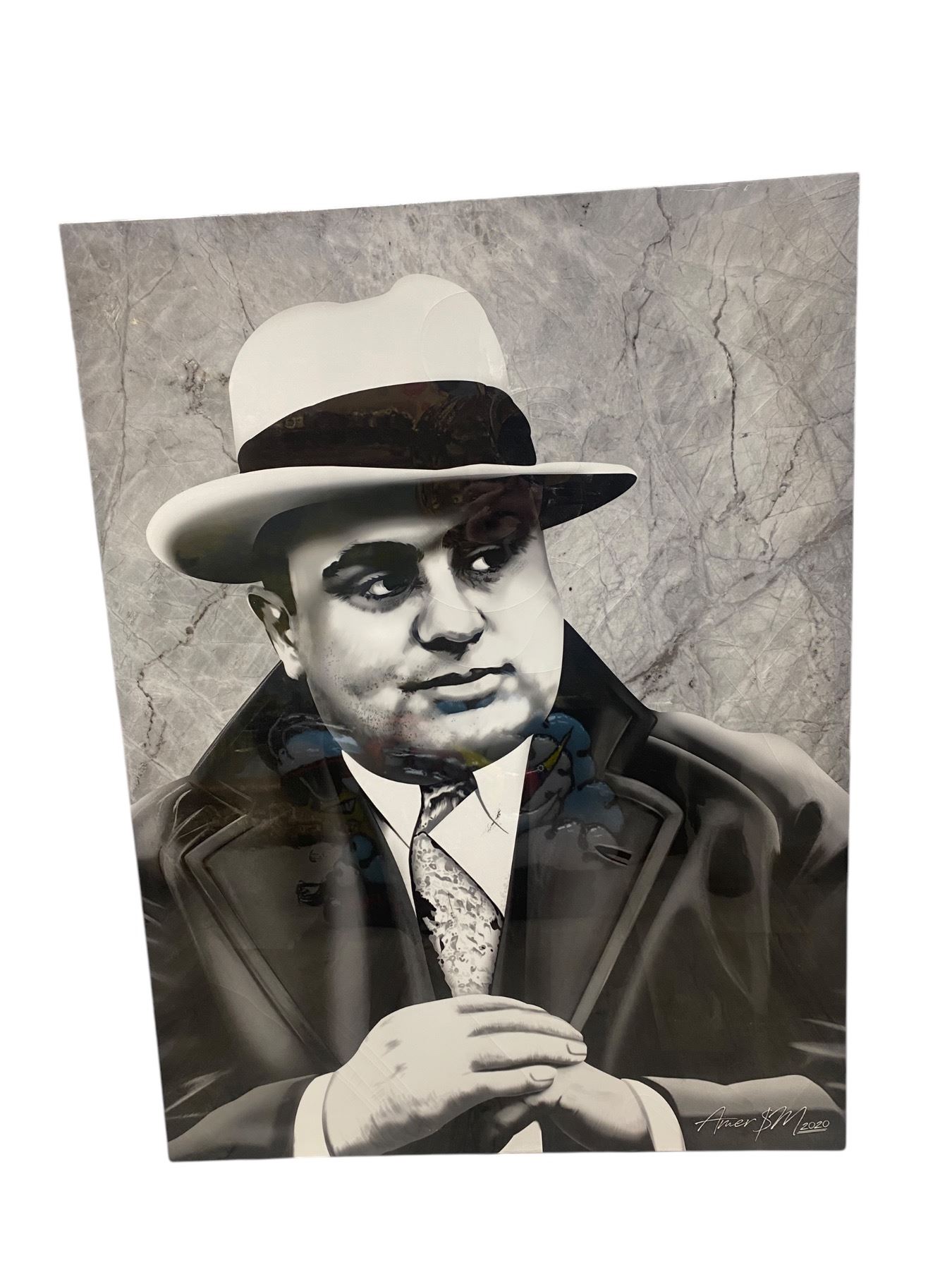
In the year 2026, the fascination with Al Capone persists as a fixture of American folklore. He remains the archetype of the 20th-century gangster—the cigar-chomping, fedora-wearing outlaw who defied the state. This image has been cemented by countless films, such as The Untouchables (1987) and Scarface (1932/1983), although these depictions often prioritize the myth over the brutal reality of his operations.
Historically, Capone’s legacy is more complex. He serves as a case study in the unintended consequences of social legislation (Prohibition) and the evolution of federal law enforcement. The FBI’s investigative history of the era highlights how the hunt for Capone forced agencies to modernize their forensic and accounting capabilities. Furthermore, Capone's "Public Enemy No. 1" designation was the precursor to the modern Most Wanted lists used by law enforcement today.
Did Al Capone ever personally kill anyone?
While Capone was suspected of several murders during his early years in Brooklyn and Chicago, including the killings of rivals like Joe Howard, he was never convicted of a violent crime. Most of the violence associated with his name was carried out by his subordinates. Historians generally agree that while he was a violent man capable of personal brutality, his primary role was that of an executive who ordered hits rather than executing them himself.
What happened to Al Capone's money after his death?
Much of Capone's wealth vanished through legal fees, fines, and the mismanagement of his assets during his long imprisonment. Because his income was illegal and largely kept in cash or laundered through various fronts, there was no traditional "inheritance" for his family. While some rumors of buried treasure or hidden vaults (like the infamous Geraldo Rivera televised opening in 1986) persisted, no significant hidden fortune was ever recovered.
Why was he sent to Alcatraz instead of a regular prison?
Capone was sent to Alcatraz specifically to break his influence over the Chicago Outfit. In the Atlanta penitentiary, he had used his wealth to bribe guards and officials to receive special treatment, including fine furniture, radio access, and the ability to run his business from his cell. Alcatraz was designed as a "supermax" facility where such corruption was virtually impossible, effectively isolating him from the outside world.
How did the public feel about Capone during his reign?
Public opinion was deeply divided. During the early 1920s, many saw him as a "social bandit" who provided a service (alcohol) that the government unfairly banned. His charitable acts, like the 1931 soup kitchen, gained him temporary popular support. However, after the St. Valentine's Day Massacre, the tide turned significantly. The public became weary of the street warfare and the blatant corruption of the police and courts, leading to widespread support for the federal crackdown.
Is the "Scarface" from the movies the same as Al Capone?
The 1932 film Scarface was loosely based on the life of Al Capone, though the character's name was changed to Tony Camonte. The 1983 remake starring Al Pacino shifted the setting to 1980s Miami and focused on the cocaine trade, but it retained the nickname and the general theme of a violent rise and fall. While the original movie was inspired by Capone, both films are works of fiction that dramatize and alter historical facts for cinematic effect.
Seeking Historical Context and Verified Records
For those researching the life of Al Capone in 2026, it is essential to distinguish between the sensationalized accounts of the "Gangster Era" and verified historical documentation. The most accurate information is found in the archives of the National Archives and Records Administration (NARA), which holds the original court transcripts and IRS investigative files from his tax evasion trial. These documents provide a granular look at the financial inner workings of the Chicago Outfit and the meticulous legal strategy that eventually ended Capone’s career. Exploring these primary sources offers a more profound understanding of how organized crime influenced American law and urban development in the early 20th century.