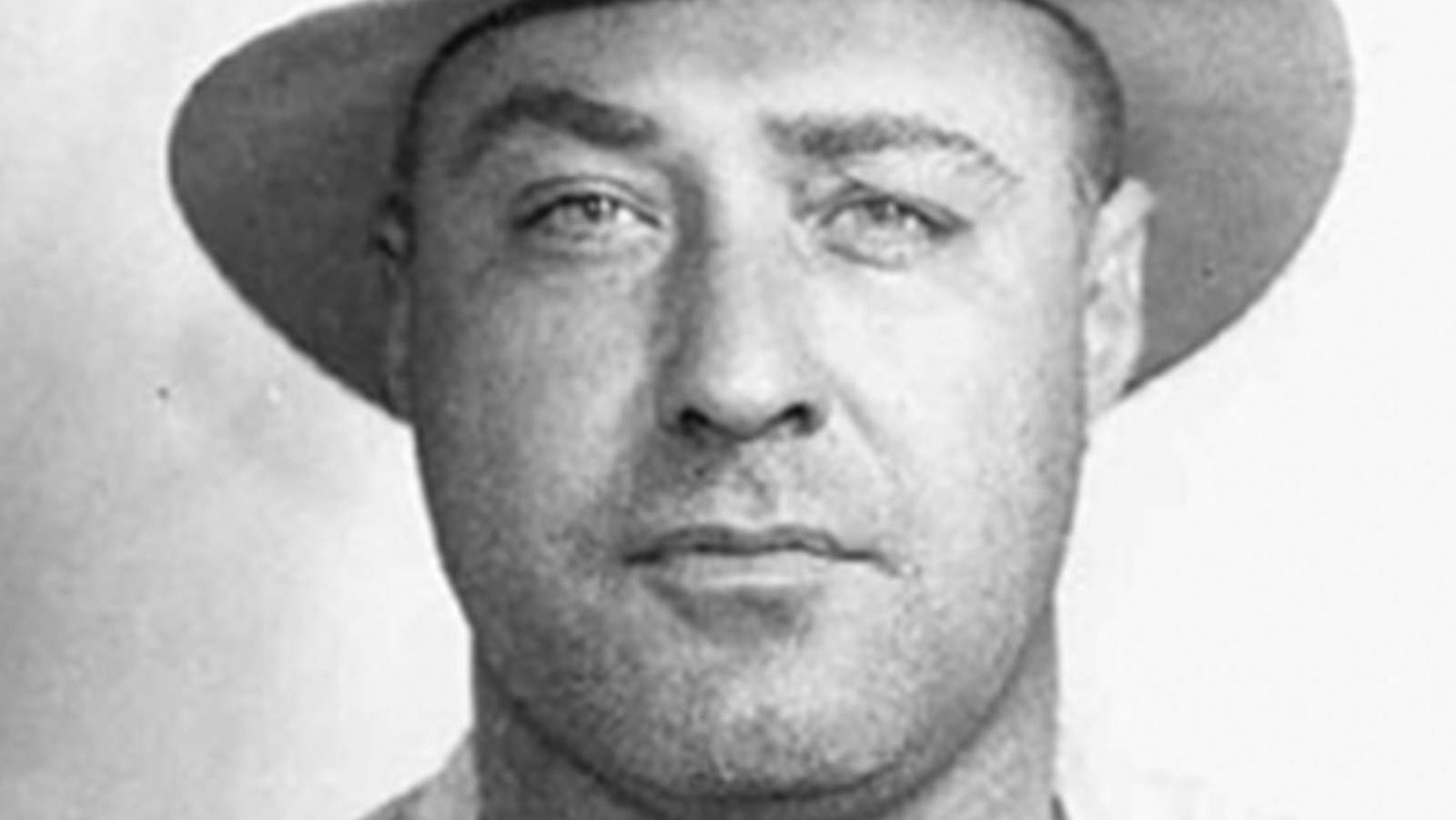
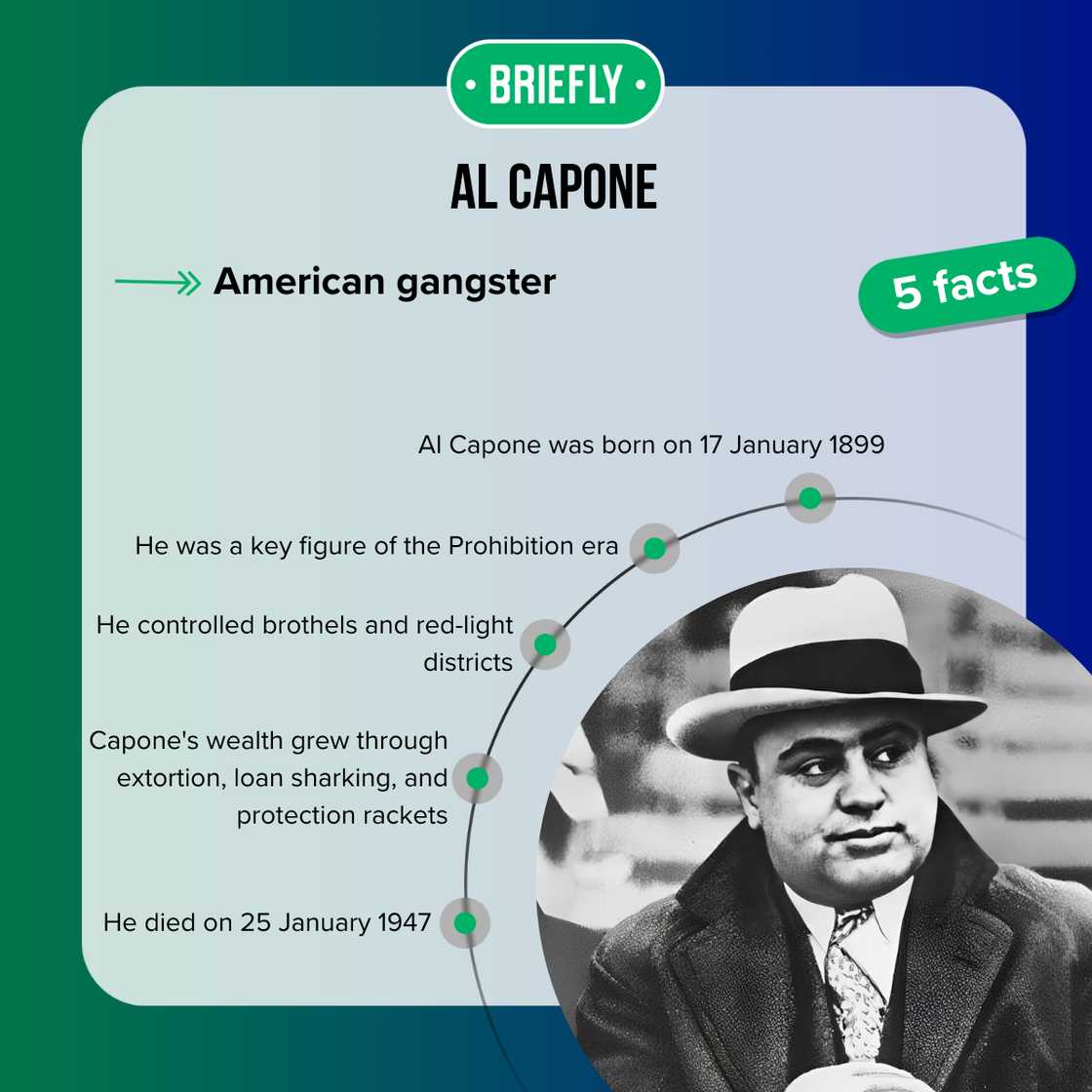
At the height of Prohibition, Al Capone’s estimated annual revenue reached $105 million, equivalent to over $1.8 billion in 2026 currency. Conversely, Machine Gun Kelly operated on a smaller, more transactional scale, famously securing a $200,000 ransom ($4.5 million today) through kidnapping. Their "net worth" was defined by volatile cash flows and heavy overhead in bribes.
The Economics of the Chicago Outfit: Al Capone’s Financial Empire
Alphonse "Al" Capone did not just lead a gang; he chaired a sophisticated corporate entity known as the Chicago Outfit. By 1927, the US government estimated that Capone's organization was generating roughly $105 million in gross annual revenue. To understand Capone’s net worth, one must look at the diversified nature of his "business" interests. Unlike modern legitimate CEOs, Capone’s salary was effectively the net profit of the syndicate after significant operational expenses.
Bootlegging was the cornerstone of this empire, accounting for roughly $60 million of the annual gross. This involved a complex supply chain including the operation of breweries, international smuggling routes for Canadian whiskey, and a vast distribution network of "speakeasies." However, the Chicago Outfit was also heavily involved in gambling ($25 million), vice ($10 million), and various racketeering enterprises ($10 million).
The overhead for maintaining such a fortune was astronomical. Capone reportedly spent millions annually on "protection"—a euphemism for bribing police officers, politicians, and federal agents. It is estimated that half of Chicago's police force was on the Outfit’s payroll during the late 1920s. Despite these costs, Capone’s personal lifestyle reflected a man of immense wealth, featuring armored limousines, custom-tailored suits, and the infamous Florida estate on Palm Island. In the context of 2026, Capone’s peak liquid net worth would have comfortably placed him among the world's billionaires, though his assets were largely hidden through layers of front companies and cash-heavy operations.
Machine Gun Kelly’s Revenue Streams: Kidnapping and Bootlegging
George "Machine Gun" Kelly Barnes occupied a different niche in the criminal underworld. While Capone was a "managerial" gangster who rarely pulled a trigger after his rise to power, Kelly was an active operative whose income was more sporadic and high-risk. Kelly began his career as a small-time bootlegger in Memphis but eventually shifted toward bank robbery and high-stakes kidnapping as federal pressure on alcohol smuggling intensified.
The most significant contribution to Machine Gun Kelly’s net worth came from the 1933 kidnapping of oil tycoon Charles F. Urschel. Kelly and his accomplices successfully extorted a ransom of $200,000. In 2026 values, this single "salary" payment would exceed $4.5 million. However, Kelly lacked the organizational infrastructure that Capone enjoyed. His wealth was not a self-sustaining ecosystem of recurring revenue; it was the result of high-stakes "scores."
Kelly’s financial downfall was as rapid as his rise. The Urschel kidnapping triggered the newly passed "Lindbergh Law," which allowed the FBI to intervene in kidnapping cases that crossed state lines. Unlike Capone, who faced financial ruin through the IRS, Kelly’s wealth was largely seized or spent while he was on the run. His "gangster salary" was high for a short period, but he lacked the laundered assets required to maintain his fortune during his life sentence at Alcatraz and Leavenworth.
Comparing the Fortunes: Capone vs. Kelly
The financial disparity between Al Capone and Machine Gun Kelly highlights the difference between organized syndicate leadership and high-profile banditry. The following table provides a breakdown of their financial metrics, adjusted for the economic climate of 2026.
| Financial Metric | Al Capone (The "Big Fellow") | Machine Gun Kelly |
|---|---|---|
| Peak Annual Gross | ~$105 Million (1927) | ~$250,000 (Estimated 1933) |
| Primary Revenue Source | Alcohol Distribution & Gambling | Kidnapping & Bank Robbery |
| Operational Strategy | Vertical Integration / Bribery | Small-cell tactical strikes |
| Estimated 2026 Equivalent | $1.8+ Billion | $4.5 - $5.5 Million |
| Primary Financial Exit | Tax Evasion Conviction (1931) | Kidnapping Conviction (1933) |
| Asset Liquidity | High (Cash-heavy business) | Low (Stolen/Marked currency) |
This comparison illustrates that while Kelly was wealthy by the standards of a common citizen, he was a "middle-class" criminal compared to the institutional wealth generated by Capone. Capone operated the equivalent of a Fortune 500 company, whereas Kelly operated more like a high-risk startup with no long-term sustainability.
Laundering and Loss: Where Did the Millions Go?
For both Capone and Kelly, the primary challenge was not just earning money, but keeping it. In the 1920s and 30s, modern anti-money laundering (AML) laws did not exist, but the Internal Revenue Service (IRS) was beginning to use tax laws as a weapon against organized crime. Capone used several "front" businesses, including his famous "Free Soup Kitchens" and cleaning services, to mask the origins of his income. This is actually where the term "money laundering" is often said to have originated—using laundromats as a legitimate front for illegal cash.
Despite his efforts, Capone was notoriously sloppy with his personal ledger. The prosecution that eventually brought him down relied on "the bookkeeper's testimony"—ledgers that showed millions of dollars in income that had never been declared to the IRS. By the time Capone was released from prison in 1939, his mental health was failing due to neurosyphilis, and his empire had been carved up by rivals. Much of his hidden wealth was either seized by the government in back taxes and fines or drained by his family to pay for his medical care.
Machine Gun Kelly’s fortune faced a different fate. Because his wealth was primarily derived from the Urschel kidnapping, much of the cash was marked or had recorded serial numbers. The FBI was able to track the ransom money as Kelly and his wife, Kathryn, attempted to spend it while crossing the country. This made his "net worth" functionally useless, as any attempt to utilize the capital increased the risk of capture.
The IRS and the End of the "Gangster Salary"
The downfall of the Great Depression-era gangsters changed how the US government approached high-net-worth individuals in the criminal sector. The successful prosecution of Al Capone for tax evasion established a legal precedent: even if the government could not prove the underlying crime (murder or bootlegging), they could prove the discrepancy between a person’s lifestyle and their reported income.
The "Gangster Salary" was effectively killed by the Revenue Act of 1913 and subsequent amendments, which the Supreme Court upheld in the case of United States v. Sullivan (1927). The court ruled that even gains from illicit businesses were subject to federal income tax. This forced gangsters like Capone and Kelly into a financial "Catch-22." If they reported their income, they admitted to crimes; if they didn't, they were guilty of tax evasion.
For Machine Gun Kelly, the financial pressure was less about taxes and more about the "cost of flight." A fugitive's net worth devalues rapidly because they must pay a premium for everything—safe houses, forged documents, and silence. Historical records suggest that by the time of his arrest in Memphis in September 1933, Kelly was nearly broke, having spent the bulk of the Urschel ransom on the logistics of evading the Federal Bureau of Investigation.
Modern Value: Adjusting 1920s Fortunes for 2026
To understand the scale of these fortunes today, we must apply a compounding inflation multiplier. Between 1927 and 2026, the purchasing power of the dollar has shifted significantly. A $100 bill in Capone’s pocket would have the same relative economic power as roughly $1,800 today.
When historians discuss Capone’s $100 million fortune, they are often discussing gross syndicate revenue. His personal "salary"—the money he could spend freely—was likely closer to $10 million to $20 million per year. In 2026, that represents an annual personal income of $180 million to $360 million. This puts Capone in the same financial bracket as modern elite athletes or top-tier hedge fund managers.
Machine Gun Kelly’s kidnapping ransom of $200,000, while substantial, represents a "one-time" windfall. In 2026, a $4.5 million windfall is a life-changing amount of money, but it does not provide the generational, city-altering power that Capone’s billions offered. The "gangster salary" of the 1930s was a high-risk, high-reward proposition that almost universally ended in total asset forfeiture or death.
FAQ
How much was Al Capone’s net worth when he died?
By the time of his death in 1947, Al Capone’s net worth was a fraction of his Prohibition-era peak. Most of his tangible assets had been seized by the IRS to cover back taxes, which totaled over $215,000 in 1931 (nearly $4.8 million in 2026 dollars). While his family remained comfortably middle-class, the billion-dollar empire was completely dismantled.
Did Machine Gun Kelly ever spend the Urschel ransom?
Kelly and his wife managed to spend or distribute a portion of the $200,000 ransom, but the FBI’s rapid response and the marking of the bills made the money difficult to use. A significant amount was recovered by federal agents following the arrests of the Kellys and their associates, the Shannon family.
What was the typical "salary" for a foot soldier in Capone’s gang?
A standard "soldier" or "torpedo" in the Chicago Outfit could expect to earn between $75 and $250 per week in the late 1920s. In 2026 terms, this equates to roughly $1,300 to $4,500 per week, or an annual salary of $67,000 to $230,000. This high pay was necessary to offset the extreme risk of death or imprisonment.
Why was Al Capone caught for taxes instead of bootlegging?
The federal government lacked the evidence to tie Capone directly to the murders and alcohol distribution because he used intermediaries for all illegal acts. However, his lavish lifestyle provided "visible wealth" that did not match his tax filings. The Special Intelligence Unit of the Treasury used his own spending records against him.
How does Machine Gun Kelly’s wealth compare to modern criminals?
Kelly’s $4.5 million (2026 equivalent) score is comparable to a modern high-end cybercriminal or a mid-level drug distributor. He lacked the "industrial" scale of wealth seen in modern cartels or Capone’s syndicate, which functioned more like a state-level economy.
Assessing the Legacy of Criminal Wealth
The financial histories of Al Capone and Machine Gun Kelly serve as a case study in the volatility of illicit fortunes. While the "gangster salary" of the 1920s and 30s reached heights that rival modern billionaires, the lack of legal protection and the inevitable intervention of federal authorities meant that these fortunes were almost never preserved. For the modern reader or researcher, the primary takeaway is that while Capone’s empire was a masterpiece of illegal "business" architecture, it was ultimately a house of cards that collapsed under the weight of its own unreported income.