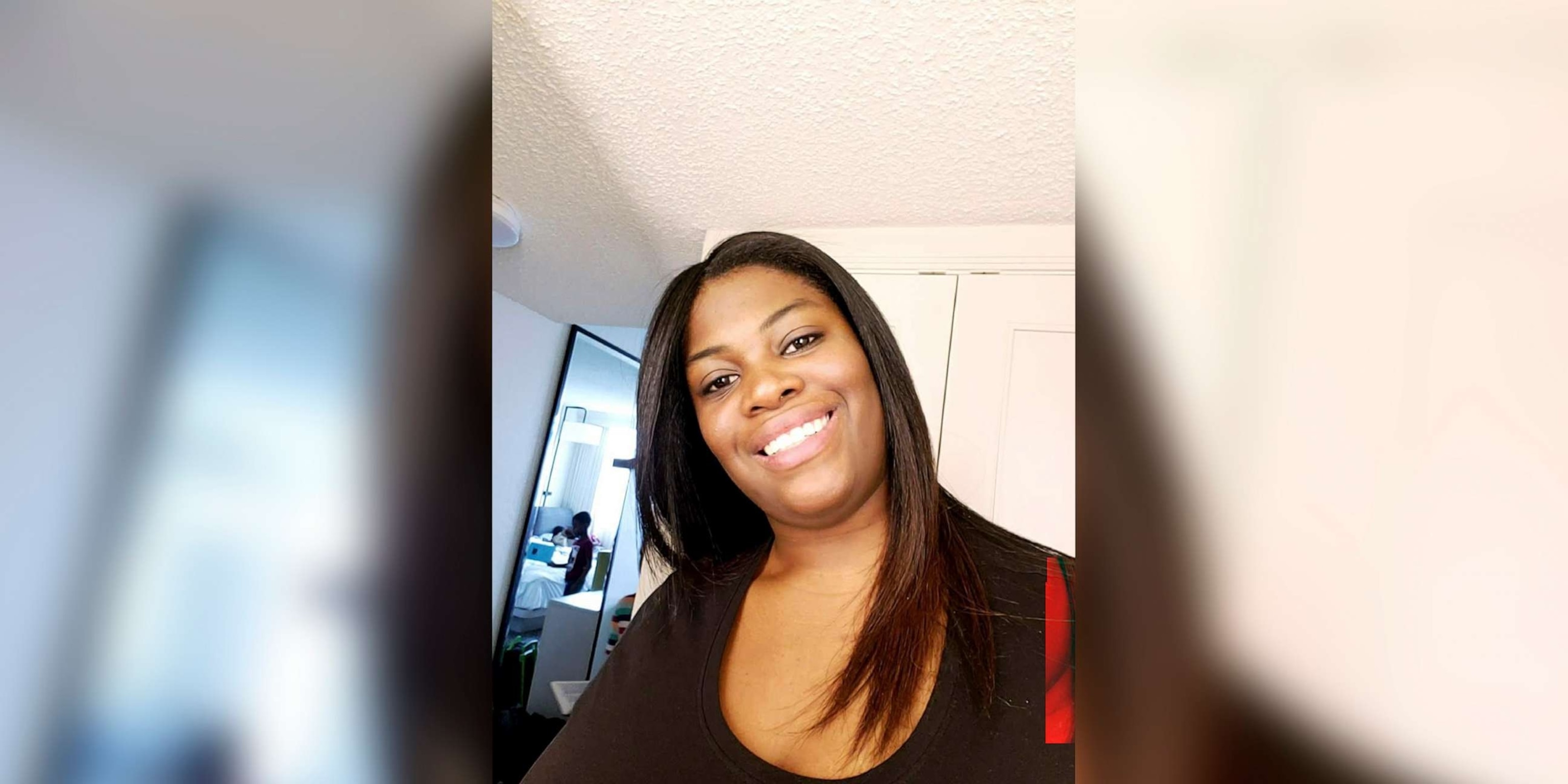
The killing of Ajike “AJ” Owens, a 35-year-old mother of four, in June 2023, sparked an intense national debate regarding Florida’s "Stand Your Ground" laws and the limits of self-defense. Following a high-profile trial in August 2024, her shooter, Susan Lorincz, was convicted of manslaughter and subsequently sentenced to 25 years in prison. As of 2026, the case remains a pivotal reference point for legal standards surrounding the use of deadly force against unarmed individuals through closed barriers.
The Incident: June 2, 2023, in Ocala, Florida
The tragedy unfolded in a quiet neighborhood in Ocala, Marion County, Florida. Ajike Owens, known to her friends and family as a devoted mother and community member, went to her neighbor’s door to address a long-standing dispute. The neighbor, 58-year-old Susan Lorincz, had reportedly been engaged in a pattern of harassment against Owens’ children, who frequently played in a common grass area between their apartment buildings.
On the evening of June 2, witnesses and investigators reported that Lorincz had become angered by the children playing nearby. She allegedly threw a rollerblade at one of the children and swung an umbrella at them. When the children told their mother what had happened, Owens walked across the lot to Lorincz’s front door to advocate for her children.
According to police reports and court testimony, Owens knocked on the door and demanded that Lorincz come outside to speak. Lorincz did not open the door. Instead, she fired a .380 caliber handgun through the closed deadbolted door. The single bullet struck Owens in the chest while her young son stood beside her. Owens was rushed to a nearby hospital, where she was pronounced dead.
The immediate aftermath was marked by confusion and community outrage. Because the shooting occurred in Florida, a state with robust self-defense statutes, the Marion County Sheriff’s Office did not immediately arrest Lorincz. Sheriff Billy Woods stated that under the "Stand Your Ground" law, investigators had to first determine whether the use of force was legally justified before an arrest could be made. This delay fueled nationwide protests and calls for "Justice for AJ."
The Legal Battle and the Stand Your Ground Threshold
The core of the legal controversy surrounding the Ajike Owens case centered on Florida Statute 776.013, commonly known as the "Stand Your Ground" law. This statute allows individuals to use deadly force if they reasonably believe such force is necessary to prevent imminent death or great bodily harm to themselves or others.
For several days, prosecutors and law enforcement scrutinized Lorincz’s claim that she acted in self-defense because she "feared for her life." However, the evidence quickly mounted against this defense. Under Florida law, for a "Stand Your Ground" defense to be valid, the threat must be imminent. Legal experts argued that a person standing outside a locked, solid door does not constitute an imminent threat of death or great bodily harm to a person inside who is armed.
On June 6, 2023, four days after the shooting, Lorincz was arrested. The State Attorney’s Office for the Fifth Judicial Circuit eventually charged her with manslaughter with a firearm, rather than second-degree murder. This decision was met with criticism from the Owens family and their legal representatives, including civil rights attorney Ben Crump, who argued that the act of firing through a door showed a "depraved mind," the legal threshold for murder.
The prosecution clarified that while the act was heinous, proving "ill will, hatred, spite, or an evil intent" (the specific requirements for second-degree murder in Florida) at the exact moment of the trigger pull is a significantly higher evidentiary bar than proving the "culpable negligence" required for manslaughter.
The Trial of Susan Lorincz: August 2024
The trial of Susan Lorincz began in August 2024. The prosecution’s strategy focused on the lack of an immediate threat and the history of racial animus Lorincz had shown toward the Owens family and other neighbors. Testimony from neighbors and digital evidence revealed that Lorincz had frequently used racial slurs and had expressed irrational anger toward the neighborhood children for years.
Key evidence presented during the trial included:
- The Physical Barrier: The fact that the door was locked and deadbolted.
- Forensic Evidence: The trajectory of the bullet, confirming it was fired blindly through the door.
- Witness Testimony: Neighbors testified that Owens was not attempting to break in, but was merely knocking and speaking loudly.
- Lorincz’s Statements: Recordings of Lorincz’s interviews with detectives where her story of "fearing for her life" appeared inconsistent with the physical reality of the scene.
The defense argued that Lorincz was a frail woman who felt besieged by the "rowdy" children and feared that Owens, who was younger and larger, would break down the door. They attempted to paint a picture of a woman suffering from anxiety who reacted in a moment of panic.
The jury rejected the self-defense claim. After less than three hours of deliberation, the jury found Susan Lorincz guilty of manslaughter with a firearm.
Sentencing and the 2026 Perspective
In late 2024, the court moved to the sentencing phase. Under Florida law, manslaughter with a firearm is a first-degree felony punishable by up to 30 years in prison. The prosecution sought the maximum sentence, citing the presence of Owens' children at the scene and the defendant's lack of remorse.
The judge sentenced Susan Lorincz to 25 years in the Florida Department of Corrections. As of 2026, Lorincz remains incarcerated, and her legal team’s attempts to appeal the conviction based on jury instructions regarding the "Stand Your Ground" law have largely been unsuccessful.
The sentencing was seen as a significant victory for the Owens family, though they maintained that the charge should have been murder. The case has served as a warning that "Stand Your Ground" is not a "get out of jail free" card for those who use deadly force in non-life-threatening situations.
Legal Comparison: Manslaughter vs. Second-Degree Murder in Florida
| Feature | Manslaughter (Firearm) | Second-Degree Murder |
|---|---|---|
| Standard of Intent | Culpable negligence or intentional act without premeditation. | A "depraved mind" regardless of human life; ill will or spite. |
| Max Sentence | Up to 30 years in prison. | Up to life in prison. |
| Burden of Proof | Must prove the defendant showed reckless disregard for life. | Must prove specific malice or hatred toward the victim. |
| Application in Owens Case | Selected by prosecutors as the most "provable" charge. | Desired by the family but deemed harder to prove by the State. |
Florida's "Stand Your Ground" Law and the Owens Precedent
The Ajike Owens case has had a lasting impact on how "Stand Your Ground" is interpreted in the state of Florida. By 2026, legal scholars have cited this case as a definitive boundary for the "castle doctrine" and self-defense statutes.
The case established three critical points for future litigation:
- The Door as a Threshold: A locked door provides a significant legal buffer. Courts are increasingly unlikely to grant immunity to shooters who fire through barriers when there is no evidence of an attempted breach.
- Provocation and History: The court allowed evidence of Lorincz’s prior behavior to be admitted, showing that a defendant’s history of escalating conflict can undermine a claim of "reasonable fear."
- The Presence of Children: The fact that children were witnesses and near-victims (one was nearly hit) played a role in the public and legal perception of the "reasonableness" of the force used.
The case also reignited legislative discussions about amending Florida Statute 776.032 to require a higher burden of proof for defendants seeking immunity before a trial can occur. While the law has not been significantly rewritten as of 2026, the Owens case remains the primary example used by advocates for reform.
Legacy and Advocacy for Justice
Beyond the courtroom, the legacy of Ajike Owens is carried on by her family and the "Justice for AJ" foundation. The foundation focuses on supporting the four children she left behind and advocating for sensible changes to self-defense laws that protect victims of unprovoked violence.
Her mother, Pamela Dias, has become a prominent voice in civil rights, speaking at national forums about the intersection of race and the legal system’s application of self-defense. The case is frequently discussed alongside the deaths of Trayvon Martin and Jordan Davis, highlighting a perceived disparity in how "fear" is validated by juries depending on the race of the victim and the shooter.
The community in Ocala has also honored Owens by advocating for better recreational spaces for children, ensuring that the "dispute over a field" that led to her death results in a safer environment for the next generation.
FAQs Regarding the Ajike Owens Case
What was the final sentence for Susan Lorincz?
Susan Lorincz was sentenced to 25 years in prison following her conviction for manslaughter with a firearm. This sentence reflects the gravity of the crime and the fact that a firearm was used, which enhances the penalty under Florida's 10-20-Life statutes.
Why was she not charged with murder?
Prosecutors opted for a manslaughter charge because it required proving "culpable negligence" rather than the "depraved mind" or "malice" required for second-degree murder. In many Florida cases, manslaughter is easier to prove to a jury when the intent to kill is less clear than the intent to fire the weapon.
Did the "Stand Your Ground" law protect the shooter?
Initially, the law delayed the arrest of Susan Lorincz while the Sheriff's Office investigated her claim of self-defense. However, during the trial, the "Stand Your Ground" defense was rejected because the jury found that Lorincz did not have a "reasonable" fear of imminent death or great bodily harm while behind a locked door.
How has the case affected Florida law as of 2026?
While the text of the law remains largely the same, the case has set a strong judicial precedent. It clarifies that the "Castle Doctrine" (protecting one’s home) does not permit shooting through a closed door at someone who is merely knocking or shouting, regardless of the homeowner's subjective level of fear.
What happened to Ajike Owens' children?
Ajike Owens' four children are being raised by their grandmother, Pamela Dias. The family has received significant support from the community and civil rights organizations to ensure the children have access to education and mental health resources following the trauma of witnessing their mother's death.
Seeking Legal Clarity in Self-Defense Cases
For individuals or legal professionals monitoring the evolution of self-defense statutes, the Ajike Owens case serves as a critical study in the limitations of the "Stand Your Ground" defense. It is essential to understand that self-defense laws require a "reasonable" belief of an "imminent" threat. Those seeking further information on Florida's specific statutes should consult the Florida Senate's official records on Chapter 776.
If you are involved in a dispute or feel threatened, the legal precedent set by this case emphasizes the importance of de-escalation and contacting law enforcement rather than resorting to lethal force, especially when a physical barrier like a locked door already provides safety.