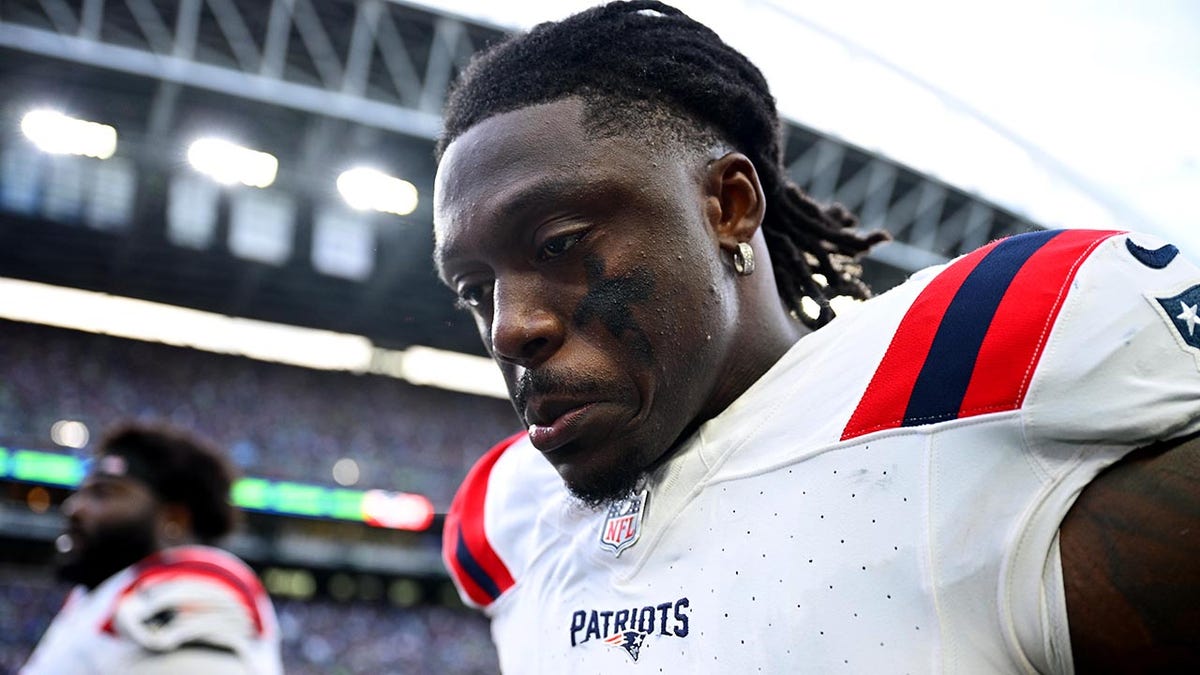
Arthur Juan "A.J." Brown has established himself as one of the most dominant and technically proficient wide receivers in the National Football League. Known for his combination of size, strength, and precise route-running, Brown has evolved from a standout prospect at the University of Mississippi into an essential pillar of the Philadelphia Eagles' offensive strategy. His professional trajectory serves as a benchmark for modern wide receiver play, characterized by elite yards-after-catch (YAC) ability and the capacity to perform under significant physical pressure.
Early Career and Collegiate Development
A.J. Brown’s path to the professional level began at Starkville High School in Mississippi, where his dual-sport capabilities earned him significant attention from collegiate recruiters. He committed to the University of Mississippi (Ole Miss), where he played from 2016 to 2018. During his time in the Southeastern Conference (SEC), Brown became a prototypical "big-bodied" receiver, utilizing his frame to win contested catches against some of the most rigorous defensive schemes in college football.
His collegiate statistics underscored his potential for professional success. Over his three seasons, he accumulated over 2,900 receiving yards and 19 touchdowns. His ability to operate both in the slot and on the perimeter provided versatility that made him a prime candidate for the 2019 NFL Draft. He was selected by the Tennessee Titans in the second round (51st overall), a draft positioning that many analysts retrospectively categorized as a significant value acquisition for the organization.
Professional Evolution with the Tennessee Titans
Upon entering the NFL in 2019, Brown immediately transitioned into a primary target for the Titans. His rookie season served as a statement of intent, as he surpassed 1,000 receiving yards—a rare feat for a first-year wide receiver. His performance during this era was defined by his physical play style. Unlike receivers who rely solely on speed to create separation, Brown leveraged his contact balance to break tackles, often turning short crossing routes into explosive plays.
During his tenure in Tennessee, Brown became the centerpiece of an offense that prioritized high-efficiency passing and play-action concepts. His synergy with the team’s offensive scheme allowed him to develop into a consistent "X" receiver, capable of beating double coverage and providing a reliable outlet on third downs. By the end of his time with the Titans, he had secured a reputation as one of the league’s most difficult players to bring down in the open field, ranking among the top receivers in the NFL in YAC per reception.
Trade to the Philadelphia Eagles and Strategic Impact
The 2022 offseason marked a pivotal shift in Brown’s career when he was traded to the Philadelphia Eagles. The acquisition signaled a commitment by the Eagles to elevate their passing attack, pairing Brown with quarterback Jalen Hurts. Since joining the franchise, Brown’s production has reached new heights, further cementing his status as an elite NFL wide receiver.
His role in Philadelphia involves acting as a primary vertical threat while maintaining his utility as a physical presence across the middle of the field. The Eagles’ offensive system, which features a heavy emphasis on RPO (Run-Pass Option) and vertical concepts, plays directly into Brown’s strengths. His ability to track the ball downfield while maintaining physical positioning against defensive backs has been a significant factor in the Eagles’ sustained offensive success through the mid-2020s.
Technical Analysis of Elite Wide Receiver Play
To understand A.J. Brown’s impact, one must examine the technical requirements of the modern wide receiver position. Brown operates at a high level due to several core competencies:
- Contact Balance: Brown possesses an unusual ability to absorb hits from defensive backs and linebackers without losing momentum. This is a critical factor in his league-leading YAC statistics.
- Route Discipline: While he is physically imposing, his success is also derived from precise footwork at the top of his routes. He effectively uses head fakes and body language to manipulate defenders, creating just enough window for his quarterback to deliver the ball.
- Catch-Point Aggression: Many receivers prioritize speed; Brown prioritizes space. He excels at "boxing out" defenders, treating the ball as a possession to be secured rather than merely caught. This approach is highly effective in red-zone scenarios.
Statistical Comparison of Receiving Profiles
The following table provides a general framework for evaluating the performance profile of an elite wide receiver like A.J. Brown compared to common archetypes in the modern NFL.
| Attribute | A.J. Brown (Power-Physical) | Deep Threat (Speed-Vertical) | Slot Specialist (Agility-Quickness) |
|---|---|---|---|
| Primary Strength | Yards After Catch | Separation Speed | Short-Area Quickness |
| Target Depth | High (10-15 yards) | Very High (15+ yards) | Low (5-10 yards) |
| Physicality | High | Low | Moderate |
| Best Usage | Boundary/Intermediate | Perimeter/Go-Routes | Middle of Field/Seams |
Physical Requirements and Conditioning
Maintaining a career at the standard set by Brown requires a rigorous approach to physical conditioning. In the NFL, receivers endure significant wear and tear throughout a 17-game season. For a receiver with Brown’s physical playing style, the focus is placed on core stability and lower-body strength.
Professional conditioning for elite receivers typically involves:
- Explosive Training: Improving first-step quickness to create initial separation from cornerbacks.
- Injury Mitigation: Targeted work on hamstrings and glutes to handle the repetitive deceleration required when making sharp cuts during route stems.
- Functional Strength: Maintaining the upper-body mass required to push through press coverage at the line of scrimmage, which is often used by defensive coordinators to disrupt timing-based offenses.
Addressing Common Misconceptions
There is often a debate regarding whether A.J. Brown’s success is a product of his physical stature or his intellectual approach to the game. While his size is undeniable, it is a common misconception that he relies solely on brute force. Film study reveals that Brown is highly cerebral, often anticipating defensive coverages and adjusting his route depth in real-time. He works closely with coaching staffs to understand the "coverage shell," ensuring he is in the optimal spot as the quarterback transitions through his progressions.
Frequently Asked Questions
How does A.J. Brown compare to other elite wide receivers in the NFL?
A.J. Brown is distinct for his physical style of play. While many elite receivers focus on route separation through extreme speed, Brown relies on catch-point physicality and an elite ability to break tackles after the catch, making him uniquely suited for intermediate and deep-intermediate passing attacks.
What makes A.J. Brown so effective in the "Yards After Catch" (YAC) category?
His effectiveness comes from a combination of low center of gravity and excellent contact balance. He does not go down easily upon initial contact, and he possesses the functional strength to stiff-arm defenders or power through arm tackles that would impede smaller receivers.
What is the most important technical skill for a receiver like A.J. Brown?
The most important skill is his release off the line of scrimmage. Being able to neutralize a defensive back's attempt to "jam" or press him allows him to dictate the tempo of the route, which is essential for his success in the intermediate part of the field.
How do teams typically attempt to defend against A.J. Brown?
Defenses usually employ "bracket" coverage, where a cornerback plays underneath and a safety provides help over the top. By double-teaming him, defensive coordinators hope to force the quarterback to target other receivers, though this often leaves other areas of the field vulnerable to the rest of the offensive unit.
Has A.J. Brown’s playing style changed throughout his career?
While his core philosophy remains the same, he has become more efficient in his route stems. Early in his career, he relied heavily on pure physicality; in recent seasons, he has displayed a more nuanced ability to decelerate and create separation through tactical route adjustments, extending his potential for long-term production.
Next Steps for Fans and Analysts
For those interested in tracking A.J. Brown’s performance, the best approach is to focus on advanced metrics beyond standard yardage and touchdowns. Monitoring "Air Yards" (the distance the ball travels before the catch) versus "YAC" (the distance gained after the catch) provides a clearer picture of how he is being utilized in any given game. Additionally, observing the defensive coverage shells faced by the Eagles reveals how much attention opposing defenses are forced to dedicate to him, which indirectly highlights his value to the team's total offensive efficiency. As the 2026 season progresses, these metrics remain the most reliable way to assess his continued impact on the league.