Airport near misses and close calls represent critical safety indicators in aviation, highlighting systemic vulnerabilities, operational gaps, and communication breakdowns before they escalate into catastrophic accidents. Investigating these incidents provides invaluable lessons for regulatory bodies, air traffic controllers, airline operators, and ground crews, serving as the foundation for continuous safety enhancements across global aviation networks.
Aviation safety heavily relies on the systematic analysis of close calls, officially categorized by regulatory bodies such as the Federal Aviation Administration (FAA) and the International Civil Aviation Organization (ICAO) as runway incursions, altitude deviations, and surface incidents. Understanding the anatomy of these occurrences requires examining human factors, technological limitations, procedural adherence, and environmental pressures that converge on the flight line. By transforming near misses into actionable safety lessons, the aviation industry shifts from a reactive accident-investigation model to a proactive predictive-risk management framework.
Defining Airport Near Misses and Close Calls in Modern Aviation
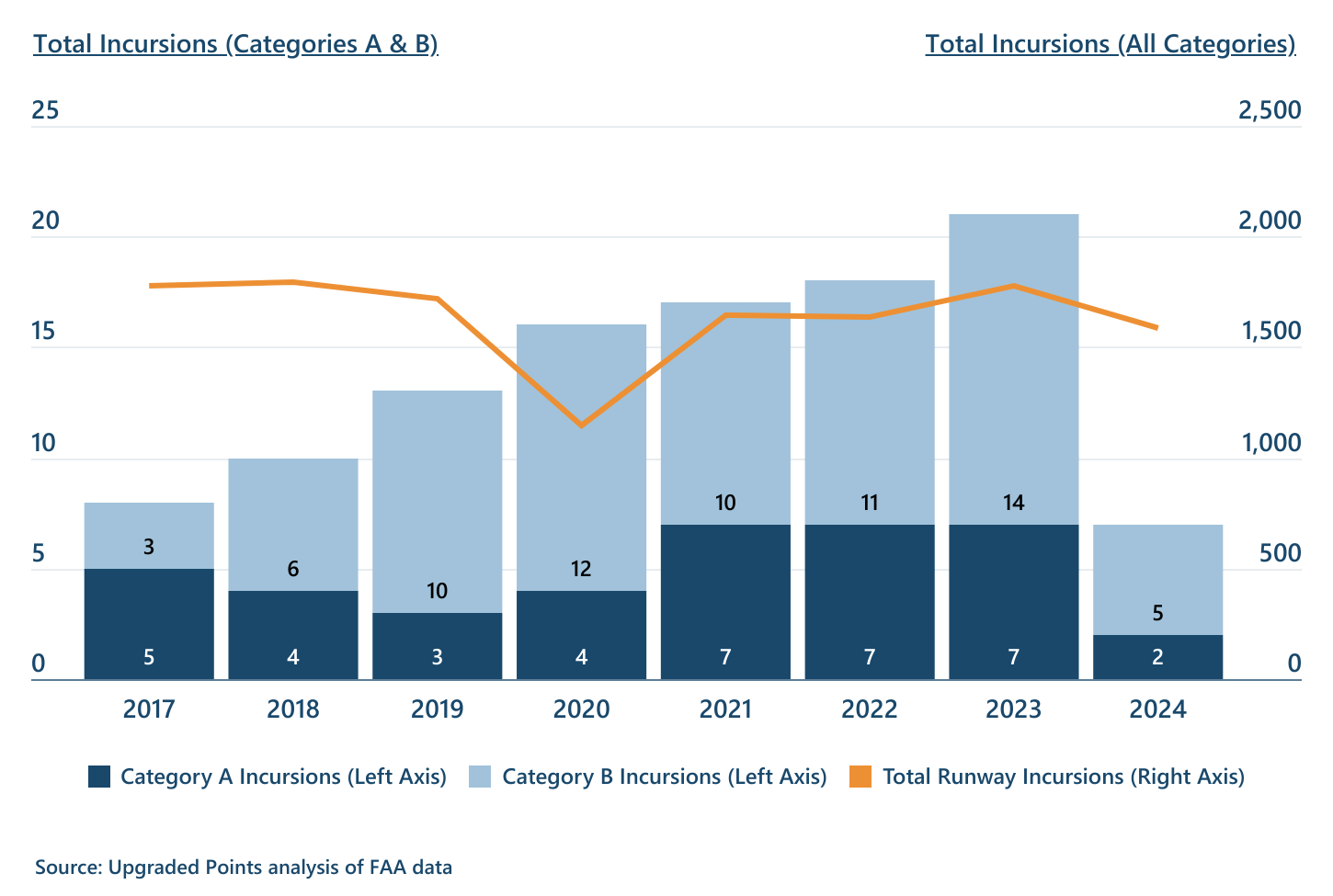
An airport near miss, frequently termed a close call or a runway incursion, occurs when an aircraft, vehicle, or pedestrian takes incorrect action, placing that aircraft or vehicle in proximity to another with an operational risk of collision. According to the Federal Aviation Administration and international standards, these events are categorized by severity, ranging from category D incidents, which involve little chance of collision, up to category A incidents, where a collision was narrowly avoided through last-second evasive action or abrupt intervention.
The taxonomy of these occurrences extends beyond simple runway incursions. Airspace close calls, also known as loss of standard separation (LOSS), happen when aircraft in terminal control areas fail to maintain the legally mandated horizontal or vertical buffer. Ground operational errors, taxiway navigation mistakes, and misunderstood clearance readbacks further contribute to the spectrum of close calls. Recognizing these definitions is essential because regulatory reporting systems depend on precise categorization to track trends, evaluate risk metrics, and implement targeted corrective actions across different airports and air traffic control sectors.
The Anatomy of Runway Incursions and Ground Incidents
Runway incursions remain one of the most persistent safety challenges at commercial and general aviation airports. These incidents typically unfold through a chain of contributing factors rather than a single isolated mistake. Human factors, including fatigue, cognitive overload, visual misinterpretation of airfield signage, and non-standard phraseology during radio communications, frequently initiate the sequence.
Consider a scenario where an air traffic controller issues a holding instruction, but the flight crew misinterprets the clearance due to simultaneous radio transmissions or blocked frequencies. Concurrently, inadequate airport lighting, confusing taxiway geometry, or obscured markings can disorient pilots navigating unfamiliar ground layouts. The convergence of these variables creates a hazardous environment where a potential collision can develop within seconds. Safety investigators analyze these sequences to identify single points of failure, emphasizing the need for redundant verification systems, standardized phraseology, and enhanced situational awareness training for both flight decks and ground personnel.
Human Factors and Communication Breakdowns
Communication is the vital link connecting air traffic controllers, flight crews, and ground vehicle operators. A significant percentage of close calls stem from subtle breakdowns in verbal exchange, such as failing to read back critical hold-short instructions, using ambiguous terminology, or relying on colloquialisms instead of precise aviation English.
Human cognitive limitations also play a profound role in near misses. Expectancy bias—where an individual perceives what they expect to happen rather than what is actually occurring—frequently causes pilots to accept clearances prematurely or mistake an intersecting taxiway for an active runway. Fatigue and high workload periods compound these cognitive vulnerabilities, reducing working memory and reaction times. Addressing these human factors requires rigorous adherence to standard operating procedures, mandatory readback/hearback protocols, and ongoing crew resource management (CRM) training that empowers junior officers to challenge perceived errors made by senior captains or controllers.
Technological Solutions and Infrastructure Enhancements
Mitigating airport close calls requires robust technological defenses that operate independently of human vigilance. Modern airports increasingly deploy advanced surface surveillance and warning systems to provide real-time situational awareness to controllers and flight crews.
| Technology / System | Primary Function | Operational Benefit |
|---|---|---|
| ASDE-X | Airport Surface Detection Equipment, Model X | Integrates radar, multilateration, and satellite data to track surface aircraft and vehicles, alerting controllers to potential collisions. |
| RUNWAY FANTASK | Runway Status Lights (RWSL) | Fully automated, in-pavement lighting system that illuminates red warning lights directly to pilots and vehicle operators when a runway is unsafe to enter or cross. |
| ADS-B In/Out | Automatic Dependent Surveillance-Broadcast | Transmits precise GPS position data between aircraft and ground stations, enhancing traffic visibility in terminal areas. |
| SMGCS | Surface Movement Guidance and Control System | Low-visibility operating procedures and lighting arrays designed to prevent incursions during periods of poor weather and restricted sight lines. |
Beyond ground surveillance, cockpit technologies such as Synthetic Vision Systems (SVS) and Electronic Flight Bag (EFB) moving maps provide flight crews with superior visual references of airfield layouts, substantially reducing the incidence of runway disorientation and wrong-surface takeoffs.
Regulatory Reporting and the Confidential Safety Culture
A cornerstone of modern aviation safety is the establishment of confidential, non-punitive reporting systems that encourage pilots, controllers, and maintenance personnel to report near misses and close calls without fear of retribution. Programs such as the Aviation Safety Reporting System (ASRS) administered by NASA and the FAA allow aviation professionals to submit detailed accounts of safety compromises, providing safety analysts with invaluable raw data regarding systemic vulnerabilities.
Without a robust reporting culture, systemic hazards remain hidden until an accident occurs. Regulatory oversight bodies utilize these voluntary reports to identify recurring hot spots at specific airports, evaluate the effectiveness of newly introduced procedures, and issue safety alerts. Fostering this transparent environment requires organizational trust, management commitment to rectifying reported deficiencies, and a clear distinction between honest operational mistakes and gross negligence or willful rule violations.
Lessons Learned and Proactive Risk Mitigation Strategies
Analyzing historical close calls yields actionable safety lessons that reshape daily operations across the aviation sector. Organizations must transition from a reactive posture—where changes are implemented only after fatalities occur—to a proactive safety management system (SMS) framework that continuously monitors operational data, identifies hazards, and mitigates risks before they result in a near miss.
Key mitigation strategies implemented across major air carrier operations include:
- Mandatory Sterile Cockpit Rules: Enforcing strict limitations on non-essential conversation and activities during critical phases of flight, including taxi, takeoff, and landing.
- Standardized Phraseology Enforcement: Eliminating conversational abbreviations on radio frequencies and strictly adhering to ICAO or national air traffic control communication manuals.
- Airfield Infrastructure Audits: Regularly reviewing signage, lighting, and pavement markings to eliminate confusing intersections and known hot spots.
- Enhanced Controller-Pilot Data Link Communications (CPDLC): Utilizing text-based digital clearances for complex routing instructions to eliminate auditory misunderstandings.
By embedding these lessons into comprehensive training curricula and daily operational habits, the global aviation community continually reinforces the margins of safety necessary to protect passengers, flight crews, and ground personnel.
How Can Aviation Professionals and Passengers Enhance Airfield Safety?
Aviation professionals can enhance airfield safety by strictly adhering to standard operating procedures, maintaining disciplined radio discipline, and utilizing all available cockpit and surface display technologies. Flight crews must execute rigorous cross-cockpit verification of all taxi clearances and runway entry instructions. Passengers can contribute indirectly by supporting safety initiatives, complying with cabin crew instructions during critical phases of flight, and remaining informed about industry safety standards. Ground operators should treat every movement area with heightened vigilance, particularly during low-visibility conditions or unfamiliar airport transits.
What Are the Most Common Causes of Runway Incursions?
The most common causes of runway incursions include pilot deviations (failing to follow air traffic control instructions or misinterpreting airfield signage), controller errors (issuing conflicting clearances or experiencing high workload distraction), and operational vehicle deviations. Contributing factors frequently involve poor visibility, complex airfield geometry, communication breakdowns using non-standard phraseology, and cognitive fatigue among operational personnel.
How Do Confidential Reporting Systems Protect Aviation Workers?
Confidential reporting systems protect aviation workers by decoupling the disclosure of safety errors from punitive regulatory enforcement or employer disciplinary action. Programs like the Aviation Safety Reporting System (ASRS) strip identifying details from submitted reports and grant limited immunity from administrative penalties for unintentional violations. This immunity incentivizes open disclosure, enabling safety analysts to uncover hidden systemic hazards and share critical lessons across the broader aviation industry.
Why Are Low-Visibility Operations Particularly Hazardous for Ground Movements?
Low-visibility operations severely degrade visual cues, forcing pilots and vehicle operators to rely entirely on instruments, surface markings, and specialized lighting systems. When natural line-of-sight awareness is compromised by fog, heavy precipitation, or darkness, the cognitive load required to navigate complex taxiway layouts increases significantly. This environment elevates the risk of spatial disorientation, missed hold-short instructions, and inadvertent runway incursions unless specialized low-visibility surface movement procedures are strictly enforced.
What Role Do Safety Management Systems (SMS) Play in Preventing Close Calls?
Safety Management Systems provide a structured, repeatable framework for commercial airlines, airports, and air navigation service providers to manage safety proactively. SMS mandates hazard identification, risk assessment, continuous data collection, and the implementation of targeted mitigations. By systematically reviewing close call data and operational feedback, organizations can identify emerging failure modes before they manifest as catastrophic accidents.
Implementing Continuous Safety Improvements in Daily Operations
Mitigating airport near misses requires an unwavering, organization-wide commitment to continuous learning and operational discipline. Aviation operators, regulatory authorities, and frontline personnel must treat every close call not as an isolated anomaly, but as a vital diagnostic tool that exposes latent system weaknesses. By fostering transparent reporting cultures, embracing advanced surface detection technologies, and maintaining rigorous adherence to communication standards, the aviation industry can systematically reduce the frequency of runway incursions and sustain the highest levels of global transport safety.