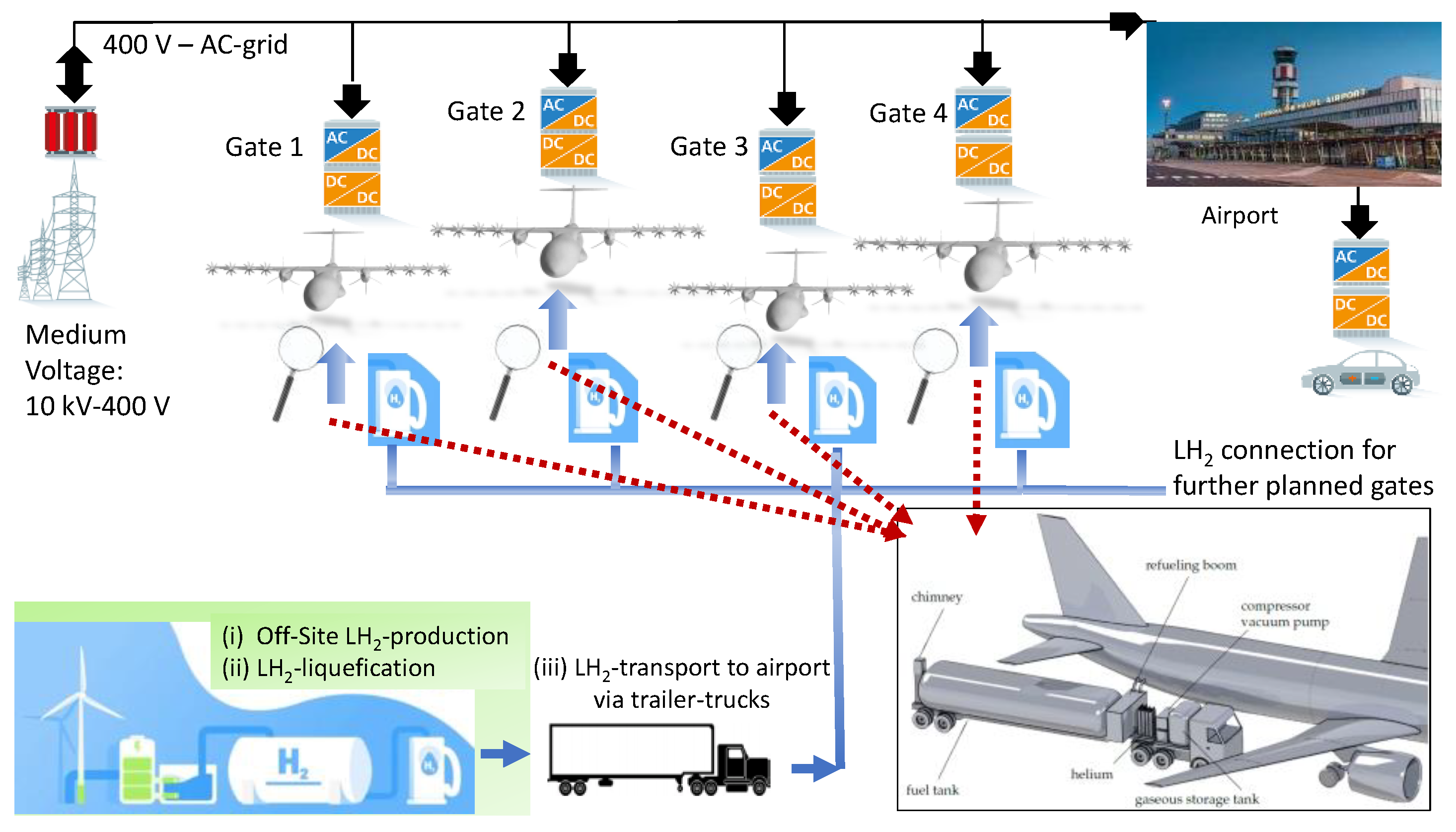
Airport infrastructure encompasses the complex network of physical assets, civil engineering structures, and specialized systems required to support the safe, efficient, and continuous movement of aircraft, passengers, and cargo. From airside runways and taxiways to landside terminal buildings and intermodal transport connections, this capital-intensive sector balances strict regulatory compliance with high-capacity throughput demands.
Modern airport infrastructure serves as the foundational backbone of global aviation, enabling the seamless transition of millions of passengers and billions of tons of cargo annually while integrating advanced air traffic management, sustainable energy solutions, and stringent security protocols.
Core Components of Airside Infrastructure
Airside infrastructure includes all operational zones directly involved in the movement, parking, and servicing of aircraft. These areas require high-durability materials, precise civil engineering, and continuous maintenance to withstand extreme mechanical loads and weathering.
Runways and Pavement Engineering
Runways represent the critical path of any aviation facility, designed to accommodate the impact loads, braking forces, and tire pressures of modern commercial aircraft. Pavement design is broadly categorized into flexible asphalt surfaces and rigid Portland Cement Concrete (PCC) slabs. Engineers determine pavement thickness and composition using specialized methodologies such as the Federal Aviation Administration (FAA) or International Civil Aviation Organization (ICAO) standards, factoring in the Aircraft Classification Number-Pavement Classification Number (ACN-PCN) system.
Runway geometry involves precise grading, longitudinal and transverse slopes for rapid drainage, and safety areas such as Runway Safety Areas (RSAs) and Runway End Safety Areas (RESAs). Grooving is often cut transversely into the pavement surface to prevent hydroplaning by facilitating water runoff during heavy precipitation events.
Taxiways and Aprons
Taxiways connect runways to aircraft parking aprons, maintenance hangars, and terminal gates. They must accommodate the static and dynamic loads of turning aircraft, incorporating widened fillets at intersections to ensure main landing gear stays on paved surfaces. High-speed exit taxiways allow aircraft to vacate runways efficiently, reducing runway occupancy times and increasing overall airfield capacity.
Aprons serve as designated zones for aircraft parking, fueling, loading, and de-icing. These areas frequently utilize rigid concrete pavements resistant to fuel spills and hydraulic fluid degradation. Integrated systems within modern aprons include fixed electrical ground power (FEGP), pre-conditioned air (PCA) units, and underground fueling hydrants that minimize ground support equipment traffic.
Airfield Lighting, Signage, and Markings
Visual aids are indispensable for pilots operating during low-visibility conditions or night operations. Airfield lighting systems are standardized globally and include:
- Runway edge lights and centerline lights emitting variable intensity white and red configurations.
- Touchdown zone lighting and threshold lights to define usable landing surfaces.
- Precision Approach Path Indicators (PAPIs) or Visual Approach Slope Indicators (VASIs) providing vertical guidance on final approach.
- High-intensity taxiway centerline lights and alternating amber/green taxiway guidance systems.
Mandatory instruction signs, featuring white text on a red background, indicate critical boundaries such as runway holding positions. Surface markings, painted with durable, retroreflective thermoplastic materials, delineate holding positions, taxiway centerlines, and prohibited areas.
Landside Infrastructure and Passenger Terminals
Landside infrastructure bridges the gap between surface transportation networks and airside operations, focusing primarily on passenger processing, baggage handling, and multimodal access.
Terminal Building Design and Passenger Flow
The architectural layout of a passenger terminal prioritizes intuitive spatial navigation, processing efficiency, and passenger comfort. Terminal design follows either decentralized or centralized linear concepts, pier fingers, or satellite configurations. Within these structures, spatial zones are strictly separated into non-secure (landside) and secure (airside) areas via screening checkpoints.
Passenger processing involves ticketing, self-service kiosks, baggage drop, and security screening lanes. Modern terminal design incorporates automated border control (ABC) kiosks, biometric boarding gates, and advanced security screening technology that allows passengers to keep electronics and liquids inside carry-on luggage.
Baggage Handling Systems (BHS)
The baggage handling system is a high-speed logistical network responsible for tracking, sorting, and transporting checked luggage from check-in counters to aircraft loading areas. Contemporary BHS facilities utilize Individual Carrier Systems (ICS), also known as tray-based systems, which assign each bag to a dedicated motorized cart equipped with Radio Frequency Identification (RFID) or barcode scanning technology.
Security integration is mandatory, requiring 100% inline explosive detection system (EDS) screening at multiple resolution tiers without disrupting the sorting flow.
Ground Access and Intermodal Integration
An airport's capacity is constrained by the performance of its external surface access network. Multimodal integration connects airports directly to regional rail networks, high-speed rail, light rail transit, bus rapid transit, and major highway corridors. Dedicated multi-story parking structures, rental car centers, and consolidated pick-up/drop-off zones for app-based ride-sharing services are engineered to mitigate vehicular congestion and optimize curb space turnover.
Air Navigation Services and Air Traffic Management Facilities
Air Navigation Services (ANS) encompass the technical installations and operational frameworks that manage the safe separation of aircraft in flight and on the ground.
Air Traffic Control Towers (ATCT)
The control tower serves as the visual command center for aerodrome control, housing air traffic controllers who manage runway incursions, ground traffic, and local airspace. Tower design requires unobstructed 360-degree sightlines of all movement areas, utilizing specialized structural glazing that minimizes glare and acoustic reflection. Cab interiors integrate communication consoles, automated weather observation systems (AWOS), and electronic flight strip displays.
Navigation Aids (NVAIDs) and Radar Infrastructure
Ground-based and satellite-augmented navigation aids guide aircraft along defined airways and precision approaches. Key systems include:
- Instrument Landing Systems (ILS): Radio beam transmitters providing lateral (localizer) and vertical (glide slope) guidance during low-visibility approaches.
- VHF Omnidirectional Range (VOR) and Distance Measuring Equipment (DME): Terrestrial radio beacons determining aircraft bearing and distance from a fixed ground station.
- Radar and Surveillance Systems: Primary and Secondary Surveillance Radars (SSR), alongside Wide Area Multilateration (WAM) and Automatic Dependent Surveillance-Broadcast (ADS-B) ground stations, providing real-time tracking data to air traffic controllers.
Capital Planning, Financing, and Regulatory Frameworks
Developing and maintaining airport infrastructure requires long-term capital planning, multi-stakeholder governance, and adherence to rigorous international standards.
| Infrastructure Category | Primary Operational Function | Key Technical Standards / Governing Bodies | Typical Design Lifespan |
|---|---|---|---|
| Runways & Pavements | Aircraft landing, takeoff, and deceleration | FAA AC 150/5320-6 / ICAO Annex 14 | 20–40 years (with periodic resurfacing) |
| Terminal Buildings | Passenger processing, security, and retail | IATA Level of Service (LoS) / NFPA 101 | 30–50 years |
| Airfield Lighting | Visual guidance during low-visibility ops | FAA AC 150/5345 / ICAO Annex 14 | 10–15 years (fixtures and cabling) |
| Baggage Handling | Checked luggage sorting and EDS screening | TSA standards / IATA Recommended Practices | 15–25 years (mechanical hardware) |
Regulatory Compliance and Safety Standards
Airports operate under strict oversight from national and international regulatory bodies. Globally, the International Civil Aviation Organization (ICAO) establishes Standards and Recommended Practices (SARPs) published across various annexes, such as Annex 14 (Aerodromes). At the national level, agencies such as the Federal Aviation Administration (FAA) in the United States or the European Union Aviation Safety Agency (EASA) enforce certification requirements, conduct regular safety inspections, and mandate Safety Management Systems (SMS).
An SMS framework requires airport operators to adopt a systematic approach to managing safety, including hazard identification, risk assessment, safety performance monitoring, and mandatory reporting of safety occurrences.
Financing Models and Capital Expenditure
Airport infrastructure projects demand massive capital outlays, often funded through diverse financial mechanisms:
- Aeronautical Revenues: Landing fees, terminal rentals, and passenger facility charges (PFCs) levied by operators.
- Non-Aeronautical Revenues: Concessions, duty-free retail, parking fees, and real estate leasing.
- Public-Private Partnerships (PPPs): Concession models where private consortiums finance, build, and operate terminal facilities or entire airports under long-term lease agreements.
- Government Grants: Federal and state infrastructure grants directed toward safety enhancements, capacity expansion, and environmental mitigation.
Environmental Sustainability and Climate Resilience
Modern airport development integrates environmental management and climate adaptation strategies to reduce ecological footprints and protect critical assets from extreme weather events.
Decarbonization and Energy Management
Airports are adopting comprehensive carbon management strategies to achieve net-zero operations. Key initiatives include transitioning ground service equipment (GSE) and airside fleets to electric power, constructing on-site solar photovoltaic arrays, and utilizing smart building energy management systems. Additionally, providing fixed electrical ground power and pre-conditioned air directly to parked aircraft eliminates the need for auxiliary power units (APUs) to burn jet fuel while parked at the gate.
Climate Adaptation and Drainage Engineering
Rising sea levels, increased precipitation extremes, and higher temperatures present physical risks to coastal and inland airports. Civil engineers design resilient stormwater management systems, retention basins, and pumping stations capable of handling severe 100-year storm events. Pavement sub-bases are engineered with enhanced thermal stability to withstand prolonged high-ambient-temperature events that cause asphalt softening and rutting.
Frequently Asked Questions
What is the difference between airside and landside airport infrastructure?
Airside infrastructure includes all operational areas restricted to authorized personnel and aircraft, such as runways, taxiways, aprons, and air traffic control facilities. Landside infrastructure encompasses public-access areas designed for passenger processing, vehicular traffic, parking, and multi-modal transit connections, separated from the airside by security screening checkpoints.
How are runway pavements designed to handle heavy aircraft loads?
Runway pavements are engineered using layered structures composed of surface courses, base courses, and sub-bases resting on compacted subgrade soils. Engineers utilize the ACN-PCN (Aircraft Classification Number-Pavement Classification Number) methodology to ensure the pavement bearing strength matches the operational loads of the specific aircraft fleet utilizing the aerodrome.
What role do Passenger Facility Charges (PFCs) play in airport development?
Passenger Facility Charges are local fees authorized by national aviation authorities and collected by airlines on behalf of airport operators. These funds are legally restricted for use on approved capital projects that enhance safety, security, capacity, or mitigate environmental impacts, providing a dedicated revenue stream for major construction works.
How do airports manage stormwater drainage across vast airfield surfaces?
Airfields utilize extensive civil drainage networks comprising graded surface slopes, permeable sub-base layers, catch basins, underground piping networks, and retention or detention basins. These systems are designed to rapidly collect and discharge stormwater while incorporating oil-water separators to prevent fuel and de-icing fluid runoff from contaminating local water tables.
What is a Safety Management System (SMS) in airport operations?
A Safety Management System is a formalized, systematic framework implemented by airport operators to manage safety risk proactively. It encompasses defined safety policies, hazard identification procedures, risk mitigation protocols, safety performance tracking, and continuous organizational training to prevent aviation incidents and accidents.
Strategic Planning and Implementation
When undertaking airport infrastructure development or modernization projects, stakeholders must follow a structured implementation framework:
- Master Planning and Capacity Analysis: Conduct comprehensive forecasting studies to project passenger and cargo demand over 20-to-30-year horizons, identifying spatial and operational bottlenecks.
- Environmental Impact Assessment (EIA): Evaluate potential effects on local ecosystems, noise contours, air quality, and water resources to secure necessary regulatory approvals and community consensus.
- Feasibility and Financial Modeling: Establish funding structures, evaluate public-private partnership viability, and project return on investment across aeronautical and non-aeronautical revenue streams.
- Engineering Design and Procurement: Engage specialized civil, structural, and electrical engineering firms to draft detailed construction specifications compliant with ICAO or national regulatory standards.
- Construction Phasing and Operational Continuity: Execute phased construction schedules that minimize disruption to active flight operations, utilizing temporary taxiways, night-time paving windows, and modular terminal expansion techniques.