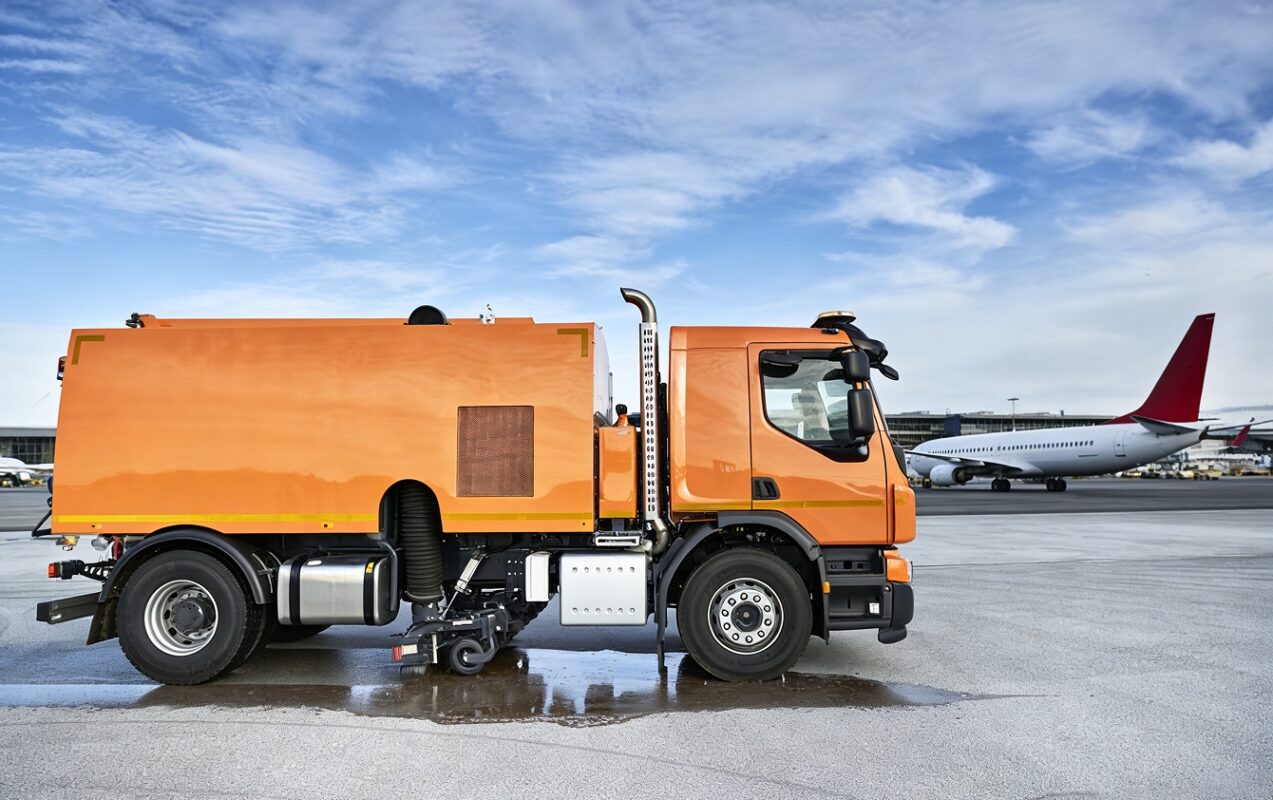
An airport crash truck, officially designated as an Aircraft Rescue and Firefighting (ARFF) vehicle, is a specialized, high-capacity emergency apparatus engineered for rapid response, extreme off-road maneuverability, and massive agent delivery to combat aviation fuel fires and secure aircraft evacuations. These vehicles form the frontline defensive shield of modern aviation infrastructure, maintaining strict regulatory compliance to ensure that any runway incident can be met with immediate, overwhelming fire suppression capability.
Understanding the Aircraft Rescue and Firefighting (ARFF) Mandate
The operational framework governing airport safety is rigorous, dynamic, and internationally standardized. Unlike municipal fire engines designed to navigate tight urban streets and pump water from municipal hydrants, an airport crash truck is a self-contained mobile fortress. It carries thousands of gallons of water, specialized fire-retardant foams, and dry chemical agents capable of subduing hydrocarbon fuel fires within critical time windows.
Regulatory authorities, such as the Federal Aviation Administration (FAA) in the United States and the European Union Aviation Safety Agency (EASA) globally, classify airports based on the length of the largest aircraft using the facility and the average daily departures. These classifications dictate the minimum number of crash trucks required, their combined extinguishing agent capacities, and their strict response time thresholds. An ARFF vehicle must be capable of achieving maximum acceleration from a standing start and reaching any point on the operational runway or taxiway system within three minutes under optimal visibility and surface conditions.
To achieve these performance metrics, crash trucks rely on high-horsepower diesel engines—often twin-engine configurations or massive single-powerplants exceeding 700 to 1,000 horsepower—paired with automatic transmissions and heavy-duty, all-wheel-drive suspension systems. This power-to-weight ratio allows a vehicle weighing upwards of 30 to 50 tons to accelerate comparably to a heavy commercial truck while maintaining stability across muddy infields, soft sand, and uneven terrain surrounding airport perimeters.
Specialized Engineering and Technical Specifications
The design of an airport crash truck distinguishes it sharply from standard municipal firefighting apparatus. Every subsystem is custom-engineered to withstand thermal radiation, off-road stress, and the extreme demands of continuous pump operations under pressure.
Chassis and Mobility Systems
An ARFF vehicle utilizes a specialized heavy-duty chassis built by manufacturers such as Oshkosh, Rosenbauer, or E-ONE. These chassis feature inter-axle differential locks, high ground clearance, and massive low-pressure flotation tires. Flotation tires prevent the heavy vehicle from sinking into soft soil when deployed off-paved surfaces. Furthermore, crab-steering capabilities on select models allow the truck to maneuver diagonally, facilitating positioning around compromised aircraft fuselages.
Agent Storage and Pumping Mechanisms
The core purpose of a crash truck is the rapid discharge of extinguishing agents. Tanks are constructed from corrosion-resistant materials like high-grade fiberglass or stainless steel to hold thousands of gallons of water, alongside separate storage compartments for Aqueous Film-Forming Foam (AFFF)—though modern facilities increasingly transition toward fluorine-free foams to meet environmental standards—and complementary dry chemical or clean agents.
High-output centrifugal pumps, driven by a power takeoff (PTO) or a dedicated auxiliary engine, can discharge thousands of gallons per minute through roof-mounted and bumper-mounted turrets. These turrets are hydraulically or electrically controlled, allowing firefighters to operate high-volume water and foam streams safely from inside the climate-controlled cab using joysticks and thermal-imaging cameras.
| Subsystem Component | Primary Engineering Function |
|---|---|
| Heavy-Duty Chassis | All-terrain mobility and rapid acceleration on unimproved ground |
| High-Capacity Pumps | Discharging thousands of gallons of water/foam per minute under pressure |
| Roof & Bumper Turrets | Delivering high-volume agent streams from a safe, enclosed cab distance |
| Piercing Nozzle (Stinger) | Punching through aircraft aluminum to inject foam directly into cabin |
The Role of Crash Trucks in Runway Safety and Incident Mitigation
Runway safety extends well beyond preventing airborne collisions; it encompasses the immediate containment of ground emergencies such as aborted takeoffs, gear-up landings, engine fires, and fuel spills. When an emergency is declared, crash trucks mobilize immediately, often staging alongside active runways or designated rapid-response corridors.
Creating and Maintaining the Survivable Corridor
In the event of an aviation accident involving a fuel-fed fire, the primary objective of the ARFF crew is not necessarily to extinguish the entire fire immediately, but to secure a survivable escape path for passengers and crew evacuating the aircraft. This is achieved through the rapid application of foam, which forms a dense, aqueous film over pooling aviation fuel. This blanket seals off atmospheric oxygen and suppresses flammable vapors, preventing ignition or subduing existing flames.
Advanced Thermal Imaging and Low-Visibility Operations
Modern airports operate around the clock in diverse weather conditions, including dense fog, heavy snow, and torrential rain. To maintain runway safety during low-visibility events, contemporary crash trucks are equipped with forward-looking infrared (FLIR) cameras and advanced radar or GPS mapping systems. These technologies allow drivers to navigate complex airfield layouts and locate distressed aircraft in zero-visibility conditions, ensuring that response times remain compliant with international safety mandates.
Operational Procedures and Inter-Agency Coordination
Deploying an airport crash truck requires seamless coordination between the ARFF crew, air traffic control (ATC), and local municipal emergency services. When an inbound aircraft declares an emergency, ATC immediately alerts the fire station, providing vital data regarding aircraft type, soul count (number of occupants), fuel load on board, and the nature of the malfunction.
Upon receiving the alert, the crew boards the apparatus, donning full structural or specialized proximity firefighting gear. Proximity gear features aluminized outer shells designed to reflect radiant heat, allowing operators to approach closer to high-temperature fires than would be possible in standard gear. Once positioned upwind of the incident, the crew executes a coordinated attack strategy:
- Initial Knockdown: Rapid discharge from high-capacity roof turrets to suppress the bulk of exterior fuel fires and cool the aircraft fuselage.
- Securing Egress Paths: Directing foam streams specifically toward emergency exit doors and slide deployment zones to protect evacuating passengers.
- Interior Suppression and Overhaul: Deploying handlines and specialized piercing nozzles—often referred to as "stingers"—to puncture the aircraft skin and inject foam directly into cargo holds or cabin spaces where hidden fires may smolder.
Maintenance, Testing, and Regulatory Compliance
An airport crash truck must maintain a state of absolute operational readiness at all times. Regulatory agencies mandate rigorous daily, weekly, and monthly inspection protocols covering fluid levels, pump pressures, foam proportioning accuracy, and tire integrity.
Furthermore, ARFF personnel conduct live-fire drills and discharge testing regularly to verify that foam systems mix agents at precise percentages (typically 1% to 3% for standard concentrates). Any mechanical discrepancy discovered during these inspections results in immediate remediation or the deployment of a certified backup apparatus to maintain the airport's assigned safety category.
Frequently Asked Questions
What is the primary difference between a municipal fire truck and an airport crash truck?
A municipal fire truck is optimized for structural firefighting, relying heavily on municipal water hydrants and narrow maneuverability. An airport crash truck is a self-contained, high-mobility off-road vehicle carrying massive water and foam supplies designed specifically to suppress volatile aviation fuel fires rapidly.
How quickly must an airport crash truck reach an incident?
Under standard regulatory frameworks established by aviation authorities, an ARFF vehicle must be capable of achieving its response speed and reaching any point on the operational runway system within three minutes from the initial alarm.
Do airport crash trucks carry water only?
No, while water constitutes the majority of the agent capacity, crash trucks also carry specialized foam concentrates (AFFF or fluorine-free alternatives) to smother fuel fires, as well as complementary dry chemical agents for electrical or specialized Class B/C fires.
Can airport crash trucks operate off-paved runways?
Yes. They are engineered with heavy-duty all-wheel-drive systems, high ground clearance, and large flotation tires specifically designed to traverse mud, sand, and rough terrain in the runway safety areas (RSAs) surrounding paved surfaces.
What is a stinger nozzle on a crash truck?
A stinger is a hydraulically operated piercing spike mounted on the primary turret. Firefighters can drive this spike directly through the aluminum skin of an aircraft fuselage to inject extinguishing agents into internal compartments without exposing personnel to exterior heat.
Next Actions and Operational Verification
For aviation facility managers, regulatory compliance officers, and emergency response planners, ensuring optimal runway safety requires continuous auditing of ARFF fleet readiness, crew training certifications, and mutual-aid agreements with local municipal responders. Verify that your facility's response protocols align with current regional aviation authority standards, schedule routine agent-discharge calibration tests, and maintain comprehensive maintenance logs for all primary and backup crash apparatus.